
Modern AI infrastructure no longer struggles with raw processing capability; it struggles with heat. Thermal constraints now dictate how far operators can push rack density inside existing facilities, and the limits appear sooner than most design models predicted. Data center expansion used to follow demand in a linear way, yet current workloads compress unprecedented power into shrinking physical footprints. This shift has forced engineers to reconsider not just cooling systems, but the entire philosophy of how heat moves through a building. Airflow, once the backbone of facility design, now competes with liquid-based strategies that promise tighter thermal control. The question no longer centers on whether cooling can keep up, but on how intelligently it can distribute and transport heat across space.

Operators now face a critical inflection point where adding more floor space no longer guarantees higher density or efficiency. Facilities designed even five years ago did not anticipate sustained rack loads exceeding current thresholds, and retrofitting them introduces both cost and operational complexity. Liquid cooling has emerged as a structural solution rather than a supplementary upgrade, reshaping how infrastructure layers interact. Piping systems, once treated as secondary utilities, now define how effectively heat exits high-density racks. Design teams increasingly focus on fluid pathways as core architectural elements rather than mechanical afterthoughts. This evolution signals a deeper transformation in how infrastructure scales under AI-driven demand.
The Density Ceiling Air Cooling Can’t Break
Air cooling systems rely on moving large volumes of conditioned air through racks, which creates inherent physical and thermodynamic limits at higher power densities. As rack loads climb, airflow must increase proportionally, yet fan efficiency and air handling capacity do not scale linearly. Pressure drops, recirculation zones, and uneven cooling distribution begin to emerge inside tightly packed environments. These inefficiencies lead to localized hotspots that constrain how densely racks can be deployed. Engineers attempt to mitigate these issues with containment strategies and optimized airflow paths, but those methods reach diminishing returns beyond certain thresholds. The result is a hard ceiling where additional density risks instability rather than delivering performance gains.
Thermal output from modern GPUs exceeds what traditional air systems can reliably dissipate within confined rack geometries. Heat transfer through air lacks the capacity to handle concentrated loads without significant energy overhead, which reduces overall efficiency. Cooling infrastructure must expand alongside rack density, increasing both capital expenditure and operational complexity. Moreover, airflow-based systems struggle to maintain consistent inlet temperatures across all components in high-density configurations. This inconsistency affects performance stability and long-term hardware reliability. Consequently, operators increasingly recognize that airflow alone struggles to sustain the highest-density GPU deployments without supplemental cooling approaches.

Smarter Pipe Grids Are Rewriting Rack Design
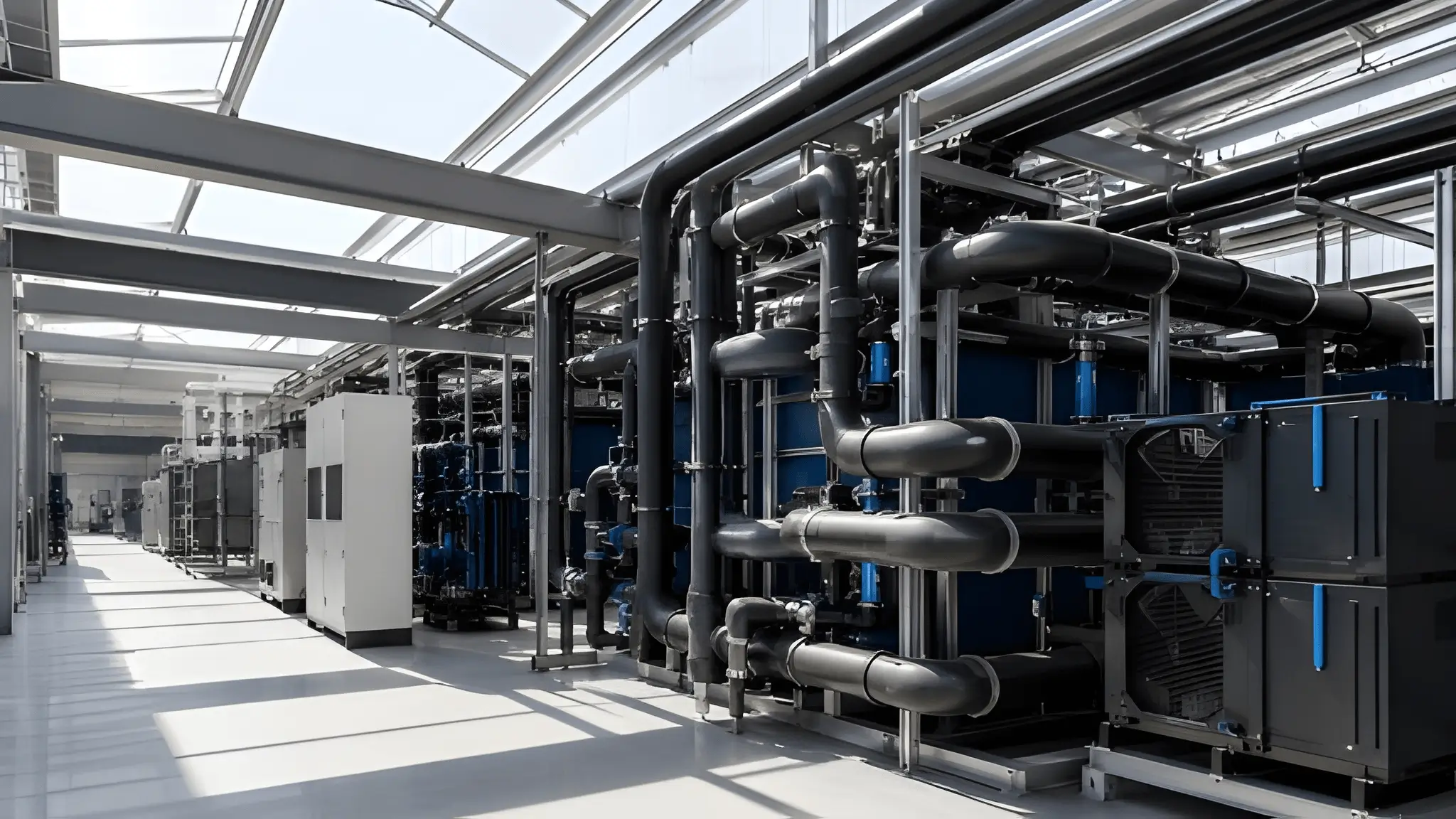
Advanced piping architectures introduce a fundamentally different approach to thermal management by placing coolant delivery closer to heat sources. Instead of relying on bulk air movement, liquid systems transport heat directly from components through precisely routed pathways. This allows racks to operate at higher densities without requiring additional physical spacing for airflow management. “Modular liquid cooling distribution systems enable flexible deployment patterns that adapt to varying load intensities across the facility. Engineers can design these systems to scale incrementally, avoiding the need for large upfront infrastructure changes. As a result, rack design increasingly incorporates fluid-based cooling alongside airflow-centric layouts in high-density environments.
Liquid cooling systems leverage the superior thermal conductivity of fluids to remove heat more efficiently than air-based methods. Coolant loops can be tailored to deliver consistent temperatures across all nodes, reducing variability within dense rack environments. Piping layouts also support redundancy and fault tolerance, ensuring that thermal performance remains stable under varying operational conditions. Additionally, these systems reduce the reliance on large air handling units, freeing up valuable floor space for additional equipment. The integration of smart sensors within piping networks enables real-time monitoring and dynamic adjustment of flow rates. This capability enhances both efficiency and reliability across high-density deployments.
Why Thermal Distance Now Matters More Than Floor Space
Thermal distance refers to the length and complexity of the path that heat must travel before it dissipates from the system. Shorter thermal paths reduce energy loss and improve the efficiency of heat transfer processes. In high-density environments, minimizing this distance becomes a critical factor alongside available floor space in improving thermal efficiency. Long coolant routes introduce temperature gradients and pressure losses that degrade system performance. Engineers now prioritize compact piping layouts that bring cooling infrastructure closer to heat-generating components. This shift redefines spatial optimization within modern facilities.
Reducing thermal distance also improves response time to dynamic workload changes within racks. Rapid heat removal stabilizes operating conditions and prevents thermal spikes that could impact system performance. Compact fluid pathways allow for more precise control over temperature distribution across different zones. This level of control supports higher density configurations without compromising reliability. Furthermore, shorter pathways reduce the energy required to circulate coolant, improving overall efficiency metrics. Therefore, thermal proximity becomes a key design parameter in next-generation infrastructure.
The Shift From Mechanical Rooms to Fluid Architecture
Traditional data center designs allocate significant space to mechanical rooms housing chillers, air handlers, and related equipment. These centralized systems distribute cooling across the facility, often requiring extensive ductwork and airflow management strategies. However, this model introduces inefficiencies when dealing with highly localized heat loads. Liquid-based systems decentralize cooling by integrating fluid distribution closer to the point of heat generation. This transition reduces dependence on large mechanical installations and shifts focus toward distributed thermal management. The infrastructure increasingly incorporates interconnected fluid pathways alongside centralized cooling systems to improve localized thermal management.
Fluid architecture enables a more granular approach to thermal management, where each rack or cluster receives tailored cooling based on its specific load. This flexibility supports heterogeneous deployments where different workloads generate varying levels of heat. Engineers can design piping systems to accommodate future upgrades without major structural modifications. The reduced reliance on mechanical rooms also lowers construction and maintenance costs over time. Additionally, distributed systems improve resilience by isolating potential failures within localized segments. This approach supports evolving demands in high-density AI infrastructure, particularly in deployments requiring localized thermal control.
Can Better Heat Transport Delay New Data Center Builds?
Optimized heat transport systems allow operators to extract more capacity from existing facilities by improving thermal efficiency. Instead of expanding physical infrastructure, organizations can increase density within current footprints. This approach reduces capital expenditure and accelerates deployment timelines for new workloads. Enhanced piping networks ensure that heat removal keeps pace with increasing rack power levels. Facilities that adopt these strategies can extend operational capacity within existing infrastructure before requiring expansion. Consequently, some infrastructure investment shifts toward upgrading internal systems alongside continued development of new sites.
Efficient thermal management also improves energy utilization, which plays a critical role in operational cost control. Lower energy consumption for cooling translates into higher overall efficiency for the facility. This improvement strengthens the economic case for retrofitting existing data centers with advanced liquid systems. Operators gain flexibility to scale density incrementally in certain scenarios rather than immediately committing to large expansion projects. Moreover, regulatory pressures around energy efficiency further incentivize such optimizations. Therefore, better heat transport mechanisms can significantly delay the need for new construction.
The Future of AI Scale May Flow Through Pipes
The trajectory of AI infrastructure suggests that thermal management will define the limits of future scalability. Liquid-based systems, supported by advanced cooling distribution architectures, offer a pathway to address constraints imposed by traditional cooling methods in high-density environments. Facilities that embrace this shift can achieve higher density without increasing their physical footprint. This transformation increases the importance of piping networks as key components within broader infrastructure design considerations. Engineers increasingly approach cooling as a combination of fluid management and airflow optimization in high-density deployments. The result is a more efficient, scalable, and adaptable data center model.
The emphasis on thermal efficiency will continue to influence design decisions across the industry. Innovations in fluid distribution and piping intelligence will determine how effectively facilities handle increasing power densities. Operators who invest in these systems today position themselves to meet future demand without extensive expansion. The integration of advanced monitoring and control within piping networks further enhances performance and reliability. This evolution reflects a broader shift toward infrastructure that prioritizes precision and adaptability. The next era of AI scale will depend on how effectively heat moves through carefully engineered pathways.











