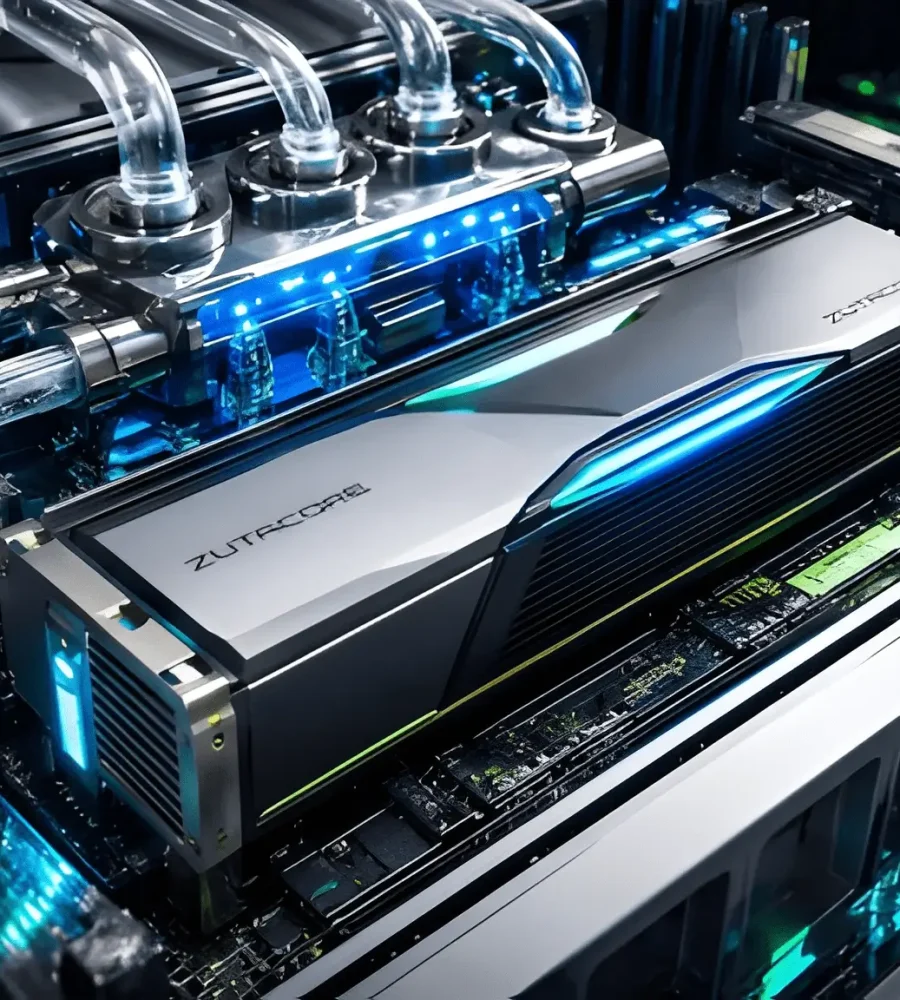
The gold rush of the generative AI era has so far been defined by a scramble for two scarce resources: silicon and electricity. First came the GPU shortage. Then came the grid. As we move into 2026, however, a third and far less visible constraint is emerging, made of chemicals. As rack densities climb from 20 kilowatts to 120 kilowatts and beyond, the industry is colliding with a hard physical limit: the thermal wall. Is Air cooling efficient anymore? Is it incapable of moving enough heat to protect Blackwell-class GPUs from failure? A shift was required and that led to liquid cooling, which has quietly transformed cooling fluids into mission-critical infrastructure.
In doing so, it has created a new and volatile supply chain bottleneck, one that could slow the pace of AI expansion as decisively as any chip shortage.
From Code to Chemistry
For much of AI’s history, progress appeared abstract. Better algorithms, more data, larger models. Physical constraints existed, but they were secondary. Data center cooling was treated as an operational concern, fans, ducts, chillers, designed around air, a free and effectively limitless medium.
That model no longer holds. High-density AI hardware has pushed thermal output beyond what air can manage. Cooling is no longer a peripheral service. It is a foundational requirement of the hardware itself. The industry has already passed through the Silicon Phase and is now constrained by the Power Phase. What comes next is the Chemical Phase, where the availability, purity, and regulatory stability of cooling fluids define the upper bound of AI scale.
Without these fluids, the world’s most advanced chips cannot operate at full performance, or at all.
Cooling Fluids as Infrastructure
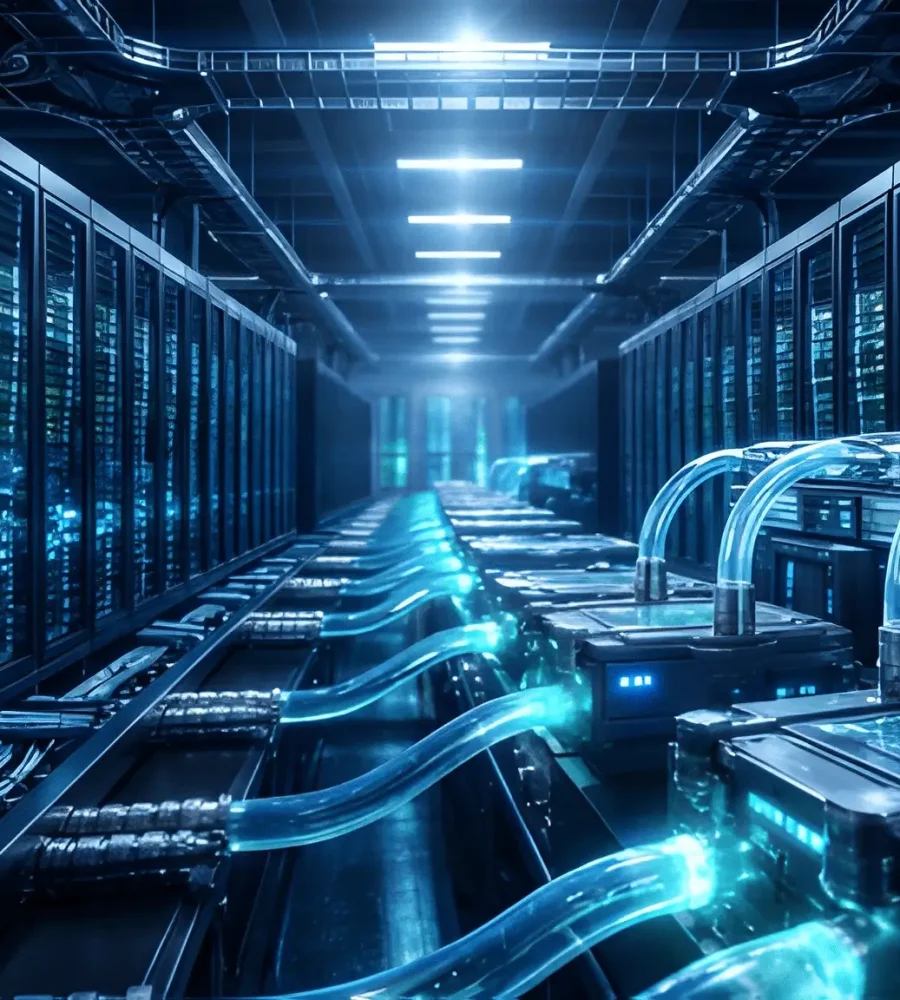
Traditional air cooling begins to fail above 20 to 30 kilowatts per rack. Modern AI deployments are already approaching 120 kilowatts, with roadmaps pointing toward 300 kilowatts per rack within the decade. At these densities, liquid cooling, whether direct-to-chip or full immersion, is not optional.
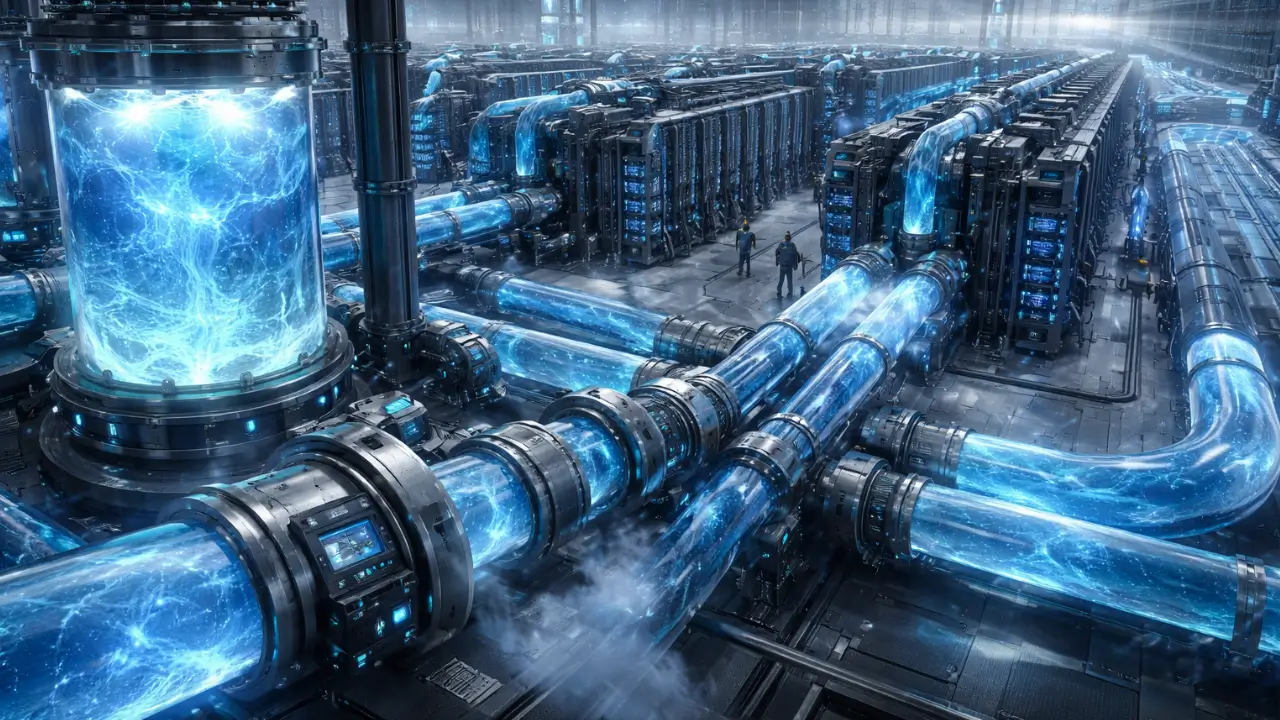
In this environment, cooling fluids meet every definition of infrastructure. They are permanent architectural assets. Fluid loops are designed into the building itself, and without them, the facility cannot function even briefly. The scale is also unprecedented. Large AI clusters require tens of thousands of gallons of engineered dielectric fluids or synthetic oils.
Purity is non-negotiable. These fluids must meet electronic-grade standards, maintaining dielectric strength and chemical stability under constant thermal stress. Contamination risks corrosion, electrical interference, or catastrophic hardware failure. As a result, cooling liquids are no longer consumables. They are strategic components, as integral to the data center as copper wiring or power transformers.
The Chemical Supply Chain Bottleneck
The emerging constraint around cooling fluids resembles the GPU shortage, but with fewer escape valves.
Production concentration is the first risk. Only a handful of global chemical firms possess the intellectual property and specialized facilities required to manufacture high-purity dielectric fluids. These are not commodity chemicals. They involve complex synthesis and filtration processes. A disruption at a single major plant could ripple across the entire AI infrastructure ecosystem.
Regulatory pressure compounds the problem. Many high-performance cooling fluids rely on PFAS compounds, which are facing increasing scrutiny and potential bans in the U.S. and Europe. For operators, this creates profound uncertainty. A data center designed around a specific fluid becomes a stranded asset if that chemistry is later restricted or outlawed. The prospect of forced reformulation introduces risk the industry is not yet equipped to absorb.
Scale and logistics present the final constraint. The projected AI buildout through 2030 requires volumes of specialty fluids that far exceed current global production. Expanding chemical manufacturing capacity is slow, often requiring three to five years for permitting and construction. Transporting, storing, and maintaining hundreds of thousands of gallons of high-purity chemicals adds further friction. This is not a cyclical shortage. It is a structural one.
Why Generative AI Changes the Equation
Generative AI workloads are thermally unforgiving. Unlike traditional cloud infrastructure, which experiences variable demand, AI training and inference clusters operate near full utilization around the clock. The result is a constant and extreme heat profile.
This relentless load accelerates fluid degradation. Over time, cooling liquids can lose dielectric strength, absorb moisture, or chemically break down. Managing this reality requires on-site filtration, reconditioning, and reclamation systems, turning cooling into an ongoing operational discipline rather than a one-time design choice.
The implications are financial as well as technical. Fluid performance directly affects total cost of ownership. A cooling liquid that degrades even marginally faster than alternatives can translate into millions of dollars in added maintenance, downtime, and reduced hardware lifespan.
Strategic Implications
As cooling chemistry becomes a limiting factor, the AI infrastructure landscape will shift accordingly.
Hyperscalers may pursue vertical integration, acquiring or partnering directly with chemical manufacturers to secure supply. Cooling fluids are the circulatory system of the data center, and control over them offers strategic advantage.
Governments may begin to treat high-purity cooling fluids as a matter of industrial or national security, encouraging domestic production to reduce reliance on concentrated global supply chains.
A secondary market for fluid recycling and purification is likely to emerge, with specialized firms restoring used dielectric fluids to electronic-grade standards.
Investors will favor long-term, take-or-pay contracts that guarantee fluid availability over the full lifespan of a facility, treating chemicals with the same seriousness as power or land.
For smaller operators and neocloud providers, access to these supply agreements may become a decisive barrier to entry. If dominant players lock up the most efficient fluids, they create a competitive moat that capital alone cannot cross.
High-density AI systems operate within narrow thermal margins. Cooling fluids sustain those margins under continuous load. Their supply chain, regulatory status, and lifecycle performance now factor directly into infrastructure planning and investment outcomes.