
NVIDIA H200 shipments delayed to Q3  · BREAKING: Microsoft confirms 3GW data centre expansion in Asia-Pacific ·  AWS announces new sovereign cloud regions in India and UAE  · Arm-based servers now 24% of hyperscale deployments ·  EU AI Act enforcement enters phase two  · Global data centre investment hits $612B in 2026 ·  TSMC Arizona yields improve to 68% on 3nm process  · OpenAI valuation reaches $400B after latest funding round ·  NVIDIA H200 shipments delayed to Q3  · BREAKING: Microsoft confirms 3GW data centre expansion in Asia-Pacific ·  AWS announces new sovereign cloud regions in India and UAE  · Arm-based servers now 24% of hyperscale deployments ·  EU AI Act enforcement enters phase two  · Global data centre investment hits $612B in 2026

Why AI Is Forcing a Rethink of Data Center UPS Architecture

The uninterruptible power supply has not changed much in thirty years. It bridges the gap between a power outage and

Share
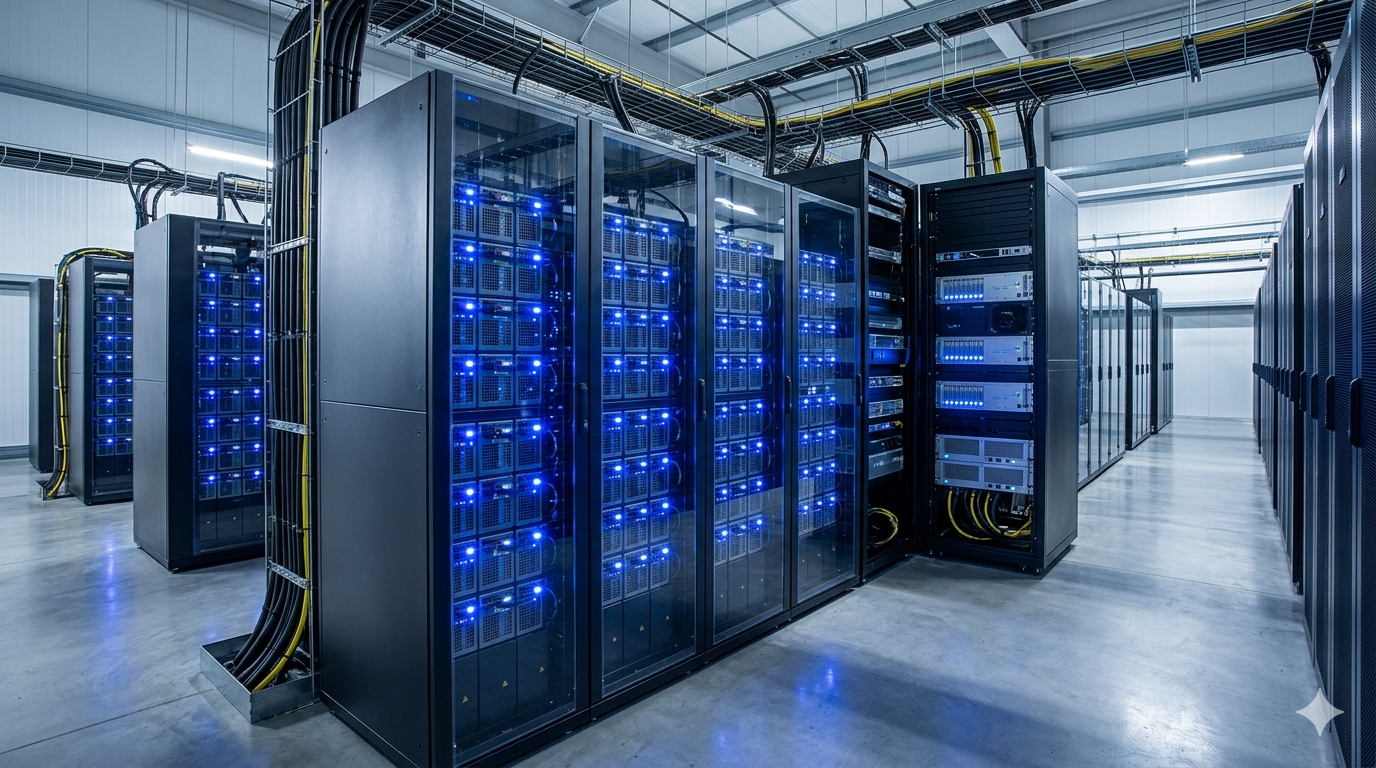
AI data center UPS architecture backup power lithium ion battery systems

The uninterruptible power supply has not changed much in thirty years. It bridges the gap between a power outage and generator startup. It was designed for servers that drew predictable, intermittent loads. Those servers rarely pushed the UPS to its limits. AI infrastructure does exactly that. GPU clusters run at near-peak power draw for hours, sometimes days. That is not a brief bridging event. That is a sustained operational condition. The UPS was never designed for it. Operators are discovering shorter battery runtimes, faster degradation, and thermal problems their enclosures cannot handle.

The power quality demands of AI workloads expose how fragile conventional UPS assumptions really are. A UPS sized for a traditional server environment encounters an AI training cluster and faces discharge rates its design never anticipated. Battery systems cycle under sustained high-load conditions instead of brief, occasional peaks. They age faster. They fail sooner. Operators applying standard replacement intervals are finding failures they did not expect. The old design logic has hit a wall, and the industry is only beginning to reckon with what comes next.

How AI Load Profiles Break Conventional UPS Design

Conventional UPS sizing assumes the IT load runs at partial capacity most of the time. Peak draws happen briefly and rarely. That assumption allows manufacturers to set maintenance intervals and battery replacement cycles with confidence. It worked for decades. AI training jobs break that assumption entirely. A GPU cluster runs hard until the job finishes. The UPS supporting that cluster cycles under sustained high-load conditions continuously. High load also means high heat. UPS systems generate heat based on the load they carry. In an AI facility, surrounding IT equipment generates heat at extreme rack densities. The UPS enclosure sits inside that thermal environment. Passive cooling cannot keep up.

Active cooling of the enclosure itself becomes necessary. The thermal management architecture of an AI facility must account for UPS heat output, not just server heat output. Most conventional designs do not. This creates compounding thermal pressure that shortens component life, increases maintenance frequency, and introduces failure modes that conventional UPS design simply did not plan for. The gap between what the UPS was built to do and what AI infrastructure demands of it is not a minor calibration issue. It is a fundamental design mismatch that operators must address at the architecture level.

Why Distributed UPS Architecture Makes More Sense

A centralized UPS puts everything behind one system. One fault, one maintenance window, one point of failure. For a large AI facility, that is a significant risk. Parallel redundancy can offset it, but at substantial additional cost. Distributed UPS architectures place smaller units close to the loads they protect. A fault affects only that unit’s load, not the entire facility. Capacity can also be added in phases as AI compute infrastructure scales up. This matches how AI data center colocation and campus development actually works in practice.

The behind-the-meter power strategies that AI campuses increasingly rely on are pushing operators to rethink their entire power architecture. Distributed UPS fits naturally into that rethink. The tradeoff is higher per-kilowatt cost and more maintenance touchpoints across the facility. However, operators building AI-specific infrastructure are finding this tradeoff worth making. The resilience benefits of distributed architecture outweigh the cost premium when the alternative is a single centralized system whose failure puts an entire AI campus at risk.

The Shift to Lithium-Ion Batteries

Lead acid batteries dominated UPS systems for decades. Lithium-ion is replacing them in AI data center applications. The reasons are practical. Lithium-ion offers higher energy density and longer cycle life. It recharges faster after a discharge event and performs better at elevated temperatures. Faster recharge matters in AI facilities because power events are more consequential when training runs are in progress. A battery that recovers quickly means the UPS is ready for the next event sooner. That directly improves facility resilience in environments where sustained workloads make every minute of downtime expensive.

Lithium-ion UPS systems cost more upfront. Over a ten to fifteen year facility life, however, the economics shift. Fewer replacements, better performance under sustained load, and lower operational disruption change the total cost of ownership calculation significantly. Operators evaluating battery technology on lifecycle cost rather than first cost are choosing lithium-ion. As data centers take on the characteristics of power infrastructure companies, every element of the power chain faces higher performance expectations. The UPS battery is no exception, and lithium-ion is the technology that meets those expectations at AI infrastructure scale.

What the Next Generation of UPS Looks Like

AI facilities need UPS systems that do more than bridge outages. They need systems that handle sustained high loads without thermal stress, recharge quickly after discharge events, and integrate with facility-wide energy management platforms. They also need monitoring granularity that predicts battery degradation before failure occurs. This points toward UPS as an integrated power system component rather than a standalone protective device. Operators who treat it that way see better performance, longer battery life, and more useful operational data from their backup power infrastructure.

The power efficiency demands of AI infrastructure make every component of the power chain a target for optimization. UPS architecture is one of the last areas where conventional thinking still dominates, and that is changing fast. Operators who redesign their backup power architecture around AI-specific load profiles, adopt lithium-ion chemistry, and integrate UPS operation with facility energy management platforms are building resilience that conventional UPS deployment cannot match. UPS reliability now directly affects the economics of AI training runs. That is a new reality, and it demands a new approach.


[simple-author-box]

More from AI Infrastructure

Power negotiations often conclude long before operational constraints reveal themselves inside a live facility.

Artificial intelligence infrastructure has compressed deployment timelines to the point where electrical capacity is

Boards increasingly expect organizations to support sustainability reporting with evidence that aligns with governance

COMPUTE WEEKLY

The briefing that 40,000+ tech leaders read every Monday. Sharp, fast, essential.

Great! We’ve received your information.

We couldn’t process your submission. Please retry

Building an AI Startup Without Owning GPUs

Not owning GPUs has become the default, deliberate strategy for building an AI company — not a compromise founders accept reluctantly. H100 rental rates fell 64-75% in fifteen months, a dense ecosystem of neoclouds and inference-as-a-service providers now lets startups skip infrastructure entirely, and credit programs can fund a company’s first year before a founder writes a check
Most Read

Infrastructure planning discussions often prioritize engineering, construction, and utility considerations before examining how end

AI infrastructure deployment schedules depend on coordinated progress across hardware availability, electrical infrastructure, cooling

Artificial intelligence has transformed the economics of digital infrastructure. Every new AI model requires

Data centers do not visibly smoke. They have no smokestacks, no visible exhaust, and

Artificial intelligence has transformed the economics of digital infrastructure. Companies once competed by acquiring

Disruptor Spotlight

Cerebras Systems

The chip that makes Nvidia nervous. Cerebras’ Wafer Scale Engine is rewriting the rules of AI inference at scale.
Faster
0 x
YoY Revenue
0 x
Transistors
0 T
Market Pulse
NVDA
$924.60
-2.11%
MSFT
$421.30
-2.94%
AMZN
$192.80
-4.87%
AMD
$924.60
-2.40%
TSMC
$924.60
-2.32%
Indicative only · Not financial advice
Upcoming Events
SEP
The AI Infrastructure Race (India)
WEBINAR · ONLINE
The AI Infrastructure Race: Won on Power, Land and Trust — Not Capital
MAY
0
AI Infrastructure Summit
DUBAI · IN PERSON
MEA’s premier AI infrastructure event.
JUN
0 0
Compute Forecast Summit
SINGAPORE · IN PERSON
Our flagship APAC event. Early bird open.
Latest Moves
Live
ecolab
Ecolab Deepens Cooling Strategy With $4.75B CoolIT Acquisition
Ecolab is making one of its biggest moves yet into AI infrastructure after completing its $4.75 billion acquisition of liquid cooling specialist CoolIT Systems
Pure DC AVK Europe data center microgrid Dublin 110MW AI infrastructure Ireland 2026
Pure DC and AVK Deploy Europe’s First 110 MW Data Center Microgrid in Dublin
The Pure DC Dublin microgrid has made history as Europe’s first large-scale on-site data center microgrid, launched in partnership with power solutions provider AVK at Pure DC’s campus in Ireland.
Pace Digitek
Pace Digitek Partners With MEGMEET to Expand AI Data Center Power Business
India’s AI infrastructure ecosystem continues to mature as domestic technology manufacturers move beyond traditional telecommunications and industrial markets toward high-growth digital infrastructure opportunities
Follow Compute Forecast
11K followers
1200 followers
Companies to Watch
CW
CoreWeave
Neo Cloud · $19B · IPO Watch
CB
Cerebras Systems
AI Hardware · $4.25B · Pre-IPO
G42
G42
Sovereign AI · Abu Dhabi
H
Humain
Saudi AI · $40B Fund
Latest Podcast
AI Capex, Cloud Margins & the Nuclear Bet
48 MIN · 25 APR 2026

Why AI Is Forcing a Rethink of Data Center UPS Architecture

The uninterruptible power supply has not changed much in thirty years. It bridges the gap between a power outage and

Share
AI data center UPS architecture backup power lithium ion battery systems
17
847 SHARES

0
SHARES

[simple-author-box]

More from AI Infrastructure

Infrastructure planning discussions often prioritize engineering, construction, and utility considerations before examining how end

AI infrastructure deployment schedules depend on coordinated progress across hardware availability, electrical infrastructure, cooling

Artificial intelligence has transformed the economics of digital infrastructure. Every new AI model requires

Data centers do not visibly smoke. They have no smokestacks, no visible exhaust, and

COMPUTE WEEKLY

The briefing that 40,000+ tech leaders read every Monday. Sharp, fast, essential.

Great! We’ve received your information.

We couldn’t process your submission. Please retry

Global AI Infrastructure Outlook 2026

The briefing that 40,000+ tech leaders read every Monday. Sharp, fast, essential.
Download Free
Most Read

Infrastructure planning discussions often prioritize engineering, construction, and utility considerations before examining how end

AI infrastructure deployment schedules depend on coordinated progress across hardware availability, electrical infrastructure, cooling

Artificial intelligence has transformed the economics of digital infrastructure. Every new AI model requires

Data centers do not visibly smoke. They have no smokestacks, no visible exhaust, and

Artificial intelligence has transformed the economics of digital infrastructure. Companies once competed by acquiring

Disruptor Spotlight

Cerebras Systems

The chip that makes Nvidia nervous. Cerebras’ Wafer Scale Engine is rewriting the rules of AI inference at scale.
Faster
0 x
YoY Revenue
0 x
Transistors
0 T
Market Pulse
NVDA
$924.60
+2.4%
MSFT
$421.30
+1.1%
AMZN
$192.80
-0.6%
NVDA
$924.60
+2.4%
NVDA
$924.60
+2.4%
Indicative only · Not financial advice
Upcoming Events
MAY
0 0
DCD Global — London
LONDON · IN PERSON
World’s largest DC event. CF is media partner.
MAY
0
AI Infrastructure Summit
DUBAI · IN PERSON
MEA’s premier AI infrastructure event.
JUN
0 0

Compute Forecast Summit

SINGAPORE · IN PERSON
Our flagship APAC event. Early bird open.
Latest Moves
  • Live
Sam Altman
OpenAI appoints new Chief Infrastructure Officer to lead $100B DC programme
27 APR · OPENAI
Sam Altman
OpenAI appoints new Chief Infrastructure Officer to lead $100B DC programme
27 APR · OPENAI
Sam Altman
OpenAI appoints new Chief Infrastructure Officer to lead $100B DC programme
27 APR · OPENAI
Follow Compute Forecast
18.4K followers
12.1K followers
9.3K subscribers
41 episodes
Companies to Watch
CW
CoreWeave
Neo Cloud · $19B · IPO Watch
CB
Cerebras Systems
AI Hardware · $4.25B · Pre-IPO
G42
G42
Sovereign AI · Abu Dhabi
CW
Humain
Saudi AI · $40B Fund
Latest Podcast
AI Capex, Cloud Margins & the Nuclear Bet
48 MIN · 25 APR 2026
Scroll to Top








