
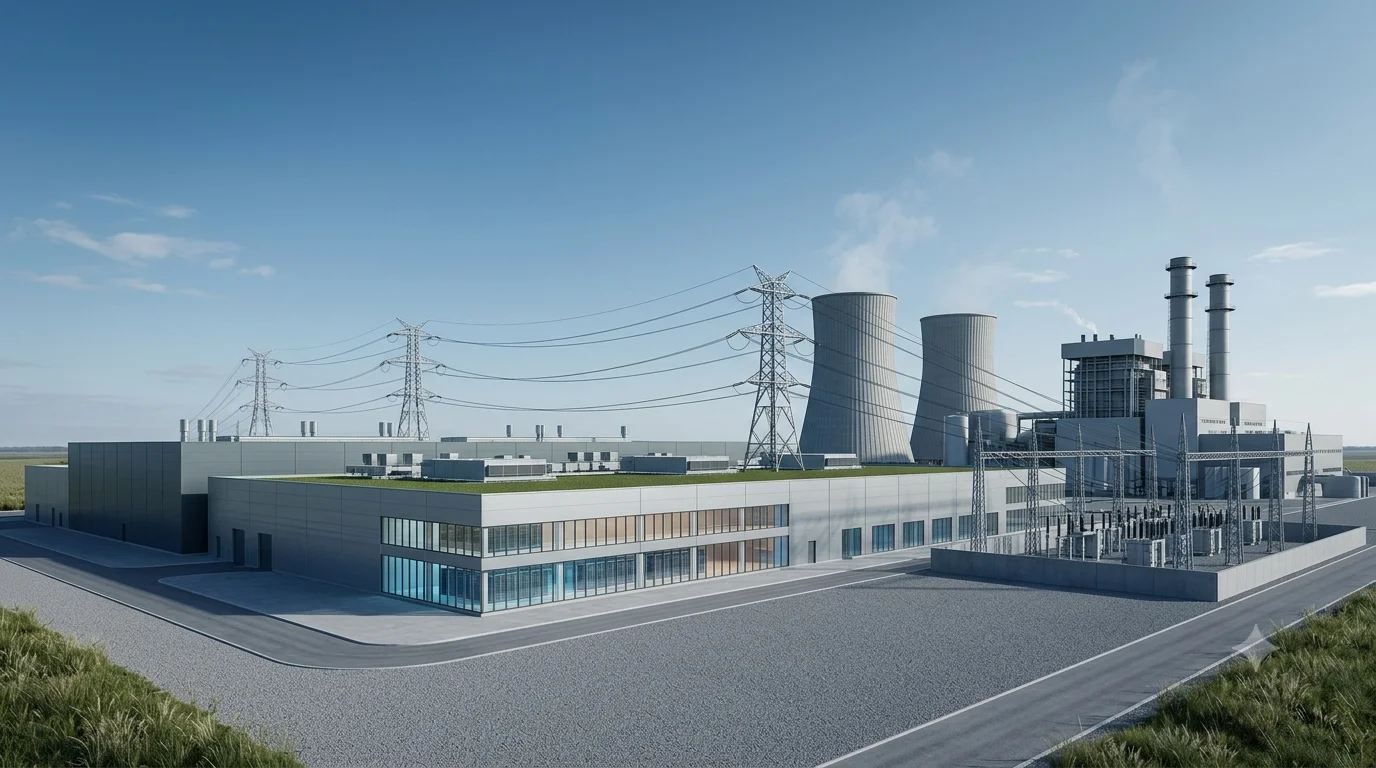
Artificial intelligence is changing more than computing. It is transforming electricity markets at an unprecedented pace. Every new AI data center requires enormous amounts of reliable power, forcing utilities, hyperscalers, and investors to rethink infrastructure priorities. Instead of waiting years for new generation projects, many are turning toward existing power plants that can deliver electricity immediately. Consequently, assets once viewed as ordinary now command premium valuations because speed has become as valuable as capacity.

AI Is Creating a New Kind of Electricity Demand
The cloud era steadily increased electricity consumption, but AI has accelerated demand at an entirely different scale. Modern AI clusters require thousands of GPUs operating continuously for training and inference workloads. Unlike conventional enterprise applications, these workloads rarely pause because interruptions reduce utilization and increase operating costs. As a result, electricity has become a strategic input rather than a routine operating expense. Infrastructure decisions now begin with power availability before considering land or networking. Hyperscalers continue expanding AI infrastructure across North America, Europe, and Asia. Microsoft, Google, Amazon Web Services, Meta, and Oracle have announced multi-billion-dollar investments supporting AI expansion. Their campuses increasingly demand hundreds of megawatts from the first construction phase. Future deployments may require gigawatt-scale infrastructure operating for decades. Therefore, utilities face unprecedented pressure to supply dependable electricity within increasingly aggressive timelines.
Existing Power Plants Suddenly Hold Strategic Value
Developing a new power station often requires several years of permitting, financing, construction, and grid interconnection. Transmission upgrades can extend those timelines even further. AI developers rarely have that luxury because competitive advantage depends on deploying compute capacity quickly. Every delayed facility postpones cloud revenue and AI service expansion. Consequently, existing generation assets have become highly attractive. Coal, natural gas, hydroelectric, and nuclear facilities already connected to transmission networks offer immediate advantages. These plants possess operating licenses, transmission access, and established maintenance operations. Utilities can often increase utilization faster than constructing entirely new facilities. Investors increasingly recognize this operational advantage when evaluating energy portfolios. Existing generation now delivers strategic flexibility alongside dependable electricity.
Speed Has Become the New Competitive Advantage
AI infrastructure economics increasingly reward deployment speed rather than simply minimizing electricity costs. Every month of delayed operation represents missed enterprise contracts, delayed AI model deployment, and lower infrastructure utilization. Cloud providers therefore prioritize available electricity over marginal price differences. Fast access frequently outweighs theoretical long-term savings from future generation projects. Time has become one of the industry’s most valuable resources. Utilities understand this changing market dynamic. Regions with available generation now attract greater attention from hyperscale developers than locations offering only future capacity. Grid operators similarly prioritize projects capable of supporting immediate economic development. Existing plants therefore contribute far beyond electricity production alone. They accelerate investment, employment, and regional AI infrastructure expansion. Their economic value increasingly reflects deployment speed instead of age.

Why New Generation Cannot Fill the Gap Quickly
Renewable energy continues expanding rapidly across global electricity markets. However, wind and solar developments require land acquisition, permitting, transmission planning, and construction before supplying customers. Large battery systems also remain under deployment across many regions. Meanwhile, nuclear projects typically require even longer development timelines. These realities create a temporary supply gap during today’s AI infrastructure boom. Transmission infrastructure presents another significant challenge. Many regions possess sufficient generation potential but lack transmission capacity to move electricity efficiently. Grid expansion projects frequently require several years because approvals involve multiple regulatory agencies. Local permitting also adds complexity across state and regional boundaries. Consequently, existing transmission-connected plants provide an immediate competitive advantage. Their infrastructure already supports commercial-scale electricity delivery.
Natural Gas Remains the Bridge for AI Expansion
Although renewable generation continues growing, natural gas still plays a central role during today’s infrastructure buildout. Gas turbines can respond quickly to changing electricity demand. Utilities also understand their operational characteristics after decades of deployment. Existing gas facilities frequently connect directly to transmission infrastructure. These advantages support faster AI campus development. Major equipment manufacturers continue introducing more efficient gas turbine technologies. These systems improve fuel efficiency while reducing operational emissions. Operators increasingly combine gas generation with renewable resources and battery storage. Hybrid energy strategies improve grid flexibility without sacrificing reliability. Consequently, natural gas remains important during the current transition period. Future electricity systems will likely integrate multiple generation technologies.
Investors Follow the Electricity
Financial markets increasingly recognize electricity infrastructure as a critical AI investment opportunity. Investors once focused primarily on semiconductor manufacturers and cloud providers. Today, utilities, independent power producers, and transmission operators attract growing attention. Reliable generation supports every stage of AI infrastructure expansion. Capital therefore flows across the broader electricity ecosystem. Infrastructure funds also evaluate generation assets differently than before. Existing plants now offer predictable demand from investment-grade technology companies. Long-term electricity agreements improve asset valuation while reducing commercial risk. Investors increasingly view these facilities as strategic infrastructure rather than conventional utilities. AI demand has fundamentally changed electricity market economics. Energy infrastructure now underpins digital infrastructure.
Grid Bottlenecks Matter More Than Generation
Electricity generation alone cannot solve the AI power challenge. Transmission infrastructure determines whether available electricity reaches new data centers efficiently. Many regions possess adequate generation but lack sufficient transmission capacity. Interconnection queues continue expanding across several major electricity markets. These constraints delay infrastructure despite available generating resources.
Grid modernization therefore becomes equally important as new generation investment. Utilities increasingly expand substations, transmission corridors, and switching infrastructure. These upgrades improve reliability while supporting larger AI campuses. Transmission investments also strengthen regional economic development beyond technology sectors. Modern electricity networks will determine future AI deployment speed. Infrastructure planning must address both power production and power delivery.
Power Availability Is Becoming the First Site Selection Filter
Data center developers once prioritized fiber connectivity and inexpensive land. AI has changed that equation. Today, reliable electricity often determines whether a project moves forward. Sites with immediate grid access attract stronger interest than locations promising future capacity. Consequently, utilities increasingly shape AI infrastructure investment decisions alongside cloud providers. Developers now evaluate substations, transmission capacity, and nearby generation before purchasing land. Regional permitting timelines also influence investment decisions. Faster access to electricity reduces construction risk and accelerates customer onboarding. Therefore, existing power infrastructure creates a meaningful competitive advantage. Energy readiness has become a core component of AI infrastructure strategy.
Existing Plants Are Becoming Strategic Infrastructure Assets
The value of existing power plants now extends far beyond electricity production. These facilities provide immediate access to transmission networks, experienced operating teams, and proven reliability. Together, those advantages reduce development uncertainty for AI operators. Investors increasingly recognize that dependable infrastructure commands premium valuations. Speed, certainty, and scalability now define asset quality. Some utilities have even reconsidered retirement plans for certain generation assets. Rising AI demand has strengthened the business case for extending plant operations. Those facilities can support hyperscale campuses while newer projects remain under development. This trend illustrates how digital infrastructure is reshaping traditional energy planning. Yesterday’s power plants increasingly support tomorrow’s AI economy.
The AI Boom Is Reshaping Electricity Markets
Artificial intelligence has created one of the strongest demand drivers the electricity sector has experienced in decades. Utilities now plan for sustained load growth rather than gradual consumption increases. Equipment suppliers, transmission operators, and generation companies all benefit from this transformation. The entire power ecosystem has become part of the AI value chain. Electricity infrastructure now sits at the center of digital competitiveness. Future investments will likely balance renewable generation, natural gas, nuclear energy, battery storage, and grid modernization. No single technology can satisfy every AI workload. Instead, diversified electricity portfolios will improve resilience while supporting rapid compute expansion. Utilities that combine dependable generation with modern transmission networks will remain well positioned. Energy strategy has become inseparable from AI strategy.
Conclusion
The AI revolution has transformed the economics of electricity infrastructure. Existing power plants no longer represent aging assets waiting for replacement. Instead, they provide immediate capacity, transmission access, and operational certainty when hyperscalers need power most. As AI data centers continue expanding, the value of established generation will likely increase further. Ultimately, the companies that control reliable electricity may become just as important as those building the next generation of AI models.











