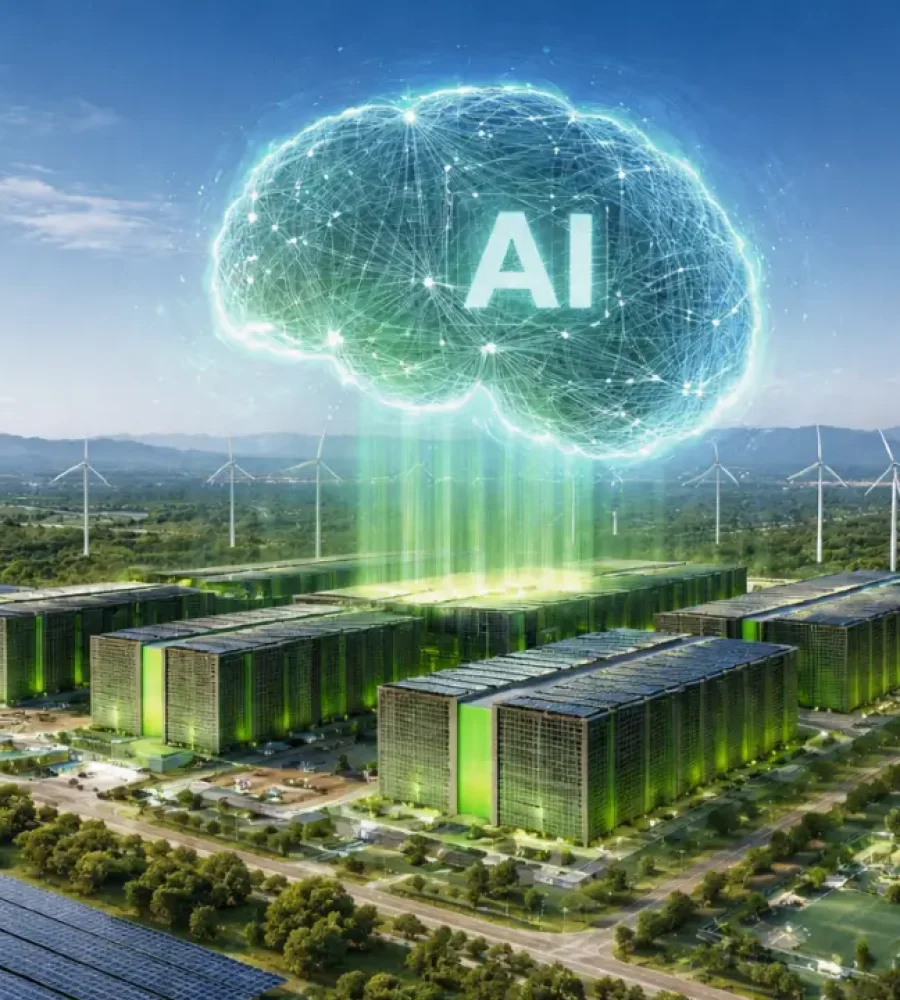

The term ‘AI supercycle‘ reflects a structural, multi-year investment trend driven by unprecedented global spending on artificial intelligence infrastructure, hardware, and applications. Unlike short-lived tech fads, the supercycle is anchored in structural demand for compute power, data analytics, and automation across sectors, not just within the technology industry.
As 2026 unfolds, markets are adjusting accordingly. Capital is rotating toward sectors tied tightly to AI demand, from semiconductors and data centers to energy and materials. Long-term investors must understand not just which stocks benefit directly, but how broader economic shifts, such as data center expansion, power consumption growth, and infrastructure capex, are influencing returns and risks.
Semiconductors & AI Hardware: The Core Engine
At the heart of the AI supercycle lies the semiconductor industry: the physical fuel that powers AI computation.
AI Chip Innovators
Leaders such as Nvidia remain the poster child of the supercycle. Latest earnings reports show massive growth driven by AI-focused data center sales, reaffirming Nvidia’s dominance in GPUs that power both training and inference workloads. Its most recent quarterly profit nearly doubled year-on-year, to $43 billion; revenue climbed 73 percent, to $68.1 billion, dispelling concerns of a tech bubble and illustrating the reality behind structural compute demand.
Meanwhile, Advanced Micro Devices has made significant inroads through major supply deals. A landmark agreement with Meta Platforms expected to cumulatively reach up to $100 billion in AI infrastructure spending boosted AMD’s stock, highlighting how diversified AI chip suppliers are gaining share as hyperscalers expand their compute footprints.
Why Semiconductors Matter to Investors
Semiconductors are the fundamental layer of the supercycle. AI workloads consume exponential amounts of compute, and that translates into high and sustained capital expenditure by tech giants and cloud providers. Companies designing GPUs, accelerators, high-bandwidth memory (HBM), and networking ASICs are positioned to benefit directly, particularly those with strong ecosystems and broad customer bases.
However, this sector also carries cyclical risks. Memory price volatility, oversupply risks, and deep capital intensity remain structural headwinds. Even as demand surges, production costs and lead times for advanced nodes can compress margins if capacity outpaces adoption.
AI Infrastructure & Data Centers: The Build-Out Play
AI does not exist in a vacuum, it requires massive physical infrastructure to operate.
Data Center Expansion
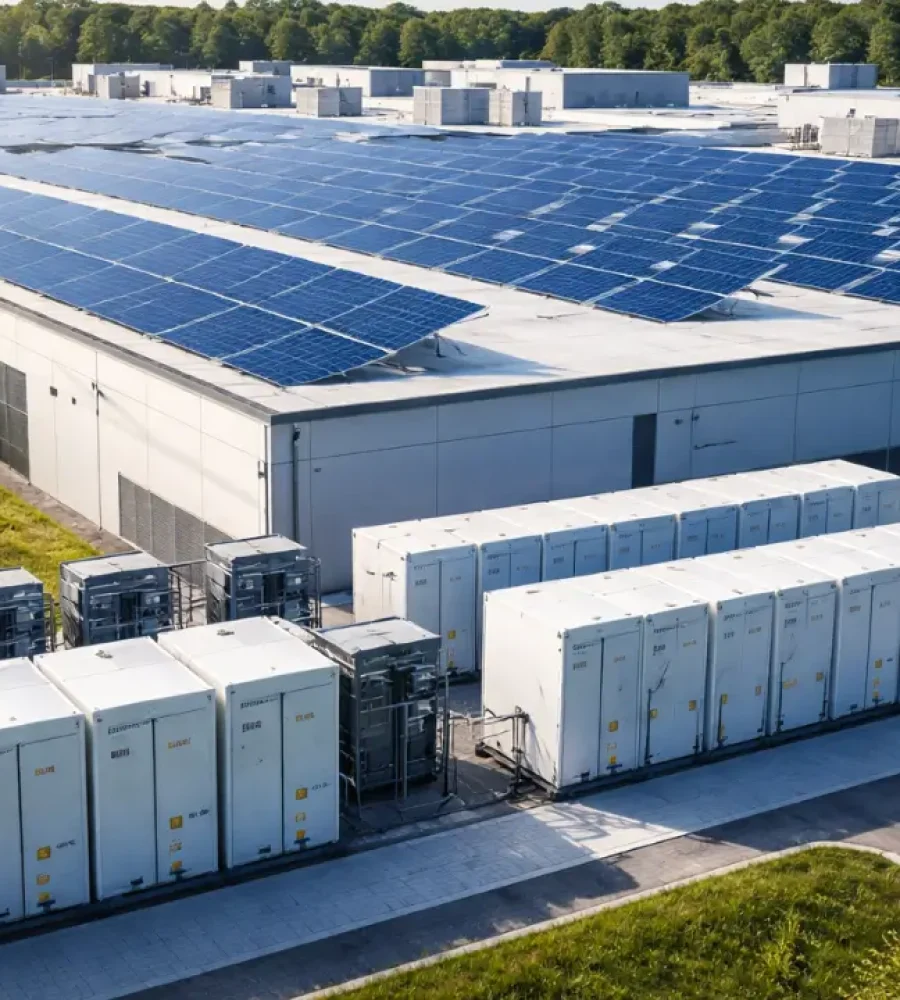
Cloud and hyperscale AI build-outs continue to propel entire ecosystems. Demand for high-density compute capacity, from GPUs to networking, storage, and cooling systems, moves well beyond chips alone. Companies supplying servers, racks, liquid cooling solutions, power conversion, and network gear are ascending alongside semiconductor makers.
This infrastructure is costly and energy-intensive, and investors are increasingly recognizing companies that enable this physical build-out as part of the AI supercycle opportunity.
Network & Support Technologies
Beyond processors, firms like Broadcom, with leadership in high-speed Ethernet switching, custom ASICs, and data center interconnect, are capturing the rapid growth of AI data centers. Strong revenue projections and upgraded ratings reflect this secular demand.
Storage companies such as Micron Technology have also seen revenues soar, driven by shortages in advanced memory used in AI servers and accelerators, while established networking vendors benefit from expanded traffic and data flows.
Big Tech & AI Platform Leaders: Growth Versus Execution
Large technology companies continue to shape the AI landscape because they integrate AI into products, services, and cloud platforms and because they are often the ones deploying massive compute capacity.
Companies like Microsoft, Google, Amazon, and Meta collectively plan hundreds of billions in AI capex in 2026 alone. Analysts estimate that combined investment by major tech firms could exceed $650 billion, fueling data center build-outs, custom silicon design, and software platforms.
These giants are not only consumers of AI compute; they are platforms where AI services are monetized. Therefore, they sit at a strategic intersection of capex intensity and service revenue growth. For investors, this creates a balance: massive infrastructure spending has long-term payoff potential, but it can also pressure near-term profitability.
Industries Riding the AI Wave: Beyond Tech
The AI supercycle is not confined to technology alone. Its impact ripples across the broader economy:
Manufacturing and Industrial Automation
AI is improving everything from production efficiency to predictive maintenance and supply chain optimization. Manufacturers integrating AI stand to benefit from productivity gains and improved capital returns, creating indirect exposure to the supercycle.
Healthcare and Biotech
AI’s integration into healthcare, for diagnostics, treatment personalization, and drug discovery, is driving a wave of innovation. Firms leveraging AI to reduce costs and accelerate breakthroughs could see substantial gains as adoption scales.
Energy & Utilities
Data centers’ surging electricity demand is opening opportunities in energy markets. Utilities securing long-term power contracts with AI tenants are benefiting from stable cash flows and infrastructure upgrades. Some utility firms have restructured operations to capture revenue tied to AI power consumption and grid support.
Critical Materials & Mining
The physical requirements of AI infrastructure: copper for cabling, specialized metals for chips, and rare earths for advanced electronics, lift demand for materials and mining companies. As compute spreads globally, so too does demand for the raw inputs that make hardware possible.
Investment Strategies for 2026
Sector Rotation
While early AI investing focused heavily on software and cloud, 2026 has seen a rotation into infrastructure, hardware, and physical economy beneficiaries — reflecting recognition that execution and supply bottlenecks matter as much as visionary product narratives.
Investors are allocating capital toward chip suppliers with strong earnings visibility and toward data center suppliers who benefit from capex cycles. Energy and utilities with AI exposure are emerging as alternatives to purely tech-centric portfolios.
Valuation and Risk Management
Despite strong fundamentals, the AI supercycle carries risks. Elevated valuations, supply chain concentration, and potential capex fatigue, where big tech slows spending if returns are delayed, are real strategic concerns. Moreover, cyclical behavior in semiconductors means investors must watch production capacity trends, not just demand forecasts.
Looking Ahead: Where Value Meets Structural Demand
The AI supercycle continues to redefine investment priorities. For investors, this means focusing beyond headline names and understanding:
- Core enablers: semiconductor makers, memory suppliers, fabricators, and network hardware producers.
- Infrastructure builders: data center OEMs, power and cooling technologies, and supporting equipment suppliers.
- Platform orchestrators: cloud providers and big tech with long-term AI monetization strategies.
- Real economy beneficiaries: sectors that adopt AI to improve efficiency and productivity.
While the supercycle narrative remains intact, markets are evolving. Firms that deliver real infrastructure execution, pricing power, and tangible revenue growth are gaining favor over speculative, promise-driven valuations. Balancing growth exposure with careful risk management will be essential as the AI supercycle matures through 2026 and beyond.