Modern facilities that host large-scale artificial intelligence clusters demand infrastructure that behaves as an integrated architecture rather than a collection of isolated subsystems. Electrical distribution, networking fabrics, thermal management, rack design, and orchestration platforms must interact through a coordinated engineering model that anticipates GPU-intensive workloads from the earliest planning phase. Traditional facilities often evolved through incremental expansion where power systems, cooling loops, and compute deployment layers operated in parallel but rarely followed a single architectural blueprint.
AI infrastructure environments change that assumption because GPU racks now concentrate extreme power density, which creates thermal and electrical dependencies that cannot operate effectively when designed separately. Engineering teams therefore approach facility design with a systems architecture methodology that treats compute clusters, network topology, and environmental control systems as parts of one operational ecosystem. This unified perspective ensures that infrastructure layers respond to compute demand with synchronized behavior rather than reactive adjustments that introduce inefficiency or operational risk.
Infrastructure architects now coordinate rack power distribution units, high-capacity busways, and liquid cooling systems during early blueprint stages so that each element supports GPU deployment patterns expected across the facility lifecycle. Data center electrical design increasingly anticipates rack densities that exceed 80 to 120 kilowatts, which forces engineers to rethink traditional power chains that once supported far lower server loads. Designers integrate switchgear capacity, transformer sizing, and backup energy systems into a unified modeling process that reflects the energy behavior of large training clusters.
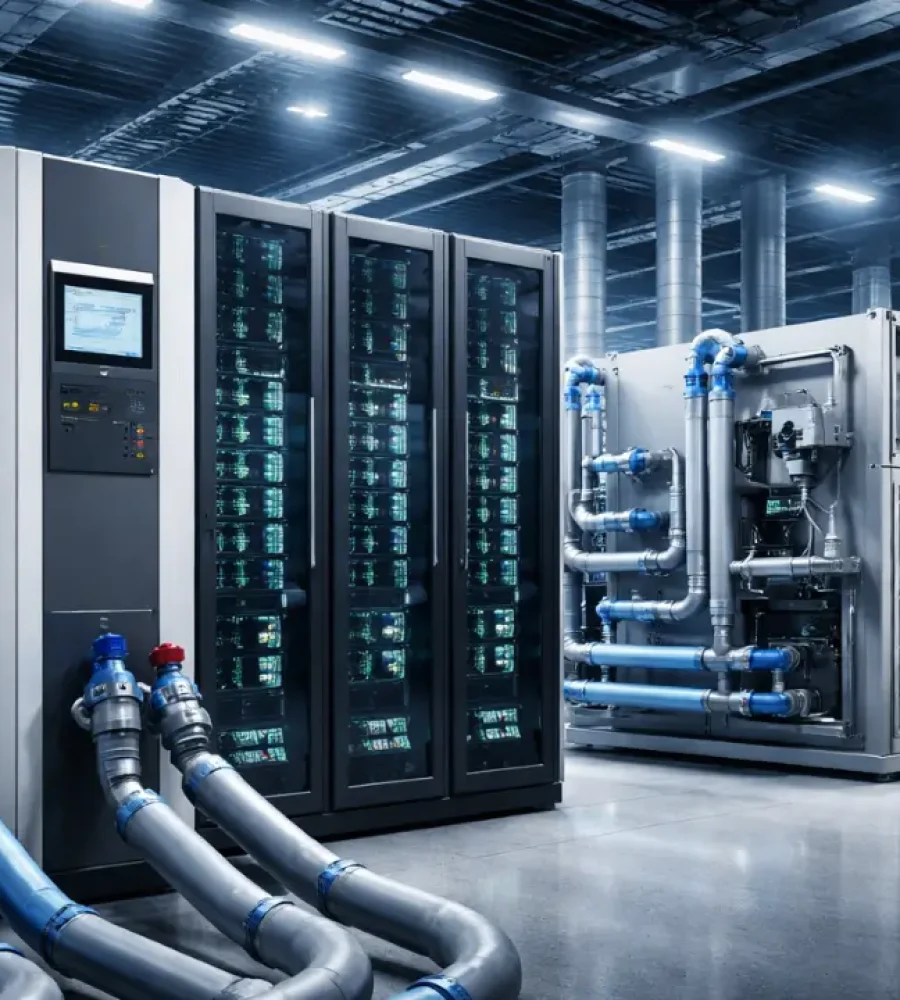
Cooling systems also participate in this architectural alignment because thermal rejection performance must match the electrical load envelope generated by dense accelerator hardware. Network infrastructure integrates into the same framework because high-performance computing fabrics demand low-latency topology that shapes rack placement and cable pathways throughout the building. This coordinated design philosophy allows operators to maintain stability while AI workloads continuously push infrastructure components toward performance limits.
Facilities supporting accelerator clusters increasingly rely on digital modeling tools to simulate infrastructure interactions before construction begins. Engineers create digital twins of electrical networks, thermal loops, and compute racks in order to test performance under projected workload conditions. These models evaluate airflow dynamics, coolant flow rates, and electrical demand curves across different cluster deployment scenarios. Simulation platforms allow infrastructure teams to observe how thermal loads migrate across rows of GPU racks and how cooling systems respond to rapid compute ramp-up during training cycles. As a result, architectural planning gains predictive accuracy that prevents mismatches between compute density and facility support capacity. Data center architecture therefore evolves into a coordinated engineering discipline where infrastructure layers function as a single system rather than independent mechanical components.
Designing for Workload Volatility Instead of Static Capacity
Artificial intelligence workloads introduce operational variability that differs substantially from traditional enterprise computing patterns. Training large neural networks often generates concentrated bursts of GPU utilization that dramatically increase power consumption across compute clusters. These workloads can ramp from moderate activity to maximum capacity within short operational windows as model training cycles begin or expand across distributed accelerator nodes. Conventional data centers typically operate under capacity planning assumptions that expect gradual workload growth across predictable infrastructure envelopes. AI deployments disrupt that model because computational intensity fluctuates according to research cycles, inference demand, and iterative experimentation within machine learning pipelines. Facility design therefore must accommodate sudden shifts in power draw, thermal output, and network throughput without degrading operational stability.
Engineers address this volatility by designing electrical systems capable of delivering flexible power distribution rather than relying on rigid load assumptions tied to static server deployments. Dynamic load management allows operators to shift electrical capacity across distribution zones depending on which clusters currently execute high-intensity workloads. This capability requires intelligent switchgear, adaptive power routing, and monitoring platforms that track real-time consumption patterns across the facility. Cooling infrastructure follows a similar adaptive philosophy because liquid cooling loops or advanced airflow systems must respond quickly when GPU utilization spikes across multiple racks simultaneously. High-performance cooling distribution units therefore include variable pumping systems and adjustable thermal controls that scale with the computational load profile. Such adaptability ensures infrastructure continues operating within safe performance thresholds during sudden workload surges.
Data center operators increasingly analyze workload telemetry to forecast infrastructure behavior during training or inference events. Historical performance data collected from GPU clusters reveals patterns in energy consumption, network throughput, and thermal output during different stages of machine learning workflows. Infrastructure teams use these patterns to refine capacity planning models that anticipate the most demanding computational phases across cluster lifecycles. Predictive analytics tools evaluate infrastructure response scenarios and identify potential bottlenecks before they emerge in production environments. However, forecasting alone does not solve the challenge of workload volatility because real-time adaptability remains essential during unpredictable spikes. Facilities that support modern artificial intelligence environments therefore prioritize operational flexibility across every infrastructure layer.
Infrastructure Observability at AI Scale
AI infrastructure environments generate operational complexity that requires deep visibility across thousands of interconnected hardware components. GPU clusters contain high-density compute nodes, advanced networking equipment, and specialized cooling systems that operate under demanding performance conditions. Observability platforms collect telemetry from sensors embedded across racks, power distribution equipment, and thermal management systems throughout the facility. These monitoring systems capture real-time data regarding power draw, coolant temperature, airflow pressure, and network latency across multiple infrastructure zones. Engineers analyze this telemetry to identify emerging anomalies that could compromise cluster stability during large training workloads. Continuous monitoring enables infrastructure teams to detect thermal imbalance, electrical irregularities, or hardware faults before they escalate into operational incidents.
Operators deploy distributed sensing technologies that measure environmental and electrical conditions at increasingly granular levels across GPU deployments. Sensors embedded within racks track temperature gradients across accelerator modules and detect hotspots that indicate cooling inefficiency. Power monitoring units analyze consumption patterns within each rack in order to identify abnormal energy fluctuations during workload execution. Network observability tools evaluate packet latency across high-performance computing fabrics that connect accelerator clusters across rows of servers. These insights allow operators to maintain consistent performance even as clusters scale to thousands of GPUs operating simultaneously. Infrastructure observability therefore transforms operational management into a data-driven process grounded in continuous measurement rather than periodic inspection.
Data center operators increasingly integrate telemetry streams into centralized analytics platforms that correlate infrastructure behavior across multiple facility subsystems. These platforms analyze relationships between thermal dynamics, power consumption, and workload activity in order to reveal hidden operational dependencies. Engineers can observe how a surge in GPU utilization affects cooling loop performance or electrical distribution load across specific zones of the facility. Such insights support faster incident response because infrastructure teams can identify root causes of anomalies with greater precision. Observability platforms also improve long-term operational planning by revealing infrastructure stress patterns that emerge during extended AI workloads. Consequently, infrastructure visibility becomes a foundational requirement for operating high-density accelerator environments safely and efficiently.
Modular Infrastructure for Rapid AI Capacity Deployment
The expansion of artificial intelligence computing demand forces data center operators to deploy new capacity within compressed timelines. Traditional construction approaches often required multi-year planning cycles that involved custom facility builds and extensive on-site infrastructure installation. Modular infrastructure frameworks change that paradigm by introducing prefabricated facility components designed for rapid assembly and deployment. Prefabricated electrical rooms, modular cooling systems, and standardized rack enclosures arrive pre-engineered and tested before installation. These modular units integrate with core facility infrastructure through repeatable deployment models that reduce construction complexity. Data center operators therefore gain the ability to expand GPU clusters without redesigning the entire facility architecture.
Modular infrastructure also supports scalability because operators can deploy additional compute capacity through incremental expansion rather than monolithic construction projects. Each modular block contains integrated power distribution, cooling interfaces, and networking pathways that connect seamlessly with existing infrastructure layers. This approach allows operators to introduce new accelerator clusters while maintaining operational continuity across running workloads. Standardized modules simplify engineering validation because infrastructure teams can replicate proven designs across multiple deployments. As AI adoption accelerates across industries, rapid infrastructure deployment becomes essential for maintaining competitive compute capacity. Modular frameworks therefore provide a practical pathway for scaling large accelerator environments without extended facility redesign cycles.
Manufacturers increasingly design modular infrastructure components specifically for high-density accelerator deployments. Liquid cooling distribution modules, high-capacity power skids, and prefabricated network switching rooms now support GPU clusters that demand extreme performance. Engineering teams test these components under simulated workload conditions to verify compatibility with modern AI hardware architectures. This testing process ensures that modular infrastructure maintains reliability even when supporting demanding machine learning environments. As a result, operators can deploy infrastructure expansions with greater confidence and shorter commissioning timelines. Modular deployment frameworks therefore reshape how facilities scale to support the evolving requirements of advanced computational workloads.
Operational Intelligence as a Core Layer of Data Center Design
Operational intelligence platforms increasingly form the digital backbone of modern infrastructure environments that support advanced compute clusters. These platforms aggregate telemetry from sensors, electrical equipment, cooling systems, and workload orchestration platforms across the facility. Advanced analytics engines analyze this data in real time to understand infrastructure behavior and anticipate potential operational disruptions. Machine learning algorithms evaluate patterns within telemetry streams and generate predictive insights regarding equipment performance and environmental conditions. Infrastructure teams use these insights to schedule maintenance, adjust cooling parameters, or redistribute power loads across facility zones. Operational intelligence therefore transforms facility management into a proactive discipline guided by continuous analysis.
Automation platforms integrate with infrastructure management systems in order to execute operational adjustments without manual intervention. Control systems can dynamically adjust coolant flow rates, regulate airflow distribution, or redistribute electrical loads in response to changing compute demand. These automated responses reduce the time required to address infrastructure anomalies during intense training workloads. Engineers define operational policies within management platforms that guide infrastructure behavior under different performance scenarios. This approach ensures that facility systems respond consistently and predictably when compute clusters operate at peak intensity. Automation therefore strengthens operational resilience across complex accelerator environments.
Digital operational layers also coordinate interactions between infrastructure components and orchestration software that manages compute workloads. Cluster schedulers allocate GPU tasks across nodes depending on availability and performance requirements. Infrastructure management platforms communicate with orchestration systems to align facility resources with compute scheduling decisions. This coordination ensures that power delivery, cooling capacity, and network throughput remain synchronized with cluster activity. Consequently, infrastructure behavior adapts continuously to workload demands rather than reacting after performance issues emerge. Operational intelligence platforms therefore function as the control layer that connects digital workloads with physical infrastructure operations.
AI-Ready Data Centers as Adaptive Infrastructure Platforms
The evolution of artificial intelligence computing has fundamentally reshaped how infrastructure architects conceptualize modern data facilities. Facilities that host large accelerator clusters must operate as adaptive infrastructure platforms capable of responding to continuous technological change. GPU density, network throughput requirements, and thermal loads continue to increase as machine learning models expand in complexity and scale. Infrastructure design therefore emphasizes flexibility, observability, and coordinated system behavior across electrical, mechanical, and digital layers. Operators no longer treat data centers as static buildings that house servers because the operational dynamics of AI demand continuous infrastructure responsiveness. The facility itself becomes an active participant in supporting computational workloads rather than a passive environment for hardware deployment.
The convergence of integrated infrastructure design, workload-adaptive engineering, deep observability, modular expansion frameworks, and intelligent operational platforms illustrates how modern facilities are transforming. Each architectural layer contributes to the ability of infrastructure systems to respond dynamically to computational demand. AI computing environments require facilities that behave as responsive ecosystems where power systems, cooling infrastructure, networking fabrics, and orchestration platforms operate in concert. This systemic coordination ensures that compute clusters maintain performance stability while operating at unprecedented density and scale. Infrastructure architecture therefore evolves into a sophisticated engineering discipline that blends digital intelligence with physical facility design.
The future of data infrastructure will likely continue along this trajectory as artificial intelligence workloads expand across global computing ecosystems. Facilities that embrace adaptive infrastructure principles will remain capable of supporting emerging accelerator technologies and evolving computational frameworks. Engineering teams will continue refining infrastructure observability, modular deployment models, and operational automation in order to sustain the performance requirements of advanced machine learning systems. Facilities that rely on traditional static infrastructure models may struggle to maintain efficiency under increasingly dynamic compute demands. Infrastructure architecture therefore stands at the center of the technological transformation shaping the global data center landscape.