Why is the automotive industry suddenly poised for a massive financial commitment to robotics, despite their decades-long presence? Roshan Batheri & Ramon Antelo, for Capgemini, draws attention to the market dynamics that is projected to more than double, exploding from roughly $9 billion today to $22.5 billion by 2033. This tidal wave of investment isn’t about buying more of the same; it’s about harnessing a new kind of power.
For years, robots were confined to predictable, repetitive tasks. Now, the accelerating application of machine learning (ML) and diverse AI forms to factory floor technology is creating a generation of genuinely smarter machines. The pivotal concept is Physical AI: empowering machines to not only move but to perceive, understand, and interact with the three-dimensional world around them. This shift is the key to unlocking adaptive processes that radically boost a factory’s efficiency, precision, and safety profile.
This evolution is already revolutionizing tasks that were once exclusively human domains, most notably quality control. Imagine an AI-driven vision system using deep learning to scan a vehicle body with better-than-human eyesight, detecting microscopic paint flaws or structural misalignments. By granting robots the ability to perceive and act autonomously, Physical AI becomes the engine driving the intelligent factory.
Layering Intelligence on Existing Machinery
The factory floor is an expensive, long-term asset. Replacing entire fleets of perfectly functional robots just to integrate new AI chips is financially impossible. Furthermore, older robot models often lack the necessary internal architecture to run complex AI programs.
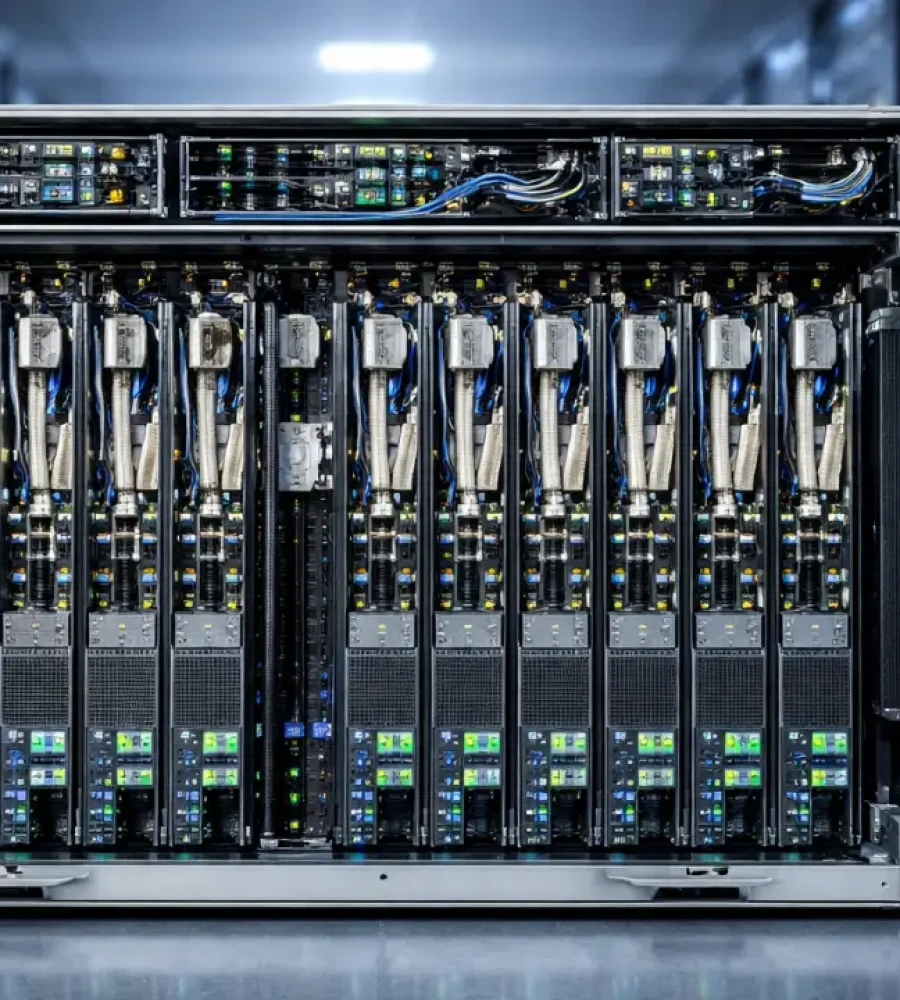
The smart solution lies in edge computing. Instead of embedding the AI, its capabilities are added externally at the network’s edge. This external intelligence interacts with existing robotic hardware, granting them advanced features like context awareness. These specialized edge AI platforms, often working in tandem with cloud systems, are evolving rapidly. Furthermore, the use of digital twins, virtual factory replicas is becoming standard practice for testing and validating these sophisticated new capabilities before they go live.
The New Math of Automation: Productivity and Precision
Integrating AI and ML into robotics allows manufacturers to improve their financials and solidify market leadership. The core value proposition is the ability to automate a host of tasks previously considered too unpredictable or too complex for traditional robots.
These advanced robots, whether new AI-native models or existing hardware enhanced at the edge, deliver tangible operational benefits across four dimensions:
- Productivity and Efficiency: Robots offer 24/7 continuous operation, leading to higher output and shorter production cycles. They perform tasks with greater speed than human operators, and by handling tedious or dangerous work, they naturally help lower direct labor costs.
- Quality and Consistency: The machines meticulously follow instructions, ensuring every product meets the same high standard. Their precision drastically reduces waste and scrap, thereby improving yields and lowering material costs.
- Workplace Safety: Robots are deployed for hazardous tasks (extreme heat, toxic materials) and eliminate the need for humans to perform repetitive, strenuous motions that cause injury and fatigue.
- Flexibility and Agility: Unlike fixed automation, these systems can be quickly reprogrammed and redeployed for different products or models. This agility allows the factory to rapidly scale up or switch production lines with minimal disruption, responding instantly to market demand.
Crucially, this shift redefines the human role. By offloading routine operations to smarter systems, human experts can focus on innovation, design, and continuous improvement, work that is more cognitively stimulating, helping companies attract and retain high-level talent while securing their market lead against digital-native competitors.
The Humanoid Challenge and the LNN Opportunity
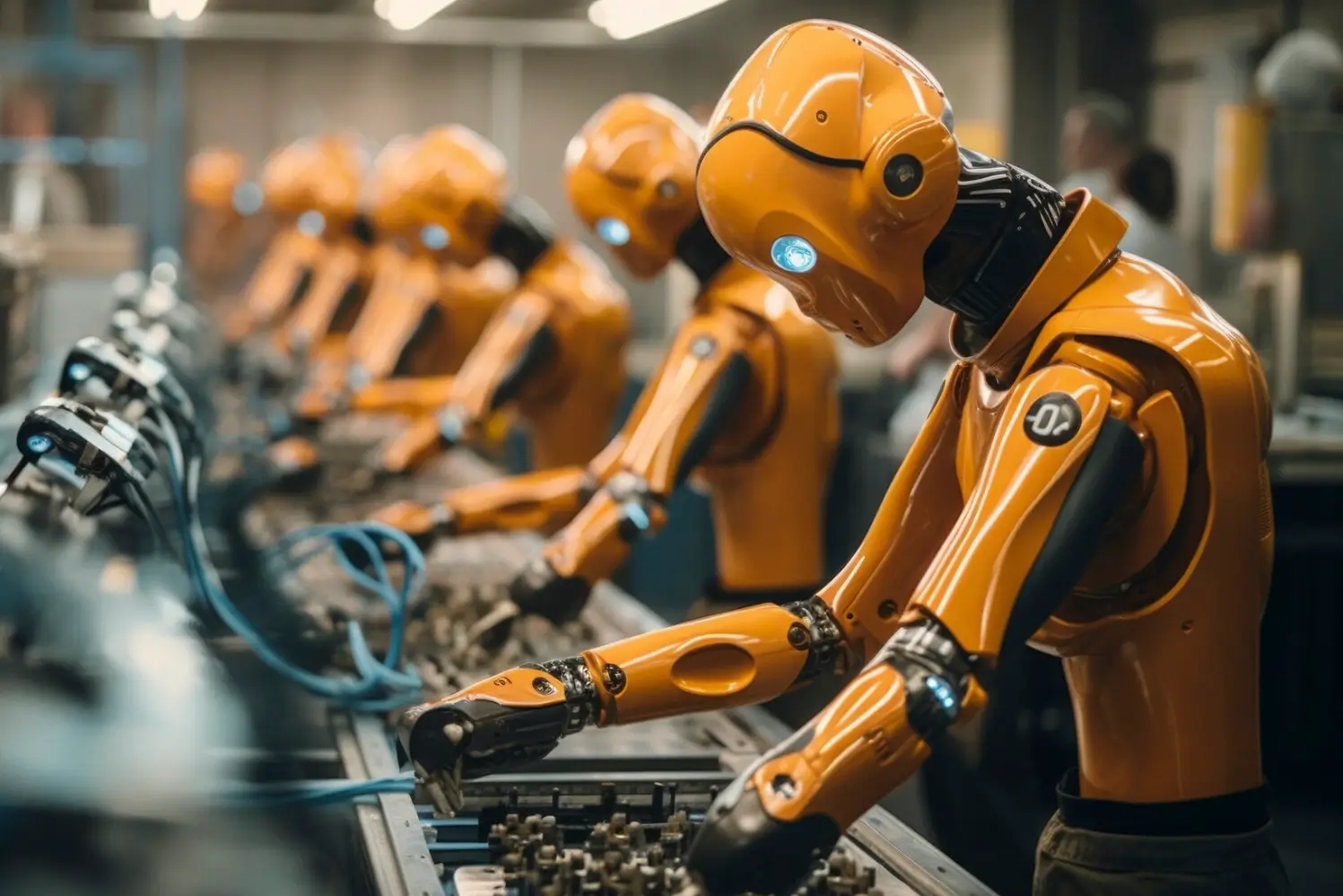
The ultimate expression of flexible automation is the humanoid robot, which can operate within environments and use tools designed for people. However, they face significant hurdles: high cost, limited battery life (often only a few hours), slower speeds compared to specialized industrial machines, complex safety integration, and difficult programming requirements. For now, they are best suited for multi-purpose roles where their ability to work in human-centric spaces is essential.
To realize this future, auto makers must embrace new concepts. One of the most promising is Hybrid AI, which combines generative models with liquid neural networks (LNNs). Unlike resource-hungry large language models, LNNs are easily trained, require minimal computing power, and critically produce explainable and accurate results. This transparency is vital for factory operations and can significantly simplify the validation of new robotic solutions through digital twins.
Ultimately, the goal is not to automate humans out of the loop, but to augment and complement their capabilities. The organization must carefully decide what tasks are safe for robots and what requires human oversight. Most critical is securing the workforce’s trust. Using transparent technologies like LNNs and engaging in honest discussions about the impact of automation is key to ensuring employees learn to collaborate with Physical AI instead of viewing it as a competitor.