
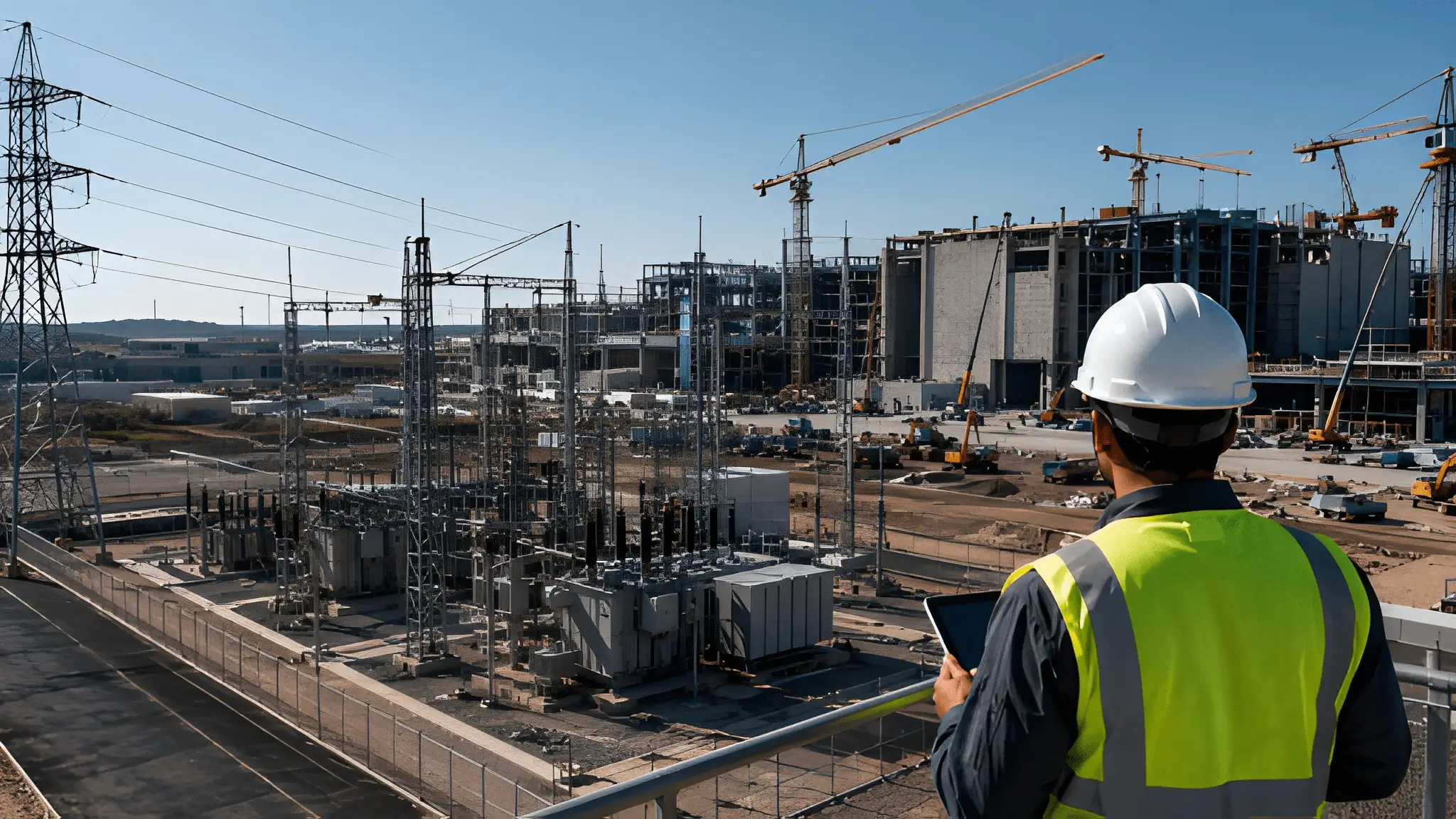
Campus Load has quietly become the first design constraint for large-scale artificial intelligence infrastructure, long before architects discuss buildings or operators specify computing hardware. Projects that once centred on available land now begin with a different question about whether the surrounding electrical network can sustain uninterrupted demand measured in hundreds of megawatts for years instead of hours. That shift changes far more than engineering assumptions because it influences permitting, insurance, transportation planning, emergency preparedness, and the economic priorities of entire communities hosting these developments. Local governments increasingly discover that the arrival of a hyperscale campus requires decisions normally associated with industrial expansion rather than commercial construction alone. Understanding this broader picture explains why infrastructure conversations increasingly begin outside the server hall and inside planning departments, utility offices, and regional development agencies.

This Is What 400MW Actually Feels Like On The Ground
Electrical demand approaching 400MW represents a continuous industrial commitment rather than a temporary operating peak, and that distinction reshapes every surrounding public system before equipment arrives on site. Transmission corridors require additional clearance, substations occupy significant land, and supporting infrastructure expands well beyond the primary campus boundary into neighbouring jurisdictions. Construction traffic often exceeds the expectations created by traditional commercial developments because transformers, switchgear, cooling equipment, and structural materials arrive through coordinated heavy-haul logistics over extended periods. County authorities may evaluate bridge capacities, road geometries, and intersection improvements alongside conventional planning applications when oversized transformers and other high-voltage electrical equipment require specialised transport routes that exceed standard road or bridge limitations. Large industrial construction projects, including major energy and digital infrastructure developments, can temporarily increase demand for local accommodation as specialised contractors, electrical engineers, and long-duration construction teams work on site over extended construction periods.
Population statistics alone rarely reveal the practical consequences of sustained industrial electricity demand because continuous consumption drives planning decisions differently from conventional urban growth patterns. Emergency access routes receive additional scrutiny where high-voltage installations intersect with public roads, while fire departments coordinate specialised response procedures around electrical assets that remain energised throughout normal operations. Acoustic studies also become important since transformers, cooling equipment, and electrical infrastructure produce continuous operational sound that planners must manage through setbacks, barriers, and landscape design instead of relying solely on building placement. Property boundaries consequently expand to include security buffers, maintenance access, drainage systems, and future transmission upgrades that support decades of operation rather than immediate construction requirements. A project described through megawatts on paper therefore becomes a visible civic transformation that affects roads, services, land use, and public expectations before the first computing workload begins operating.
When the Developer Builds the Substation, Who Keeps the Liability?
Utilities traditionally designed, constructed, owned, and maintained the substations connecting major customers to regional transmission systems, creating a clear separation between public network responsibilities and private industrial operations. Growing demand for rapid capacity delivery has encouraged alternative commercial structures where developers finance or directly build dedicated substations before transferring selected operational responsibilities through negotiated agreements with utilities. This arrangement shortens development schedules in certain circumstances, yet it also introduces new legal considerations regarding asset ownership, inspection obligations, maintenance standards, insurance coverage, and operational accountability throughout the infrastructure lifecycle. Responsibility no longer ends at the perimeter fence because contractual definitions determine who manages equipment failures, replacement schedules, access rights, and compliance obligations across interconnected assets. Financial institutions and insurers consequently examine electrical infrastructure ownership with increasing attention because operational risk influences project financing alongside construction performance and tenant commitments.

Insurance discussions surrounding privately developed substations extend well beyond equipment replacement because prolonged service interruptions may affect contractual commitments, tenant operations, financing arrangements, and regional electricity coordination simultaneously. Operators must demonstrate structured maintenance programmes, documented inspection practices, and clearly defined emergency procedures that satisfy regulators, lenders, and insurers throughout the operational lifespan of the installation. Ownership agreements frequently distinguish between transmission assets, interconnection facilities, protective equipment, and operational control because each category carries different legal and financial responsibilities under applicable regulatory frameworks. Consequently, engineering decisions increasingly reflect governance requirements alongside technical performance, encouraging developers to evaluate lifecycle accountability before finalising project architecture. Public utilities continue providing essential network functions, yet privately financed electrical infrastructure expands the range of stakeholders participating in long-term operational responsibility across the connection point.
A Constant Load in a Peak-Designed World
Regional electricity systems evolved around demand profiles that rise and fall through predictable daily and seasonal cycles, allowing operators to balance generation, transmission, and maintenance against changing consumption patterns. A facility requiring approximately 400MW every hour of every day introduces a fundamentally different planning challenge because the demand remains consistently high regardless of morning activity, evening peaks, or overnight reductions. Grid operators already account for large industrial consumers, yet artificial intelligence campuses combine industrial-scale consumption with digital service expectations that tolerate very limited interruptions across continuous operating schedules. Planning agencies therefore evaluate transmission reinforcement, reserve margins, outage coordination, and restoration priorities through a broader regional lens rather than treating a single development as an isolated customer. Existing emergency response frameworks may also require refinement because prolonged interruptions affecting critical computing infrastructure can create economic consequences extending well beyond the host community.
Planning challenges extend beyond electrical engineering because municipalities, emergency services, and regional authorities must coordinate around facilities that consume significant power without following conventional commercial operating patterns. Utility maintenance windows, scheduled transmission upgrades, and contingency planning increasingly require closer engagement with campus operators since interruptions affect infrastructure that supports round-the-clock computational activity. County emergency management teams also benefit from understanding specialised electrical layouts, access controls, hazardous energy procedures, and restoration priorities before unexpected events occur instead of developing those relationships during an incident. Furthermore, infrastructure planning becomes increasingly collaborative because transportation agencies, telecommunications providers, water utilities, and electricity suppliers each influence operational continuity across interconnected public systems. Communities hosting these developments increasingly discover that reliable infrastructure requires planning relationships capable of evolving alongside rapidly expanding electricity demand rather than responding only after capacity constraints emerge.
When a Land Deal Is Really a Power Deal
Large campus acquisitions increasingly reflect infrastructure strategy rather than conventional real estate expansion because electrical connectivity often determines long-term project viability more directly than property size alone. Developers now evaluate transmission proximity, interconnection feasibility, substation parcels, utility easements, and future expansion corridors before assessing architectural flexibility or building configuration across the remaining land. A parcel with direct access to suitable electrical infrastructure may ultimately deliver greater strategic value than substantially larger sites requiring extensive transmission upgrades or prolonged interconnection processes. Legal due diligence consequently extends beyond property ownership into rights-of-way, easement restrictions, environmental obligations, utility coordination agreements, and neighbouring infrastructure plans that could influence future capacity. Site control increasingly includes protecting access for heavy electrical equipment, maintenance activities, transmission expansion, and operational security throughout the expected lifecycle of the development. Land transactions therefore represent infrastructure decisions that combine legal, commercial, engineering, and regulatory considerations into a single long-term investment framework.
Securing the surrounding infrastructure corridor has become almost as important as acquiring the primary development parcel because substations and transmission connections require dependable physical access throughout construction and operation. Easements supporting underground cables, overhead transmission lines, drainage systems, security perimeters, and maintenance routes often influence future expansion opportunities more significantly than unused acreage inside the campus boundary. Investors increasingly examine these supporting assets because infrastructure constraints can delay capacity additions even after computing buildings have completed construction and received occupancy approvals. Negotiations with neighbouring landowners, utilities, transport authorities, and local governments therefore shape project timelines alongside financing and permitting activities. Strategic advantage increasingly belongs to organisations that understand how electrical infrastructure interacts with land ownership instead of viewing property acquisition as an isolated commercial transaction. The competitive landscape consequently extends beyond buildings into the surrounding network of physical rights that enables reliable power delivery over several decades.
The Memo Didn’t Reach the Grid, It Reached Main Street
Hyperscale infrastructure has entered a phase where electrical access increasingly determines project feasibility before construction schedules, equipment procurement, or tenant commitments receive final approval. Developers now participate directly in infrastructure delivery because waiting for conventional utility expansion does not always align with commercial deployment timelines or contractual obligations. That participation extends beyond financing substations into accepting long-term operational responsibilities that previously remained within the traditional utility domain. Communities consequently encounter projects whose supporting electrical infrastructure resembles privately funded public works while continuing to operate within existing regional utility frameworks. Local planning discussions therefore expand from questions about employment and tax revenue toward broader considerations involving resilience, emergency preparedness, infrastructure governance, and future regional growth. Decisions made during early power planning increasingly shape the economic and operational relationship between campuses and surrounding communities for decades after construction finishes.
Future campus development will likely continue reflecting this shift because electricity has become a strategic asset that influences location decisions as strongly as connectivity, workforce availability, and capital investment. Private investment in substations, transmission connections, and supporting infrastructure does not replace the public grid, yet it changes how responsibilities, financial risks, and operational accountability are distributed across participating organisations. Regional authorities, utilities, developers, insurers, lenders, and emergency services increasingly succeed through coordinated planning rather than independent decision-making because each stakeholder influences the reliability of the overall system. Electrical infrastructure has therefore become an integral element of civic planning rather than an invisible service supporting digital facilities from a distance. The changing relationship between private infrastructure investment and public utility systems suggests that the next generation of large computing campuses will influence not only electricity networks but also the long-term planning priorities of the communities that host them.











