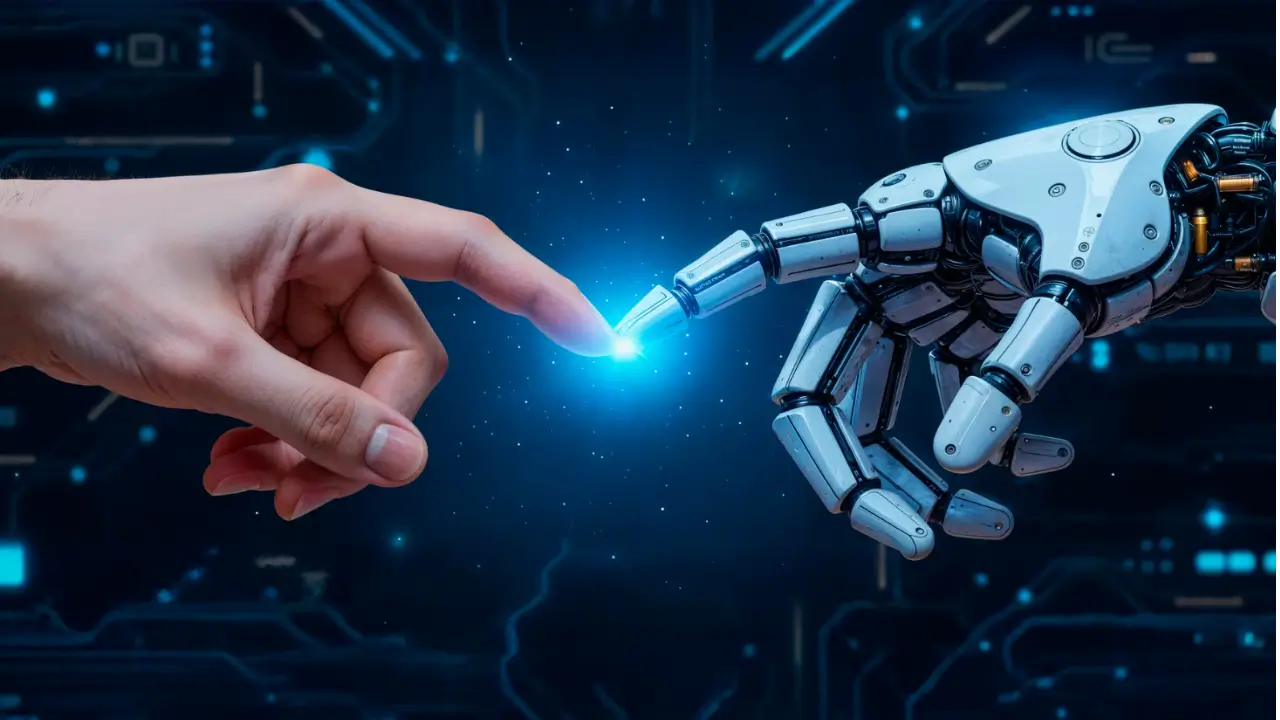
Advances in physical AI, computer vision, edge computing, and electromechanical design are enabling machines to operate in open-ended, real-world environments rather than tightly controlled industrial cells. As a result, robots no longer rely on rigid scripts. Instead, they can increasingly see, reason, and act with a high degree of autonomy.
This evolution carries significant economic and operational consequences. Today, industries demand continuous operations, higher quality thresholds, and safer collaboration between humans and machines. Under these pressures, robotics has shifted from experimental pilots to scalable, production-grade automation. Consequently, AI-native robotics is emerging as a new industrial layer. Capgemini’s latest robotics initiative, built on Intel’s edge AI and vision stack, reflects this turning point.
Project REACH
With decades of experience across automation, AI, embedded systems, and edge computing, Capgemini brings deep domain expertise to its robotics strategy. At the center of this effort is Project REACH, an initiative that illustrates how tightly AI is now woven into robotic system design. Led by Kevin Cloutier, North American Director of Robotics, the project demonstrates a model where robotics and AI evolve as a single, unified system rather than as parallel technologies.
At its core, Project REACH is built on four technical foundations. First, human-level perception combines Intel RealSense™ depth cameras with Capgemini’s Geti™ platform to detect objects, track motion, and adapt to changing environments. Second, robotic manipulation relies on collaborative robots such as the UR5e, supported by inverse kinematics, dynamic path planning, and ROS 2–based control to deliver precise yet flexible movement.
In addition, the platform’s modular architecture allows teams to swap sensors, cameras, and robotic components without redesigning the entire system. An end-to-end AI pipeline further enables engineers to train and deploy models locally using Geti and OpenVINO™, reducing development cycles from weeks to hours. Together, these capabilities replace rigid automation with systems designed to evolve over time.
Vision-Language-Action Redefines Robotic Intelligence
Beyond perception and motion, the second phase of Project REACH introduces contextual understanding. By integrating Vision-Language-Action (VLA) models, robots can link visual input with natural language and translate that understanding into action. Moreover, World Models and advanced simulation allow machines to reason about their surroundings, anticipate change, and plan accordingly.
This represents a fundamental shift in how robotic intelligence is structured. Rather than executing isolated tasks, robots gain the ability to operate in unpredictable environments such as warehouses, factory floors, and outdoor sites. For example, they can adapt workflows, collaborate safely with humans, and respond intelligently to exceptions. Capgemini positions this capability as a foundation for autonomous systems designed to scale across industries instead of remaining confined to narrow use cases.
Edge Computing Makes Physical AI Operational
Crucially, Intel’s heterogeneous edge computing architecture underpins the entire system. Intel® Core™ Ultra Processor Series 2 handles motion control on CPUs, while NPUs and GPUs manage vision and inference workloads. As a result, the platform delivers high performance within a compact, energy-efficient form factor suited for edge deployment.
Meanwhile, RealSense cameras provide depth perception and spatial awareness, while OpenVINO accelerates model optimization and deployment. A robotic vision control framework then connects perception, planning, and action through ROS 2. Together, these components enable robots to operate locally with low latency and minimal reliance on cloud infrastructure.
The implications span multiple sectors. In manufacturing, robots now perform inspection, orientation, and high-mix handling with consistent accuracy. In logistics, AI-driven perception supports parcel classification, palletizing, and truck loading. Similarly, healthcare benefits from deterministic edge computing for precise surgical assistance and rehabilitation, all while preserving data privacy. In agriculture and infrastructure, autonomous robots inspect crops, turbines, and pipelines across large, remote environments.
Ultimately, Capgemini and Intel are not presenting a speculative vision. Instead, they are delivering a deployable, scalable robotics stack engineered for real-world conditions. As physical AI continues to mature, this collaboration signals a broader shift in automation, one where intelligence moves decisively to the edge, and robotics becomes an adaptive, system-level capability rather than a fixed industrial tool.