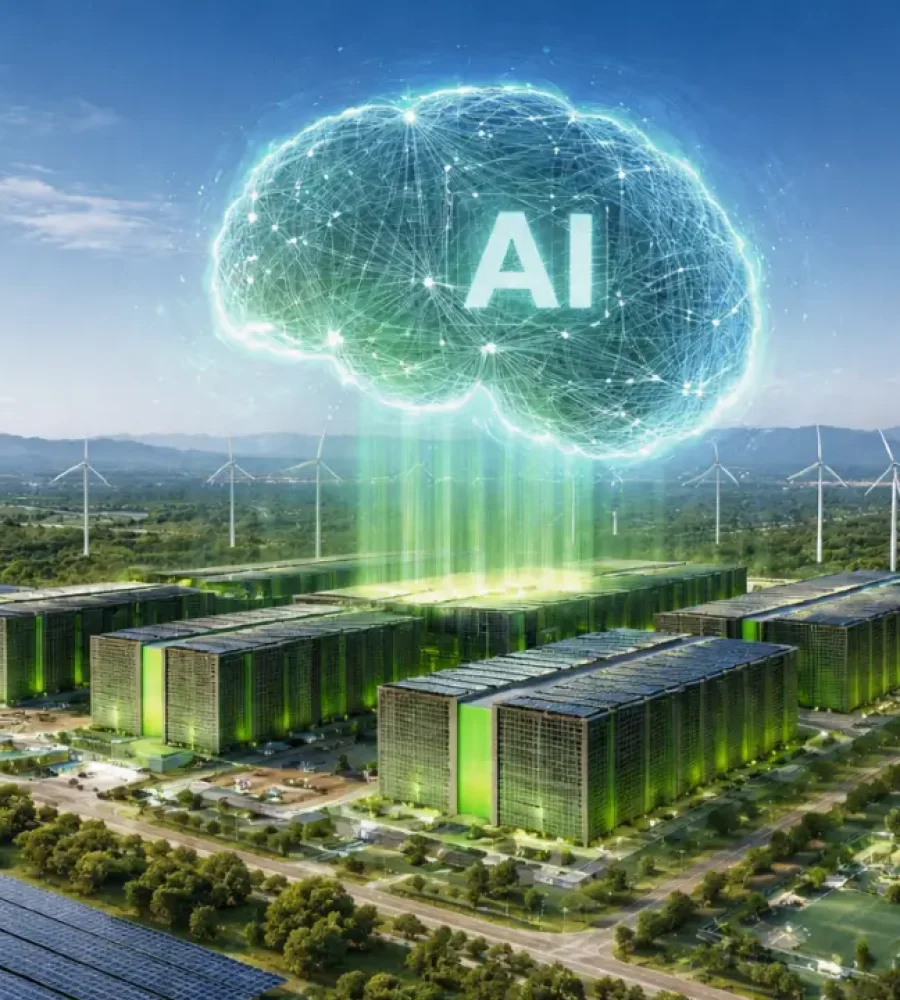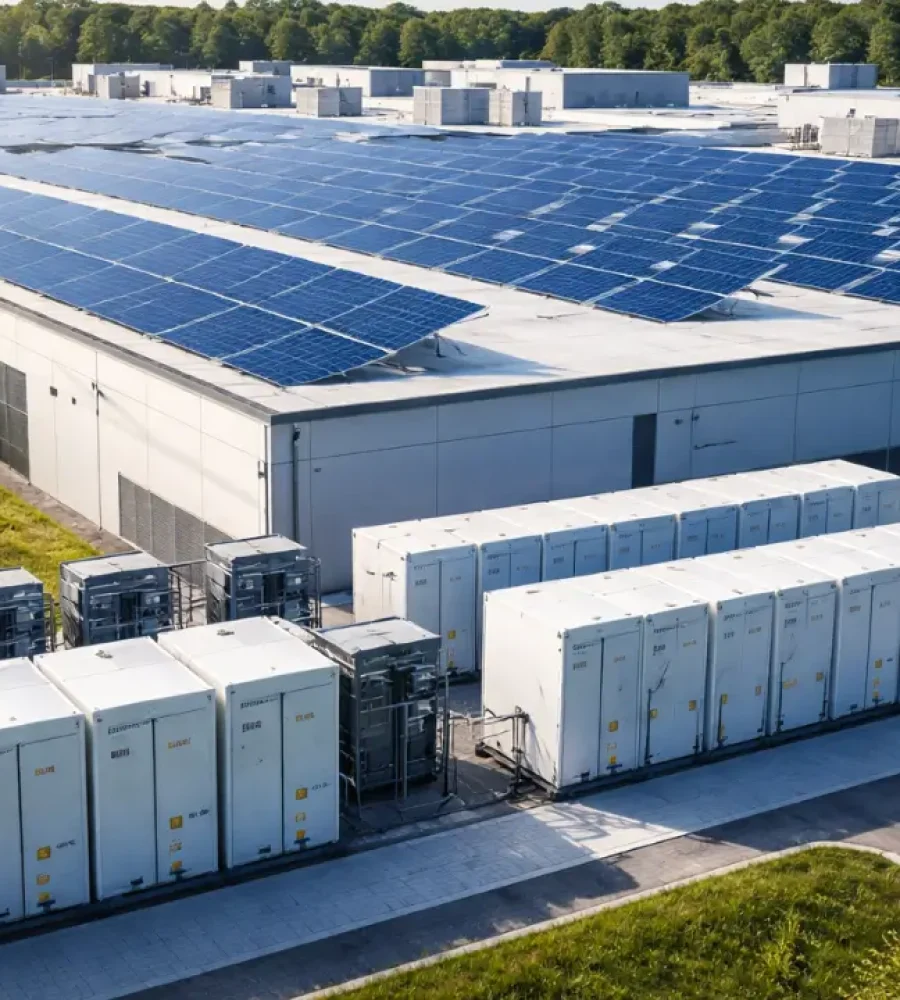
The next transformation is unfolding inside the world’s most advanced computing environments, and it does not begin with new hardware or larger facilities. Engineers once treated sustainability as a matter of power procurement or cooling design, yet a new discipline now embeds environmental awareness directly into the logic that runs applications. The modern data center no longer operates as a static consumer of electricity, because software increasingly interprets the carbon intensity of grids in real time. Workloads that once ran without regard to energy context now respond to signals from renewable generation and regional power conditions. This evolution signals that efficiency has become a dynamic software problem rather than a purely mechanical one. The next chapter of digital infrastructure will hinge on how intelligently code can interpret the energy systems that sustain it.
Digital infrastructure expanded rapidly over the past decade as cloud adoption, artificial intelligence, and edge computing reshaped enterprise IT strategies. Operators invested heavily in resilient facilities and renewable power purchase agreements to reduce environmental impact. Those measures improved the supply side of sustainability but rarely influenced how applications consumed compute resources. Today, orchestration platforms ingest carbon intensity data alongside performance metrics to determine where and when tasks should execute. The shift transforms sustainability from an external commitment into an operational parameter embedded within runtime decisions. Enterprises now recognize that environmental responsibility must coexist with latency, reliability, and cost objectives inside the same control plane.
Sustainability Moves Into the Software Layer
Sustainability has migrated from facility blueprints into the core of operating systems and schedulers that manage compute clusters. Developers now integrate carbon signals into workload orchestration frameworks, enabling platforms to prioritize execution in regions powered by cleaner energy sources. Container orchestration engines evaluate energy metadata in parallel with resource availability to determine optimal placement. Virtual machines spin up in zones where grid conditions align with environmental policies encoded in infrastructure templates. Engineering teams design abstractions that expose carbon intensity as a first-class variable alongside CPU and memory. This integration represents a structural shift in how software interprets the physical world that powers it.
Operating systems once optimized solely for throughput and uptime, yet sustainability logic now shapes kernel-level scheduling experiments in advanced research environments. Cloud-native architectures provide hooks that allow policy engines to communicate with infrastructure controllers in near real time. Platform engineers build middleware layers that translate grid signals into actionable deployment constraints. These constraints influence autoscaling events, batch scheduling windows, and even database replication strategies. Sustainability has therefore become a programmable attribute rather than a static report generated after consumption occurs. Organizations that embrace this paradigm treat environmental impact as a runtime condition instead of a retrospective metric.
Carbon awareness inside software also alters how enterprises think about architecture reviews and procurement decisions. Technology leaders increasingly ask whether orchestration stacks support dynamic routing based on energy context before approving new deployments. Vendors respond by embedding APIs that expose grid carbon intensity feeds to application developers. Teams experiment with time-shifting non-critical workloads to periods of renewable abundance without compromising service-level agreements. Sustainability officers collaborate directly with platform architects to codify environmental objectives into technical specifications. The software layer now carries accountability for climate alignment in ways that extend far beyond marketing commitments.
Dynamic Workload Shifting in an Energy-Constrained Era
Energy systems experience variability due to weather patterns, transmission constraints, and fluctuating demand across regions. Orchestration engines increasingly interpret these fluctuations as signals that influence workload placement decisions. Batch analytics jobs, training runs, and non-latency-sensitive tasks can migrate across geographies where renewable generation currently peaks. Real-time dashboards feed carbon intensity data into scheduling algorithms that weigh environmental impact against latency requirements. This approach does not sacrifice performance because policy thresholds ensure critical applications remain anchored to stable environments. Dynamic workload shifting therefore introduces environmental agility into compute strategies without undermining reliability.
Advanced orchestration platforms leverage distributed tracing and predictive modeling to anticipate energy conditions hours ahead. They adjust execution windows for flexible tasks in response to forecasted renewable output. Grid-aware scheduling reduces exposure to carbon-intensive peaks by proactively aligning compute demand with cleaner supply. Infrastructure controllers coordinate across multiple availability zones to maintain redundancy while optimizing environmental outcomes. Enterprises that operate hybrid environments can shift workloads between on-premises clusters and public clouds depending on regional energy characteristics. This capability marks a departure from static capacity planning toward adaptive environmental alignment.
Workload shifting also introduces governance challenges that require careful policy design. Organizations must define acceptable trade-offs between latency, cost, and carbon reduction objectives before automating decisions.Monitoring systems validate that dynamic routing does not compromise compliance or data residency requirements. Enterprises that operate in regulated industries implement guardrails that prevent unintended cross-border data movement. Dynamic orchestration succeeds only when technical agility aligns with legal and operational frameworks.
Hyperscale Infrastructure Meets Carbon Intelligence
Hyperscale cloud providers invest in proprietary control planes that manage millions of servers across global regions. These platforms increasingly provide carbon reporting dashboards and sustainability APIs that inform customers’ provisioning and scaling decisions, though core automated provisioning systems do not yet universally optimize based on real-time carbon intensity. Some research initiatives and pilot programs explore how regional grid intensity could influence capacity assignment for large-scale training clusters, but such mechanisms are not widely documented as standard operational practice. AI workloads that demand substantial compute resources can shift to facilities powered by abundant renewable generation. Cloud dashboards increasingly display environmental attributes alongside pricing tiers and performance specifications. Carbon intelligence has become part of the architectural vocabulary that shapes infrastructure design at scale.
Artificial intelligence clusters amplify the urgency of carbon-aware orchestration because training models consume significant energy over extended periods. Research teams and sustainability-focused initiatives within hyperscale environments are experimenting with scheduling strategies that explore temporal flexibility in research workloads. Model training jobs may pause and resume in response to energy availability without losing progress. Storage systems coordinate checkpoints to ensure continuity across shifting compute environments. Hyperscale operators provide performance telemetry as standard practice, and several now offer environmental reporting data through separate sustainability dashboards rather than fully unified real-time observability frameworks. This convergence allows decision engines to balance throughput with sustainability in real time.
Cloud providers also collaborate with energy utilities to gain granular visibility into grid conditions. Data sharing agreements enable near-instant updates on renewable generation patterns and transmission constraints. Current sustainability offerings typically allow customers to view carbon intensity data and manually incorporate it into region selection decisions, rather than provisioning systems automatically shaping autoscaling events based on those signals. Customers gain transparency into how their workloads align with environmental objectives through detailed reporting interfaces. Carbon intelligence thus becomes a service feature rather than an invisible backend function.Hyperscale infrastructure increasingly positions sustainability as a strategic pillar of operational excellence, primarily through reporting transparency, renewable procurement, and advisory tooling.
The Rise of Policy-Driven Compute Governance
Policy-driven governance extends beyond deployment pipelines into runtime enforcement mechanisms. Control planes continuously evaluate workloads against predefined sustainability thresholds. Automated remediation scripts can reschedule non-critical processes if grid conditions deteriorate unexpectedly. Audit logs capture environmental decision paths to support internal reporting and regulatory disclosures. Enterprise architects align these controls with broader environmental, social, and governance strategies. Compute governance now reflects a holistic view of responsibility that spans technology and corporate leadership.
Developers and operators both play essential roles in operationalizing policy-driven sustainability within distributed systems. Engineering teams design modular architectures that support portability across regions and providers. Operations staff monitor telemetry streams that reveal how policy rules influence performance and cost. Cross-functional collaboration ensures that environmental objectives do not conflict with customer experience commitments. Training programs educate technical teams about interpreting carbon intensity data in practical contexts. Policy-driven compute governance thrives when organizational culture supports experimentation and accountability.
From Optimization to Competitive Differentiation
Carbon-aware orchestration increasingly differentiates cloud providers in competitive procurement processes. Enterprise customers evaluate environmental capabilities when selecting long-term infrastructure partners. Providers that expose transparent carbon data and adaptive scheduling features strengthen their value propositions. Sovereign compute initiatives consider carbon intelligence as part of national digital strategy frameworks. Competitive positioning therefore extends beyond price and performance toward demonstrable environmental integration. Market dynamics now reward platforms that align compute capabilities with responsible energy stewardship.
Startups entering the infrastructure market design platforms that treat carbon awareness as a foundational principle rather than a retrofit. Venture capital firms assess sustainability features as indicators of long-term resilience and regulatory readiness. Governments exploring digital sovereignty initiatives evaluate whether domestic cloud ecosystems can support carbon-aligned compute models. Industry alliances publish interoperability standards that facilitate sharing of energy data across providers. This ecosystem-level collaboration accelerates adoption of environmentally intelligent orchestration practices. Competitive differentiation emerges from the ability to operationalize sustainability at scale.
Carbon-aware capabilities also influence enterprise brand narratives and stakeholder engagement strategies. Organizations communicate how intelligent workload placement reduces environmental impact without sacrificing service quality. Sustainability reports increasingly reference software-level innovations alongside renewable procurement achievements. Corporate boards scrutinize technology roadmaps for evidence that digital growth aligns with climate commitments. Customers and partners respond positively to demonstrable integration of environmental logic into core operations. Competitive advantage thus arises from credibility rooted in technical execution rather than aspirational statements.
Embedding Climate Logic Into the Future of Compute
The evolution of digital infrastructure now hinges on the convergence of software intelligence and energy system awareness. Carbon signals flow into orchestration engines that interpret them as actionable inputs rather than abstract indicators. Architects design platforms that balance latency, resilience, and environmental alignment within unified control planes. Enterprises codify sustainability policies into pipelines that shape every deployment decision. The compute stack increasingly reflects the rhythms of renewable generation and grid variability. Future competitiveness will depend on how effectively organizations embed climate logic into the core of their software ecosystems.