
Inside every data center, an invisible exchange unfolds as electricity fuels computation and leaves behind concentrated warmth. That warmth, once expelled through ventilation and evaporative systems, represented a cost center rather than an opportunity. Engineers historically designed facilities to extract heat as efficiently as possible, rarely considering its downstream utility. However, tightening energy markets, sustainability commitments, and denser urban footprints now reshape how decision-makers interpret thermal byproducts. Closed-loop cooling heat reuse integration introduces a disciplined method for capturing and channeling that energy into productive pathways. Instead of treating heat as excess, forward-looking operators evaluate it as an asset that can strengthen both financial models and community partnerships. This evolution reflects a deeper strategic alignment where cooling systems, city infrastructure, and industrial ecosystems converge within a unified energy vision.
Reframing Thermal Output: From Operational Burden to Strategic Resource
Executive teams once confined thermal discussions to facilities management meetings, where engineers debated airflow, redundancy, and equipment protection. Today, however, sustainability officers, urban planners, and finance leaders increasingly participate in those same conversations, particularly in regions with strong decarbonization mandates. While not yet universal across the global industry, a growing number of operators now evaluate thermal output as a potential secondary energy stream rather than simply excess heat. This evolution often emerges where regulatory frameworks, urban density, or district heating infrastructure create viable pathways for reuse. In parallel, procurement and energy strategy teams assess infrastructure investments with recovery potential in mind rather than defaulting to heat rejection. As a result, heat begins to transition from operational overhead to a conditional strategic asset in forward-looking infrastructure planning.
Such a reframing also demands cultural alignment across engineering, sustainability, and corporate development functions. Engineers must design systems that stabilize and channel thermal output instead of expelling it unpredictably. Sustainability teams must articulate how reuse supports climate commitments without compromising reliability. Financial planners must evaluate return on investment models that include external heat offtake agreements. Consequently, organizations begin to map their thermal profiles with the same rigor applied to power sourcing strategies. Through this alignment, thermal output earns recognition as a controllable energy stream capable of strengthening both resilience and regional partnerships.
Closed-Loop Cooling as the Foundation for Controlled Heat Capture
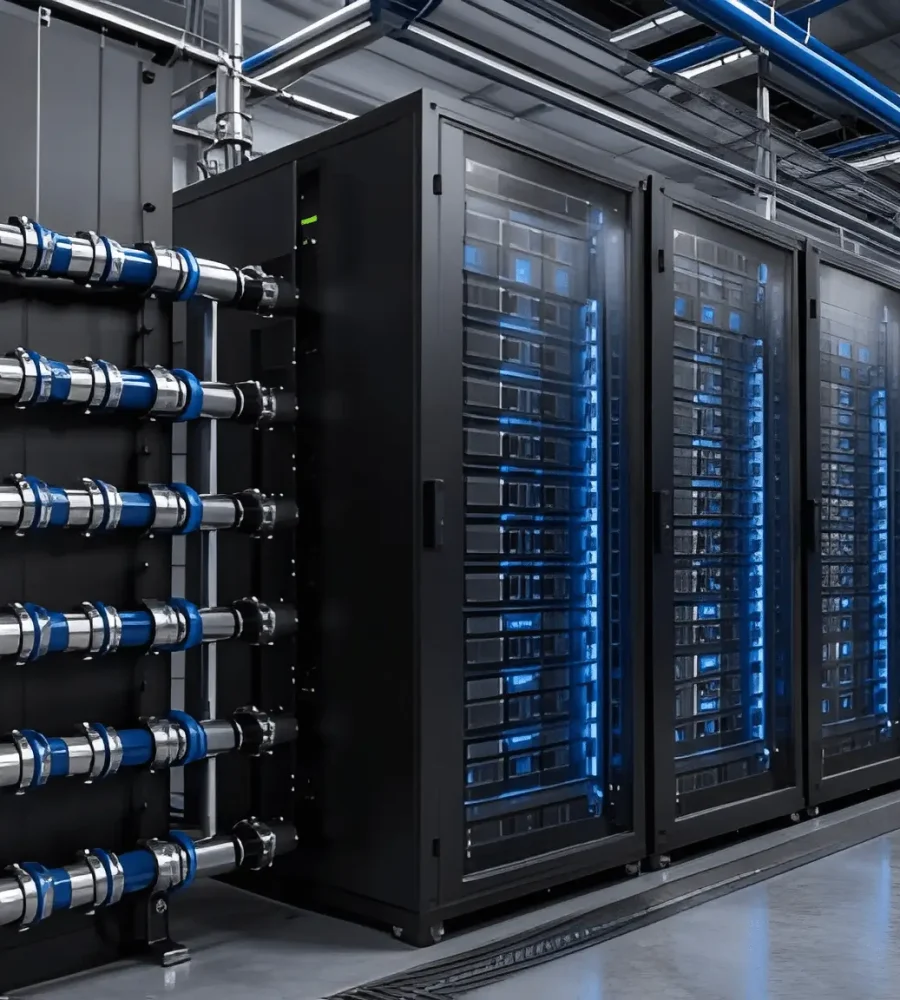
Stable heat reuse begins with predictable thermal behavior, and predictable behavior depends on architecture rather than aspiration. Traditional air-based systems disperse heat unevenly, making capture inefficient and inconsistent. In contrast, liquid-based closed-loop designs circulate coolant directly to heat-generating components and return it through sealed pathways. This containment ensures that thermal energy remains concentrated within a defined circuit instead of diffusing into ambient air. Operators gain precise control over temperature gradients, flow rates, and heat exchanger interfaces. Therefore, controlled circulation becomes the technical enabler that transforms heat from ambient byproduct into recoverable asset.
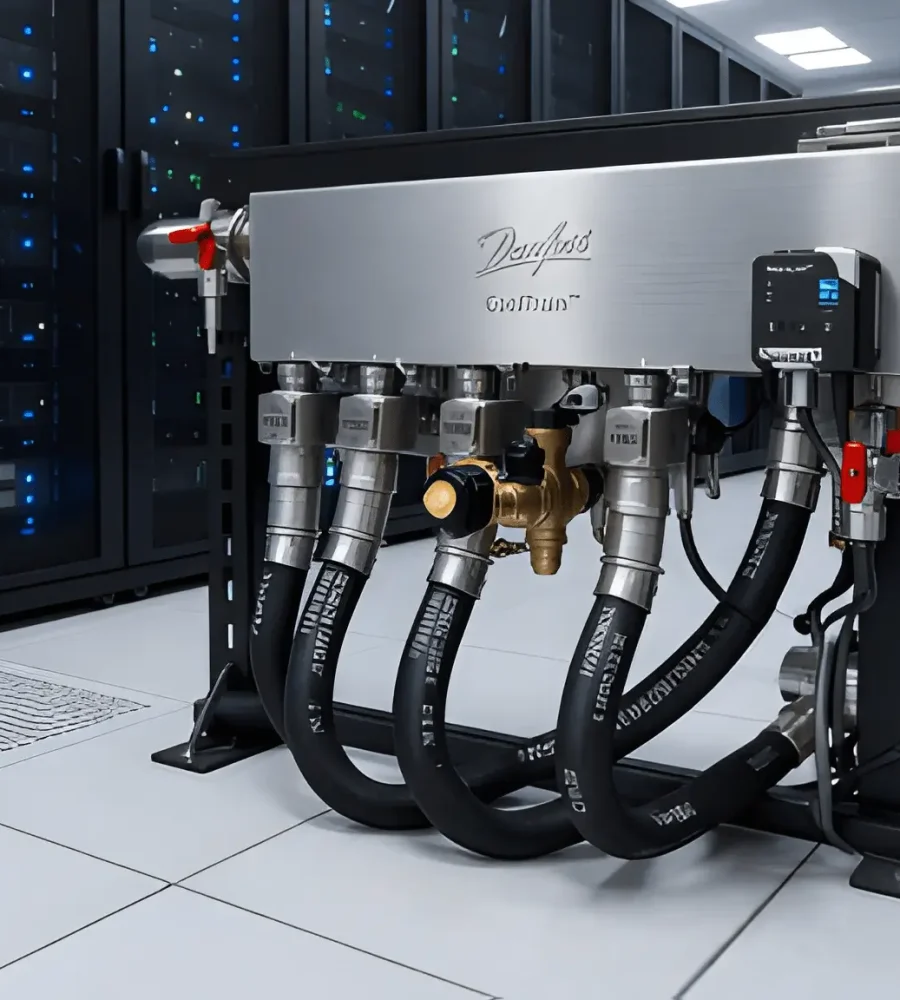
Within these systems, heat exchangers serve as bridges between compute environments and external reuse infrastructure. Plate or shell-and-tube exchangers transfer energy from primary cooling loops to secondary distribution networks without mixing fluids. This separation protects mission-critical equipment while allowing downstream integration with district or industrial systems. Engineers design redundancy into pumps, sensors, and control valves to ensure that recovery does not compromise uptime. Moreover, monitoring platforms track thermal loads in real time, enabling operators to balance performance with recovery targets. Through disciplined engineering, closed circuits create the reliability conditions that make reuse technically viable at scale.
Designing for Reuse from Day One: Architectural Considerations
Retrofitting heat reuse onto an existing facility introduces constraints that early-stage planning can avoid. Developers who anticipate recovery integrate piping corridors, mechanical rooms, and energy transfer stations into the master layout from inception. This foresight prevents spatial conflicts and reduces the need for disruptive structural modifications later. Architects collaborate with mechanical engineers to align server hall orientation, plant placement, and external connection points. Urban planners contribute insight into nearby heating networks or industrial clusters that may absorb thermal output. By embedding reuse into the blueprint, organizations secure long-term flexibility without compromising design integrity.
Site selection also evolves when heat reuse enters the equation. Operators assess proximity to residential districts, manufacturing zones, or agricultural facilities that require steady thermal input. They analyze topography and underground routing possibilities for insulated piping. Additionally, developers evaluate regulatory frameworks that govern energy exchange between private facilities and public infrastructure. This holistic evaluation transforms location strategy from purely connectivity-driven to ecosystem-oriented. Consequently, the data center becomes not an isolated fortress of compute but a planned participant in regional energy flows.
District Heating and Urban Integration: Connecting Data Centers to Cities
Across colder climates, municipalities maintain district heating systems that circulate hot water to residential and commercial buildings. These networks traditionally rely on fossil-fuel boilers or combined heat and power plants to maintain supply temperatures that often exceed the direct output of standard air-cooled data centers. When data centers integrate captured heat into these systems, they frequently deploy heat pumps to elevate temperatures to network specifications. This technical requirement introduces additional capital expenditure and operational coordination, which means feasibility depends heavily on local infrastructure and policy support. City planners therefore evaluate proximity, temperature compatibility, and long-term contractual reliability before establishing connections. Through structured agreements and appropriate thermal upgrading systems, digital infrastructure can meaningfully contribute to urban heating networks where conditions align.
Urban integration, however, requires synchronization between compute load profiles and seasonal heating demand. Winter months align naturally with higher heating requirements, while summer periods may create surplus capacity. To address this variability, planners incorporate thermal storage solutions such as insulated water tanks or underground reservoirs. These buffers smooth fluctuations and allow excess heat to remain available during peak demand windows. Furthermore, contractual models specify minimum delivery thresholds without jeopardizing data center redundancy. In this coordinated ecosystem, both city and operator gain resilience through shared infrastructure planning.
Industrial Symbiosis: Powering Manufacturing with Recovered Thermal Energy
Manufacturing facilities often require low- to medium-grade heat for drying, washing, pasteurization, or chemical processing, although temperature thresholds vary significantly by sector. When located near compute campuses and when thermal quality aligns with process requirements, these plants can integrate recovered heat into their operations. Co-location strategies reduce transmission losses and simplify insulated piping infrastructure, which strengthens economic viability. However, successful implementation requires engineered interface stations that regulate temperature and pressure precisely to match production specifications. Industrial partners must also evaluate reliability assurances before integrating external heat streams into continuous processes. Through carefully designed collaboration, digital workloads can support selected manufacturing applications without introducing operational risk.
Greenhouses represent another compelling beneficiary of reclaimed heat. Controlled-environment agriculture relies on consistent warmth to sustain crop cycles throughout colder seasons. By channeling thermal output into greenhouse heating systems, operators enable local food production with reduced energy intensity. Agricultural managers coordinate planting schedules with anticipated compute growth to ensure stable thermal supply. This proximity fosters a localized energy loop that strengthens food resilience alongside digital capacity. Industrial symbiosis therefore extends beyond factories into broader economic ecosystems shaped by shared infrastructure.
Operational Continuity: Aligning Heat Reuse with Core Compute Performance
Mission-critical environments demand unwavering reliability, and any reuse initiative must respect that priority above all external distribution goals. Engineers design control systems that automatically prioritize internal cooling loops before allocating thermal energy to secondary networks. When compute loads spike unexpectedly, automated valves and control logic retain additional heat within primary circuits to maintain temperature stability. Redundant chillers, pumps, and backup power systems support this hierarchy, ensuring that recovery systems never override core uptime requirements. Achieving this balance requires advanced monitoring platforms, predictive modeling, and disciplined operational governance. With appropriate engineering safeguards in place, heat recovery can operate alongside compute performance without compromising service continuity.
Load variability introduces additional complexity because compute intensity does not always align with heating demand. Advanced analytics platforms forecast workload patterns and correlate them with thermal output projections. Facility managers coordinate with municipal or industrial partners to communicate anticipated fluctuations. Maintenance schedules for pumps, exchangers, and distribution lines align with lower demand windows to minimize impact. Integrated monitoring dashboards provide visibility across both compute and thermal domains. As a result, organizations maintain operational continuity while sustaining energy contribution commitments.
The Emergence of Thermal Ecosystems Around Compute Infrastructure
Digital infrastructure once stood apart from urban energy systems, operating as enclosed facilities that consumed electricity and expelled heat without further engagement. That separation no longer reflects the realities of modern infrastructure planning. Through architectural foresight, engineered containment, and cross-sector partnerships, operators now position data centers as contributors to regional energy resilience. Closed-loop cooling enables precise capture, while district and industrial networks provide meaningful outlets for reuse. Leadership alignment ensures that performance integrity and sustainability objectives advance together rather than in tension. Consequently, compute campuses evolve into nodes within broader thermal ecosystems that connect technology, cities, and industry in a shared purpose.
As energy systems decarbonize and urban density increases, this integrated model will likely define future infrastructure development. Developers who anticipate thermal collaboration during planning stages will secure stronger regulatory alignment and community support. Municipalities that welcome digital facilities as energy partners may accelerate their own sustainability transitions. Industrial operators that align with compute hubs can stabilize energy costs while reducing emissions intensity. These converging interests form the foundation of a new infrastructure paradigm where heat flows carry strategic significance. In that landscape, thermal output ceases to represent operational excess and instead becomes a measurable contribution to the regions that host the world’s growing digital backbone.