
NVIDIA H200 shipments delayed to Q3  · BREAKING: Microsoft confirms 3GW data centre expansion in Asia-Pacific ·  AWS announces new sovereign cloud regions in India and UAE  · Arm-based servers now 24% of hyperscale deployments ·  EU AI Act enforcement enters phase two  · Global data centre investment hits $612B in 2026 ·  TSMC Arizona yields improve to 68% on 3nm process  · OpenAI valuation reaches $400B after latest funding round ·  NVIDIA H200 shipments delayed to Q3  · BREAKING: Microsoft confirms 3GW data centre expansion in Asia-Pacific ·  AWS announces new sovereign cloud regions in India and UAE  · Arm-based servers now 24% of hyperscale deployments ·  EU AI Act enforcement enters phase two  · Global data centre investment hits $612B in 2026

The Next Data Center You Build Has to Serve Two Fundamentally Different Workloads

The Next Data Center You Build Has to Serve Two Fundamentally Different Workloads  The data center industry spent the past

Share
data center training inference design two workloads AI infrastructure 2026 GPU cluster serving

The Next Data Center You Build Has to Serve Two Fundamentally Different Workloads 

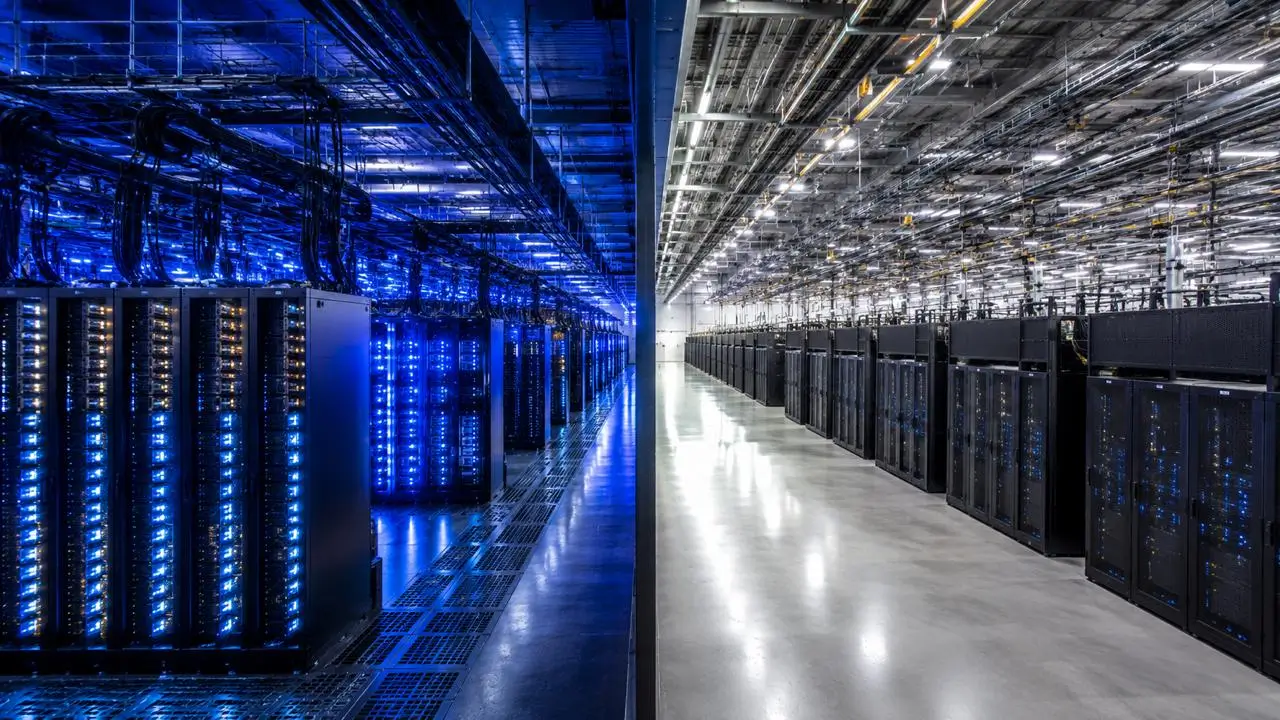
The data center industry spent the past three years designing for one thing: AI training. The race to deploy GPU clusters for large model training defined the architecture, the power density, the network topology, and the cooling systems of the AI data centers that came online between 2023 and 2025. Training workloads connect tens of thousands of GPUs in tightly coupled clusters where every node must communicate with every other node at microsecond latency. The network is optimised for collective communication patterns. The rack density pushes toward the maximum that cooling systems can support. The facility is built around synchronisation as its primary design principle. 

The inference era has arrived simultaneously with the training era rather than following it sequentially, and that simultaneity is creating a design challenge that the industry has not yet fully worked through. Ram Nagappan, vice president of AI infrastructure at Oracle Cloud Infrastructure, told Data Center World 2026 that operators must now design for two fundamentally different AI patterns: large-scale training and distributed inference. Training workloads connect tens of thousands of GPUs in tightly coupled clusters where latency and proximity matter. Inference workloads prioritise availability and responsiveness at a broader scale. Those differences cascade through the facility, affecting layout, resilience, and network design. The result is a more complex baseline: a single facility must support both tightly synchronised systems and distributed, user-facing workloads with fundamentally different performance requirements, fundamentally different failure tolerance profiles, and fundamentally different network architectures. 

The Infrastructure Requirements That Pull in Opposite Directions 

The design tension between training and inference is most visible at the network layer. Training clusters require the highest-bandwidth, lowest-latency interconnects available, because the all-to-all collective communication patterns of large model training are performance-limited by network throughput and latency in ways that are directly reflected in training speed and therefore model development cost. Varun Sakalkar, distinguished engineer in Google’s datacenter technology and systems group, noted at Data Center World 2026 that racks which once pushed 30 to 40 kilowatts are now measured in hundreds of kilowatts, with designs approaching the megawatt range, driven by the synchronisation requirements of tightly coupled training clusters. 

Inference workloads generate a different network traffic pattern. Individual inference requests are short, concurrent, and latency-sensitive in a different dimension from training synchronisation latency. An inference endpoint that must respond to thousands of simultaneous user requests needs high throughput for individual connections and low tail latency for user experience, not the tightly synchronised all-to-all bandwidth that training clusters require. The network fabric that is optimal for training, with the highest possible aggregate bandwidth between a small number of tightly coupled nodes, is not the network fabric that is optimal for inference, which requires different routing, different load balancing, and different redundancy patterns. A facility designed solely for training will serve inference workloads with a network architecture that is unnecessarily expensive and operationally complex for the workload it is running. 

The Power and Cooling Implications of Dual-Workload Design 

The power delivery and cooling implications of serving training and inference simultaneously within a single facility compound the network design challenge. Training clusters generate sharp, dynamic load patterns as they cycle between compute-intensive training phases and checkpointing or evaluation phases. Sean James, Nvidia’s distinguished engineer for energy systems, described at Data Center World 2026 how training cluster load variations can be seen all the way back at the power plant, requiring energy storage to smooth those fluctuations, maintain power quality, and meet grid requirements such as ride-through during voltage events. Inference workloads generate more predictable, sustained loads that do not create the same grid-level volatility, but whose continuous nature means that cooling systems must be designed for sustained thermal load rather than the cyclical patterns that training clusters produce. 

A facility that houses both training and inference workloads must design its power delivery, energy storage, and cooling systems for the envelope that covers both load profiles rather than optimising for either. That design envelope is wider and more expensive than either workload would require in isolation. The operators who are managing that cost most effectively are those who have been deliberate about the physical separation of training and inference infrastructure within their facilities, using different cooling architectures, different power distribution designs, and different network topologies for each workload type rather than trying to serve both from a single unified infrastructure design. The rack density threshold forcing a rethink of every data center standard documented how rapidly the density requirements of training-oriented GPU clusters are changing the fundamental engineering assumptions of data center design. The inference dimension adds a second set of requirements that do not move in the same direction as training requirements, creating the dual-optimisation problem that the next generation of data center design must solve. 

What This Means for Site Selection and Development Economics 

The dual-workload design requirement has direct implications for how data center sites are evaluated, how facilities are planned, and how the economics of AI data center development are modelled. A site that is adequate for inference deployment may not be adequate for training deployment because training clusters require power densities, cooling infrastructure, and network fabric specifications that exceed what inference workloads require. A site that is optimal for training may be over-engineered and therefore unnecessarily expensive for the inference workloads that will run alongside training within the same campus. 

The operators who are navigating this challenge most effectively are those who design their campuses with explicit zones for training and inference from the earliest stages of site planning, allocating power capacity, cooling design, and network architecture to each zone based on the specific requirements of the workload type rather than applying a single design specification across the entire facility. That zoned design approach is more complex to plan and build than a uniform facility, but it produces better economics across the full workload lifecycle because each zone is optimised for its specific requirements rather than being over-built for the most demanding workload across the board. The data center design challenge of 2026 is not how to build a training facility or how to build an inference facility. It is how to build a campus that serves both simultaneously, at the density and performance levels that frontier AI requires, without the economic penalty of designing the entire campus to the most demanding specification of either workload type. 

[simple-author-box]

More from AI Infrastructure

Power negotiations often conclude long before operational constraints reveal themselves inside a live facility.

Artificial intelligence infrastructure has compressed deployment timelines to the point where electrical capacity is

Boards increasingly expect organizations to support sustainability reporting with evidence that aligns with governance

COMPUTE WEEKLY

The briefing that 40,000+ tech leaders read every Monday. Sharp, fast, essential.

Great! We’ve received your information.

We couldn’t process your submission. Please retry

Building an AI Startup Without Owning GPUs

Not owning GPUs has become the default, deliberate strategy for building an AI company — not a compromise founders accept reluctantly. H100 rental rates fell 64-75% in fifteen months, a dense ecosystem of neoclouds and inference-as-a-service providers now lets startups skip infrastructure entirely, and credit programs can fund a company’s first year before a founder writes a check
Most Read

Infrastructure planning discussions often prioritize engineering, construction, and utility considerations before examining how end

AI infrastructure deployment schedules depend on coordinated progress across hardware availability, electrical infrastructure, cooling

Artificial intelligence has transformed the economics of digital infrastructure. Every new AI model requires

Data centers do not visibly smoke. They have no smokestacks, no visible exhaust, and

Artificial intelligence has transformed the economics of digital infrastructure. Companies once competed by acquiring

Disruptor Spotlight

Cerebras Systems

The chip that makes Nvidia nervous. Cerebras’ Wafer Scale Engine is rewriting the rules of AI inference at scale.
Faster
0 x
YoY Revenue
0 x
Transistors
0 T
Market Pulse
NVDA
$924.60
-2.11%
MSFT
$421.30
-2.94%
AMZN
$192.80
-4.87%
AMD
$924.60
-2.40%
TSMC
$924.60
-2.32%
Indicative only · Not financial advice
Upcoming Events
SEP
The AI Infrastructure Race (India)
WEBINAR · ONLINE
The AI Infrastructure Race: Won on Power, Land and Trust — Not Capital
MAY
0
AI Infrastructure Summit
DUBAI · IN PERSON
MEA’s premier AI infrastructure event.
JUN
0 0
Compute Forecast Summit
SINGAPORE · IN PERSON
Our flagship APAC event. Early bird open.
Latest Moves
Live
ecolab
Ecolab Deepens Cooling Strategy With $4.75B CoolIT Acquisition
Ecolab is making one of its biggest moves yet into AI infrastructure after completing its $4.75 billion acquisition of liquid cooling specialist CoolIT Systems
Pure DC AVK Europe data center microgrid Dublin 110MW AI infrastructure Ireland 2026
Pure DC and AVK Deploy Europe’s First 110 MW Data Center Microgrid in Dublin
The Pure DC Dublin microgrid has made history as Europe’s first large-scale on-site data center microgrid, launched in partnership with power solutions provider AVK at Pure DC’s campus in Ireland.
Pace Digitek
Pace Digitek Partners With MEGMEET to Expand AI Data Center Power Business
India’s AI infrastructure ecosystem continues to mature as domestic technology manufacturers move beyond traditional telecommunications and industrial markets toward high-growth digital infrastructure opportunities
Follow Compute Forecast
11K followers
1200 followers
Companies to Watch
CW
CoreWeave
Neo Cloud · $19B · IPO Watch
CB
Cerebras Systems
AI Hardware · $4.25B · Pre-IPO
G42
G42
Sovereign AI · Abu Dhabi
H
Humain
Saudi AI · $40B Fund
Latest Podcast
AI Capex, Cloud Margins & the Nuclear Bet
48 MIN · 25 APR 2026

The Next Data Center You Build Has to Serve Two Fundamentally Different Workloads

The Next Data Center You Build Has to Serve Two Fundamentally Different Workloads  The data center industry spent the past

Share
data center training inference design two workloads AI infrastructure 2026 GPU cluster serving
7
847 SHARES

0
SHARES

[simple-author-box]

More from AI Infrastructure

Infrastructure planning discussions often prioritize engineering, construction, and utility considerations before examining how end

AI infrastructure deployment schedules depend on coordinated progress across hardware availability, electrical infrastructure, cooling

Artificial intelligence has transformed the economics of digital infrastructure. Every new AI model requires

Data centers do not visibly smoke. They have no smokestacks, no visible exhaust, and

COMPUTE WEEKLY

The briefing that 40,000+ tech leaders read every Monday. Sharp, fast, essential.

Great! We’ve received your information.

We couldn’t process your submission. Please retry

Global AI Infrastructure Outlook 2026

The briefing that 40,000+ tech leaders read every Monday. Sharp, fast, essential.
Download Free
Most Read

Infrastructure planning discussions often prioritize engineering, construction, and utility considerations before examining how end

AI infrastructure deployment schedules depend on coordinated progress across hardware availability, electrical infrastructure, cooling

Artificial intelligence has transformed the economics of digital infrastructure. Every new AI model requires

Data centers do not visibly smoke. They have no smokestacks, no visible exhaust, and

Artificial intelligence has transformed the economics of digital infrastructure. Companies once competed by acquiring

Disruptor Spotlight

Cerebras Systems

The chip that makes Nvidia nervous. Cerebras’ Wafer Scale Engine is rewriting the rules of AI inference at scale.
Faster
0 x
YoY Revenue
0 x
Transistors
0 T
Market Pulse
NVDA
$924.60
+2.4%
MSFT
$421.30
+1.1%
AMZN
$192.80
-0.6%
NVDA
$924.60
+2.4%
NVDA
$924.60
+2.4%
Indicative only · Not financial advice
Upcoming Events
MAY
0 0
DCD Global — London
LONDON · IN PERSON
World’s largest DC event. CF is media partner.
MAY
0
AI Infrastructure Summit
DUBAI · IN PERSON
MEA’s premier AI infrastructure event.
JUN
0 0

Compute Forecast Summit

SINGAPORE · IN PERSON
Our flagship APAC event. Early bird open.
Latest Moves
  • Live
Sam Altman
OpenAI appoints new Chief Infrastructure Officer to lead $100B DC programme
27 APR · OPENAI
Sam Altman
OpenAI appoints new Chief Infrastructure Officer to lead $100B DC programme
27 APR · OPENAI
Sam Altman
OpenAI appoints new Chief Infrastructure Officer to lead $100B DC programme
27 APR · OPENAI
Follow Compute Forecast
18.4K followers
12.1K followers
9.3K subscribers
41 episodes
Companies to Watch
CW
CoreWeave
Neo Cloud · $19B · IPO Watch
CB
Cerebras Systems
AI Hardware · $4.25B · Pre-IPO
G42
G42
Sovereign AI · Abu Dhabi
CW
Humain
Saudi AI · $40B Fund
Latest Podcast
AI Capex, Cloud Margins & the Nuclear Bet
48 MIN · 25 APR 2026
Scroll to Top









