 Skip to content
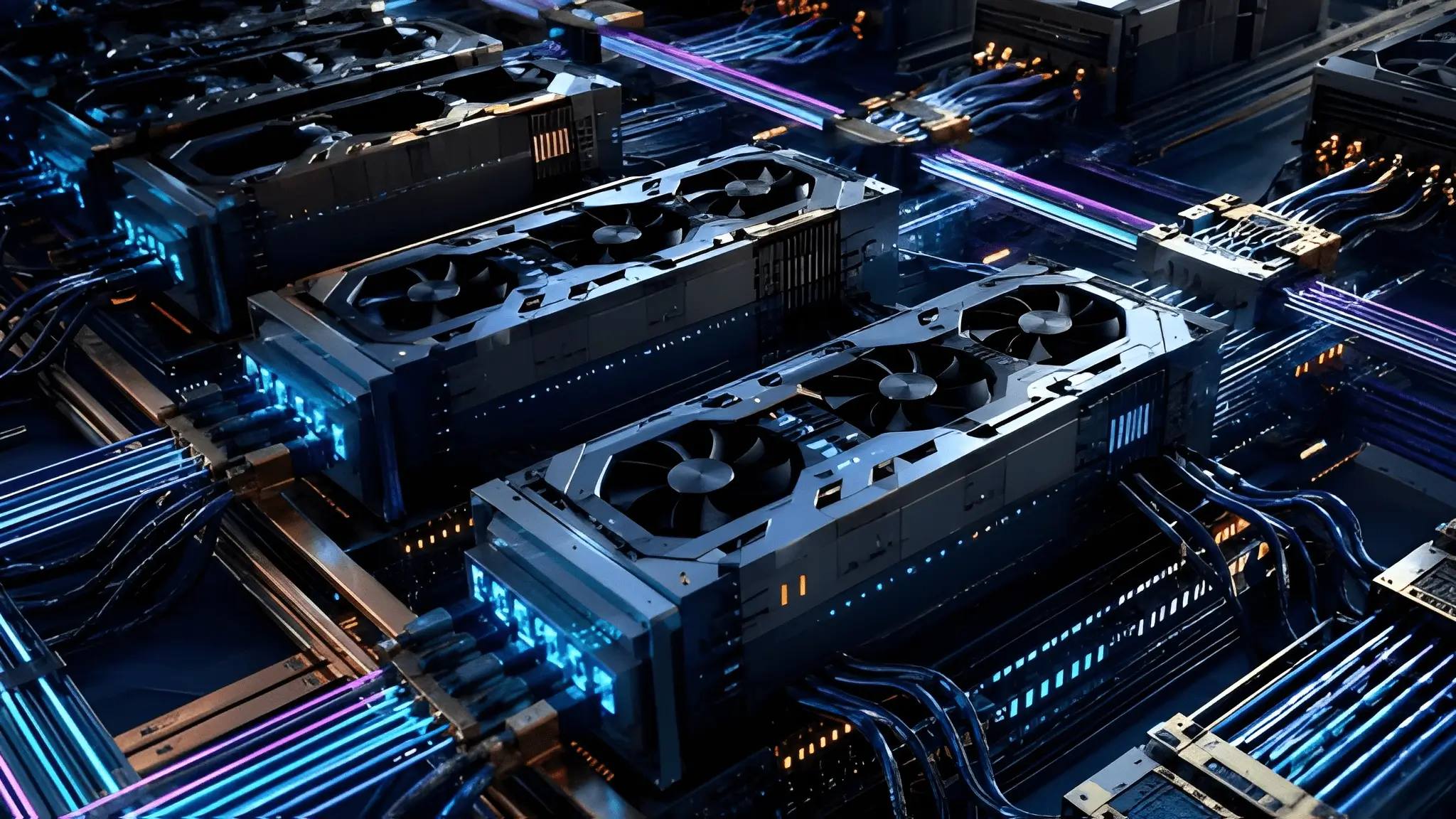
Too often, modern AI infrastructure discussions begins with procurement numbers instead of operational behavior. Enterprises announce accelerator purchases measured in gigawatts, while hyperscalers compete over deployment speed and rack density across rapidly expanding facilities. The industry narrative still treats GPUs as independent performance units despite the fact that large training environments behave more like tightly coupled distributed systems. Every additional accelerator can increase synchronization pressure, communication dependency, and thermal interaction inside large distributed cluster environments. Hardware procurement solved the compute shortage for many organizations, yet operational instability now emerges from the interaction between thousands of synchronized devices rather than from isolated hardware limitations. Massive AI deployments increasingly resemble fragile computational ecosystems where timing consistency, network behavior, and orchestration discipline determine usable performance far more than raw silicon counts.

GPU Swarms Don’t Fail Quietly
Large GPU clusters rarely experience isolated degradation because distributed training architectures depend on synchronized execution across thousands of accelerators operating within tightly coordinated communication cycles. One unstable node can delay collective operations, forcing neighboring GPUs into idle synchronization waits that spread latency across entire training groups within milliseconds. Packet retransmissions inside large fabrics often trigger workload imbalance that amplifies computational drift between accelerators sharing the same distributed model state. Thermal fluctuations inside dense racks can influence clock behavior unevenly across accelerators, introducing additional timing variability into communication-sensitive workloads during long-duration training sessions. Failure propagation becomes especially dangerous when orchestration systems attempt automated recovery without understanding the original synchronization fault that triggered the instability. GPU clusters therefore behave less like modular compute inventories and more like tightly coupled distributed systems where localized instability can propagate into broader operational disruption.
Hyperscale environments now operate under communication conditions where training efficiency depends heavily on predictable synchronization timing across geographically concentrated infrastructure zones. AI workloads using tensor parallelism and pipeline parallelism require thousands of accelerators to exchange gradients continuously with extremely low tolerance for jitter or communication inconsistency. Small delays inside one communication domain frequently force other GPUs into stalled execution windows because distributed training frameworks wait for collective completion before continuing computation cycles. Rack-level thermal imbalance can intensify these synchronization issues because different thermal zones produce uneven power behavior across adjacent accelerator groups operating under identical workloads. Meanwhile, orchestration layers often mask early warning indicators by redistributing workloads dynamically before engineers can identify the root instability source. Operators increasingly discover that cluster reliability depends less on hardware replacement cycles and more on maintaining synchronized operational equilibrium across every layer of the distributed environment.
The Hidden War Inside GPU Interconnects
Interconnect infrastructure has quietly become one of the most critical limitations in large-scale AI environments because distributed training now depends more on communication speed than isolated computational throughput. NVLink, InfiniBand, and advanced Ethernet fabrics carry enormous synchronization traffic between accelerators that must exchange gradients, checkpoints, and memory states continuously during training cycles. Latency jitter across even a small portion of the network fabric can reduce cluster-wide efficiency because collective communication algorithms amplify timing inconsistencies across thousands of participating GPUs. Network congestion inside oversubscribed topologies often creates uneven bandwidth distribution where certain accelerator groups finish communication tasks while others remain trapped inside synchronization barriers. AI infrastructure teams increasingly spend more operational time analyzing communication bottlenecks than tuning raw GPU utilization because interconnect instability now determines usable scaling efficiency.

High-performance distributed AI systems place enormous stress on fabric architectures because training models containing hundreds of billions of parameters generate continuous east-west traffic between compute nodes. Large clusters can experience microbursts where synchronized communication spikes overwhelm localized fabric segments despite average utilization appearing operationally stable across the broader environment. Communication retries triggered by transient congestion frequently create cascading delays because synchronization-sensitive training frameworks depend on deterministic communication timing between participating accelerators. Consequently, infrastructure engineers increasingly optimize topology placement, routing consistency, and congestion control policies before modifying actual compute resources inside advanced AI facilities. Fabric instability also introduces hidden operational costs because clusters consume power continuously even while stalled accelerators wait for delayed synchronization traffic to complete. GPU procurement therefore represents only one layer of the scaling equation because communication architecture now dictates whether deployed accelerators deliver sustained computational efficiency under production workloads.
Why GPU Clusters Drift Out of Sync
Distributed AI training environments gradually drift out of synchronization because workload execution rarely progresses at perfectly identical speeds across every participating accelerator during extended computational cycles. Differences in memory pressure, thermal conditions, communication latency, and checkpoint timing slowly accumulate into measurable synchronization decay across large GPU fleets operating under high-intensity workloads. Scheduler imbalance often worsens the problem because orchestration systems redistribute tasks dynamically without fully accounting for communication dependencies between neighboring accelerator groups. Checkpoint operations can introduce additional synchronization overhead when slower nodes delay state persistence while faster accelerators enter synchronization waits that reduce overall throughput efficiency. Training frameworks attempt to maintain consistency through collective communication operations, yet those mechanisms become increasingly fragile as cluster size and model complexity continue expanding simultaneously. AI operators now spend substantial engineering effort managing synchronization discipline because distributed coherence degrades naturally as computational scale grows larger and operational conditions become more variable.
Workload drift becomes especially problematic during long-duration foundation model training because even minor timing inconsistencies compound across millions of synchronization events occurring throughout multi-week execution windows. GPU clusters frequently contain hardware components operating under slightly different thermal and power conditions despite appearing identical from a provisioning perspective inside orchestration systems. Those small differences influence execution timing enough to create uneven progress across distributed workloads requiring tightly coordinated synchronization behavior between accelerators. Furthermore, communication-intensive operations such as all-reduce exchanges amplify execution asymmetry because slower nodes dictate synchronization timing for the broader computational group. Infrastructure teams increasingly recognize that distributed AI systems behave similarly to synchronized industrial machinery where timing precision matters as much as raw processing capability. Scaling modern AI environments therefore demands operational strategies focused on synchronization resilience rather than simplistic assumptions that additional accelerators automatically improve computational output.
GPUs Are Starting to Compete Against Each Other
Resource contention inside large AI environments has emerged as a significant operational problem because thousands of accelerators now compete simultaneously for shared communication, memory, and orchestration resources. GPU clusters operating near maximum utilization frequently experience bandwidth contention where synchronized communication operations overload shared interconnect pathways during critical training phases. Memory access conflicts also intensify in multi-tenant environments where competing workloads consume shared infrastructure resources unevenly across distributed compute groups. Scheduling systems attempt to balance computational demand dynamically, yet aggressive workload density often creates hidden interference patterns between neighboring training jobs operating within the same fabric domain. Some accelerators remain computationally active while others wait for delayed communication windows, causing cluster-wide efficiency degradation despite apparently strong utilization metrics at the hardware level. AI infrastructure performance therefore depends increasingly on cooperative workload coordination instead of simplistic deployment models focused exclusively on maximizing accelerator counts inside facilities.
Large training environments now resemble competitive resource ecosystems where accelerators continuously negotiate access to communication bandwidth, synchronization timing, and orchestration priority under highly dynamic operational conditions. GPUs assigned to one workload can indirectly affect neighboring workloads by increasing congestion across shared fabric infrastructure supporting multiple distributed training domains simultaneously. Scheduler-level optimization becomes difficult because infrastructure teams must balance computational throughput against synchronization consistency across rapidly changing workload conditions inside hyperscale clusters. Meanwhile, thermal density variations inside racks can contribute to uneven execution characteristics between accelerators participating in the same distributed training operation. Internal competition between GPUs therefore emerges primarily from infrastructure saturation created by extremely dense AI deployment strategies operating near architectural limits. AI operators increasingly discover that cluster efficiency can degrade gradually through accumulated resource contention rather than through dramatic hardware failures visible through conventional monitoring systems.
The AI Race Is Creating Underutilized GPU Capacity
Many accelerators inside large AI deployments remain technically operational while contributing very little productive computation because synchronization waits and orchestration bottlenecks trap them inside persistent idle states. These underutilized GPUs consume power, cooling resources, and rack capacity despite spending significant operational time stalled behind delayed checkpoints or communication barriers. Distributed training frameworks often hide these inefficiencies because utilization dashboards report hardware availability without accurately reflecting synchronization dead time occurring during workload execution. GPU fleets can therefore appear fully allocated even while large portions of the infrastructure remain trapped inside low-productivity operational loops driven by communication imbalance or scheduler instability. Underutilized accelerators become especially common during recovery operations when orchestration systems attempt to preserve distributed model consistency after node failures or transient fabric interruptions. AI infrastructure economics consequently depend not only on deployment scale but also on minimizing the amount of computational capacity trapped inside non-productive synchronization behavior.
Idle synchronization states increasingly represent a hidden operational tax across hyperscale AI facilities because stalled accelerators continue consuming substantial electrical and thermal resources without advancing training workloads meaningfully. Some GPU clusters experience prolonged inefficiency when orchestration layers repeatedly retry failed communication operations that prevent synchronized workloads from progressing normally across distributed environments. Network instability, checkpoint corruption, and scheduler fragmentation can all create operational dead zones where accelerators remain online yet contribute negligible computational value during training cycles. Nevertheless, traditional infrastructure metrics often struggle to identify these conditions because hardware telemetry focuses primarily on availability and temperature instead of synchronization productivity. The industry emphasis on deployment scale has therefore obscured a growing operational reality where usable compute efficiency differs dramatically from installed accelerator capacity across many large AI environments.
The GPU Era Needs Infrastructure Physics
The AI infrastructure race has entered a phase where operational characteristics such as synchronization resilience, workload coherence, and interconnect stability increasingly influence competitive advantage alongside procurement scale. Large GPU deployments now behave as synchronized computational systems shaped by timing discipline, communication resilience, workload coherence, and thermal consistency across highly interconnected environments. Interconnect reliability, synchronization tolerance, scheduler intelligence, and workload orchestration increasingly define whether massive GPU fleets deliver sustained computational output under production conditions. AI infrastructure leaders are therefore shifting attention toward cluster behavior analysis because stable distributed operation has become more valuable than raw accelerator accumulation at hyperscale scale. NVIDIA successfully delivered the engines powering the modern AI economy, but the broader industry still faces the much harder challenge of mastering the infrastructure physics governing how those engines operate together.












