Artificial intelligence has introduced infrastructure requirements that differ fundamentally from the architecture of conventional enterprise data centers. Facilities once treated electrical systems, cooling networks, and compute hardware as independent design domains that interacted only at defined operational boundaries. Modern AI workloads challenge this separation because training clusters draw massive power while generating concentrated thermal loads within small physical footprints. Operators therefore examine the entire path of energy delivery, beginning at the grid connection and ending at individual processors. Engineers increasingly view infrastructure design as a continuous system that connects power infrastructure directly to silicon performance characteristics. That evolving perspective has encouraged industry discussions around what many practitioners describe as grid-to-chip architecture within hyperscale AI environments, a conceptual framework used to illustrate the integration of energy infrastructure with compute systems.
The scale of compute clusters illustrates why infrastructure integration has become unavoidable for AI deployments. High-performance training racks often draw tens or even hundreds of kilowatts, which exceeds the capacity assumptions used in traditional facilities. Industry studies show that GPU-driven AI racks frequently operate in the 30 to 100 kilowatt range and may reach 150 kilowatts or more with advanced liquid cooling solutions. Hardware density concentrates both electrical demand and heat generation into tightly packed equipment footprints. Facility engineers therefore must coordinate power distribution, cooling design, and rack configuration much earlier in the architectural process. Infrastructure planning now influences server layout and accelerator selection rather than supporting them afterward. This convergence marks a structural shift in how hyperscale computing environments develop and operate.
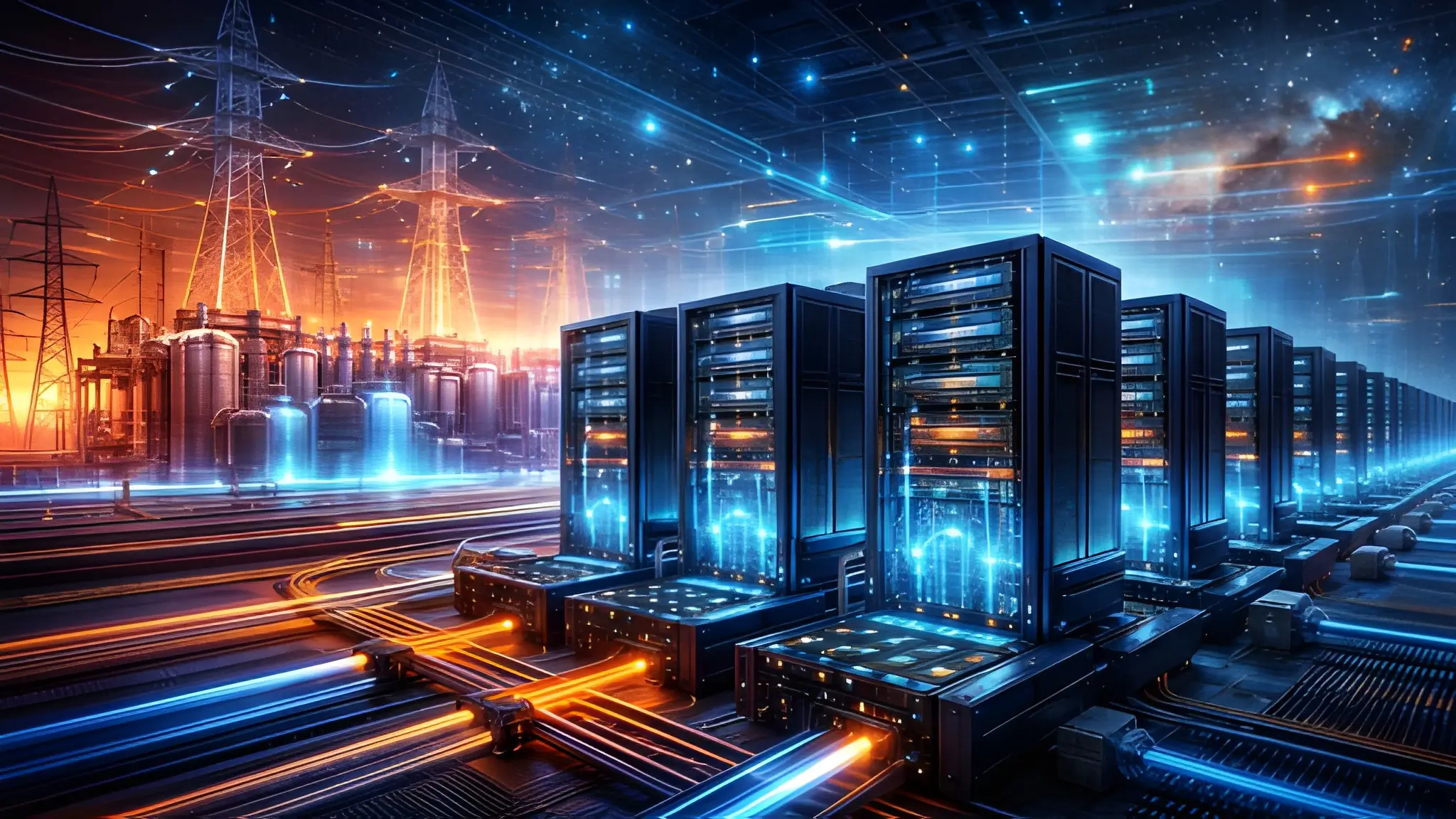
AI compute infrastructure has also accelerated the pace at which energy systems and digital workloads interact with each other. Data center operators increasingly deploy campuses that include dedicated substations, large-scale backup generation, and specialized power distribution networks designed specifically for AI clusters. Those electrical systems must deliver stable high-current power streams while maintaining redundancy and efficiency across multiple transformation stages. At the same time, compute platforms require tightly controlled thermal conditions to maintain performance and reliability. The operational relationship between infrastructure layers has therefore become continuous rather than segmented. Architects increasingly model the energy system, facility equipment, and computing hardware as a single integrated performance environment. This integrated approach forms the foundation of grid-to-chip infrastructure design in modern AI data centers.
The Shrinking Distance Between Power Infrastructure and Compute Silicon
The separation between utilities, facility systems, and computing hardware defined data center architecture for decades. Utility power traditionally entered a facility through high-voltage substations before moving through switchgear, uninterruptible power supplies, and power distribution units that served server rooms. Engineers optimized each layer independently because workloads remained relatively stable and rack power requirements stayed modest. AI infrastructure disrupts that model because accelerator clusters demand extremely dense electrical delivery combined with highly efficient thermal management. Rack-level power consumption now directly influences upstream electrical design decisions. Infrastructure engineers must therefore coordinate with hardware architects during early planning stages of AI facilities. That collaboration shortens the conceptual distance between grid infrastructure and compute silicon.
Hyperscale operators now build infrastructure stacks that treat energy delivery as a compute-critical system rather than a background utility service. AI clusters frequently occupy dedicated data halls with customized electrical distribution equipment designed for accelerator workloads. Engineers often deploy high-capacity busways and rack-level power distribution units that deliver three-phase power directly to dense GPU servers. Hardware vendors also specify preferred voltage configurations and circuit capacities that support stable operation of large AI systems. Infrastructure planners must therefore coordinate electrical topology with the power profiles of individual compute platforms. This process reflects a deeper integration between facility engineering and semiconductor-level performance characteristics. The resulting architecture allows electrical infrastructure to respond precisely to the requirements of AI silicon.
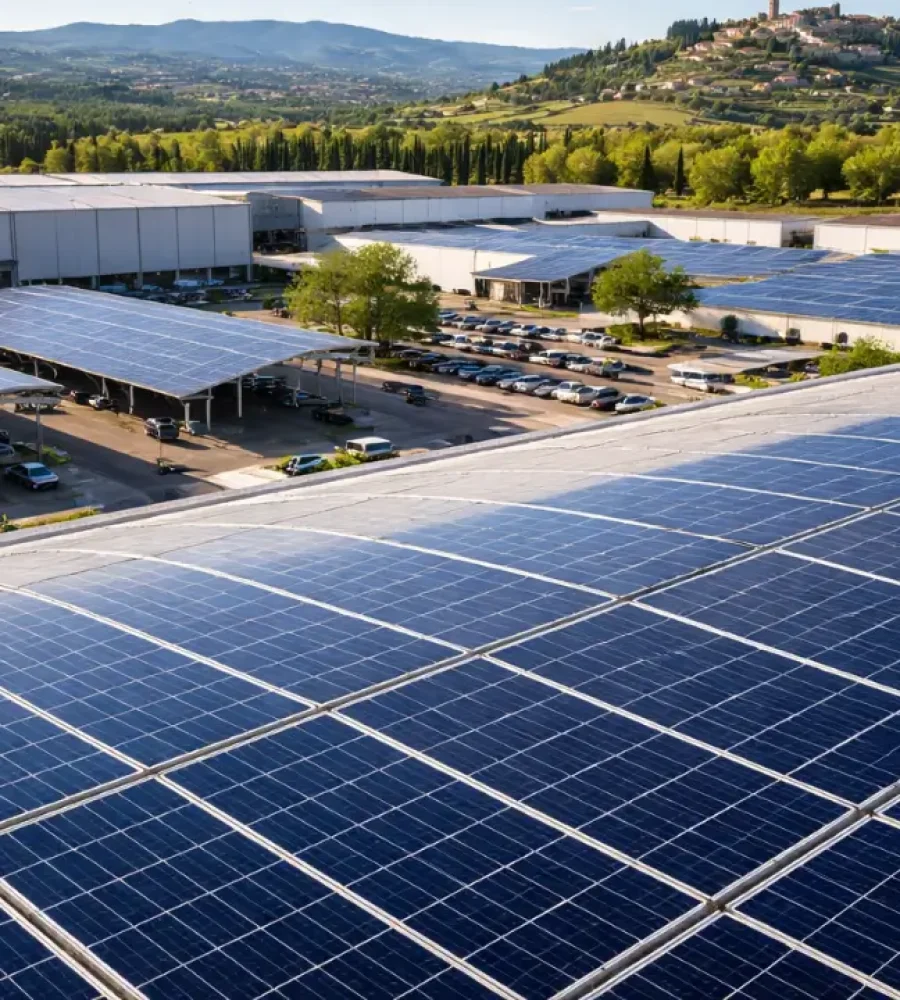
The shrinking gap between energy infrastructure and compute hardware also reshapes how data center campuses connect to regional power grids. Large AI clusters can require significant electrical capacity and may involve dedicated substations or expanded utility connections depending on the scale of accelerator deployments and regional grid availability. Utility coordination therefore becomes a central element of compute planning because power availability can limit expansion timelines. Some hyperscale operators now design campuses around energy infrastructure first and position compute buildings accordingly. This reversal highlights how electricity supply has become a defining factor in AI facility design. Architects now approach the full energy pathway as an integrated system that begins with grid interconnection and ends with processor operation. Grid-to-chip thinking emerges naturally from this continuous design philosophy.
Re-Engineering the Power Value Chain from Substation to GPU
Electricity follows a complex path through a data center before it reaches computing hardware. Power typically arrives at a facility through high-voltage transmission lines and passes through transformers that step voltage down to medium-voltage distribution levels. Electrical systems then route energy through switchgear assemblies, backup power infrastructure, and uninterruptible power supplies that stabilize the incoming supply. After these stages, power distribution units convert electricity again before feeding rack-level circuits. Each transformation stage introduces efficiency losses that can accumulate across the infrastructure stack. AI workloads intensify the importance of minimizing these losses because compute clusters operate continuously at very high utilization levels. Engineers therefore analyze the entire electrical chain to improve efficiency from the substation to the processor.
Infrastructure designers increasingly examine how voltage conversion and power conditioning affect large AI clusters. Each conversion stage generates heat and consumes energy, which reduces the efficiency of the computing environment. Modern hyperscale facilities experiment with higher distribution voltages and fewer transformation stages to reduce those inefficiencies. Engineers sometimes deliver three-phase power closer to the rack before final conversion occurs inside server hardware. This strategy shortens the electrical path and reduces losses associated with multiple conversion layers. AI infrastructure therefore encourages designers to rethink electrical topology throughout the facility. The power value chain becomes a central optimization target in grid-to-chip architecture strategies.
AI workloads also reshape the capacity planning process across the electrical value chain. Traditional enterprise racks often consumed less than ten kilowatts, which allowed facilities to distribute power across thousands of racks with moderate electrical infrastructure. Modern AI racks operate at dramatically higher densities, which concentrates electrical demand into fewer physical systems. Infrastructure planners must therefore provision significantly larger power capacity for each rack row and each data hall. Substations, busways, and backup power systems must scale accordingly to maintain operational resilience. The electrical architecture of AI facilities therefore evolves toward high-capacity distribution systems designed specifically for accelerator clusters. Consequently, the path of electricity from grid infrastructure to GPU hardware becomes a defining engineering challenge.
AI Rack Density and the End of Isolated Infrastructure Design
The rapid growth of rack-level power density represents one of the most visible consequences of AI computing expansion. Conventional enterprise data centers typically operated with rack densities between five and fifteen kilowatts, which allowed air cooling systems to manage thermal loads effectively. Accelerator-driven AI clusters operate at dramatically higher power densities because GPUs concentrate compute performance into compact hardware configurations. Studies of AI infrastructure show racks frequently exceeding forty kilowatts and reaching beyond one hundred kilowatts in liquid-cooled deployments. These power levels produce thermal conditions that conventional air cooling cannot manage reliably. Infrastructure design therefore must incorporate advanced cooling systems tightly integrated with compute hardware. This shift marks the end of isolated infrastructure design practices in hyperscale facilities.
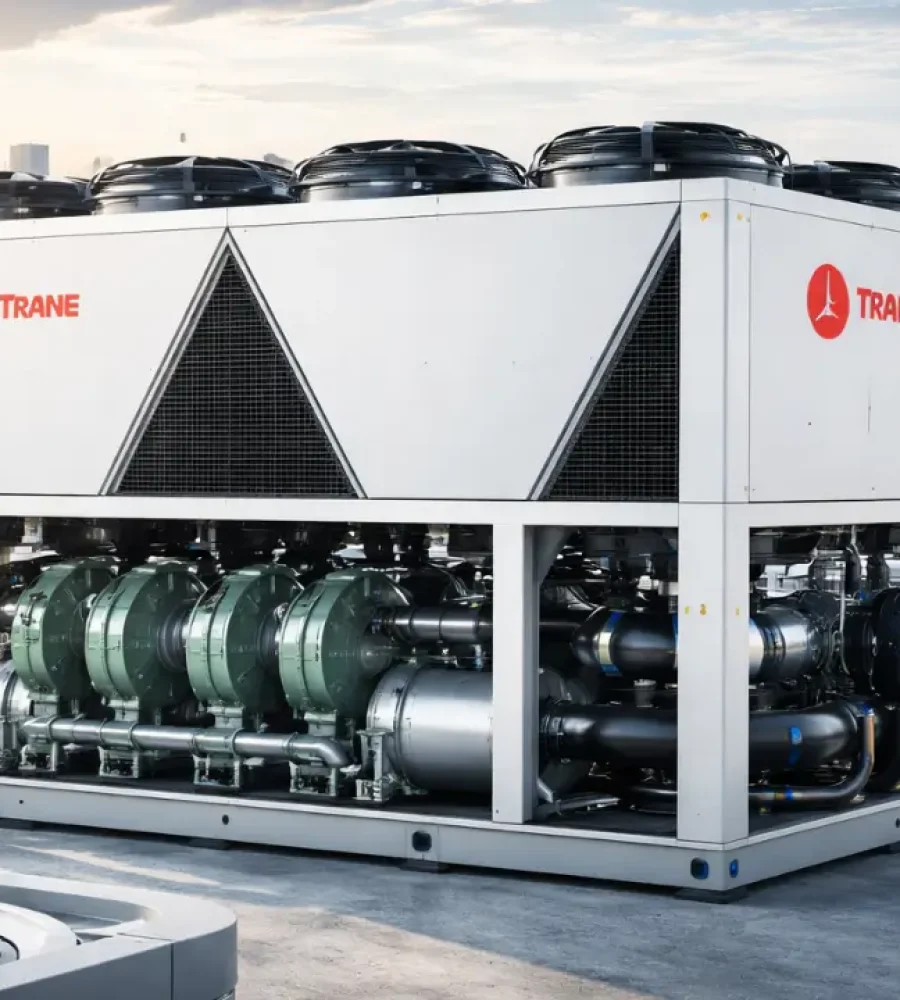
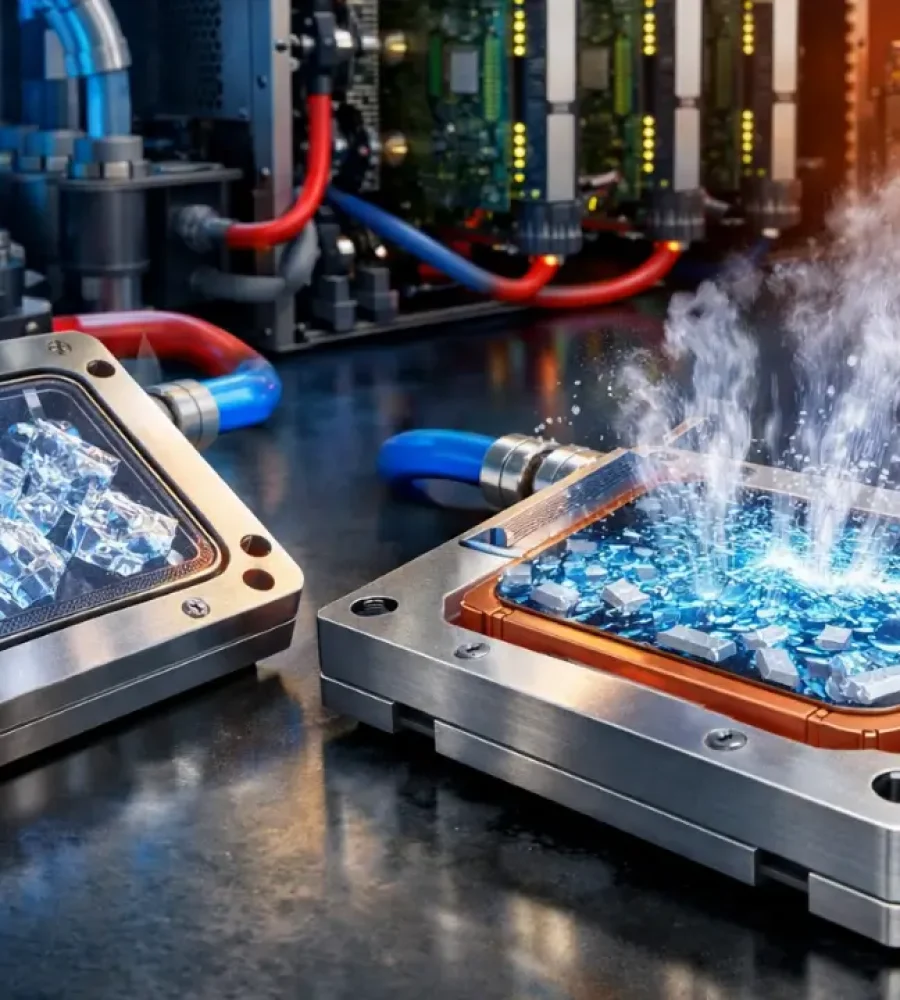
Liquid cooling technologies have emerged as a central component of AI data center architecture. Direct-to-chip cooling systems circulate coolant through cold plates that contact processors and accelerators directly, removing heat before it disperses into the surrounding environment. Immersion cooling approaches submerge entire server boards in specialized fluids that absorb thermal energy more efficiently than air. Engineers often combine these cooling strategies with facility water loops and heat exchange infrastructure designed for high thermal loads. Infrastructure designers must therefore coordinate rack design, coolant distribution, and facility cooling plants within a unified architecture. The resulting systems demonstrate how AI workloads require close integration between hardware engineering and facility infrastructure planning.
Extreme rack densities also influence the physical structure of data center facilities. High-density GPU servers weigh significantly more than traditional computing equipment because they include accelerators, power components, and cooling hardware. Data center floors must therefore support higher structural loads while accommodating larger power distribution systems. Engineers must design facility layouts that provide sufficient space for cooling distribution units, liquid loops, and electrical busways. These infrastructure components interact closely with the compute environment and cannot remain separate design elements. The architectural boundary between facility infrastructure and server hardware continues to narrow as rack densities increase. AI computing therefore accelerates the transition toward fully integrated infrastructure ecosystems.
Real-Time Infrastructure Intelligence: Linking Power, Cooling, and Workloads
Modern AI data centers increasingly rely on real-time monitoring platforms that unify operational visibility across electrical systems, cooling infrastructure, and computing hardware. Sensors distributed across racks, power distribution units, and cooling loops continuously measure temperature, energy flow, pressure levels, and equipment status. Data streams from these devices feed centralized analytics platforms that evaluate facility conditions against performance thresholds. Infrastructure teams rely on these insights to maintain stable conditions for GPU clusters that operate at extremely high utilization levels. AI training workloads often run for extended periods without interruption, which increases the importance of precise environmental control. Real-time infrastructure intelligence therefore enables operators to maintain stability across the entire infrastructure stack that supports large-scale AI computation.
Predictive analytics platforms now help operators anticipate infrastructure conditions before operational risks develop. Machine learning models analyze historical telemetry data to forecast thermal behavior, energy demand, and cooling system performance across facility environments. These predictive tools allow engineers to adjust power distribution and cooling capacity before workloads create instability within the data hall. Infrastructure management systems increasingly integrate workload scheduling data from compute clusters with facility telemetry streams. Engineers can therefore coordinate compute activity with infrastructure availability across power and cooling domains. This approach enables a dynamic operational environment where infrastructure resources adapt continuously to AI workload behavior. Data-driven infrastructure management represents a critical component of integrated AI facility design.
Software-defined infrastructure controls also reshape how energy flows through large AI campuses. Facility management systems increasingly automate adjustments to cooling setpoints, power distribution configurations, and airflow conditions based on real-time operational data. Operators can redirect power capacity between clusters or adjust cooling delivery across high-density rack zones without manual intervention. Infrastructure automation therefore improves energy efficiency while maintaining stable compute performance during fluctuating workload demands. Engineers increasingly treat facility infrastructure as an active participant in the computing environment rather than a static support system. Consequently, digital intelligence connects energy delivery, thermal management, and compute workloads into a coordinated operational framework.
The Rise of Integrated Vendor Ecosystems in AI Infrastructure
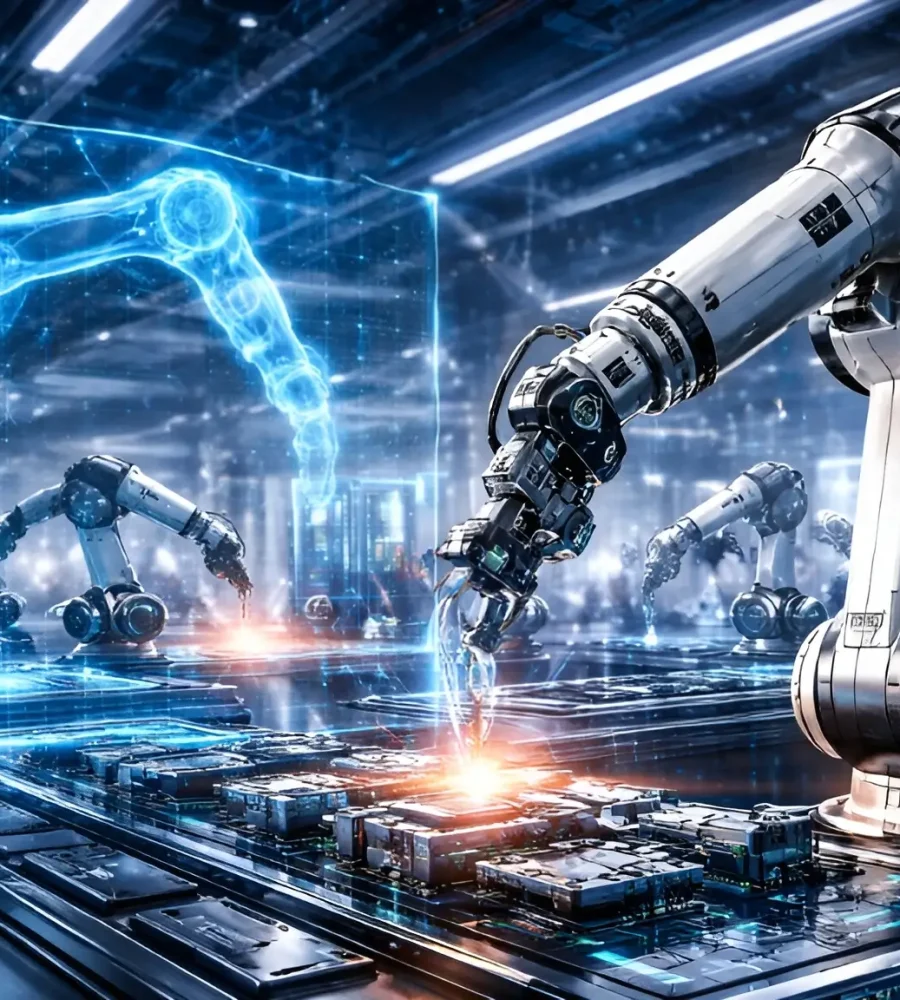
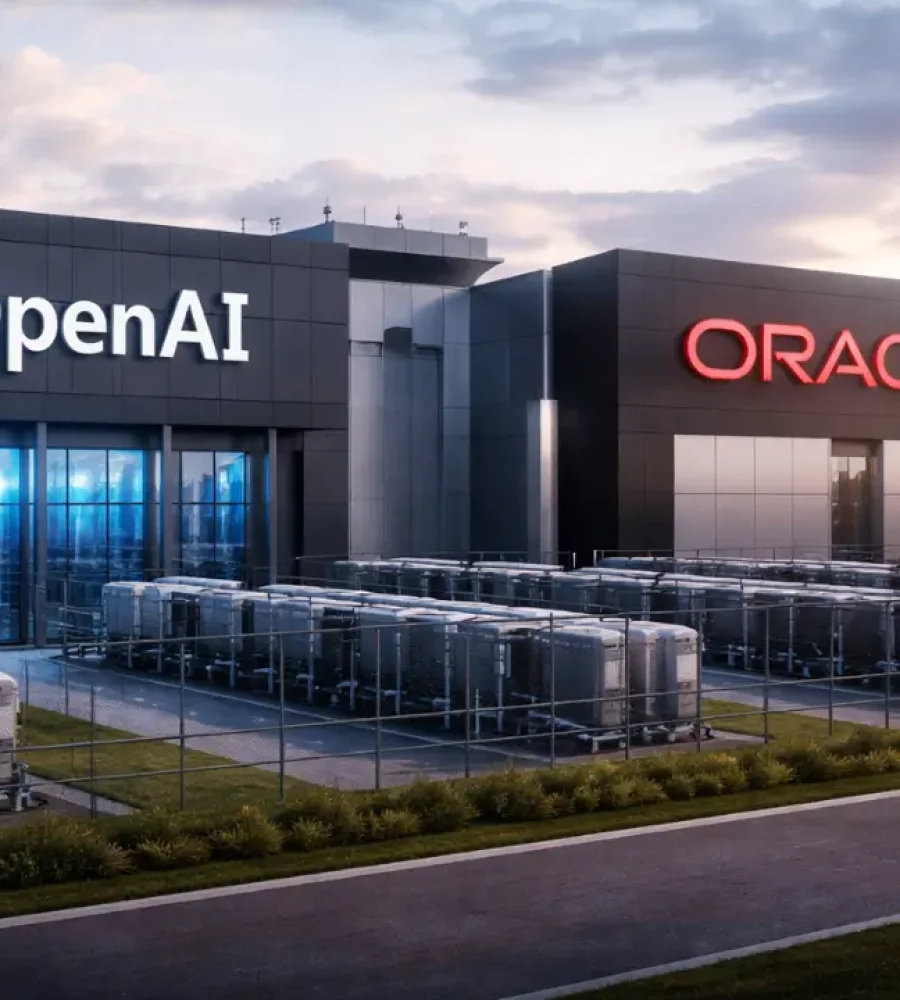
The technical complexity of AI infrastructure has encouraged closer collaboration between hardware manufacturers, electrical equipment providers, and cooling technology vendors. Large AI clusters require coordinated engineering across power conversion hardware, liquid cooling systems, and GPU server architectures. Vendors increasingly collaborate to design infrastructure platforms that combine these technologies into integrated solutions for hyperscale operators. This shift reflects the growing interdependence between compute performance and facility infrastructure capabilities. Hyperscale data center operators often prefer unified technology ecosystems that simplify deployment and operational management. Integrated vendor partnerships therefore play a growing role in the evolution of AI infrastructure systems.
Several infrastructure providers now deliver modular platforms that integrate power distribution, cooling systems, and compute hardware into standardized architectures. These solutions aim to accelerate deployment timelines for large AI clusters while maintaining consistent infrastructure performance across multiple facilities. Vendors design modular units that combine electrical busways, cooling distribution networks, and rack-level compute systems within pre-engineered frameworks. Hyperscale operators can deploy these integrated platforms rapidly when expanding AI training capacity across global data center campuses. Standardized infrastructure modules also simplify maintenance and operational management for high-density environments. These developments illustrate how vendor ecosystems are converging around integrated infrastructure design for AI computing environments.
Strategic alliances between semiconductor manufacturers, server vendors, and infrastructure providers further reinforce this integrated approach. Compute platform developers increasingly publish reference architectures that specify electrical distribution requirements, cooling configurations, and rack layouts for AI clusters. Infrastructure vendors design compatible facility systems that align with these compute platform guidelines. Operators therefore gain a clear blueprint for building AI data centers that support specific accelerator technologies. Industry collaboration reduces integration challenges that could otherwise delay the deployment of large-scale AI infrastructure. The resulting ecosystems align compute innovation with infrastructure capabilities across the full energy-to-silicon pathway.
Grid-to-Chip Architecture Will Define the Next Decade of AI Data Centers
Artificial intelligence continues to transform the physical foundations of digital infrastructure across global data center ecosystems. Accelerator-driven workloads demand unprecedented levels of electrical capacity, thermal management precision, and infrastructure coordination. Engineers therefore approach facility design with a system-wide perspective that integrates energy delivery, cooling technologies, and compute hardware performance. The architecture of AI data centers increasingly reflects a continuous engineering pathway that begins with grid power connections and extends directly to processor operation. This shift redefines the relationship between utility infrastructure and computing systems within hyperscale environments. Infrastructure convergence will therefore shape how the next generation of digital facilities supports AI innovation at scale.
Energy efficiency considerations also strengthen the importance of integrated infrastructure architecture. AI clusters operate at extremely high utilization rates, which amplifies the impact of energy losses within electrical and cooling systems. Operators must therefore minimize inefficiencies across every stage of the infrastructure stack to maintain sustainable operational costs. Grid-connected energy infrastructure, facility electrical systems, and rack-level hardware design all contribute to overall efficiency performance. Engineers increasingly treat these elements as components of a unified system rather than independent operational layers. Integrated design strategies will therefore remain essential as AI workloads continue expanding across global computing environments.
The future development of hyperscale infrastructure will likely reinforce this convergence between energy systems and compute platforms. AI models continue to grow in scale, which increases both the electrical demand and thermal density of accelerator clusters. Infrastructure providers therefore explore new electrical architectures, advanced cooling technologies, and integrated monitoring systems to support emerging compute requirements. Vendors and operators will continue refining collaborative design approaches that align facility infrastructure with semiconductor innovation. These developments will define the engineering blueprint for AI data centers during the coming decade. Grid-to-chip architectural thinking will therefore likely remain an influential conceptual framework in discussions about the evolution of high-performance digital infrastructure worldwide.