
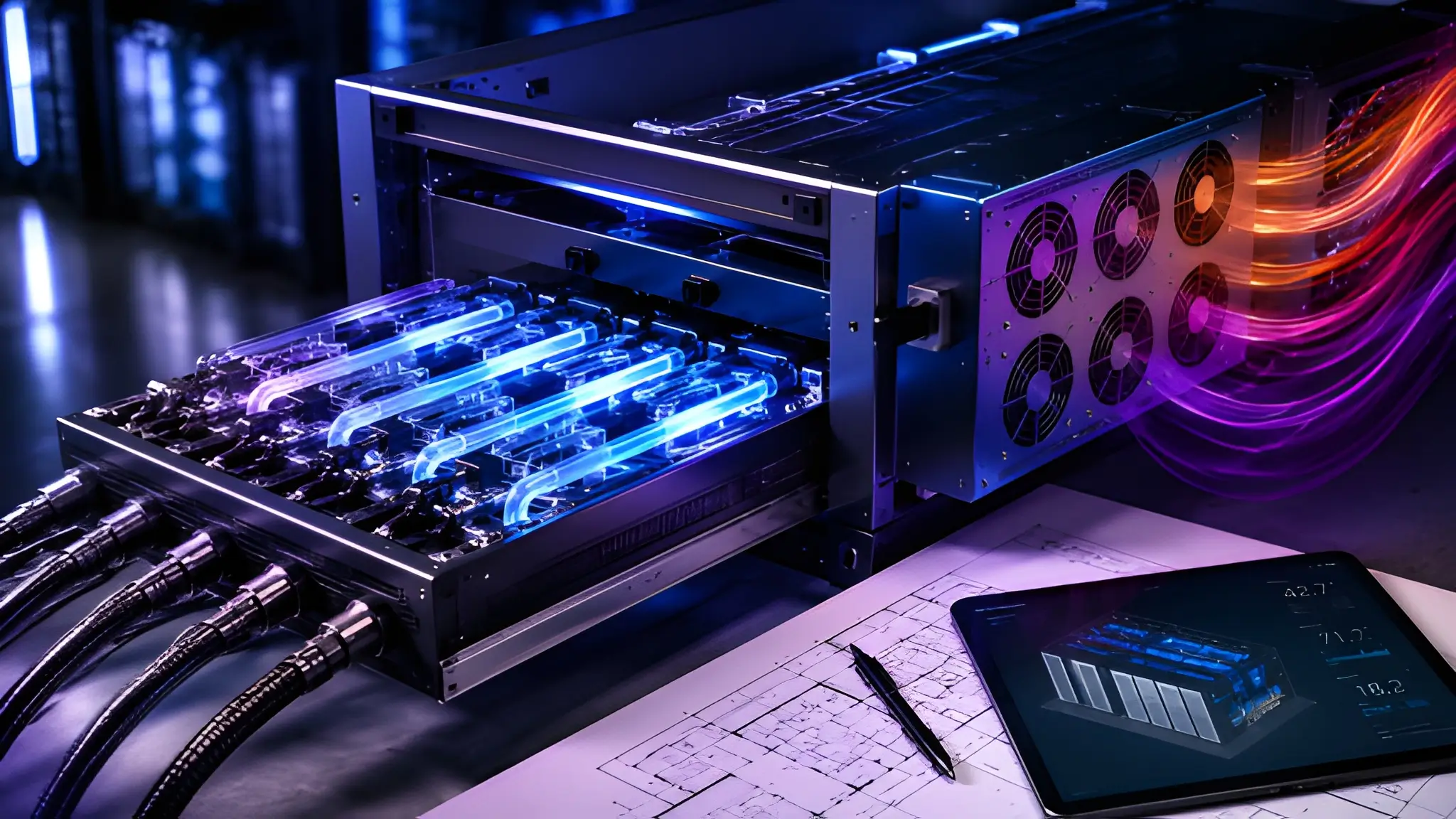
Artificial intelligence infrastructure has compressed deployment timelines to the point where electrical capacity is no longer the only gating factor inside a colocation facility. Tenants increasingly arrive with servers that exceed the thermal limits of conventional air-cooled environments while expecting occupancy schedules measured in months rather than years. This mismatch has created demand for intermediate cooling solutions that can accommodate higher rack densities without requiring immediate modifications to a building’s central chilled-water distribution. Heat dissipation units, along with rear-door heat exchangers, coolant distribution units, and other localized cooling technologies, are being deployed by some operators to support higher rack densities while avoiding immediate modifications to facility-wide chilled-water infrastructure. Several colocation providers have begun packaging localized cooling infrastructure into standardized deployment offerings to accelerate customer onboarding for higher-density workloads. This evolution reflects growing customer demand for faster deployment schedules alongside increasing thermal requirements associated with accelerated computing platforms.

Infrastructure decisions rarely change because of technology alone, and commercial incentives often determine which innovations become permanent service offerings. Facilities that once differentiated themselves through available power or geographic location increasingly compete by offering deployment flexibility for specialized compute clusters. Instead of immediately expanding centralized cooling infrastructure, some operators are deploying standardized localized cooling solutions within existing white space to accommodate higher-density customer installations. This approach allows providers to offer predefined cooling capabilities alongside traditional colocation attributes such as power allocation, connectivity, and physical security. Infrastructure planning discussions increasingly consider how quickly higher-density cooling capacity can be deployed in addition to whether sufficient electrical capacity is available. That distinction increasingly influences tenant selection when high-performance computing projects operate under aggressive implementation schedules.
The Air-Cooled Building That Now Sells Liquid Racks
Colocation providers traditionally designed mechanical plants around broad assumptions regarding rack density, leaving substantial portions of their white space optimized for conventional enterprise workloads. Accelerated demand for graphics processing clusters has disrupted those assumptions because localized thermal loads can exceed what standard containment and room-level cooling systems efficiently support. Some colocation providers deploy localized cooling equipment, including rear-door heat exchangers and similar technologies, to support higher-density racks while postponing large-scale mechanical modifications to centralized cooling infrastructure. This configuration enables higher-density deployments inside facilities that remain fundamentally air-cooled from an architectural perspective. Customers gain access to denser compute environments without waiting for extensive capital projects that require lengthy design reviews and construction schedules. Providers benefit because existing floor space becomes capable of supporting premium workloads without fundamentally altering the central mechanical infrastructure.
Commercial packaging has become just as important as the underlying engineering because repeatability determines whether an offering scales across multiple facilities. Several providers now define repeatable deployment processes, standardized installation procedures, and documented operational practices for localized cooling deployments to improve consistency across customer installations. Standardized deployment documentation enables providers to communicate consistent performance characteristics, installation processes, and operational responsibilities to prospective customers. Prospective customers receive greater certainty regarding deployment timelines because equipment, operational procedures, and maintenance responsibilities already exist within approved operating frameworks. Meanwhile, engineering teams avoid redesigning mechanical interfaces for every installation, allowing resources to focus on capacity planning instead of repetitive customization. The result is a repeatable deployment model that supports higher-density computing while fitting within established colocation operational processes.

The Contract Clause That Changed Everything
Service agreements have traditionally emphasized electrical availability, network uptime, physical security, and environmental operating conditions because cooling infrastructure remained largely invisible to tenants. Higher-density deployments supported by localized thermal equipment introduce additional contractual considerations since cooling performance becomes directly linked to workload stability rather than general facility conditions. Operators deploying localized liquid-assisted cooling commonly define operating parameters covering supported inlet temperatures, maintenance procedures, monitoring thresholds, and equipment operating conditions within customer agreements and technical documentation. Responsibility for leak detection, equipment interfaces, emergency shutdown procedures, and maintenance access also requires clearer allocation because thermal systems increasingly extend beyond standard facility assets. These provisions reduce ambiguity by distinguishing responsibilities that belong to the colocation provider from those retained by the customer supplying compute hardware. Therefore, contractual language evolves alongside infrastructure architecture because predictable operational accountability supports both technical reliability and commercial confidence.
Where localized liquid-assisted cooling is deployed, providers increasingly document validated thermal operating conditions and supported equipment environments during commissioning and customer acceptance. Facilities offering localized heat management increasingly document supported thermal envelopes under defined operating conditions, ensuring that installed equipment performs within validated environmental parameters rather than theoretical design assumptions. Engineering documentation consequently forms a larger component of customer onboarding because commissioning records, operational testing, monitoring thresholds, and maintenance procedures establish the baseline for future service verification. Organizations implementing liquid-assisted cooling typically review insurance requirements, maintenance responsibilities, leak response procedures, and operational risk controls as part of project planning. Risk management teams increasingly review maintenance processes, sensor coverage, incident response procedures, and equipment isolation methods before approving standardized operational frameworks. These operational documents define measurable thermal operating conditions alongside traditional facility service commitments where localized cooling systems are incorporated.
Why Operations Teams Prefer A Product Over A Project
Operations organizations generally favor standardized infrastructure because consistency simplifies maintenance, staff training, spare-parts management, and incident response across multiple facilities. Custom liquid cooling installations often introduce unique plumbing layouts, equipment interfaces, documentation requirements, and maintenance procedures that vary from one customer deployment to another. Standardized heat dissipation unit bays reduce that variability by using repeatable installation methods, predefined operational checklists, approved monitoring systems, and established maintenance schedules that align with existing facility workflows. Engineers can therefore troubleshoot equipment through familiar processes instead of interpreting one-off mechanical designs created for individual tenants. This consistency improves operational planning because replacement components, inspection intervals, commissioning activities, and support documentation remain largely identical across multiple deployments. Customers also benefit because standardized environments reduce uncertainty surrounding implementation schedules, maintenance coordination, and long-term operational support throughout the infrastructure lifecycle.
Operational scalability increasingly depends on reducing engineering exceptions rather than expanding engineering headcount to accommodate every specialized request. Repeatable thermal deployment models allow providers to document installation procedures once and apply them consistently across suitable facilities without restarting engineering evaluations for each project. Equipment vendors likewise support standardized implementations through validated reference architectures, maintenance guidance, monitoring integrations, and commissioning recommendations that simplify operational adoption. However, standardized deployment does not eliminate technical oversight because capacity planning, airflow management, electrical distribution, and facility monitoring still require continuous engineering attention. What changes is the proportion of effort devoted to repeatable execution instead of custom infrastructure design for every new tenant engagement. This transition improves operational consistency because standardized deployment procedures reduce engineering variation across multiple customer installations.
How HDU Pricing Is Creating A New Tier In Colo Economics
Traditional colocation pricing models have largely centered on contracted electrical capacity because power allocation represented the principal constraint for most enterprise deployments. High-density computing changes that commercial equation by introducing thermal handling as an independent resource that requires dedicated equipment, operational oversight, monitoring, and maintenance beyond conventional room cooling. Providers supporting higher-density computing evaluate both available electrical capacity and the cooling capability required to maintain validated operating conditions. This distinction allows providers to differentiate infrastructure offerings based on supported rack density and validated cooling performance. Customers obtain faster occupancy for demanding workloads, while operators monetize infrastructure that sits between standard air-cooled space and fully liquid-ready halls. Some providers have introduced premium pricing for higher-density deployments that require specialized cooling equipment and additional operational support beyond conventional colocation services.
Standardized localized cooling deployments can reduce engineering effort and accelerate customer occupancy compared with fully customized infrastructure projects, improving operational efficiency for providers. A repeatable deployment model reduces engineering uncertainty, shortens commissioning cycles, and improves inventory utilization across existing whitespace that might otherwise remain unsuitable for emerging compute platforms. Sales organizations can package deployment speed, validated thermal capacity, operational support, and defined service commitments into a differentiated commercial offering that appeals to customers facing compressed infrastructure schedules. Investors likewise evaluate these offerings through the lens of capital efficiency because localized upgrades often require significantly lower investment than comprehensive mechanical modernization across an entire facility. Finally, this intermediate product category demonstrates that infrastructure value increasingly depends on operational adaptability as much as installed electrical capacity. These offerings represent a differentiated colocation service for higher-density deployments that combines specialized cooling capability with standardized operational processes.
Stopgap Was The Wrong Word All Along
Describing localized thermal infrastructure solely as a temporary measure does not fully reflect its growing adoption within selected higher-density colocation deployments. Several localized cooling deployments are now supported through standardized installation methods, operational documentation, and commercial service offerings rather than one-off engineering implementations. Their continued adoption reflects practical business realities because customer deployment schedules rarely align perfectly with long-duration mechanical expansion projects. Providers have recognized that standardized thermal capability satisfies an identifiable market requirement regardless of whether broader liquid infrastructure eventually expands across an entire campus. This approach positions localized thermal management as a repeatable deployment option supported by standardized engineering and operational practices.
Organizations evaluating future colocation strategies should therefore assess thermal service capabilities with the same discipline traditionally applied to power availability, connectivity, resilience, and geographic location. Procurement teams increasingly benefit from understanding how providers define operational responsibilities, performance commitments, deployment timelines, maintenance practices, and future upgrade pathways for localized cooling environments. Site selection decisions should account for the maturity of standardized thermal offerings because infrastructure flexibility can influence expansion planning long after the initial deployment enters production. Mechanical architecture remains important, yet operational execution increasingly determines how effectively facilities support evolving compute requirements under compressed implementation schedules. Heat dissipation units illustrate that infrastructure innovation often succeeds because it aligns engineering practicality with commercial repeatability instead of pursuing technical perfection alone. Current industry guidance indicates that conventional air cooling, liquid-assisted cooling, and fully liquid-cooled environments are expected to coexist as computing density requirements continue to diversify across colocation facilities.











