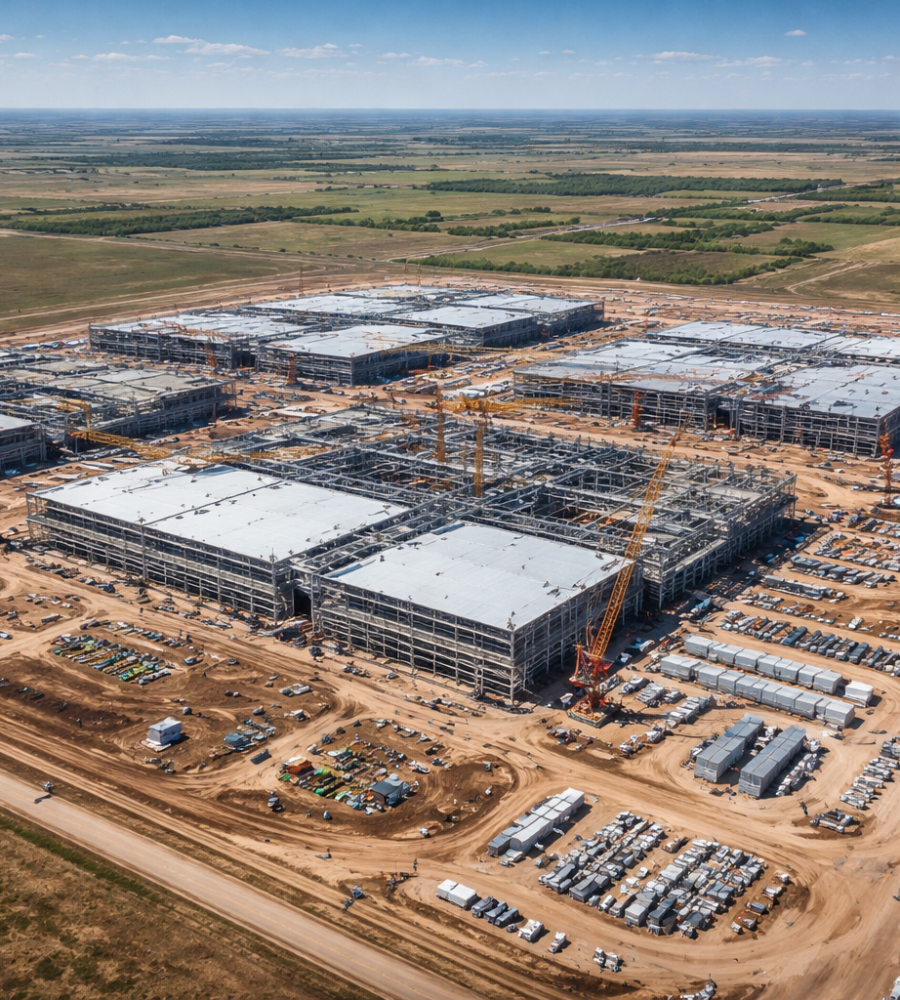
Capital deployment in data center infrastructure often begins generating financial exposure long before it produces any measurable output. Power capacity that remains unenergized or unallocated represents stranded investment, which continues to accumulate costs without offsetting revenue streams. Developers frequently classify these megawatts as “future-ready,” yet their financial behavior mirrors that of idle assets rather than strategic reserves. Fixed costs such as land acquisition, grid connection agreements, and cooling infrastructure continue to accrue regardless of utilization levels. This imbalance creates a widening gap between capital deployed and capital recovered, especially during prolonged construction or leasing cycles. Consequently, project-level return metrics degrade silently as idle capacity extends beyond initial projections.
Financial models often assume a linear transition from construction to revenue generation, but real-world utilization rarely follows that trajectory. Operators must account for the fact that partially energized facilities still incur near-complete operational overheads. Power distribution systems, backup infrastructure, and environmental controls remain active even when racks sit empty. This creates a scenario where a significant portion of operating expenditure is incurred ahead of revenue realization, as baseline systems such as cooling, power distribution, and redundancy layers remain active even at low utilization levels.
Moreover, investor expectations tied to capacity milestones can diverge from actual monetization timelines. As a result, the perception of progress masks the underlying inefficiency embedded in unused infrastructure.
Idle megawatts also distort supply-demand signaling within regional markets, leading to overestimation of available capacity. When developers report built capacity without distinguishing between energized and revenue-generating segments, stakeholders receive an incomplete view of market readiness. This misalignment can influence pricing strategies, contract negotiations, and expansion planning across the ecosystem, particularly in markets where reported capacity does not fully reflect deployable readiness. In addition, tenants evaluating deployment options may face delays when nominal capacity fails to translate into deployable compute environments. The resulting friction affects both hyperscale clients and enterprise customers seeking predictable timelines. Therefore, idle infrastructure does not just impact internal returns but also introduces inefficiencies across the broader digital infrastructure value chain.
The interval between physical completion and operational readiness represents one of the least quantified risks in data center investments. Infrastructure may reach a “built” status while critical systems such as network integration, security validation, and compute provisioning remain incomplete. This lag delays the point at which tenants can begin deploying workloads, effectively extending the non-revenue phase of the asset. Traditional financial planning in some development models may overlook this gap, treating commissioning as the endpoint rather than incorporating a detailed transition phase toward full operational readiness. As a result, projected cash flow timelines fail to align with actual revenue onset. This discrepancy introduces structural inaccuracies into return calculations and capital planning.
Activation delays frequently stem from dependencies that extend beyond the developer’s direct control. Network interconnects, cloud on-ramps, and compliance certifications require coordination with external providers and regulatory bodies. Each dependency introduces potential bottlenecks that can stall deployment readiness even after infrastructure appears complete. Additionally, hardware procurement cycles for servers and storage systems may not align with facility timelines, further extending the activation window. These misalignments compound over large campuses where multiple phases depend on synchronized readiness. Consequently, the activation lag becomes a systemic issue rather than an isolated delay.
The financial impact of activation lag intensifies when capital costs continue to accrue during idle periods. Interest expenses, depreciation, and maintenance costs persist regardless of utilization levels. Investors often underestimate the cumulative effect of these costs over extended activation timelines. Furthermore, contractual obligations with certain tenants, particularly hyperscale clients, may include penalties or renegotiation clauses if deployment milestones slip. This creates additional financial exposure that compounds the cost of delayed activation. Therefore, the gap between completion and readiness must be treated as a critical performance variable rather than an operational afterthought.
Deployment speed has emerged as a defining factor in determining the financial viability of data center projects. Rapid construction alone does not guarantee success if compute deployment fails to keep pace with infrastructure readiness. Slow rollout introduces timing mismatches between capital expenditure and revenue generation, increasing the duration of negative cash flow. This mismatch becomes particularly critical in high-growth markets where demand cycles evolve rapidly. Delayed deployment can result in missed opportunities in competitive markets, where tenants may shift to alternative providers with faster activation capabilities if comparable options are available. Therefore, deployment speed directly influences competitive positioning and revenue capture.
Contract structures further amplify the risks associated with slow deployment. Agreements with hyperscale clients often include strict timelines for capacity delivery and performance benchmarks. Failure to meet these timelines can trigger financial penalties or contract renegotiations. Additionally, delayed deployment may in some cases require operators to offer pricing concessions to retain or attract tenants, particularly in regions with surplus capacity or active competition. These adjustments erode projected returns and weaken long-term revenue stability. The cumulative effect of these factors transforms deployment speed into a critical financial variable rather than a purely operational concern.
Slow rollout also creates compounding exposure across multiple project dimensions. Capital remains tied up in underutilized assets while operational costs continue to rise. Demand timing becomes increasingly uncertain as market conditions shift during extended deployment phases. This introduces a layer of volatility that traditional risk models often fail to capture. Moreover, delayed deployment can disrupt expansion plans by diverting resources toward completing existing projects. Consequently, the inability to accelerate deployment translates into both immediate financial losses and long-term strategic constraints.
Partially completed data center campuses often behave as fully realized financial liabilities despite their incomplete operational status. Infrastructure components such as substations, cooling systems, and structural frameworks require substantial upfront investment. These elements do not generate incremental revenue until the entire ecosystem reaches operational readiness. As a result, capital remains locked in assets that deliver no immediate financial return. This creates a disproportionate relationship between expenditure and output during the construction phase. The financial burden intensifies as projects scale across multiple phases or locations.
Half-built facilities also introduce inefficiencies in resource allocation and project management. Teams must maintain and secure incomplete infrastructure while continuing construction activities. This dual focus increases operational complexity and cost. Additionally, partially deployed campuses may face challenges in attracting certain categories of tenants due to perceived risks associated with incomplete ecosystems, although pre-leased or hyperscale commitments can mitigate this effect. Tenants often prefer fully operational environments that offer immediate deployment capabilities. This preference further delays revenue generation for partially completed projects.
The financial implications extend beyond immediate costs to long-term asset performance. Investors evaluating project returns may discount partially completed assets due to uncertainty around completion timelines. This affects valuation metrics and financing conditions for ongoing and future projects. Moreover, delays in completing one phase can cascade into subsequent phases, amplifying overall project risk. The accumulation of these factors transforms partially built campuses into high-cost liabilities rather than strategic growth assets. Therefore, managing construction timelines and completion sequencing becomes critical to preserving financial performance.
The transition from commissioned infrastructure to fully productive compute environments represents a critical yet often overlooked phase in data center operations. Facilities may achieve commissioning milestones while operating at minimal utilization levels. This gap between technical readiness and operational productivity defines the true ramp curve of the asset. Financial models in some cases assume rapid utilization growth, although more advanced models incorporate phased ramp-up assumptions based on tenant onboarding and deployment timelines. This discrepancy affects revenue projections and return calculations. Consequently, understanding the dynamics of this ramp becomes essential for accurate financial planning.
Utilization ramp depends on several interdependent factors, including tenant onboarding, hardware deployment, and workload migration. Each factor introduces variability that can slow the transition to full productivity. Additionally, enterprise clients often adopt phased deployment strategies, which further extend the ramp timeline. This phased approach reduces immediate utilization but provides flexibility for scaling workloads. However, it also delays the realization of full revenue potential. The cumulative effect of these dynamics creates a prolonged period of suboptimal asset performance.
The financial impact of a slow ramp curve becomes evident when comparing projected and actual returns. Revenue growth lags behind cost accumulation, compressing margins during the early operational phase. Investors may interpret this lag as underperformance, even when the asset follows a typical ramp trajectory. Moreover, extended ramp periods can strain cash flow and, in capital-constrained or leveraged scenarios, limit reinvestment capacity. This constraint affects the ability to scale operations or pursue new opportunities. Therefore, aligning financial expectations with realistic ramp dynamics becomes essential for sustainable performance.
The evolving dynamics of data center economics demand a shift in how success gets measured and executed. Capacity accumulation alone no longer guarantees competitive advantage or financial performance. Operators must prioritize activation velocity to ensure that infrastructure transitions quickly from capital expenditure to revenue generation. Faster activation reduces idle periods, improves cash flow timing, and enhances return metrics. This approach requires tighter coordination across construction, network integration, and compute deployment processes. It also demands a more granular understanding of dependencies that influence activation timelines.
Strategies focused on activation speed often involve modular design, pre-integrated systems, and closer collaboration with technology partners. These approaches reduce the complexity and duration of deployment cycles. Additionally, aligning procurement and construction timelines with tenant requirements helps minimize activation lag. Operators must also adopt more dynamic financial models that account for variability in utilization and ramp rates. This enables more accurate forecasting and risk management. As a result, activation velocity becomes a central metric in evaluating project performance.
The industry’s transition toward activation-focused strategies reflects broader changes in demand patterns and technological requirements. High-density workloads, rapid scaling needs, and evolving customer expectations place greater emphasis on speed and flexibility. Data center operators who adapt to these dynamics can capture value more effectively and reduce exposure to idle capital risks. Those who fail to adjust may continue to face hidden inefficiencies that erode returns over time. Ultimately, the ability to convert infrastructure into productive compute at speed represents a significant factor in shaping competitive advantage in digital infrastructure, alongside location, connectivity, and capital efficiency.