
...
NVIDIA H200 shipments delayed to Q3  · BREAKING: Microsoft confirms 3GW data centre expansion in Asia-Pacific ·  AWS announces new sovereign cloud regions in India and UAE  · Arm-based servers now 24% of hyperscale deployments ·  EU AI Act enforcement enters phase two  · Global data centre investment hits $612B in 2026 ·  TSMC Arizona yields improve to 68% on 3nm process  · OpenAI valuation reaches $400B after latest funding round ·  NVIDIA H200 shipments delayed to Q3  · BREAKING: Microsoft confirms 3GW data centre expansion in Asia-Pacific ·  AWS announces new sovereign cloud regions in India and UAE  · Arm-based servers now 24% of hyperscale deployments ·  EU AI Act enforcement enters phase two  · Global data centre investment hits $612B in 2026

Why Liquid Cooling Could Become the New Normal for AI Data Centers

Artificial intelligence workloads are changing the physical requirements of computing infrastructure as organizations deploy larger models, more complex applications, and

Share
Liquid Cooling

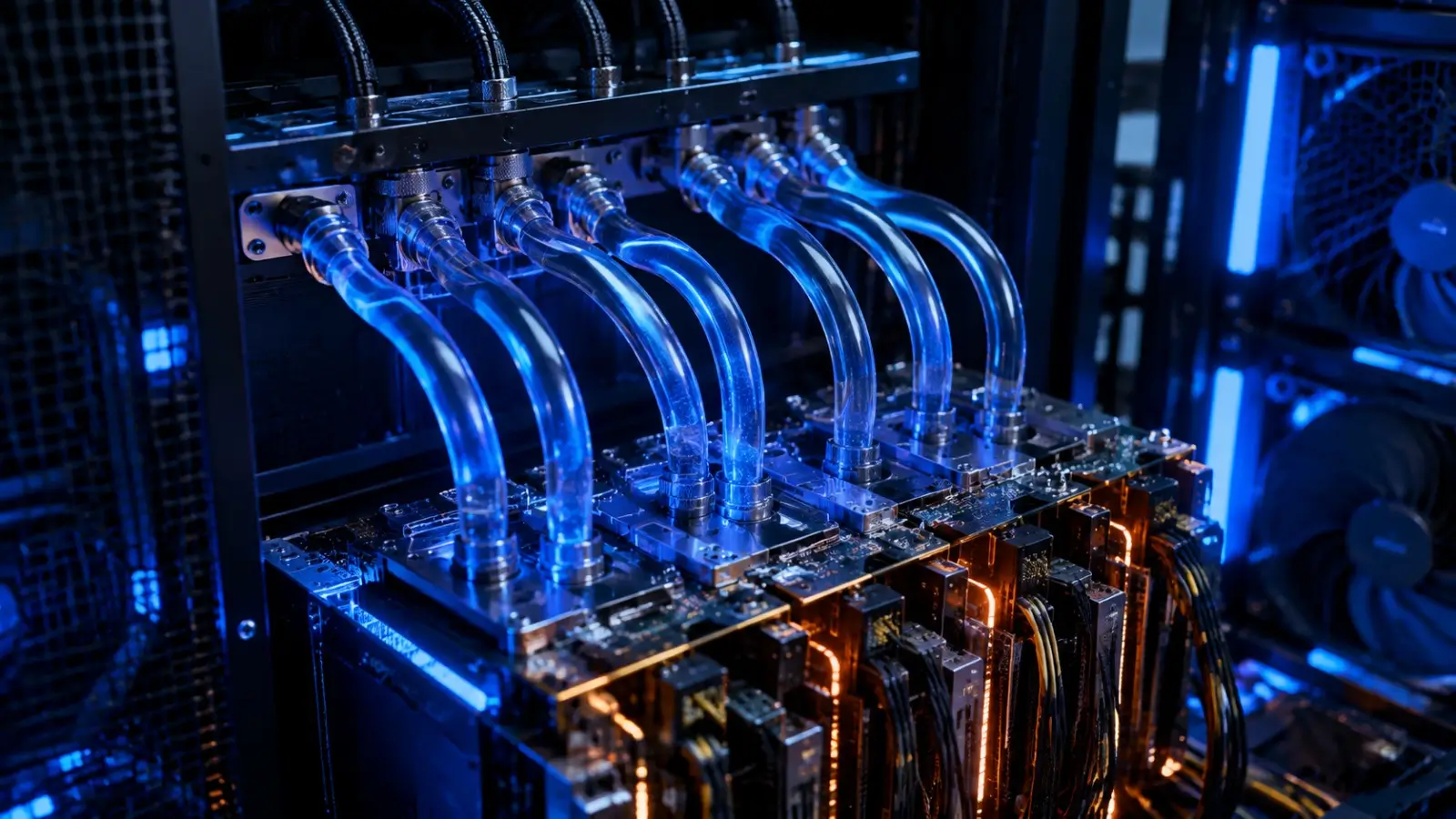
Artificial intelligence workloads are changing the physical requirements of computing infrastructure as organizations deploy larger models, more complex applications, and increasingly demanding AI services. Higher processing densities are creating new challenges for thermal management because modern accelerator systems generate significantly more heat within compact computing environments. Traditional cooling approaches based primarily on airflow continue to support many enterprise facilities, but high-density AI deployments are encouraging operators to evaluate alternative thermal strategies. Cooling decisions now influence infrastructure planning because they affect compute performance, energy consumption, equipment reliability, and long-term expansion requirements. The International Energy Agency has highlighted increasing electricity demand from data centers as a significant impact of AI adoption, making infrastructure efficiency a growing priority for technology leaders. Liquid based thermal management is therefore gaining attention as one of the approaches being evaluated for future high-density computing environments.

AI data centers increasingly require coordinated consideration of rack density, processor performance, and energy efficiency because these factors directly interact within high-performance computing environments. Traditional infrastructure planning models often treated computing systems and facility operations as separate areas, but AI workloads are creating closer relationships between hardware architecture and physical infrastructure requirements. Higher-performance accelerator platforms generate concentrated thermal loads that require efficient heat removal to maintain reliable operations. Liquid cooling addresses this challenge by transferring heat closer to the source through specialized cooling systems designed for high-density computing environments. The technology does not represent a universal replacement for air cooling because workload requirements, facility design, and operational models differ across organizations. However, growing adoption of accelerated computing is encouraging infrastructure providers to evaluate liquid cooling as part of broader strategies focused on capacity utilization, reliability, and energy efficiency.

Understanding Why AI Workloads Are Driving Cooling Changes

AI workloads differ from many traditional enterprise applications because they frequently rely on large-scale accelerator clusters operating together for training, inference, and advanced computational tasks. These workloads can create concentrated heat generation within individual racks, increasing the importance of effective thermal management strategies. Excessive operating temperatures can affect system stability, hardware reliability, and overall infrastructure performance, making cooling design an important factor in maintaining predictable operations. The increasing concentration of computing power within smaller physical spaces has influenced facility design approaches, particularly for environments built around accelerated computing clusters. Air cooling remains an important technology, but its effectiveness depends on factors such as rack density, airflow management, temperature requirements, and facility configuration. AI-driven infrastructure growth has increased interest in cooling technologies that operate closer to high-power components rather than relying only on traditional airflow management methods.

The relationship between computing density and cooling requirements has become an increasingly important consideration in AI infrastructure planning. Processor manufacturers continue to develop more powerful accelerator platforms, which encourages infrastructure operators to evaluate whether existing cooling systems can support future hardware generations without requiring major redesigns. Direct-to-chip cooling systems address this challenge by circulating coolant through components that generate significant amounts of heat, improving thermal transfer efficiency compared with conventional approaches in high-density environments. Liquid cooling systems require careful planning around piping infrastructure, maintenance procedures, coolant management, equipment compatibility, and operational expertise. These requirements mean organizations need to evaluate thermal management alongside computing architecture, facility design, and future workload expectations. A successful cooling strategy depends on balancing performance requirements, operational complexity, investment considerations, and long-term infrastructure objectives.

Direct-to-Chip Cooling Is Becoming a Key Technology for High-Density Systems

Direct-to-chip cooling has gained attention because it places the cooling mechanism closer to the components generating the majority of system heat. Unlike traditional air-based approaches that remove heat after it spreads throughout the server environment, direct-to-chip systems use liquid channels or cold plates positioned near processors to improve heat transfer efficiency in high-density computing environments. This approach can support higher rack densities because it reduces dependence on large volumes of circulating air throughout the facility. AI environments are particularly relevant for this technology because accelerator systems deliver significant computing capability within compact physical configurations. Research from 451 Research indicates that operators are evaluating combinations of liquid and air cooling technologies as they respond to the thermal requirements of demanding AI workloads. The adoption path varies between organizations because factors such as existing facilities, workload requirements, and investment cycles influence the suitability of liquid cooling deployments.

Cooling design increasingly affects how organizations evaluate infrastructure efficiency because thermal management influences available capacity, operational flexibility, and future expansion possibilities. Higher-density systems can potentially allow organizations to achieve greater computing output within existing physical footprints when thermal management supports reliable operation. This approach becomes particularly relevant in locations where expanding physical data center capacity or securing additional electricity supply presents challenges. NVIDIA has highlighted fully liquid-cooled designs for its next-generation AI infrastructure, demonstrating how major hardware providers are integrating thermal considerations into system architecture. Such developments indicate that cooling decisions are increasingly being considered alongside processor design, facility planning, and future AI deployment strategies. For infrastructure leaders, the decision involves evaluating cooling technology as part of a complete computing ecosystem rather than as an isolated mechanical solution.


[simple-author-box]

More from AI Infrastructure

Network resilience often appears stronger in planning documents than it proves during an actual

Choosing where artificial intelligence infrastructure belongs has become less about reaching the largest concentration

Few infrastructure decisions receive as little executive attention during early project development as the

COMPUTE WEEKLY

The briefing that 40,000+ tech leaders read every Monday. Sharp, fast, essential.

Great! We’ve received your information.

Building an AI Startup Without Owning GPUs

Not owning GPUs has become the default, deliberate strategy for building an AI company — not a compromise founders accept reluctantly. H100 rental rates fell 64-75% in fifteen months, a dense ecosystem of neoclouds and inference-as-a-service providers now lets startups skip infrastructure entirely, and credit programs can fund a company’s first year before a founder writes a check
Most Read

Network resilience often appears stronger in planning documents than it proves during an actual

Reliable connectivity often receives the same level of attention as power availability during hyperscale

Construction schedules no longer determine whether large digital infrastructure projects succeed because capital markets

Infrastructure planning discussions often prioritize engineering, construction, and utility considerations before examining how end

AI infrastructure deployment schedules depend on coordinated progress across hardware availability, electrical infrastructure, cooling

Disruptor Spotlight

Cerebras Systems

The chip that makes Nvidia nervous. Cerebras’ Wafer Scale Engine is rewriting the rules of AI inference at scale.
Faster
0 x
YoY Revenue
0 x
Transistors
0 T
Market Pulse
MSFT
+1.02%
NVDA
+0.66%
AMZN
-0.078%
AMD
-6.95%
TSMC
-2.98%
Indicative only · Not financial advice
Upcoming Events
SEP
The AI Infrastructure Race (India)
WEBINAR · ONLINE
The AI Infrastructure Race: Won on Power, Land and Trust — Not Capital
MAY
0
AI Infrastructure Summit
DUBAI · IN PERSON
MEA’s premier AI infrastructure event.
JUN
0 0
Compute Forecast Summit
SINGAPORE · IN PERSON
Our flagship APAC event. Early bird open.
Latest Moves
Live
ecolab
Ecolab Deepens Cooling Strategy With $4.75B CoolIT Acquisition
Ecolab is making one of its biggest moves yet into AI infrastructure after completing its $4.75 billion acquisition of liquid cooling specialist CoolIT Systems
Pure DC AVK Europe data center microgrid Dublin 110MW AI infrastructure Ireland 2026
Pure DC and AVK Deploy Europe’s First 110 MW Data Center Microgrid in Dublin
The Pure DC Dublin microgrid has made history as Europe’s first large-scale on-site data center microgrid, launched in partnership with power solutions provider AVK at Pure DC’s campus in Ireland.
Pace Digitek
Pace Digitek Partners With MEGMEET to Expand AI Data Center Power Business
India’s AI infrastructure ecosystem continues to mature as domestic technology manufacturers move beyond traditional telecommunications and industrial markets toward high-growth digital infrastructure opportunities
Follow Compute Forecast
11K followers
1200 followers
Companies to Watch
CW
CoreWeave
Neo Cloud · $19B · IPO Watch
CB
Cerebras Systems
AI Hardware · $4.25B · Pre-IPO
G42
G42
Sovereign AI · Abu Dhabi
H
Humain
Saudi AI · $40B Fund
Latest Podcast
AI Capex, Cloud Margins & the Nuclear Bet
48 MIN · 25 APR 2026

Why Liquid Cooling Could Become the New Normal for AI Data Centers

Artificial intelligence workloads are changing the physical requirements of computing infrastructure as organizations deploy larger models, more complex applications, and

Share
Liquid Cooling
0
847 SHARES

0
SHARES

[simple-author-box]

More from AI Infrastructure

Network resilience often appears stronger in planning documents than it proves during an actual

Reliable connectivity often receives the same level of attention as power availability during hyperscale

Construction schedules no longer determine whether large digital infrastructure projects succeed because capital markets

Infrastructure planning discussions often prioritize engineering, construction, and utility considerations before examining how end

COMPUTE WEEKLY

The briefing that 40,000+ tech leaders read every Monday. Sharp, fast, essential.

Great! We’ve received your information.

Global AI Infrastructure Outlook 2026

The briefing that 40,000+ tech leaders read every Monday. Sharp, fast, essential.
Download Free
Most Read

Network resilience often appears stronger in planning documents than it proves during an actual

Reliable connectivity often receives the same level of attention as power availability during hyperscale

Construction schedules no longer determine whether large digital infrastructure projects succeed because capital markets

Infrastructure planning discussions often prioritize engineering, construction, and utility considerations before examining how end

AI infrastructure deployment schedules depend on coordinated progress across hardware availability, electrical infrastructure, cooling

Disruptor Spotlight

Cerebras Systems

The chip that makes Nvidia nervous. Cerebras’ Wafer Scale Engine is rewriting the rules of AI inference at scale.
Faster
0 x
YoY Revenue
0 x
Transistors
0 T
Market Pulse
NVDA
$924.60
+2.4%
MSFT
$421.30
+1.1%
AMZN
$192.80
-0.6%
NVDA
$924.60
+2.4%
NVDA
$924.60
+2.4%
Indicative only · Not financial advice
Upcoming Events
MAY
0 0
DCD Global — London
LONDON · IN PERSON
World’s largest DC event. CF is media partner.
MAY
0
AI Infrastructure Summit
DUBAI · IN PERSON
MEA’s premier AI infrastructure event.
JUN
0 0

Compute Forecast Summit

SINGAPORE · IN PERSON
Our flagship APAC event. Early bird open.
Latest Moves
  • Live
Sam Altman
OpenAI appoints new Chief Infrastructure Officer to lead $100B DC programme
27 APR · OPENAI
Sam Altman
OpenAI appoints new Chief Infrastructure Officer to lead $100B DC programme
27 APR · OPENAI
Sam Altman
OpenAI appoints new Chief Infrastructure Officer to lead $100B DC programme
27 APR · OPENAI
Follow Compute Forecast
18.4K followers
12.1K followers
9.3K subscribers
41 episodes
Companies to Watch
CW
CoreWeave
Neo Cloud · $19B · IPO Watch
CB
Cerebras Systems
AI Hardware · $4.25B · Pre-IPO
G42
G42
Sovereign AI · Abu Dhabi
CW
Humain
Saudi AI · $40B Fund
Latest Podcast
AI Capex, Cloud Margins & the Nuclear Bet
48 MIN · 25 APR 2026
Scroll to Top
Seraphinite AcceleratorOptimized by Seraphinite Accelerator
Turns on site high speed to be attractive for people and search engines.








