
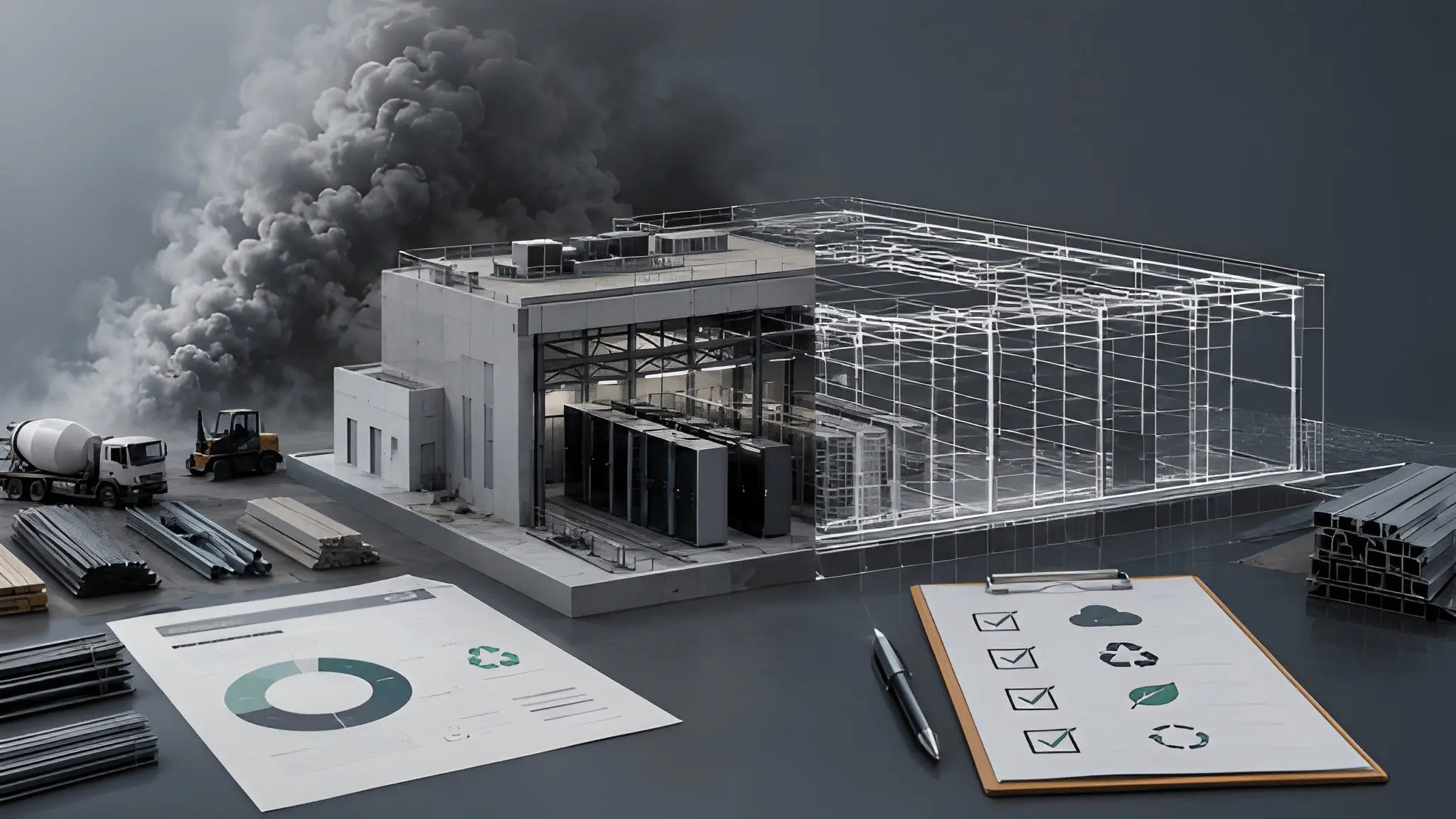
Organizations rarely inherit infrastructure decisions in isolation because every leased facility carries historical design assumptions into present-day sustainability reporting. Decisions made during site planning often determine environmental liabilities long before production systems occupy a single rack or application begins generating business value. Procurement leaders increasingly evaluate infrastructure through financial, operational, and environmental lenses because reporting obligations now extend beyond direct energy consumption. Corporate sustainability teams therefore examine construction choices with the same attention once reserved for electricity procurement or renewable energy contracts. Facility oversizing no longer represents only an engineering preference because it introduces embedded emissions that remain attached to assets throughout their accounting life. Executive teams increasingly incorporate embodied carbon considerations into sustainability governance because construction-related emissions occur before operational efficiency measures can influence overall lifecycle performance.

Environmental reporting frameworks continue expanding their expectations around value chain transparency, making infrastructure procurement an increasingly strategic governance issue. Investors, regulators, customers, and assurance providers now expect organizations to demonstrate how supplier decisions influence reported greenhouse gas inventories across multiple reporting boundaries. Physical capacity that remains permanently unused still reflects extraction, manufacturing, transportation, and installation activities completed during project delivery. These emissions cannot disappear simply because equipment deployment never reaches projected utilization levels or because expansion plans evolve differently than forecast. However, organizations often discover these inherited impacts only when sustainability disclosures require greater detail about embodied emissions across leased infrastructure. Infrastructure strategy has therefore become inseparable from long-term environmental accountability rather than remaining a purely operational consideration.
Concrete, Steel and Silence: Why Empty Space Has a Carbon Weight
Construction activity creates environmental consequences immediately because structural materials generate emissions before facilities receive their first production workload. Concrete production contributes significant carbon emissions through clinker manufacturing, while structural steel requires energy-intensive extraction, refining, and fabrication processes that remain embedded throughout a building’s lifecycle. Oversized shells amplify these impacts because additional floor area requires larger foundations, stronger framing systems, expanded roofing assemblies, and more extensive mechanical distribution networks. Every unnecessary square meter therefore represents additional embodied emissions that become part of downstream reporting obligations for organizations occupying those facilities. Right-sizing decisions influence environmental performance long before electrical systems operate because construction materials account for substantial lifecycle impacts during project delivery. Corporate occupiers increasingly recognize that inherited structural excess carries environmental significance even when operational utilization remains intentionally conservative during initial deployment.
Building shells rarely remain environmentally neutral after completion because unused structural capacity still reflects substantial resource extraction and industrial manufacturing activity. Cement, reinforcing steel, façade systems, insulation products, and structural connections collectively establish an emissions profile that cannot shrink after construction concludes. Infrastructure projects commonly incorporate future expansion capacity during planning, yet additional construction materials increase embodied emissions regardless of how much of the completed space ultimately supports productive computing capacity. Design optimism therefore creates environmental consequences extending well beyond capital budgeting discussions into long-term sustainability disclosures. Consequently, embodied carbon information has become an established consideration within sustainability-focused infrastructure procurement alongside resilience, connectivity, and operational performance metrics. Infrastructure planning now demands greater precision because environmental liabilities begin accumulating before digital services generate their first business outcome.

When Vacancy Becomes an Emissions Line Item
Unused white space often appears operationally harmless because empty aisles consume less electricity than fully populated computing environments. Lifecycle accounting reaches beyond active power consumption by recognizing emissions associated with installed building systems that remain essential regardless of occupancy levels. Fire suppression infrastructure, raised floor assemblies, cable containment systems, acoustic materials, sealants, internal partitions, and mechanical distribution networks continue representing embodied emissions throughout their service lives. These components require raw material extraction, industrial processing, transportation, installation, maintenance, and eventual replacement even when rack utilization remains significantly below planned capacity. Sustainability reporting increasingly captures these upstream and downstream impacts because value chain accounting extends beyond direct operational boundaries into leased assets and supplier activities. Organizations therefore account for lifecycle emissions associated with infrastructure included within their applicable reporting boundary, even when portions of that infrastructure contribute little operational value throughout the facility lifecycle.
Audit teams increasingly review infrastructure documentation alongside sustainability disclosures because reporting quality depends upon understanding how physical assets entered the organizational value chain. Material inventories, commissioning records, construction specifications, and supplier declarations provide evidence supporting emissions calculations beyond electricity consumption alone. Facilities designed around ambitious growth assumptions often retain permanently unused capacity that nevertheless required manufactured products with measurable environmental footprints. Those impacts become relevant when organizations quantify purchased goods, capital assets, and leased infrastructure under established greenhouse gas accounting methodologies. Meanwhile, reporting expectations continue shifting toward greater transparency around lifecycle emissions instead of relying primarily upon operational efficiency indicators. Executive leadership therefore benefits from evaluating utilization assumptions before contractual commitments transform speculative expansion capacity into reportable environmental obligations.
Stranded Materials, Stranded Carbon
Material selection influences environmental performance long after construction crews leave the project because structural systems determine much of a facility’s embodied carbon profile. Engineers balance durability, resilience, structural loading, seismic performance, and lifecycle costs when specifying framing materials, yet oversized designs frequently require substantially greater material volumes than operational demand ultimately justifies. Timber, steel, concrete, composite systems, and hybrid structural approaches each present distinct environmental characteristics depending upon sourcing practices, manufacturing methods, transportation distances, and end-of-life recovery opportunities. Overspecified structural spans or excessive floor loading may improve theoretical expansion flexibility while simultaneously increasing embedded emissions across the completed asset. Sustainability teams must therefore understand how design specifications shape inherited environmental inventories rather than focusing exclusively upon electricity consumption after occupancy begins. Infrastructure procurement now requires deeper collaboration between engineering, finance, sustainability, and procurement stakeholders to balance resilience with measurable environmental performance.
Construction materials continue carrying their embodied emissions throughout a facility’s operational life even when portions of the completed capacity remain underutilized. Carbon accounting does not distinguish between productive and idle structural components because both required identical manufacturing processes before installation. Infrastructure designed with additional future capacity contains embodied emissions created during construction, and organizations account for those emissions according to the reporting boundary defined by applicable greenhouse gas accounting standards. Investors increasingly expect organizations to provide transparent, decision-useful sustainability disclosures supported by consistent lifecycle data and recognized reporting frameworks. Finally, organizations evaluating infrastructure partnerships gain stronger governance outcomes by examining material efficiency alongside resilience, scalability, and commercial performance during provider selection. Sustainable infrastructure decisions increasingly depend upon disciplined design optimization rather than assuming larger physical footprints automatically create greater long-term value.
Why Bloat Fails The Audit
External assurance practices continue evolving because stakeholders increasingly expect sustainability disclosures to withstand the same level of scrutiny applied to financial reporting. Verification teams now evaluate data lineage, calculation methodologies, supplier evidence, and lifecycle assumptions instead of concentrating only on operational efficiency metrics such as Power Usage Effectiveness. Embodied emissions receive greater attention because construction decisions influence reported inventories long before operational optimization measures produce measurable reductions. Assurance engagements therefore require organizations to demonstrate how infrastructure choices align with recognized accounting methodologies and documented procurement records across the reporting boundary. Facilities containing significant unused structural capacity require organizations to maintain complete documentation supporting embodied emissions associated with construction materials included within the applicable reporting boundary. Independent verification has consequently become more dependent upon complete lifecycle documentation than isolated operational performance indicators.
Frameworks supporting corporate sustainability reporting increasingly encourage organizations to strengthen governance around supplier data quality and lifecycle transparency across material value chain activities. European reporting requirements, investor expectations, and voluntary disclosure platforms collectively reinforce the importance of traceable environmental information supported by credible evidence. Infrastructure providers capable of documenting embodied carbon, construction materials, and lifecycle assumptions place tenant organizations in a stronger position during external assurance exercises. Limited assurance engagements require sufficient supporting evidence for reported lifecycle emissions regardless of infrastructure utilization because assurance focuses on the completeness and reliability of disclosed information. Procurement strategies therefore influence reporting confidence because evidence gaps often emerge from historical design decisions rather than current operational performance. Environmental governance now extends beyond energy management into disciplined infrastructure selection supported by verifiable lifecycle information.
Your Disclosure, Their Overbuild
Infrastructure planning has traditionally emphasized resilience, scalability, and future expansion because digital demand rarely follows predictable growth patterns. Sustainability reporting introduces another dimension by attaching measurable environmental consequences to physical capacity that never delivers proportional operational value. Construction materials, structural systems, interior fit-outs, and supporting building components establish emissions profiles that remain associated with leased infrastructure regardless of utilization outcomes. Organizations cannot easily separate inherited embodied emissions from broader environmental disclosures once those assets enter the reporting boundary through procurement and occupancy decisions. Executive leadership therefore benefits from evaluating provider design philosophy with the same rigor applied to service reliability, commercial flexibility, and operational resilience. Responsible infrastructure strategy increasingly depends upon selecting capacity that aligns with realistic business requirements instead of speculative expansion assumptions.
Environmental disclosures now shape investment decisions, regulatory engagement, customer relationships, and long-term corporate credibility across global markets. Frameworks including the Corporate Sustainability Reporting Directive, CDP disclosures, and established greenhouse gas accounting standards continue encouraging greater transparency around value chain emissions supported by defensible evidence. Provider construction choices can influence reported lifecycle emissions whenever applicable greenhouse gas accounting standards include those leased assets or value chain activities within an organization’s reporting boundary. Organizations that prioritize disciplined capacity planning place themselves in a stronger position to manage future reporting complexity while improving confidence in sustainability governance. Careful infrastructure selection ultimately reduces inherited environmental liabilities without compromising operational resilience or business continuity objectives. Improving lifecycle environmental performance requires organizations to evaluate both appropriate capacity planning and operational energy efficiency throughout the life of infrastructure assets.











