
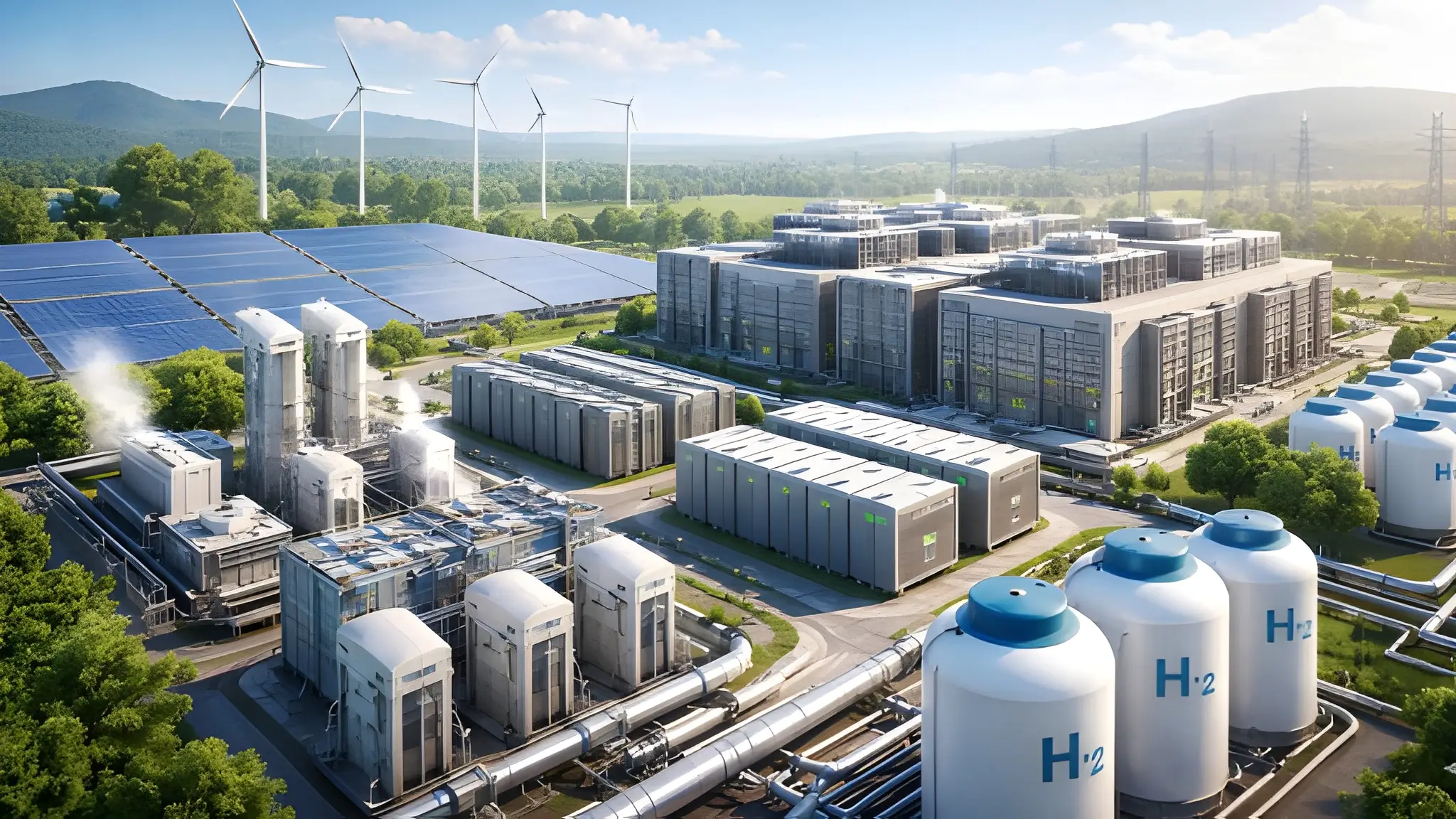
The rapid expansion of artificial intelligence workloads has elevated uptime requirements to near-continuous operational thresholds, often aligning with Tier IV-level availability benchmarks of approximately 99.995% across hyperscale environments. Renewable energy sources such as solar and wind continue to grow in deployment, yet their inherent intermittency introduces variability that conflicts with deterministic compute demand. Data centres operating large-scale AI clusters cannot tolerate fluctuations in power delivery without risking latency spikes, system instability, or workload interruption. This mismatch between variable energy generation and constant compute demand has intensified scrutiny on energy reliability as a foundational design constraint. Dispatchable power systems, capable of delivering electricity on demand regardless of external conditions, provide the operational stability required to sustain AI performance at scale. The industry now recognizes that sustainability must integrate reliability rather than assume it as an external condition.

Grid operators and infrastructure developers have begun reassessing the limitations of renewable-only strategies in the context of high-density compute environments. Solar generation drops during nighttime hours, while wind output fluctuates unpredictably based on atmospheric conditions, creating gaps that must be filled instantly. AI clusters, which often run continuously for extended durations, rely on layered power protection systems such as UPS, redundancy architectures, and conditioning equipment to mitigate fluctuations, although sustained instability can still introduce latency spikes, system imbalance, or workload disruption. Energy storage systems such as batteries help bridge short-duration gaps, yet they remain insufficient for prolonged deficits or seasonal variability. Dispatchable energy sources, including natural gas and emerging hydrogen-based systems, address these gaps by offering controllable and scalable output. Consequently, infrastructure planning now prioritizes hybridization rather than exclusive reliance on any single energy source.
Hybrid Power Stacks: The New Data Centre Architecture
Modern data centre architecture increasingly integrates multiple energy sources into unified power stacks, particularly across hyperscale and advanced edge deployments, where operators aim to optimize both sustainability and performance through hybridized energy models. These hybrid configurations combine renewable generation, battery storage, and dispatchable power systems to create a resilient energy ecosystem capable of adapting to dynamic conditions. Operators no longer treat energy sourcing as a peripheral consideration, instead embedding it into the core design philosophy of infrastructure development. Gas turbines, hydrogen-ready engines, and advanced battery systems are being piloted and selectively deployed to operate in coordination, contributing to consistent power delivery under varying load conditions while large-scale integration continues to evolve. This architectural shift reflects a broader transition toward systems thinking, where energy reliability and efficiency align with computational demands. Moreover, the integration of diverse energy inputs enhances redundancy and reduces dependency on external grid stability.
Engineering teams now design facilities with energy orchestration layers that dynamically balance supply sources based on availability, cost, and emissions profiles. These control systems monitor real-time conditions and increasingly support adaptive power allocation across available energy sources, although fully optimized multi-source orchestration at scale remains an area of ongoing development. Battery storage absorbs excess renewable generation during peak production periods and discharges during shortfalls, smoothing variability within the system. Dispatchable units activate during extended deficits or peak demand intervals, maintaining continuous operations without interruption. Hydrogen-ready infrastructure introduces an additional layer of flexibility by enabling future fuel transitions without requiring significant redesign. The result is an adaptive energy framework that evolves alongside both technological advancements and regulatory pressures.
From Backup to Baseload: Redefining On-Site Power
On-site power systems have historically served as emergency backup solutions, activated only during grid outages or unexpected disruptions. However, the growing demand for consistent energy supply has begun shifting their role toward continuous or prime power operation in select grid-constrained regions rather than representing a universal global transition. Data centres located in grid-constrained areas increasingly rely on on-site generation as a primary energy source rather than a contingency measure. Gas generators, once reserved for rare events, are increasingly used in specific markets to support portions of base load requirements while remaining subject to regulatory and operational constraints. This transition reflects a broader redefinition of reliability, where backup systems are evolving into more active operational components in certain deployments rather than becoming standard across all data centre environments. As a result, infrastructure strategies now emphasize durability, efficiency, and emissions management within on-site power systems.
Fuel flexibility has emerged as a critical factor in enabling this operational shift, allowing generators to adapt to evolving sustainability requirements. Hydrotreated vegetable oil and hydrogen blends provide lower-emission alternatives to traditional diesel, reducing environmental impact while maintaining performance. Manufacturers have begun developing engines capable of operating across multiple fuel types, with performance characteristics that can vary depending on fuel composition, system configuration, and operating conditions. This adaptability ensures that facilities can respond to changing regulatory frameworks and fuel availability constraints. In addition, operators can transition gradually toward cleaner fuels without incurring immediate infrastructure overhaul costs. The convergence of reliability and sustainability within on-site power systems defines a new baseline for data centre energy strategy.

The Grid Constraint Reality Check
The availability of grid power has become a limiting factor for data centre expansion, particularly in regions experiencing rapid digital infrastructure growth. Utilities face challenges in scaling transmission and distribution networks quickly enough to meet increasing demand from hyperscale facilities. Connection delays, capacity constraints, and regulatory hurdles have extended project timelines and introduced uncertainty into infrastructure planning. Data centre developers must now navigate a landscape where securing power access often dictates site selection more than land availability or connectivity. This shift has redefined the hierarchy of constraints, placing energy availability at the forefront of strategic decision-making. However, reliance on grid expansion alone no longer provides a viable path to meet immediate demand.
Dispatchable power solutions offer a practical response to these limitations by enabling localized energy generation that can reduce dependence on grid timelines, although deployment still depends on regulatory approvals, fuel logistics, and emissions compliance requirements. Facilities can deploy on-site systems to bypass delays and ensure timely project execution without compromising operational requirements. Hybrid energy models reduce strain on public infrastructure while providing operators with greater control over energy sourcing and cost management. Grid interconnection remains valuable for supplemental supply and redundancy, yet it no longer serves as the sole foundation for power delivery. Energy strategies now incorporate a distributed approach that balances grid reliance with autonomous generation capabilities. The evolution toward decentralized energy models aligns closely with the demands of AI-driven infrastructure expansion.
Fuel Optionality as a Sustainability Strategy
Fuel optionality has emerged as a growing design principle in forward-looking data centre infrastructure, enabling systems to operate across multiple energy inputs while adoption continues to expand beyond early-stage implementations. Engineers now prioritize flexibility at the component level, ensuring compatibility with natural gas, hydrogen, and emerging low-carbon fuels. This approach reduces long-term risk by allowing operators to adapt to evolving market conditions, regulatory changes, and technological advancements. Facilities designed with fuel-agnostic capabilities can support transitions between natural gas, hydrogen blends, and emerging fuels with planned modifications, although seamless switching across all fuel types remains technically limited in current deployments. In addition, this flexibility supports gradual decarbonization without disrupting operational continuity. The concept reframes sustainability as an adaptive process rather than a fixed endpoint.
Infrastructure investments increasingly reflect this philosophy by incorporating modular systems that support incremental upgrades and fuel transitions over time. Hydrogen-ready turbines, dual-fuel engines, and adaptable storage solutions provide a pathway toward reduced emissions by minimizing redesign requirements, while still necessitating supporting infrastructure adjustments such as storage, transport, and safety systems. Operators can deploy existing technologies today while maintaining readiness for future energy ecosystems. This staged approach aligns financial planning with technological maturity, minimizing stranded asset risk. Furthermore, it enables organizations to respond proactively to policy incentives and carbon reduction targets as they evolve. The integration of fuel optionality strengthens resilience while advancing sustainability objectives in a pragmatic manner.
Sustainability as a Power Balancing Act
The evolution of AI infrastructure has reshaped the definition of sustainability, shifting focus from singular energy sources to integrated systems that balance reliability, efficiency, and environmental impact. Dispatchable power has emerged as a critical component in this equation, ensuring consistent performance while supporting the integration of renewable energy. Hybrid power architectures demonstrate that sustainability does not require compromise when approached through system-level design. Data centre operators now recognize that resilience and decarbonization must progress in parallel to meet the demands of AI-driven growth. This balanced approach reflects a deeper understanding of the complexities inherent in large-scale infrastructure development. Therefore, the future of sustainable AI infrastructure lies in harmonizing diverse energy inputs rather than prioritizing any single solution.
The transition toward dispatchable sustainability represents a pragmatic response to the realities of energy supply, technological constraints, and operational requirements. It acknowledges that no single energy source can independently support the scale and reliability demanded by modern AI workloads. By integrating dispatchable systems with renewables and storage, operators can achieve both stability and emissions reduction without sacrificing performance. Fuel flexibility and hybrid design principles ensure that infrastructure remains adaptable in the face of evolving energy landscapes. This model provides a scalable pathway for continued expansion while aligning with global sustainability goals, reflecting an emerging framework that is gaining traction rather than a fully established industry standard. Ultimately, the success of AI infrastructure will depend on its ability to balance ambition with operational discipline through intelligent energy strategies.











