 Skip to content
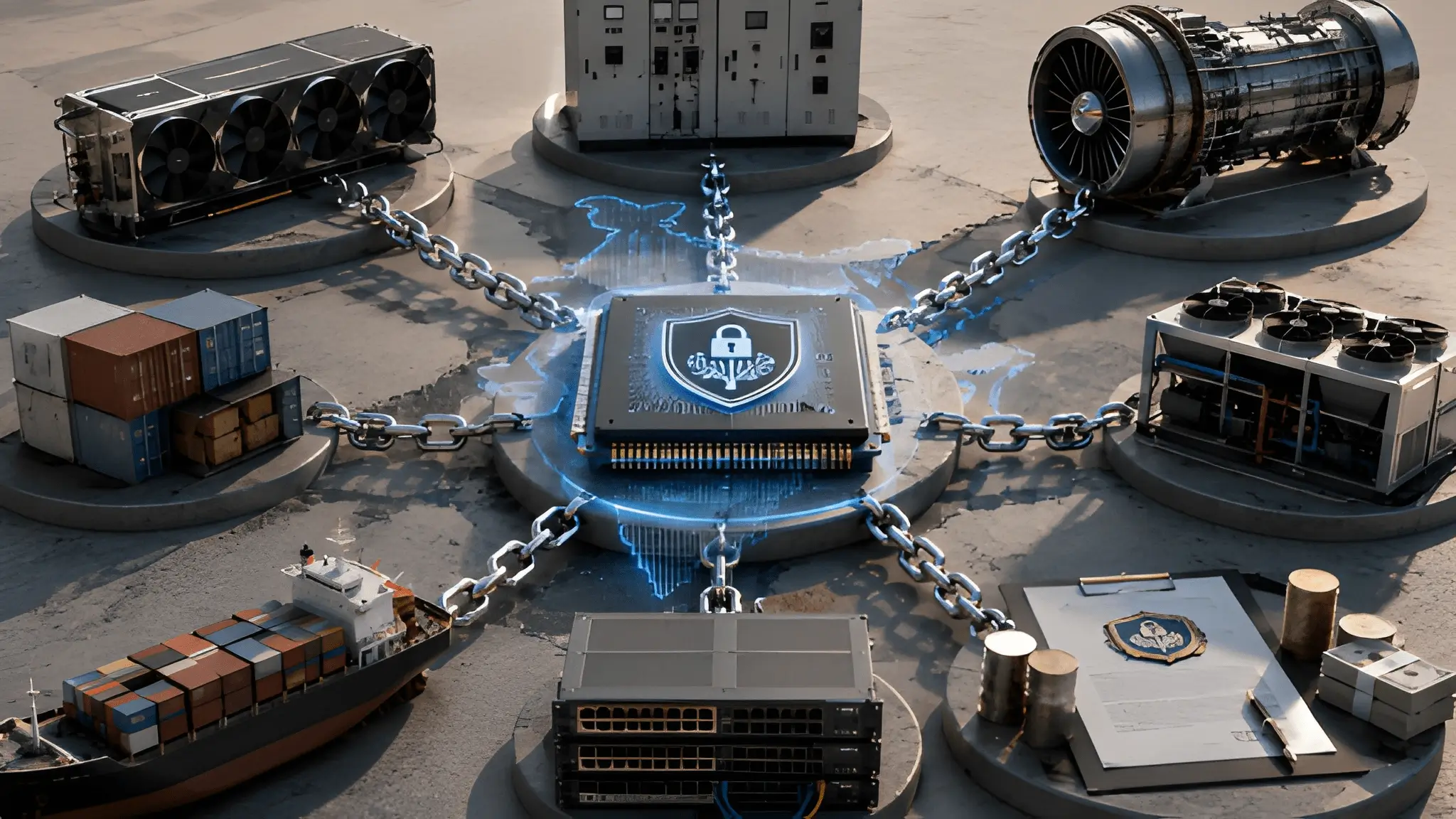
India can own the land, hold the operating license, employ the engineering team, and still depend on foreign systems to keep an AI facility running. That dependency does not sit in one obvious component, because it spreads across financing, electrical infrastructure, thermal systems, controls, software, replacement parts, and the engineering knowledge required to integrate them. A sovereign compute facility therefore needs a broader definition of ownership than the legal entity that appears on its title documents. The practical question is not simply whether processors sit inside Indian borders, but whether the surrounding infrastructure can continue operating when an overseas supplier changes pricing, restricts exports, delays a shipment, or withdraws technical support. India’s expanding data center capacity makes this distinction increasingly material because high-density AI infrastructure concentrates dependencies across power delivery, cooling, networking, and specialized equipment.

Dollar Debt in Rupee Infrastructure
A facility can generate revenue in rupees while carrying financing exposure in dollars, creating a mismatch that sits below the visible ownership structure. Foreign-currency borrowing does not automatically reduce operational sovereignty, but it introduces refinancing, hedging, interest, and currency variables that can influence how aggressively an owner expands or restructures an asset. The economics become particularly important when project debt extends beyond the period for which practical hedges remain available, because the borrower may face rollover risk when an existing hedge expires before the underlying obligation. Currency protection also carries a cost, and changes in that cost can alter debt-service coverage, capital allocation, and the financial flexibility available to the operator. For an AI facility, those effects can reach beyond the finance department because delayed expansion can postpone additional electrical capacity, cooling upgrades, spare inventory, and accelerator deployments.
Contract structure can deepen that dependency when financing documents contain mandatory repayment events, refinancing conditions, security arrangements, or restrictions linked to changes in ownership and project performance. Those clauses do not mean that lenders control day-to-day engineering decisions, yet they can constrain decisions that affect the asset’s long-term operating model. An operator facing a currency shock may prioritize debt service over stocking expensive replacement equipment, redesigning a cooling loop, or maintaining redundant electrical inventories. India’s financial framework already recognizes foreign-exchange exposure as a material consideration for external commercial borrowing, while hedging arrangements can introduce their own tenor and rollover considerations. Recent movements in offshore fundraising also demonstrate that dollar funding remains an active part of the broader Indian financial system rather than an exceptional financing route.
Spare Parts Sovereignty Is Harder Than Chip Sovereignty
A failed accelerator attracts immediate attention because its strategic importance is obvious, while a failed pressure sensor can disappear into a maintenance ticket until the consequences become operational. AI facilities depend on large populations of ordinary components, including filters, seals, pumps, valves, temperature sensors, circuit breakers, contactors, power supplies, control boards, and communication modules. Each component may represent a small fraction of capital expenditure, yet a single unavailable item can disable a larger subsystem if engineers cannot substitute it without recertification or redesign. Cooling infrastructure creates particularly sensitive maintenance dependencies because thermal control relies on coordinated operation among pumps, valves, heat exchangers, controls, sensors, and distribution equipment. Electrical infrastructure can face a similar problem when specialized power electronics and subcomponents lack an immediately qualified domestic substitute, creating a more complex maintenance dependency than the equipment’s purchase price suggests.

Lead time also matters differently during construction and operations because a project can schedule a major transformer months ahead, while an operating facility may need an unexpected replacement immediately. An overseas shipment that takes several weeks can therefore create a disproportionate operational problem if the failed component sits inside a system without sufficient redundancy. The correct response does not require manufacturing every component domestically, because that approach would often produce uneconomic duplication and could reduce equipment choice. Instead, operators need engineering-approved substitutes, regional inventory, documented interchangeability, repair capability, and access to component-level diagnostics. India already manufactures significant portions of electrical infrastructure, while power electronics and specialized subcomponents retain significant import exposure, creating a more complex localization picture than a simple domestic-versus-imported label suggests.
The Blueprint Is Borrowed Even When the Building Is Ours
Physical construction creates the appearance of independence because concrete, steel, electrical rooms, mechanical systems, and racks become fixed assets inside India. The engineering logic behind those assets can remain externally sourced through reference architectures, thermal design rules, equipment integration procedures, validation methods, and commissioning documentation. AI infrastructure makes this distinction more important because high-density racks require coordinated decisions across power distribution, liquid cooling, controls, network topology, and mechanical capacity. A local engineering team can execute installation successfully while still relying on overseas design assumptions that it did not develop or independently validate. That dependency becomes significant when operators need to change rack density, coolant characteristics, electrical topology, or operating temperatures after the original design reaches its limits. A facility cannot claim deep engineering autonomy merely because Indian contractors assembled equipment according to a foreign reference design.
Engineering independence also requires ownership of the models and decision frameworks used to modify an operating facility. Thermal simulations, electrical protection studies, commissioning sequences, control logic, failure-mode analysis, and maintenance procedures determine whether a site can safely move from one equipment configuration to another. Reference documentation can accelerate deployment, but operators need enough internal expertise to challenge its assumptions when Indian ambient conditions, grid characteristics, water quality, equipment availability, or workload behavior differ from the original design environment. India’s manufacturing base is expanding into AI-oriented infrastructure, including power distribution and thermal equipment, with new domestic production facilities supporting high-density cooling and broader electrical-equipment manufacturing capability. That transition will matter more when domestic engineering teams can alter architectures without waiting for foreign design approval or proprietary troubleshooting. The strategic objective should therefore move from reproducing proven designs toward developing the technical authority to change them safely.
The Low-Value Parts That Create High-Value Risk
A bill of materials can hide strategic exposure because percentage-of-cost analysis favors expensive equipment and makes small components appear commercially insignificant. Connectors, busbars, coatings, seals, specialty chemicals, sensor assemblies, insulating materials, and valve components may each carry limited financial weight while remaining essential to system reliability. A missing connector can prevent a control cabinet from operating, while an unavailable coating or chemical can affect maintenance procedures for equipment exposed to demanding thermal or electrical conditions. Busbars provide another example because their physical simplicity does not eliminate requirements around conductivity, insulation, geometry, certification, and compatibility with the surrounding power-distribution architecture. These parts can become difficult to replace when the alternative requires fresh testing, revised drawings, or equipment-level certification. Supply-chain resilience therefore depends on technical substitutability rather than simply counting how much of the purchase order originates domestically.
The most useful procurement metric is consequently not domestic content alone, but recoverability under disruption. Operators should know which components have qualified Indian alternatives, which require imported raw materials, which depend on proprietary specifications, and which have no approved second source. Such a database can connect procurement records with engineering drawings, maintenance schedules, failure modes, and minimum-stock requirements rather than leaving supply-chain risk inside a purchasing spreadsheet. The same discipline should apply to transformers, switchgear, cooling systems, generators, and other equipment whose procurement timelines can influence expansion schedules. Current industry analysis shows that India’s electrical-equipment sector still faces substantial import dependence, particularly in power electronics and subcomponents, reinforcing the need to treat upstream material and component availability as an engineering variable. Once procurement teams map those dependencies at component level, executives can assign capital to inventory, domestic qualification, redesign, or dual sourcing according to actual operational exposure.
Sovereignty Is Not Where You Build, But What You Can Repair Without Permission
Sovereignty becomes operational only when an AI facility can continue functioning through predictable supply disruptions, financial volatility, equipment failures, and changes in workload requirements. Indian ownership provides an important foundation, but ownership alone does not eliminate potential dependence on externally supplied GPUs, networking equipment, power electronics, cooling technology, proprietary engineering knowledge, or specialized replacement components. The stronger test asks whether engineers in India can diagnose a failure, obtain a qualified replacement, modify the system, validate the change, and return the facility to service without waiting for an external authority. It also requires financial structures that do not force every major operating or expansion decision through an external currency or refinancing constraint. The result is a definition of sovereignty based on operational freedom rather than geographic location or ownership labels.
India’s compute strategy will become more resilient when the dependency map moves from headline hardware into the less visible layers that keep that hardware productive. Chips remain strategically important, but their value depends on electrical conversion, cooling, power quality, controls, maintenance, financing, and a supply chain capable of replacing the supporting components required to keep those systems operational. A sovereign facility should therefore be tested against a practical failure scenario rather than its commissioning announcement: remove one overseas supplier, interrupt one critical shipment, increase one equipment density, or change one financing assumption and measure how long the facility can continue operating. Ultimately, the strongest form of sovereignty is the ability to fix, scale, reconfigure, and optimize critical compute infrastructure with Indian supply chains, Indian engineering capability, and Indian decision-making authority when external support becomes unavailable.










