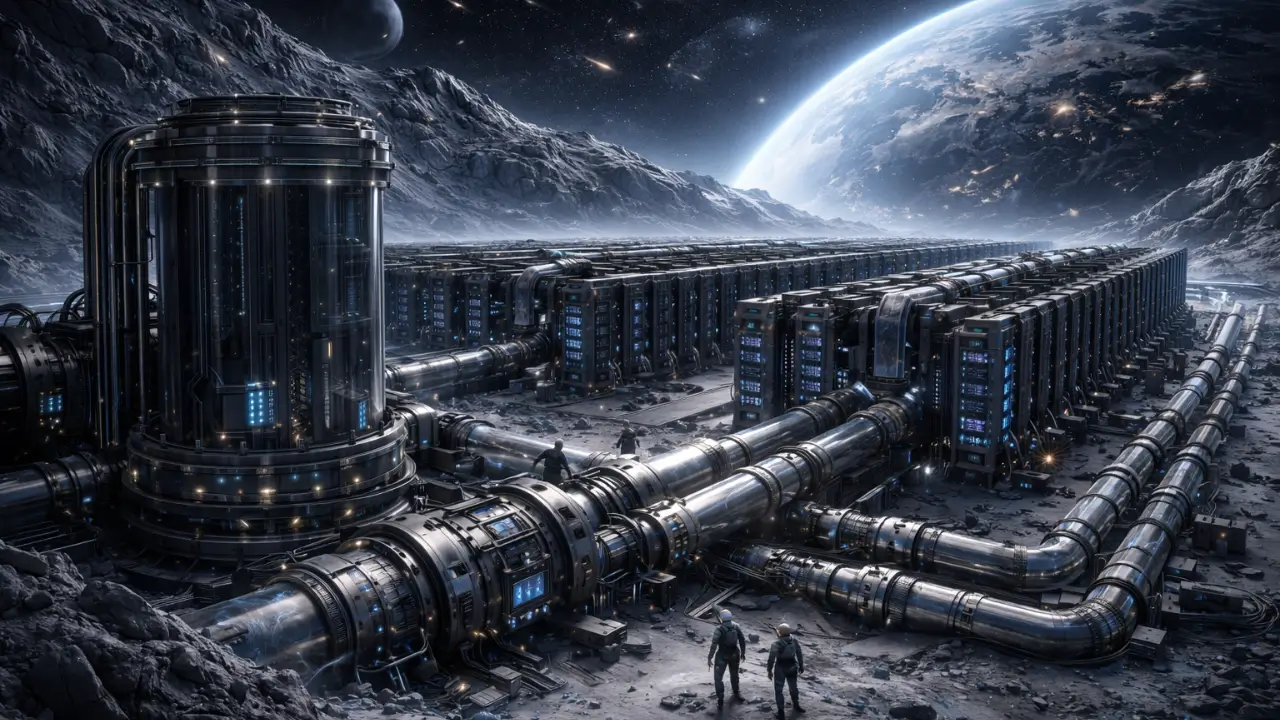
In early 2026, Voyager Technologies CEO Dylan Taylor delivered a sobering assessment for advocates of orbital data centers. According to Taylor, cooling remains one of the most serious technical barriers facing space-based computing infrastructure. He emphasized that even under aggressive assumptions, a two-year deployment timeline would be difficult to achieve. The reason is simple but unforgiving: in space, heat can only be removed through radiation rather than convection or conduction.
That observation points to a deeper engineering reality. Managing waste heat presents challenges even in terrestrial data centers. In orbit, those challenges intensify dramatically. Cooling constraints may ultimately determine whether space-based data centers remain experimental concepts or evolve into scalable infrastructure. For orbital computing to move beyond demonstration missions, thermal management must shift from a secondary concern to the central design constraint. Understanding why requires a closer look at physics, system architecture, and the economic consequences tied to both.
Why Cooling in Space Poses Extreme Challenges
On Earth, data center cooling relies on a combination of conduction, convection, and radiation. Fans move air across heat sinks. Chilled water loops carry heat away from processors. Liquid cooling systems transfer thermal energy through pipes before releasing it to ambient air or cooling towers. These mechanisms depend on surrounding media such as air or water.
In space, those options disappear. The vacuum provides no external medium to carry heat away. As a result, thermal radiation becomes the only viable mechanism for rejecting waste heat. Radiation transfers energy in the form of infrared electromagnetic waves. The effectiveness of this process depends on surface temperature and emissivity. Although radiative output increases rapidly with temperature, the total heat rejected per square meter remains limited.
For spacecraft, this limitation leads to the use of external radiators. These panels circulate a heat exchange fluid and expose it to deep space while avoiding direct sunlight. Radiators perform reliably at modest power levels. However, scaling them to manage the heat generated by dense AI compute clusters presents an entirely different problem. Every additional square meter increases mass, structural complexity, and risk. Launch economics amplify these constraints because mass directly translates into cost.
The Thermal Load Created by AI Systems
The scale of modern AI workloads compounds the cooling problem. Conventional enterprise servers typically dissipate a few kilowatts per rack. By contrast, AI clusters built around high-end accelerators produce heat loads that reach into the tens or even hundreds of kilowatts per rack. These systems operate continuously. Training runs and inference workloads maintain sustained thermal output with little opportunity for cooling recovery.
This continuous heat generation places extreme demands on radiator systems. Radiative cooling grows slowly relative to surface area, which means rejecting hundreds of kilowatts requires expansive radiator arrays. Historical space systems provide useful context. Radiators on the International Space Station handle thermal loads measured in tens of kilowatts. Moving from that scale to megawatt-class rejection represents a major leap rather than a straightforward extension.
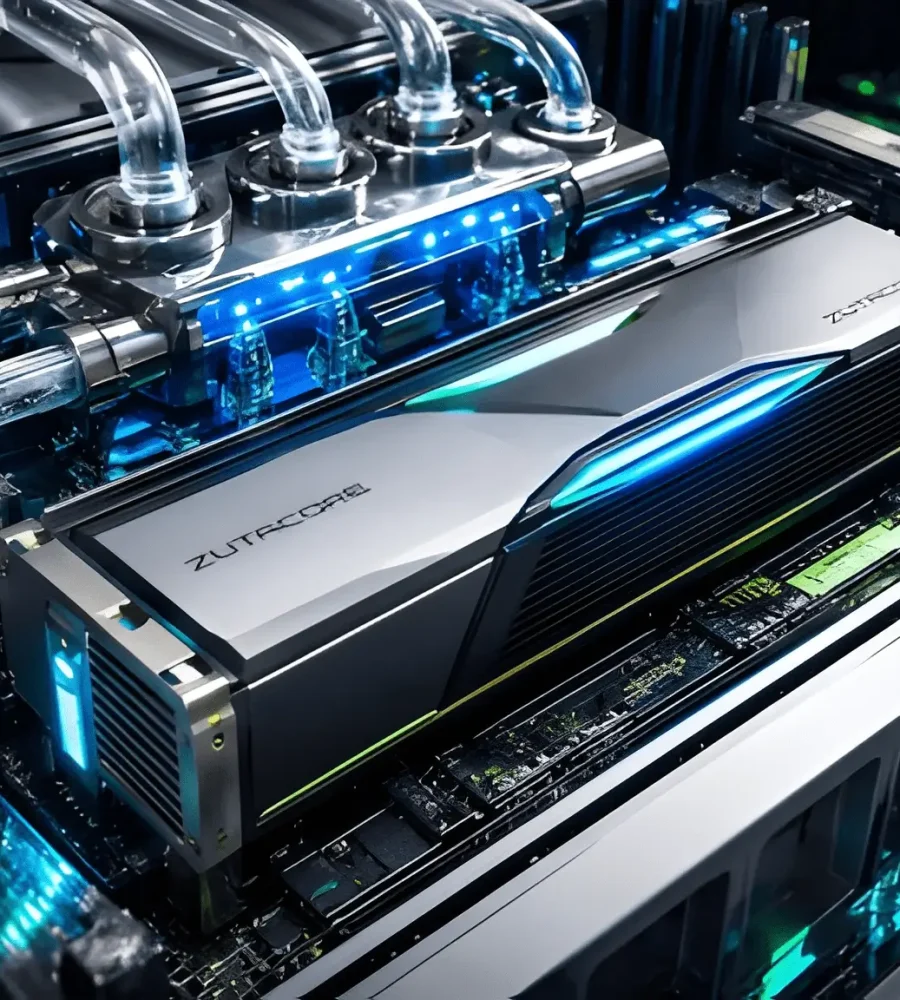
Internal thermal management adds further complexity. Within the spacecraft, heat must still be collected and transported to the radiators. Air circulation offers limited value beyond sealed internal loops. Engineers must rely on liquid cooling systems to move heat from processors to external panels. Pumps, fluid reservoirs, valves, and redundancy mechanisms all add mass and increase system complexity.
Radiator Design, Mass, and Orientation Constraints
Radiators impose several interrelated challenges beyond heat rejection alone. First, they are heavier than many observers expect. Depending on design and materials, radiator panels often require between five and nine kilograms per square meter. When multiplied across the surface area required for AI-scale heat loads, mass quickly reaches prohibitive levels.
Second, radiators must be carefully oriented. To function effectively, they need to face cold space rather than the Sun. Any absorbed solar radiation reduces net heat rejection. This requirement constrains spacecraft orientation and complicates attitude control. In some orbital configurations, maintaining optimal radiator alignment may conflict with power generation goals or communication needs.
Furthermore, radiator effectiveness varies throughout an orbit. Periods of solar exposure reduce thermal performance unless the spacecraft alters its orientation. Designing systems that maintain consistent heat rejection across orbital cycles adds another layer of engineering difficulty.
The Power and Heat Tradeoff in Orbit
One of the central paradoxes of orbital data centers lies in the relationship between power generation and heat rejection. Space offers abundant solar energy, which initially appears to solve the power supply problem. Large solar arrays can generate significant electrical output without fuel costs or grid constraints.
However, every watt of electrical energy consumed by compute hardware ultimately becomes waste heat. As solar capacity increases, thermal rejection requirements rise in parallel. Expanding power generation therefore intensifies the cooling challenge rather than alleviating it.
This dynamic creates a hard physical limit. Even with unlimited solar input, compute density remains constrained by the ability to radiate heat away. Without major advances in radiator efficiency or thermal transport, power abundance alone cannot enable large-scale orbital computing.
Engineering Concepts Under Active Exploration
Several approaches are under investigation to address orbital cooling, though each introduces its own tradeoffs.
Deployable radiator arrays provide larger surface areas after launch. These systems reduce launch volume but introduce mechanical complexity. Hinges, joints, and deployment mechanisms increase the risk of failure and complicate reliability modeling.
Two-phase fluid loops offer another avenue. These systems absorb heat through phase changes in the coolant, allowing thermal transport at relatively constant temperatures. While effective in principle, they require precise fluid management in microgravity and introduce additional pumps and control systems.
Material and surface engineering also plays a role. Advances in emissive coatings and structured surfaces may improve radiative efficiency. Higher emissivity combined with lower solar absorptivity could enhance heat rejection without increasing area. Even so, current materials improvements provide incremental gains rather than transformative leaps.
At present, none of these approaches scale cleanly to the multi-megawatt waste heat produced by AI data centers. Significant innovation remains necessary before commercial orbital facilities become feasible.
Economic and Strategic Consequences
Advocates of space-based data centers often emphasize relief from terrestrial power constraints. Earth-bound facilities face rising electricity prices, grid congestion, and regulatory delays. Space appears to offer an alternative path with abundant solar energy and global reach.
Yet cooling challenges reshape the economic equation. Radiator mass, thermal management systems, and launch costs add substantial capital expense. Every kilogram launched costs thousands of dollars. Hardware must also withstand radiation exposure, microgravity effects, and collision risk from orbital debris.
Even with technical solutions, economic viability depends on whether performance advantages justify these costs. Cooling infrastructure alone could dominate total system expense. As a result, thermal management stands as a primary determinant of whether orbital data centers transition from experimental deployments to sustainable businesses.
Cooling as the Gatekeeper of Orbital Computing
Dylan Taylor’s assessment captures the core issue accurately. In space, heat does not dissipate naturally into a surrounding medium. Every joule must be deliberately managed, transported, and radiated away. This challenge stems from immutable physical laws rather than software limitations or supply chain constraints.
Until engineers develop lightweight, reliable cooling systems capable of handling AI-scale thermal loads, orbital data centers will remain constrained in size and scope. The vision of globally distributed, solar-powered compute platforms holds strong appeal. However, cooling represents the foundation upon which that vision depends.
Solving the thermal problem will determine whether space-based computing evolves into a meaningful extension of digital infrastructure or remains a specialized niche.