Electricity demand is no longer spreading outward, it is stacking inward. Across major cities and industrial zones, power consumption is concentrating into compact geographic corridors where megawatts accumulate faster than physical infrastructure can expand. In response, substation design for high-load density corridors has emerged as a defining technical challenge for modern power systems.
This shift reflects deeper structural changes in how electricity is produced, distributed, and consumed. Urban densification, industrial consolidation, and accelerated electrification are compressing demand into smaller physical footprints while raising expectations for reliability and continuity. Substations, once designed as spatially generous transition points within the grid, are now required to function as high-performance assets operating under persistent physical and operational constraints.
What follows is not a story of incremental upgrades. It is a systemic re-evaluation of substation architecture, engineering priorities, and planning assumptions, driven by concentrated demand, limited space, and the rising consequences of failure in densely loaded environments.
The Rise of Load Concentration in Urban and Industrial Zones
High-load density corridors are defined less by total electricity demand than by how tightly that demand is clustered. In urban contexts, these corridors often form around central business districts, transit-oriented developments, vertical mixed-use complexes, and digital infrastructure hubs. Industrial corridors, meanwhile, are shaped by manufacturing clusters, logistics zones, port-adjacent facilities, and large-scale electrified processes.
In both cases, electrical intensity per square kilometer increases sharply. Peak loads that once characterized entire municipalities may now be concentrated within a few city blocks or industrial campuses. This concentration alters the risk profile of the grid. Localized outages carry disproportionate economic and social consequences, while opportunities for spatial expansion are limited or nonexistent.
Traditional planning models, which assumed gradual outward growth and predictable load increments, struggle to accommodate these conditions. The result is mounting pressure on substations to deliver higher capacity, greater flexibility, and improved resilience within constrained environments.
Why Legacy Substation Architectures Are Being Reassessed
Conventional substations were historically designed around land availability and long asset lifecycles. Air-insulated switchgear, horizontal layouts, and wide equipment spacing reflected an era when space was less constrained and demand growth was incremental. Expansion was typically planned through additional bays or adjacent land acquisition.
High-load density corridors expose the limitations of this approach. Urban substations face strict land-use controls, proximity to occupied buildings, and heightened safety and noise requirements. Industrial substations, while sometimes less space-constrained, must accommodate rapid load additions tied to investment cycles and production timelines.
Thermal performance also becomes critical. High current densities increase heat generation in transformers, busbars, and switchgear, while confined sites restrict natural dissipation. These pressures make clear that legacy architectures are not easily adaptable to concentrated load environments without fundamental redesign.
The Engineering Imperative Behind Substation Design for High-Load Density Corridors
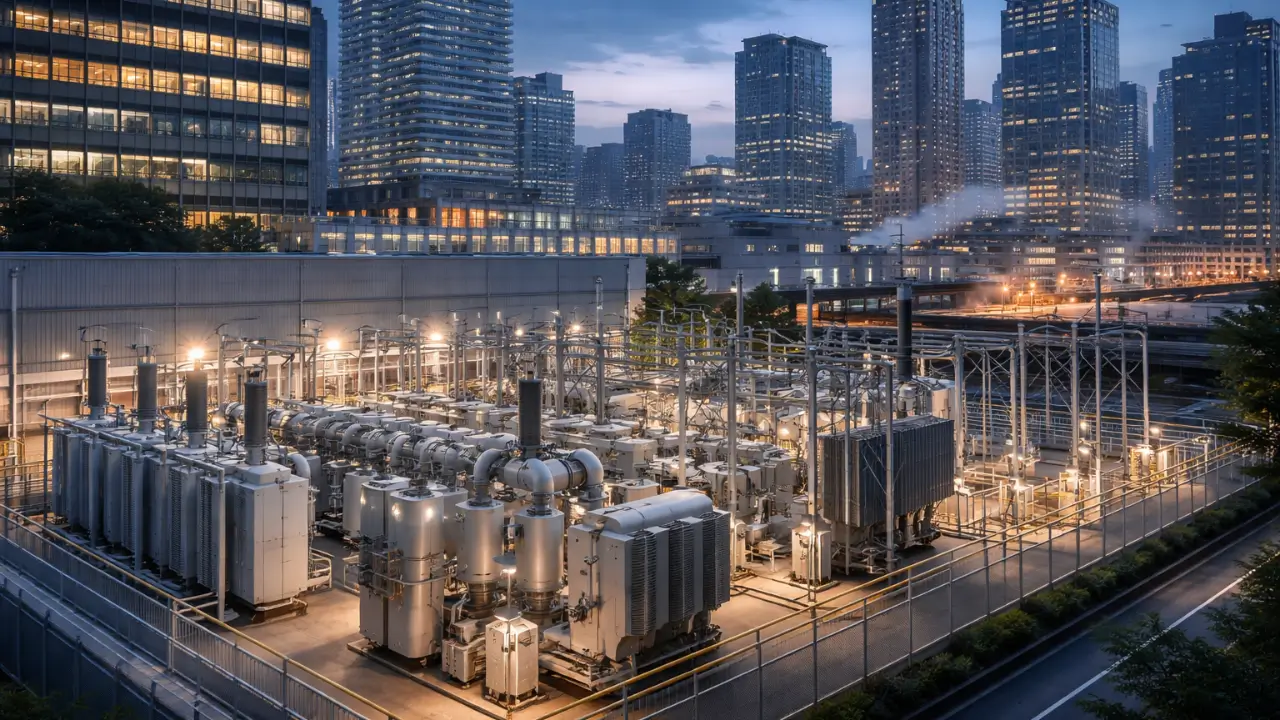
Compactness has become a primary design driver. Gas-insulated substations, hybrid switchgear, and fully enclosed configurations are increasingly deployed to reduce spatial footprints while maintaining operational reliability. By enclosing live components within sealed systems, these designs allow higher capacity to be installed within significantly smaller areas.
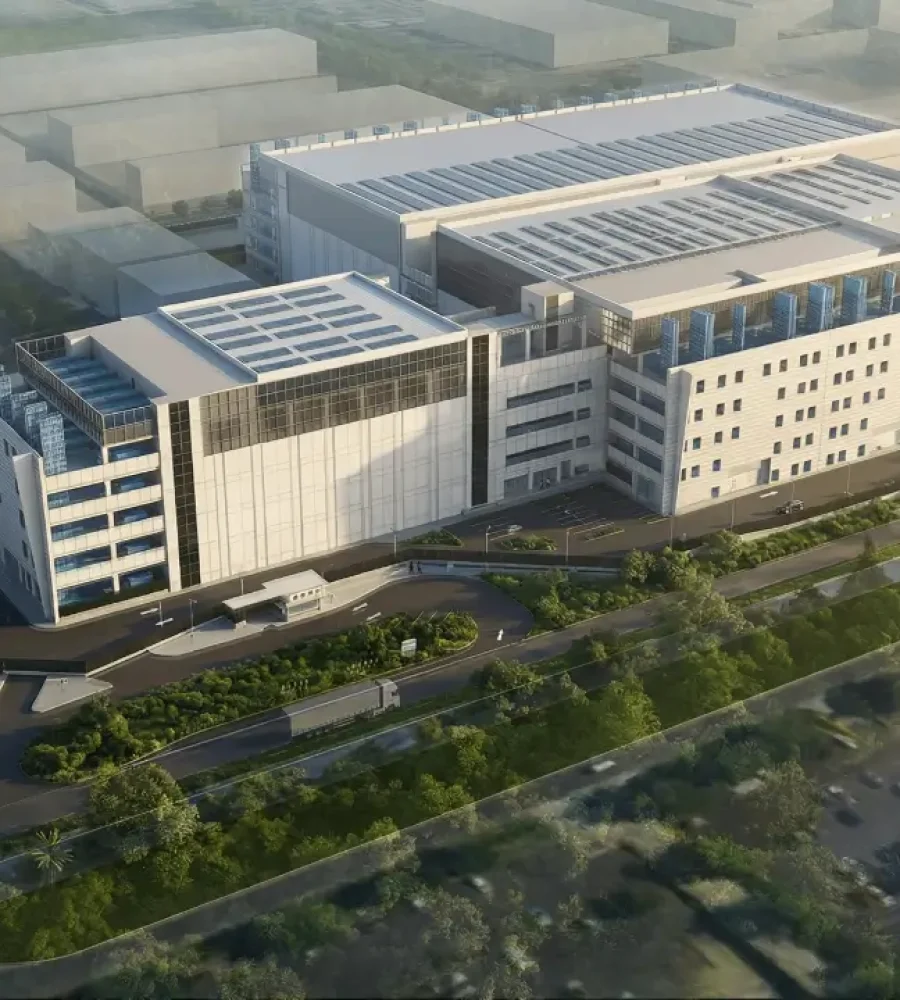
Vertical configurations are another response. Multi-level substations stack transformers, switchgear, and control systems to maximize capacity per unit area. In dense cities, such installations may be integrated into basements, podiums, or standalone structures designed to blend with surrounding development.
These compact solutions are not solely about space efficiency. Shorter conductor runs reduce losses, enclosed equipment improves environmental resilience, and controlled layouts enhance safety. However, they also introduce greater design complexity, higher capital costs, and increased reliance on precise engineering and maintenance practices.
Thermal Constraints as a Central Design Consideration
As electrical density rises, thermal management shifts from a secondary concern to a defining constraint. Heat generated by high-load equipment must be managed continuously to avoid derating, accelerated aging, or failure. In enclosed or underground substations, this challenge intensifies.
Advanced cooling strategies are increasingly incorporated into design from the outset. Forced-air systems, liquid-cooled transformers, and integrated heat extraction solutions are used to maintain thermal stability under variable loading conditions. Detailed thermal modeling during the planning phase allows engineers to identify hotspots and design mitigation measures before construction.
In some urban projects, excess heat is explored as a recoverable resource, potentially feeding nearby district heating systems. While not yet widespread, such approaches reflect a broader shift toward viewing substations as integrated elements of urban infrastructure rather than isolated technical facilities.
Planning for Load Volatility and Future Uncertainty
High-load density corridors are rarely static. Urban commercial demand fluctuates sharply by time of day, while industrial loads can change abruptly as new facilities come online or processes electrify. These dynamics challenge traditional assumptions about peak demand and asset utilization.
Modern substation planning increasingly emphasizes flexibility over fixed capacity. Transformer ratings are assessed alongside dynamic loading capabilities, supported by real-time monitoring of temperature and insulation health. Rather than oversizing assets based on conservative forecasts, designers provide structured pathways for modular expansion.
Standardized bays, scalable protection systems, and reserved connection points allow capacity to be added as needed without extensive reconstruction. This approach balances near-term efficiency with long-term adaptability, reducing stranded investment while maintaining readiness for rapid load growth.
Reliability Expectations in Concentrated Load Environments
The tolerance for disruption in high-load density corridors is minimal. An outage affecting a dense urban district or industrial cluster can cascade across transport, communications, manufacturing, and essential services. As a result, reliability criteria for substations in these zones are significantly higher than for more dispersed networks.
Design responses include redundant transformer arrangements, multiple independent supply paths, and protection schemes capable of isolating faults with minimal impact. Network topologies increasingly favor meshed or ringed configurations, allowing power to be rerouted quickly during contingencies.
Physical resilience is also embedded into design. Flood protection, fire segregation, seismic reinforcement, and controlled access are no longer optional features but core requirements, particularly in environments where recovery time is critical.
How Substation Design for High-Load Density Corridors Alters Grid Planning Models
The concentration of demand reshapes not only individual substations but broader grid planning philosophies. Instead of treating substations as endpoints of radial feeders, planners increasingly view them as active nodes within interconnected systems, capable of responding dynamically to changing conditions.
Digital technologies play a central role in this transition. Intelligent electronic devices, condition-monitoring sensors, and high-speed communications provide real-time visibility into load behavior and asset health. Digital substations reduce wiring complexity, free physical space, and enable more precise control under constrained conditions.
This data-driven approach supports predictive maintenance, allowing issues to be addressed before they escalate into failures. In dense corridors, where access may be limited and downtime costly, such capabilities are essential to maintaining service continuity.
Integration With Urban and Industrial Development
Substation projects in high-load density corridors increasingly intersect with broader planning and development processes. In cities, substations must comply with zoning requirements, architectural guidelines, and community safety expectations. Noise mitigation, visual integration, and electromagnetic exposure controls are integral to design approval.
In industrial corridors, coordination with large consumers is critical. Load ramp-up schedules, redundancy requirements, and expansion timelines must be aligned to avoid capacity shortfalls or overbuild. In some cases, substations are developed in parallel with industrial facilities, reflecting tighter coupling between grid infrastructure and economic activity.
This integration underscores a broader shift: substations are becoming embedded components of urban and industrial ecosystems rather than standalone utility assets.
A Global Design Transition With Regional Variation
While high-load density corridors are a global phenomenon, regional responses vary. Dense metropolitan areas in Asia and Europe often favor underground or fully enclosed substations, reflecting land scarcity and regulatory constraints. North American industrial corridors may prioritize modular outdoor designs that allow rapid scaling.
Climate conditions, regulatory frameworks, and grid maturity influence these choices, but the underlying trajectory is consistent. Across regions, substations are being engineered for higher intensity, tighter integration, and greater operational intelligence.
Conclusion
The redesign of substations for concentrated demand represents a fundamental shift in power infrastructure engineering. High-load density corridors challenge long-standing assumptions about space, scalability, and reliability, compelling utilities to adopt compact, flexible, and digitally enabled solutions.
As electrification accelerates and economic activity continues to cluster, these corridors will play an increasingly central role in shaping grid performance. Substations, once viewed as static components of the network, are evolving into critical systems engineered to sustain stability under unprecedented density and pressure.