The environmental challenge of AI-scale infrastructure
The rapid expansion of artificial intelligence has reshaped global digital infrastructure. Training large models and running inference at scale require unprecedented levels of compute density, power delivery, and thermal management. Traditional infrastructure, originally designed for mixed enterprise workloads, is increasingly misaligned with these requirements. As a result, environmental cost has become a central constraint rather than a secondary consideration.
Sustainable design for AI-optimized infrastructure addresses this misalignment by rethinking how facilities, systems, and components are engineered when artificial intelligence is the primary workload. The objective is not incremental efficiency gains, but structural reductions in energy waste, material intensity, and operational overhead. Across regions, operators are moving away from retrofitting legacy environments toward purpose-built infrastructure that aligns physical design with AI behavior.
Why legacy infrastructure struggles with AI workloads
AI workloads differ fundamentally from conventional enterprise computing. They generate sustained, high-intensity power draw, concentrate heat in dense accelerator clusters, and require low-latency internal networking. Legacy designs rely on assumptions of fluctuating utilization, air-based cooling, and overprovisioned redundancy. These assumptions create inefficiencies when applied to AI.
In many older environments, power distribution systems are optimized for lower rack densities, leading to higher conversion losses as loads scale upward. Cooling systems designed for broad airflow struggle to manage localized thermal hotspots created by GPUs. The result is excessive cooling energy consumption, reduced equipment lifespan, and constrained deployment density. Sustainable design for AI-optimized infrastructure begins by removing these structural mismatches rather than compensating for them through additional energy use.
Purpose-built facilities and spatial efficiency
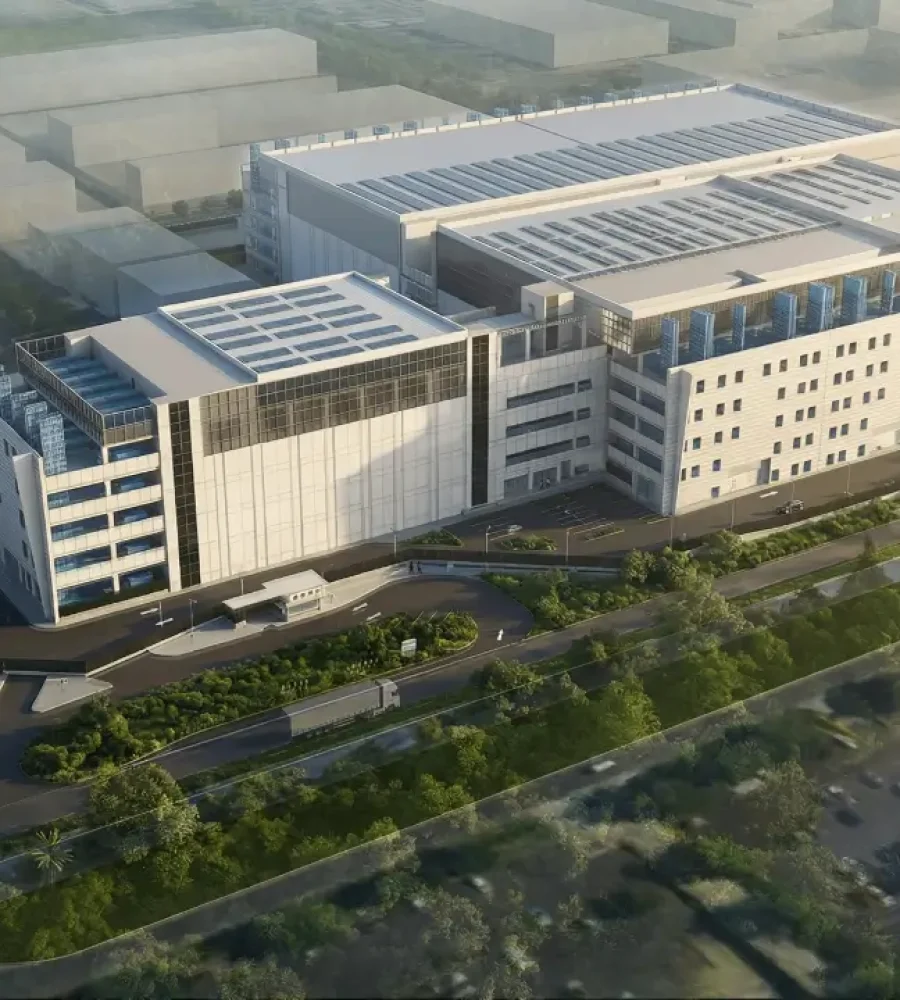
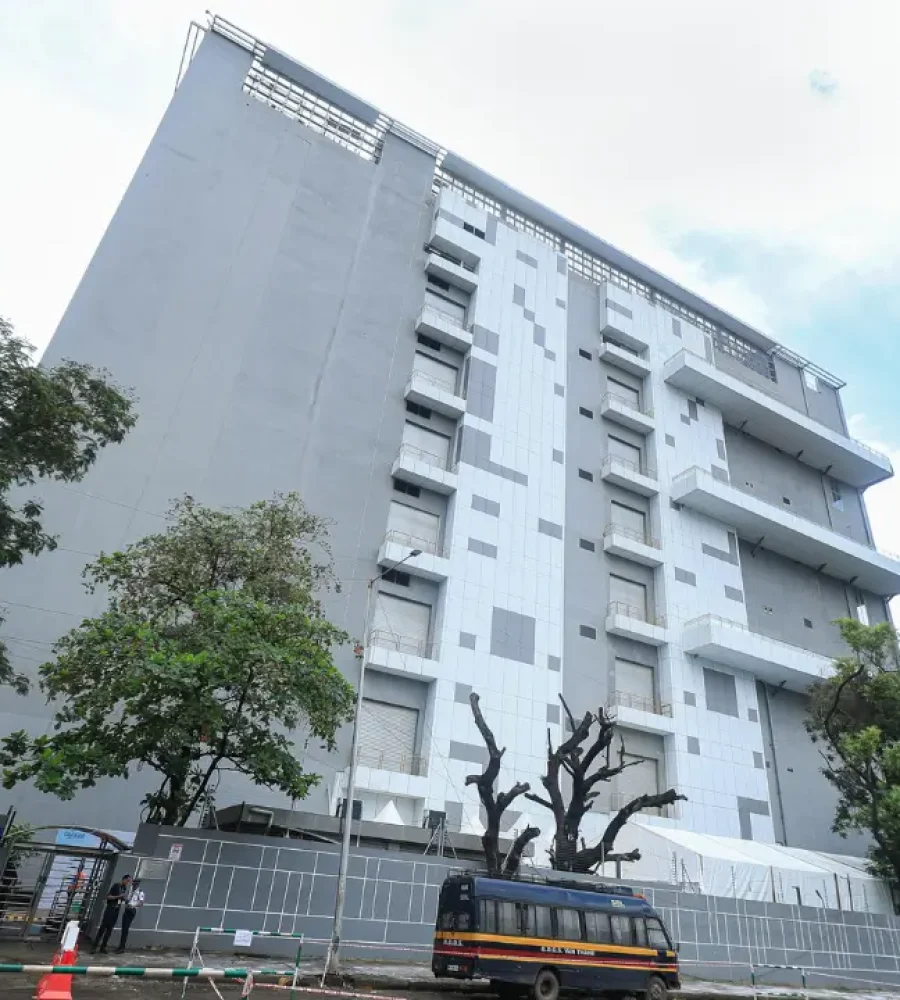
One of the most visible shifts in AI infrastructure design is the move toward purpose-built facilities. These environments are planned around AI workloads from the earliest stages, including site selection, building layout, and mechanical systems. Spatial efficiency plays a central role in sustainability outcomes.
AI-optimized layouts reduce unnecessary white space and shorten power and cooling paths. By clustering high-density compute zones and separating them from lower-intensity support areas, designers minimize energy losses and simplify thermal containment. Structural elements such as floor loading, ceiling height, and column spacing are tailored to support dense equipment without requiring extensive reinforcement later. This upfront alignment reduces both embodied carbon and long-term operational inefficiencies.
Power delivery aligned with AI demand profiles
Power systems are a critical determinant of environmental impact. AI infrastructure draws power in sustained, predictable patterns rather than sporadic bursts. Sustainable design for AI-optimized infrastructure leverages this predictability to improve efficiency across the electrical chain.
Modern power architectures favor higher-voltage distribution to reduce resistive losses and simplify conversion stages. Modular power systems allow capacity to scale in step with deployment, avoiding the inefficiencies of oversized infrastructure operating far below design load. In parallel, closer integration between utility feeds, on-site generation, and energy storage improves overall utilization and reduces reliance on carbon-intensive peaking power.
The sustainability benefits extend beyond energy efficiency. Purpose-built power systems reduce material waste by minimizing redundant components and extending usable equipment life through stable operating conditions.
Thermal management as a sustainability lever
Thermal management has emerged as one of the most decisive factors in AI infrastructure sustainability. Air cooling, while familiar, becomes increasingly inefficient as rack densities rise. Large volumes of chilled air are required to manage localized heat loads, driving up energy consumption and water use.
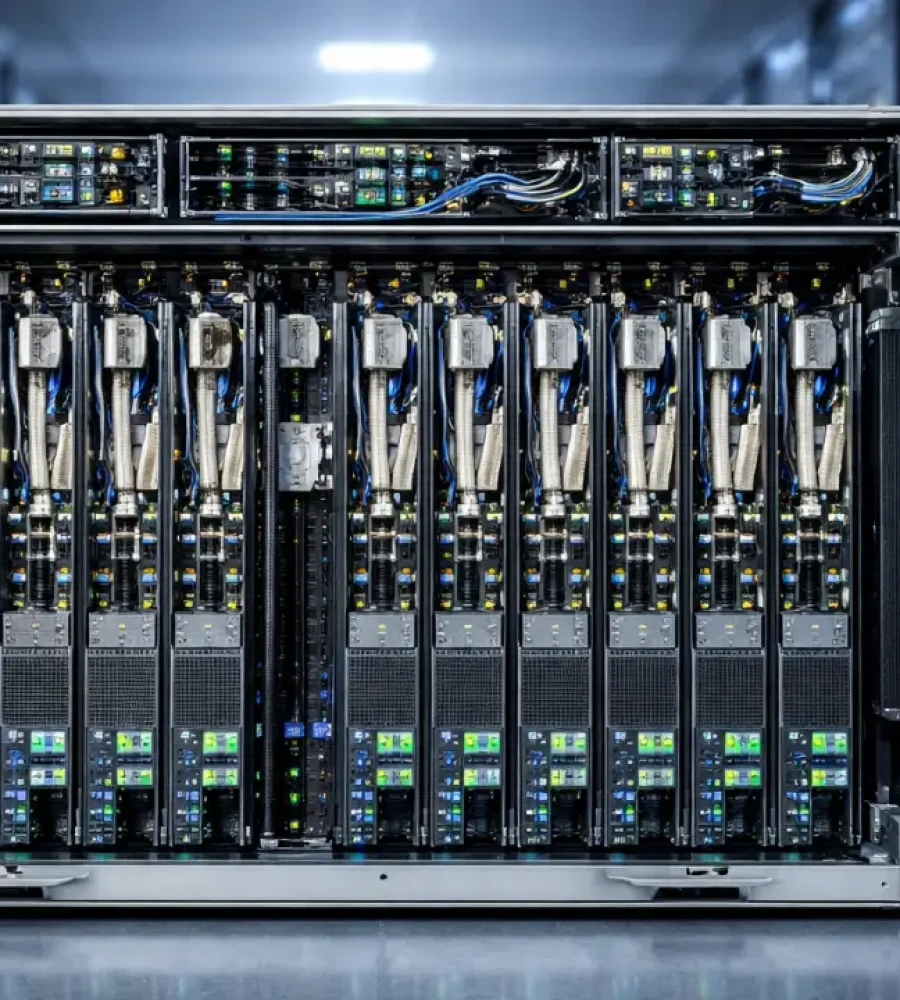
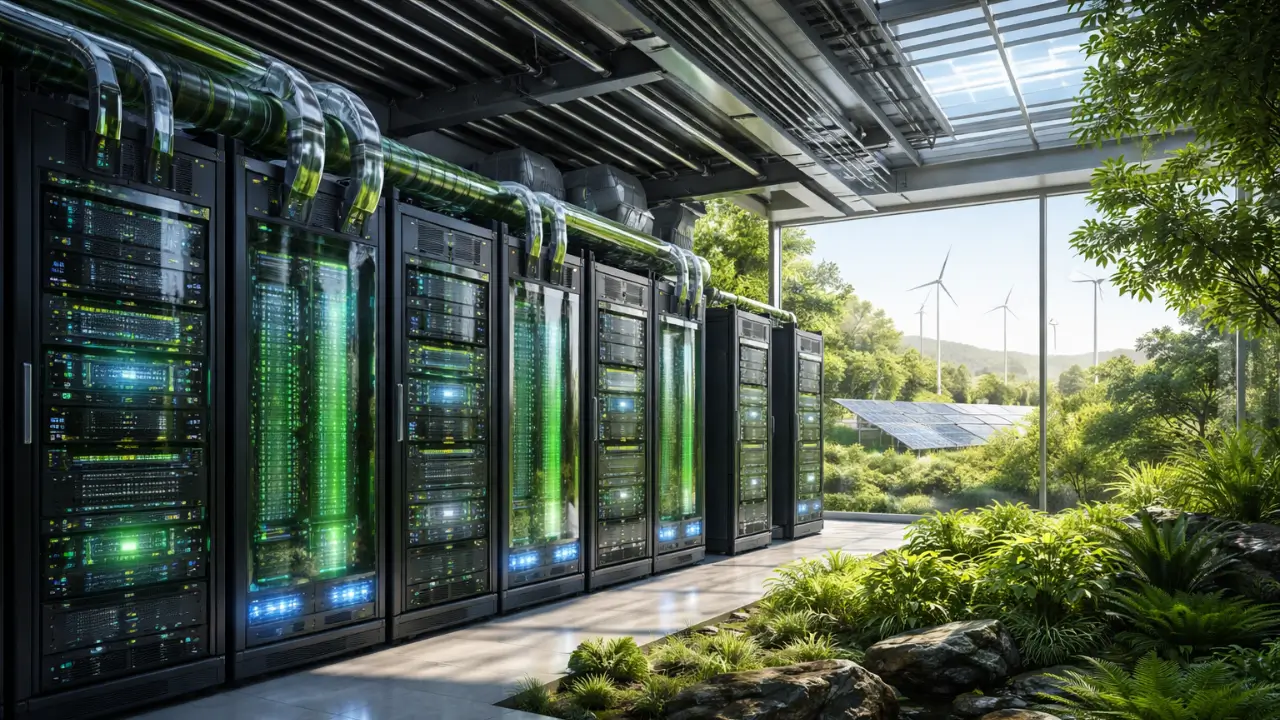
Liquid-based cooling approaches are gaining prominence because they align more closely with the thermal characteristics of AI hardware. By removing heat at the source, liquid systems reduce the total energy required for cooling and enable higher operating temperatures. This, in turn, expands opportunities for heat reuse and free cooling, particularly in temperate climates.
Sustainable design for AI-optimized infrastructure treats thermal systems not as isolated components but as integrated energy flows. Waste heat, once considered a byproduct, is increasingly viewed as a recoverable resource for adjacent industrial or district heating applications, further improving environmental performance.
Hardware lifecycle and material efficiency
The sustainability of AI infrastructure is influenced not only by operational energy use but also by hardware lifecycle dynamics. AI accelerators often follow faster refresh cycles than traditional servers, increasing the risk of embodied carbon accumulation through frequent replacement.
Purpose-built infrastructure can mitigate this impact by supporting modular hardware deployment and standardized form factors. Systems designed for easy component replacement and upgrade reduce the need for full system turnover. Stable thermal and power conditions also extend hardware lifespan, delaying replacement and lowering cumulative material consumption.
In addition, sustainable design increasingly considers end-of-life pathways. Infrastructure that supports efficient decommissioning, refurbishment, and recycling contributes to lower overall environmental cost across the AI hardware lifecycle.
Networking efficiency and internal data movement
AI workloads place heavy demands on internal networking, with large volumes of data moving continuously between accelerators. Inefficient network design increases both power consumption and heat generation, compounding sustainability challenges.
AI-optimized infrastructure prioritizes short, high-bandwidth interconnects and simplified network topologies. By reducing physical distance and unnecessary switching layers, designers lower latency and energy use simultaneously. Optical technologies, when deployed strategically, further reduce power per bit compared with traditional electrical connections.
Sustainable design for AI-optimized infrastructure recognizes that networking efficiency is inseparable from overall energy performance. Optimized data movement reduces not only direct network power draw but also secondary cooling requirements.
Regional considerations and resource constraints
Sustainability outcomes vary significantly by region due to differences in climate, energy mix, and regulatory frameworks. AI infrastructure designed for lower environmental cost must account for these contextual factors without compromising performance.
In regions with abundant renewable energy, infrastructure design increasingly aligns deployment schedules with renewable availability, smoothing demand and reducing reliance on fossil-based backup generation. In water-stressed areas, cooling strategies prioritize minimal water use, favoring closed-loop liquid systems and air-assisted heat rejection where feasible.
Purpose-built AI environments allow for this regional tailoring at the design stage rather than relying on operational workarounds later. This flexibility is a defining feature of sustainable design for AI-optimized infrastructure in a globally distributed digital economy.
Measuring sustainability beyond traditional metrics
Conventional efficiency metrics, such as power usage effectiveness, offer limited insight into AI infrastructure sustainability. High-density environments can achieve favorable ratios while still imposing significant absolute environmental costs due to scale.
Industry reporting increasingly emphasizes holistic measurement frameworks that account for energy source, hardware lifecycle, water use, and heat reuse potential. Sustainable design for AI-optimized infrastructure integrates these considerations into planning decisions, enabling more accurate assessment of long-term environmental impact.
This shift reflects a broader understanding that sustainability is not a single parameter but a system-level outcome shaped by design choices across the infrastructure stack.
The transition toward AI-native infrastructure models
The evolution toward AI-native infrastructure marks a structural transition rather than a temporary adaptation. As artificial intelligence becomes embedded across industries, the volume and intensity of compute demand are expected to continue rising. Meeting this demand without proportional environmental cost requires infrastructure that is inherently aligned with AI characteristics.
Sustainable design for AI-optimized infrastructure represents a convergence of engineering efficiency, environmental constraint, and economic necessity. By addressing power, cooling, hardware, and spatial design as interdependent systems, purpose-built environments reduce waste while supporting continued AI expansion.
This approach does not eliminate environmental impact, but it reshapes the trajectory. Instead of scaling inefficiencies alongside compute demand, AI-optimized sustainable infrastructure decouples growth from resource intensity, setting a more viable foundation for the next phase of digital development.