Heat has emerged as the defining sustainability constraint for modern digital infrastructure, surpassing power availability as the primary limiting factor. How heat is generated, concentrated, transported, and ultimately rejected now shapes efficiency, reliability, and long-term viability across digital systems. As compute density rises, thermal behavior has shifted from an operational concern to a fundamental physics problem that increasingly governs how data center infrastructure can scale.
This blog examines why heat is becoming harder to manage, how rising compute density is reshaping thermal dynamics at every layer of infrastructure, and why thermal sustainability has become inseparable from energy efficiency, material durability, and system longevity. The analysis adopts an industry-reporting, evidence-driven, and globally contextual approach, aligned with established editorial standards.
Heat Density Is Scaling Faster Than Efficiency Gains
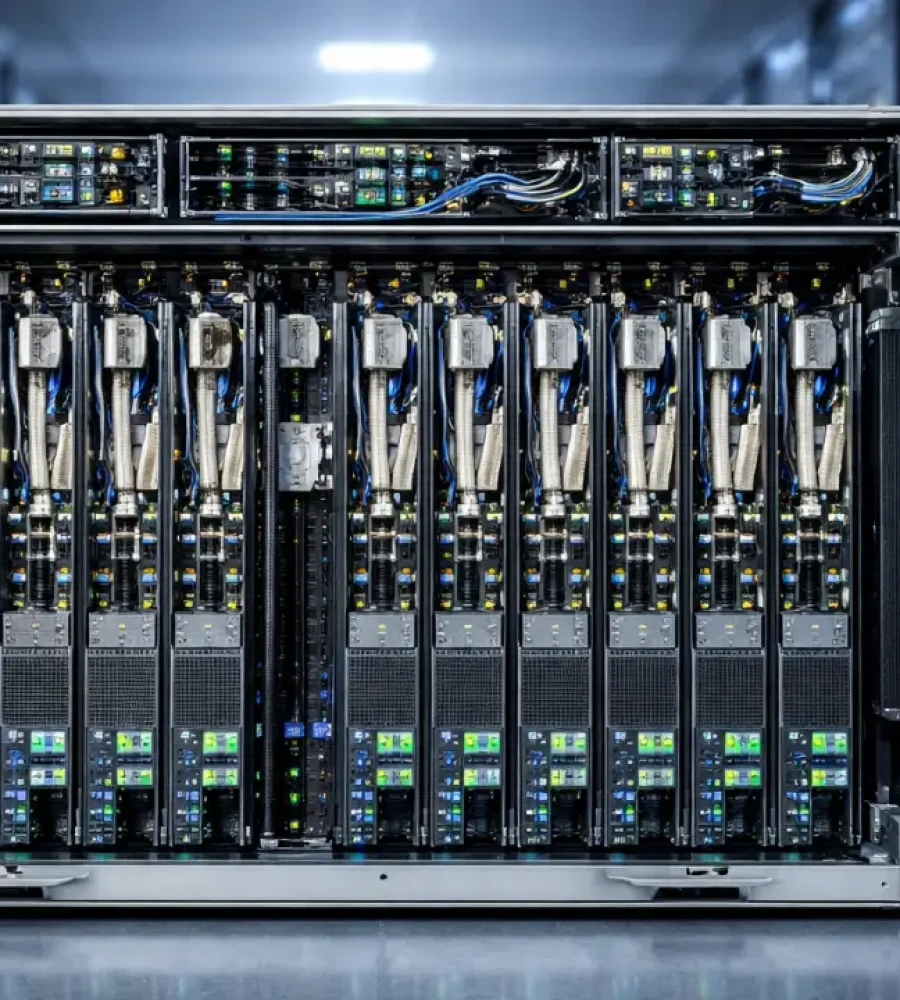
Chip-level efficiency improvements have reduced the energy required per computation. However, rapid increases in compute density have offset these gains. Accelerators, particularly GPUs and specialized AI processors, now concentrate unprecedented power levels into increasingly compact physical footprints. Rack densities that once averaged between five and ten kilowatts now exceed thirty kilowatts in mainstream deployments, while advanced AI clusters operate well beyond that range.
This shift matters more than total facility load. Heat no longer distributes evenly across a data center floor. Instead, it concentrates into localized thermal hotspots that push airflow, materials, and cooling systems toward physical limits. The sustainability challenge has moved beyond removing more heat. It now centers on managing sharper thermal gradients, faster temperature transients, and tighter operating tolerances.
As compute density rises, operational margins shrink. Small inefficiencies in heat transfer translate directly into higher energy consumption, accelerated component aging, and reduced system stability. Thermal performance has become a first-order constraint rather than a secondary optimization target.
Thermal Behavior Has Become a Materials Problem
Heat affects infrastructure long before cooling systems fail. Elevated and fluctuating temperatures accelerate material fatigue across the technology stack. Silicon degradation, solder joint creep, capacitor aging, and connector oxidation all correlate strongly with sustained thermal stress. These effects shorten hardware lifespans and accelerate replacement cycles, adding embedded carbon and resource costs that often remain excluded from sustainability assessments.
Thermal sustainability extends well beyond operational energy use. It encompasses lifecycle impacts tied to maintenance frequency, refurbishment rates, and equipment retirement. Higher sustained operating temperatures reduce mean time between failures, increase intervention rates, and expand spare inventory requirements.
As components pack more tightly, passive heat dissipation declines and reliance on active cooling increases. Over time, thermal stress creates a feedback loop in which higher operating temperatures drive greater material turnover, eroding efficiency gains achieved elsewhere in the system.
Cooling Efficiency Faces Physical Constraints
Traditional air-based cooling approaches practical limits in high-density environments. Air’s low heat capacity requires large volumes to remove incremental thermal loads, increasing fan energy consumption, ducting complexity, and spatial overhead. As inlet temperatures rise, airflow requirements increase nonlinearly, driving higher parasitic power demand.
Here, thermal sustainability diverges from conventional sustainability narratives. The constraint is not adoption speed or policy alignment, but thermodynamics. Only a finite amount of heat can move efficiently through air across narrow temperature differentials. Beyond that point, cooling efficiency declines sharply.
Liquid-based approaches, including direct-to-chip cooling, improve heat transfer efficiency but introduce new sustainability considerations. Pump energy, fluid management, materials compatibility, and leak mitigation all affect long-term performance. Liquid systems shift the thermal challenge rather than eliminate it, transferring heat more efficiently while preserving the requirement for effective heat rejection.
Across cooling modalities, the underlying issue remains unchanged: rising heat flux density continues to compress the efficiency envelope within which data center cooling systems can operate sustainably.
Energy Metrics Mask Localized Thermal Stress
Aggregate efficiency metrics such as power usage effectiveness capture facility-level performance but obscure localized thermal conditions. A data center can report stable efficiency ratios while individual racks operate near thermal thresholds, relying on overcooling elsewhere to maintain balance.
This masking effect complicates accurate sustainability assessments. Energy savings achieved through power optimization or workload consolidation can be offset by intensified cooling demand in specific zones. Thermal sustainability requires visibility into micro-level heat behavior, not just macro-level energy flows.
As infrastructure grows more heterogeneous, with mixed workloads and variable utilization, static cooling strategies designed around average loads increasingly misalign with real-world heat generation patterns.
Thermal Constraints Are Reshaping Architecture
Heat is no longer an afterthought reserved for mechanical design. It now influences architectural decisions at the platform level. Processor selection, rack configuration, workload placement, and geographic siting increasingly reflect thermal considerations.
High-density deployments favor designs that minimize heat transport distances and reduce temperature differentials across components. These priorities affect modularity, redundancy, and scalability. Designs optimized for thermal stability often sacrifice flexibility, signaling a shift driven by sustainability constraints rather than performance ambition alone.
Geography further shapes outcomes. Ambient temperature, humidity, water availability, and grid characteristics affect heat rejection efficiency and cooling system performance. As thermal loads rise, environmental context becomes a decisive factor in long-term sustainability planning.
Reliability and Sustainability Converge Through Heat
Thermal instability undermines reliability, and reliability failures carry sustainability costs. Unplanned outages, emergency cooling responses, and premature hardware replacement increase energy consumption and material waste. In this context, thermal sustainability and operational resilience converge.
Systems designed near thermal limits require tighter monitoring, faster response mechanisms, and higher redundancy, all of which consume additional resources. As compute density continues to rise, tolerance for thermal variability narrows. Sustainability strategies that overlook this convergence risk underestimating long-term impacts.
Heat Is Becoming a Binding Constraint on Scaling
Digital infrastructure continues to favor compute intensity over horizontal expansion. AI inference, real-time analytics, and performance-sensitive workloads concentrate compute closer to users and data sources. This trend intensifies thermal challenges rather than dispersing them.
At scale, heat rejection capacity becomes a binding constraint. Adding compute without corresponding thermal headroom yields diminishing returns and forces trade-offs between performance, efficiency, and system longevity. Sustainability discussions increasingly center not only on energy consumption, but on sustained operation within thermal limits.
Heat has become a first-order design parameter rather than a secondary operational concern.
Thermal Sustainability Requires System-Level Thinking
Addressing heat as a sustainability limiter demands integration across disciplines. Chip design, mechanical engineering, facility architecture, and operational analytics must align around thermal behavior. Isolated optimizations fail when heat propagates through the entire system.
System-level approaches prioritize reducing heat generation per workload, smoothing thermal gradients, and maintaining stable operating envelopes rather than maximizing peak capacity. These trade-offs may constrain short-term performance but support long-term efficiency and durability.
The industry has begun to recognize thermal sustainability as a distinct domain, intersecting with energy efficiency but governed by different physical limits. How this recognition translates into standards, metrics, and design practices remains unresolved.
Conclusion
Heat has become one of the hardest sustainability problems to solve in modern digital infrastructure because it arises from physics rather than preference. Rising compute density intensifies thermal stress across components, systems, and facilities, challenging assumptions about efficiency, reliability, and scalability.
Thermal sustainability reframes the conversation. It shifts focus from how much energy infrastructure consumes to how effectively heat can be managed over time, across materials, and within constrained physical environments. As data center architectures evolve, sustainable operation will increasingly depend on respecting thermal limits.
Heat is no longer a byproduct to manage. It is a defining factor shaping the future of compute infrastructure.