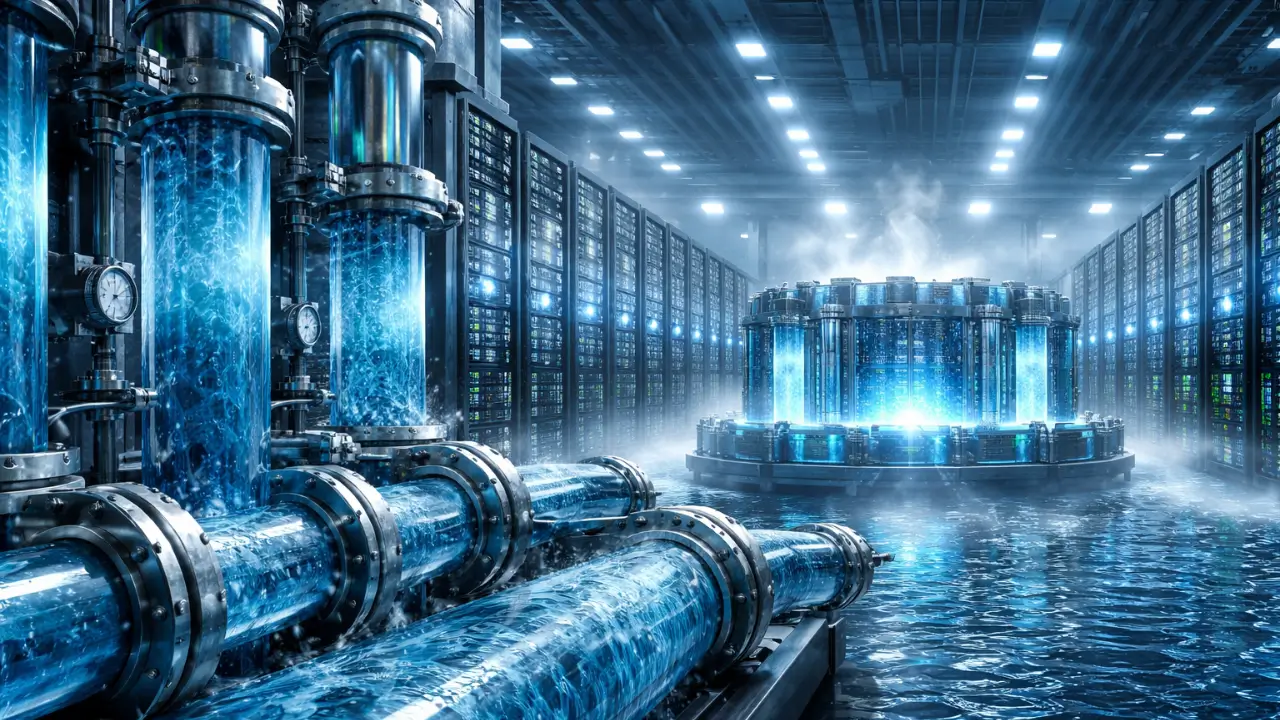
The hum of servers rarely reaches human ears, yet their thirst increasingly touches human lives across regions where digital growth meets physical limits.A silent competition has begun between artificial intelligence workloads and natural water systems that sustain cities, industries, and ecosystems.Behind every breakthrough model, behind every accelerated inference pipeline, and behind every dense compute cluster lies an invisible dependency on cooling systems that require water at unprecedented scales.
As AI workloads grow in complexity and density, the infrastructure that supports them faces constraints that no longer remain theoretical or distant.Unlike power shortages or land constraints, water scarcity introduces a systemic risk that extends beyond engineering into economics, policy, and social stability.This emerging tension reshapes how the world must think about AI infrastructure, not as an abstract digital layer but as a physical system anchored in finite natural resources.
AI Workloads Are Redefining Cooling Intensity
High-performance AI workloads generate heat at levels that exceed the assumptions embedded in traditional data center design models. GPU clusters now operate at power densities that dwarf earlier enterprise deployments, which forces cooling systems to work continuously under extreme thermal loads. Facility operators no longer treat cooling as a background process, because thermal management directly influences uptime, hardware lifespan, and operational stability. The algorithmic complexity and model scale continue to rise, which pushes hardware utilization closer to theoretical limits. Consequently, cooling intensity has become a defining feature of AI infrastructure rather than a secondary engineering consideration. The thermal footprint of artificial intelligence increasingly determines how fast physical infrastructure can scale across geographies.
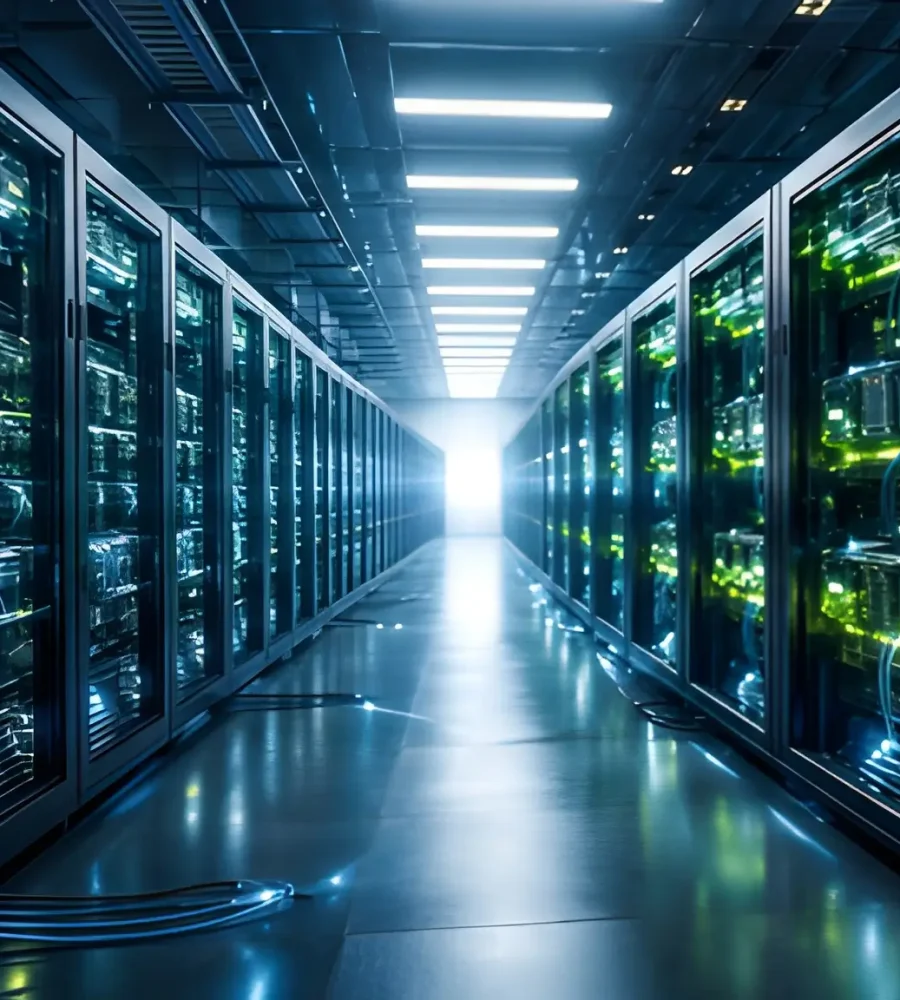
AI-driven compute clusters also alter spatial layouts inside data halls, which changes airflow patterns and thermal gradients across racks. Designers now compress equipment into smaller footprints to maximize compute density, yet this strategy concentrates heat in localized zones that conventional cooling systems struggle to dissipate. The workload variability introduces unpredictable thermal spikes that strain cooling capacity beyond steady-state assumptions. Cooling architectures must adapt dynamically rather than operate within fixed design envelopes. However, adaptation often requires additional water-intensive cooling solutions, which increases dependency on local water resources. AI workloads redefine not only compute architecture but also the physical limits of cooling infrastructure worldwide.
Regions such as Arizona, Texas, Virginia, and California have become focal points because rapid data center expansion coincides with persistent drought conditions and regulatory scrutiny. Local governments and communities increasingly challenge hyperscaler water usage, which has transformed water from an operational variable into a political and economic risk. At the same time, the U.S. leads global AI compute deployment, which amplifies the visibility of cooling-related water consumption. Consequently, North America functions as the global testing ground for how water scarcity intersects with AI infrastructure scale.
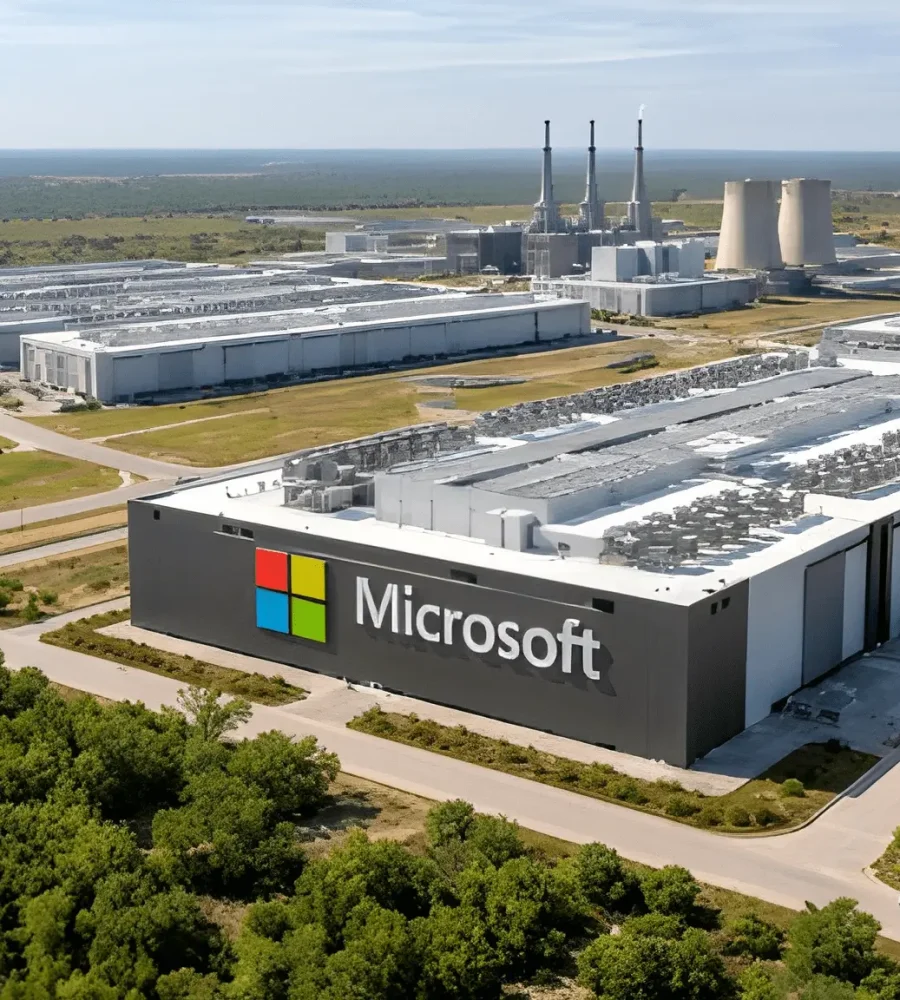
Among hyperscalers, Microsoft stands out as the most visible and influential actor in the water–AI infrastructure debate due to its scale of AI deployment and transparency around water metrics. Microsoft operates one of the world’s largest global data center footprints and is deeply integrated into AI workloads through Azure, OpenAI partnerships, and enterprise AI platforms. The company’s reported water consumption increased significantly as AI workloads expanded, which triggered public scrutiny and policy discussions about hyperscaler resource usage. At the same time, Microsoft positioned itself as a pioneer in “water-positive” data center strategies, which elevated its role from participant to agenda-setter in the industry. Therefore, Microsoft functions not only as a hyperscaler but also as a reference point for how AI infrastructure interacts with water systems at scale.
Water Usage Is Quietly Rising Faster Than Power Demand
Electricity consumption in data centers has received extensive scrutiny, yet water usage has grown with far less public visibility. Cooling systems that rely on evaporative processes consume significant volumes of water, especially in warm climates where heat rejection becomes more challenging. As AI workloads intensify, cooling cycles increase in frequency and duration, which accelerates water consumption beyond historical projections. Efficiency gains in compute hardware sometimes reduce marginal energy growth, yet they do not proportionally reduce cooling water requirements. Water demand can rise faster than power demand even when energy efficiency improves. The gap between electricity metrics and water metrics continues to widen across global AI infrastructure footprints.
Operators also face difficulties in measuring water usage with the same precision applied to energy monitoring systems. Many facilities track power metrics in real time, yet water consumption often appears in aggregated reports that mask operational variability. The decision-makers underestimate how rapidly cooling water demand escalates during peak AI workloads. Reporting frameworks across regions lack standardization, which complicates comparisons between facilities and jurisdictions. Therefore, water usage remains a hidden variable in capacity planning despite its growing operational impact. This invisibility delays strategic responses until resource constraints become unavoidable.
Why Air Cooling Alone Can’t Support AI at Scale
Air cooling dominated data center design for decades because it offered simplicity, reliability, and predictable performance under moderate thermal loads. However, AI workloads now push rack densities beyond the thermal dissipation capacity of air-based systems, which forces designers to explore alternative cooling methods. As airflow velocity increases, energy consumption rises sharply while thermal efficiency improves only marginally. Moreover, physical constraints within data halls limit how much air can circulate without causing turbulence or uneven temperature distribution. Therefore, air cooling alone cannot sustain the thermal demands of high-density AI clusters at scale. Consequently, reliance on air cooling increasingly restricts the growth potential of next-generation AI infrastructure.
Thermodynamics further complicates the viability of air cooling because heat transfer efficiency declines as temperature differentials narrow. AI hardware often operates near optimal temperature thresholds, which reduces the margin for effective heat removal through air circulation. As a result, air cooling systems must operate continuously at high capacity, which accelerates mechanical wear and increases operational risk. The extreme ambient temperatures in certain regions amplify the limitations of air-based cooling strategies. Therefore, the industry confronts a structural mismatch between AI-driven heat generation and legacy cooling architectures. Ultimately, this mismatch drives a shift toward water-intensive cooling technologies that introduce new resource dependencies.
Local Water Stress Is Becoming a Site-Selection Constraint
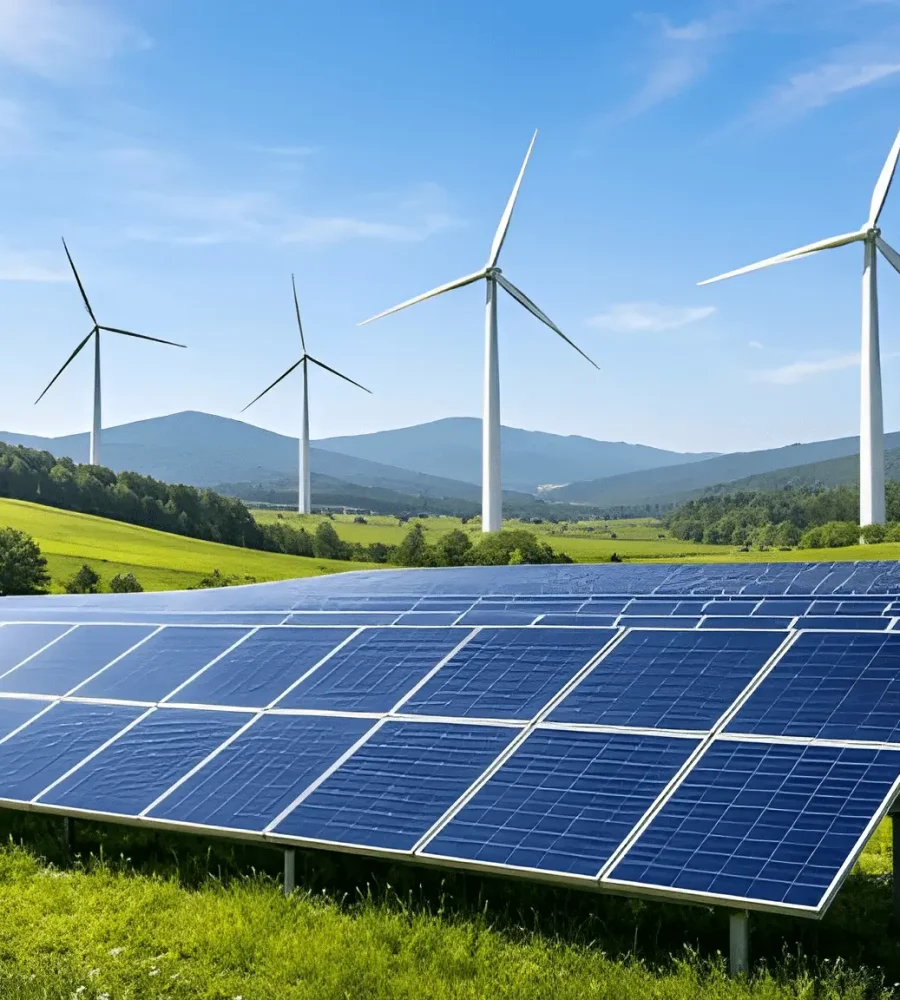
Site selection for data centers traditionally prioritized land availability, grid connectivity, and network latency, yet water availability now influences strategic decisions with increasing urgency. Regions with abundant renewable energy sometimes face water scarcity, which creates a paradox for AI infrastructure expansion. Developers must evaluate hydrological conditions alongside power infrastructure when assessing potential locations. The regulatory authorities in water-stressed regions impose restrictions that limit industrial water usage during drought periods. Therefore, water stress has transformed from an environmental concern into a direct constraint on infrastructure deployment. Geographic patterns of AI infrastructure development increasingly reflect local water realities rather than purely technological considerations.
Communities near proposed data center sites also exert growing influence over project approvals, particularly when water resources appear vulnerable to industrial consumption. Public scrutiny intensifies when residents perceive that digital infrastructure competes with agriculture, households, or ecosystems for limited water supplies. Meanwhile, developers face reputational risks when projects appear misaligned with local sustainability priorities. The social acceptance becomes intertwined with hydrological feasibility in modern site-selection processes. Water stress reshapes not only technical planning but also the political and social dynamics surrounding AI infrastructure expansion.
Melanie Nakagawa, Microsoft’s Chief Sustainability Officer, has publicly stated that the company aims to become “water positive” by 2030, meaning it will replenish more water than it consumes across its global operations. She emphasized that data center cooling represents one of the most complex sustainability challenges because it intersects with local ecosystems, community needs, and infrastructure design. Her statements highlight that water risk cannot be managed through offsets alone but requires redesigning cooling architectures and site-selection strategies. This perspective reveals how Microsoft’s sustainability leadership treats water as a structural constraint rather than a reputational issue.
The Sustainability Trade-Offs No One Likes to Talk About
AI infrastructure development often promotes narratives of efficiency and digital progress, yet sustainability trade-offs remain difficult to articulate in public discourse. Water-intensive cooling solutions improve thermal performance, but they also increase dependence on finite natural resources. Alternative cooling methods that reduce water usage often require higher capital expenditure or complex engineering modifications. The decision-makers face a tension between immediate performance gains and long-term resource resilience. Regulatory frameworks struggle to balance economic growth with environmental stewardship in rapidly evolving technological contexts. Sustainability trade-offs persist as unresolved dilemmas at the core of AI infrastructure strategy.
Corporate sustainability commitments further complicate these trade-offs because companies must reconcile ambitious environmental targets with operational realities. Many organizations pledge reductions in carbon emissions, yet water consumption metrics receive less attention in public reporting. As a result, sustainability narratives sometimes obscure the resource-intensive nature of AI-driven infrastructure expansion. The investors increasingly demand transparency across environmental indicators, which forces companies to confront water usage as a material risk factor. Therefore, sustainability discourse evolves from symbolic commitments toward measurable resource accountability. Water emerges as a critical dimension of environmental governance in the AI era.
Liquid, Hybrid, and Immersion Cooling: Promise and Pitfalls
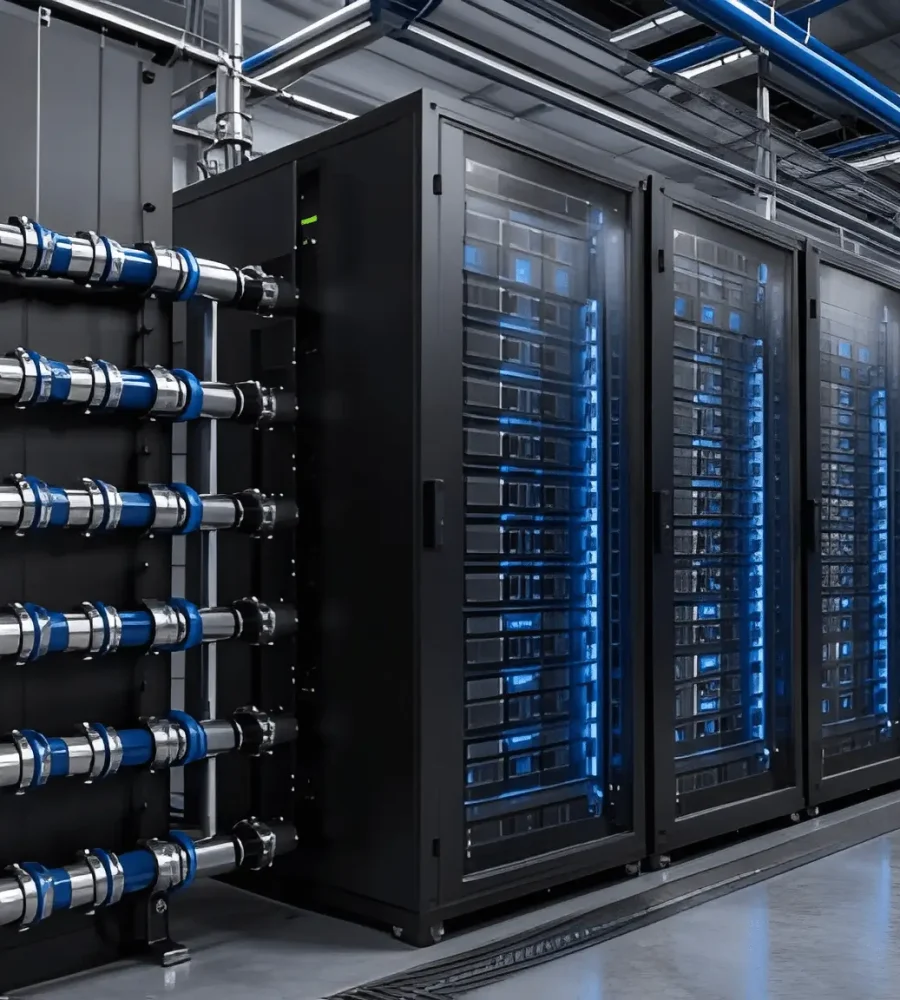
Liquid cooling technologies promise dramatic improvements in thermal efficiency by transferring heat directly from hardware components to cooling fluids. Direct-to-chip systems reduce reliance on air circulation, which improves temperature control in high-density environments. Immersion cooling submerges hardware in dielectric fluids, which enables even greater heat dissipation while reducing airflow requirements. However, these technologies introduce new complexities in system design, maintenance, and supply chain dependencies. The next-generation cooling solutions solve thermal challenges while creating operational and logistical uncertainties. The transition toward liquid-based cooling reshapes the economic and technical landscape of AI infrastructure deployment.
Hybrid cooling architectures attempt to balance air and liquid systems, yet they require precise integration to avoid inefficiencies. Implementation costs often exceed initial projections because facilities must retrofit existing infrastructure to accommodate liquid cooling systems. Additionally, liquid cooling still relies on water at some stage of the heat rejection process, which means it does not eliminate water dependency entirely. Therefore, technological innovation does not automatically translate into reduced resource consumption. The industry standards for liquid cooling remain fragmented, which slows widespread adoption. The promise of advanced cooling technologies coexists with structural and economic constraints that limit their transformative potential.
Cooling Strategy as a Long-Term Capacity Decision
Cooling strategy decisions made during facility design can determine the future scalability of AI infrastructure for decades. Once a data center adopts a particular cooling architecture, retrofitting becomes costly and technically challenging. Therefore, early design choices effectively lock facilities into specific resource consumption patterns and operational constraints.AI workloads evolve faster than physical infrastructure, which creates a mismatch between initial design assumptions and future performance requirements. Cooling strategy functions not merely as an engineering choice but as a long-term capacity determinant. The strategic foresight in cooling design becomes essential for sustaining AI-driven growth in a resource-constrained world.
Cooling strategy also influences financial planning because infrastructure investments reflect assumptions about future thermal loads and resource availability. When designers underestimate cooling requirements, facilities face premature capacity ceilings that limit compute expansion without major upgrades. Overengineering cooling systems increase upfront costs and complicate return-on-investment calculations across long project timelines. Therefore, cooling design operates at the intersection of engineering foresight and capital allocation rather than purely technical optimization. Financial stakeholders increasingly scrutinize cooling strategies because they affect operational expenditure, asset longevity, and regulatory compliance. Consequently, cooling strategy evolves into a structural determinant of competitive positioning in the AI infrastructure ecosystem.
Cooling decisions also interact with regional policy frameworks that shape long-term infrastructure viability. Governments in water-stressed regions introduce regulatory measures that affect permissible water withdrawals, which directly influence cooling system feasibility. As a result, facilities designed without considering regulatory trajectories risk future operational constraints that cannot be mitigated through incremental upgrades. Climate variability introduces uncertainty into hydrological forecasts, which complicates long-term cooling strategy planning.Cooling architecture must anticipate both technological evolution and environmental policy shifts across multi-decade horizons.Cooling strategy becomes a governance challenge as much as an engineering problem in the context of AI infrastructure growth.
From Operational Metric to Strategic Risk
Water consumption in data centers once appeared as a secondary operational metric tracked by facilities teams, yet it now emerges as a strategic risk that influences corporate decision-making. As AI workloads intensify, water usage patterns reveal vulnerabilities that extend beyond technical performance into reputational and regulatory domains. Boards increasingly recognize that water scarcity can disrupt expansion plans, trigger community opposition, and attract regulatory scrutiny. Therefore, water metrics move from internal dashboards into strategic risk assessments that inform investment and location decisions. Moreover, financial institutions incorporate environmental risk factors into capital allocation models, which amplifies the significance of water-related exposure. Consequently, water usage transforms from a technical parameter into a strategic variable that shapes the trajectory of AI infrastructure development.
Risk perception also shifts because water scarcity intersects with geopolitical and climate dynamics that extend beyond individual facility boundaries. Regions experiencing prolonged droughts or unpredictable rainfall patterns face heightened volatility in water availability, which introduces systemic uncertainty into infrastructure planning. As a result, organizations must evaluate water risk across supply chains, regulatory environments, and community relations simultaneously. Public disclosure frameworks increasingly require companies to quantify and communicate water-related risks to investors and stakeholders. Transparency requirements accelerate the integration of water risk into corporate governance structures. Ultimately, water risk evolves into a multidimensional challenge that connects operational resilience with broader environmental and societal stability.
Water risk also influences competitive dynamics among infrastructure developers because regions with secure water access gain strategic advantages in attracting AI investments. Facilities located in water-abundant regions can scale with fewer regulatory and social constraints, which accelerates deployment timelines and reduces uncertainty. Projects in water-stressed regions encounter delays, additional compliance costs, and heightened scrutiny from local communities. Therefore, water availability reshapes global competition for AI infrastructure leadership by altering the geography of feasible expansion. Strategic actors increasingly view water security as a prerequisite for sustained technological growth rather than a peripheral environmental issue. Water risk becomes embedded in the strategic calculus that determines the future distribution of AI infrastructure worldwide.
Planning for a Water-Constrained AI Future
Planning for a water-constrained future requires a fundamental rethinking of how AI infrastructure integrates with natural resource systems. Engineers must design facilities that reduce dependence on freshwater sources while maintaining thermal performance under extreme workloads. At the same time, planners must evaluate alternative cooling strategies that leverage reclaimed water, seawater, or closed-loop systems to mitigate resource pressure. Infrastructure design increasingly incorporates hydrological modeling alongside traditional electrical and mechanical engineering analyses. Long-term planning must account for climate-driven variability in water availability, which introduces uncertainty into capacity forecasting. Water-aware design emerges as a central pillar of resilient AI infrastructure development rather than a niche sustainability initiative.
Technological innovation also plays a critical role in shaping water-resilient infrastructure architectures. Advanced heat exchangers, AI-driven cooling optimization, and predictive maintenance systems can reduce water consumption without sacrificing performance. However, these innovations require integration across hardware, software, and facility management layers, which increases system complexity. Organizations must balance technological sophistication with operational reliability when adopting water-efficient cooling solutions. Innovation cycles in AI hardware often outpace infrastructure adaptation, which creates gaps between compute capability and cooling readiness. Planning for a water-constrained future demands coordination across multiple technological domains rather than isolated engineering interventions.
Economic considerations further complicate long-term planning because water-efficient infrastructure often involves higher upfront costs and uncertain long-term savings. Investors must evaluate whether reduced water dependency justifies additional capital expenditure in an environment where AI demand continues to expand rapidly. As a result, financial models increasingly incorporate environmental risk metrics alongside traditional performance indicators such as uptime and energy efficiency. Moreover, regulatory incentives and penalties influence the economic viability of water-resilient design strategies across jurisdictions. Planning for a water-constrained future requires alignment between engineering priorities, financial frameworks, and regulatory landscapes. Economic logic becomes inseparable from environmental strategy in shaping the next phase of AI infrastructure growth.
Urban planning dynamics also intersect with water-aware AI infrastructure development because data centers increasingly locate near population centers to reduce latency. Cities facing water scarcity must reconcile digital infrastructure ambitions with competing demands from residential, industrial, and ecological sectors. Consequently, municipal authorities adopt integrated planning approaches that evaluate data center projects within broader urban water management frameworks. Public-private partnerships emerge as mechanisms for sharing infrastructure costs and resource responsibilities across stakeholders. Therefore, urban governance structures play a decisive role in determining whether AI infrastructure can expand sustainably within water-constrained environments. The future of AI infrastructure becomes inseparable from the evolution of urban water governance and regional planning strategies.
Conclusion
Water has quietly shifted from an operational input to a structural constraint that shapes the future of AI infrastructure at every level of design, investment, and governance. As compute density rises and cooling demand accelerates, the relationship between artificial intelligence and natural resources becomes more direct, more visible, and more consequential for long-term scalability. The industry now faces a reality in which technological ambition cannot advance independently of hydrological limits, regulatory pressures, and community expectations.
Strategic decisions about cooling architectures, site selection, and infrastructure planning increasingly determine not only performance outcomes but also environmental and social legitimacy. Moreover, organizations that integrate water-aware design, transparent risk assessment, and adaptive cooling strategies into their core infrastructure models will gain resilience in an era defined by resource constraints. The trajectory of global AI expansion will depend not only on silicon and electricity but also on how effectively the industry learns to operate within the finite boundaries of water.