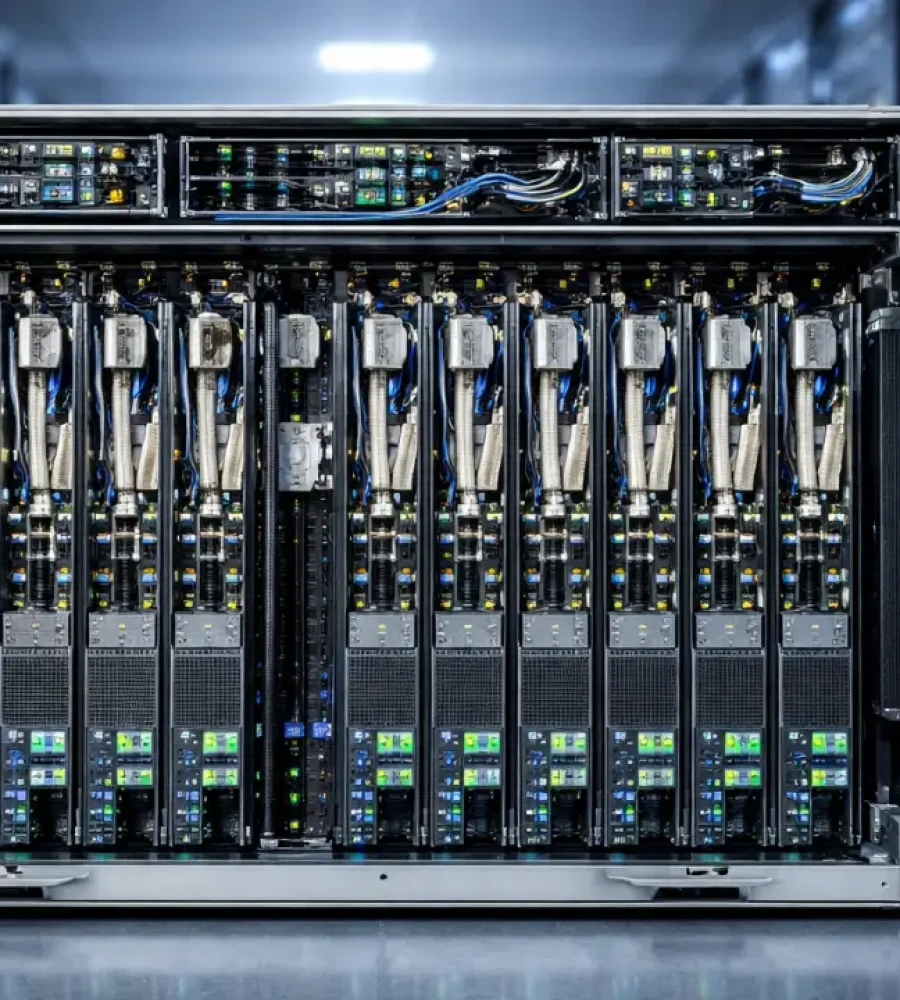
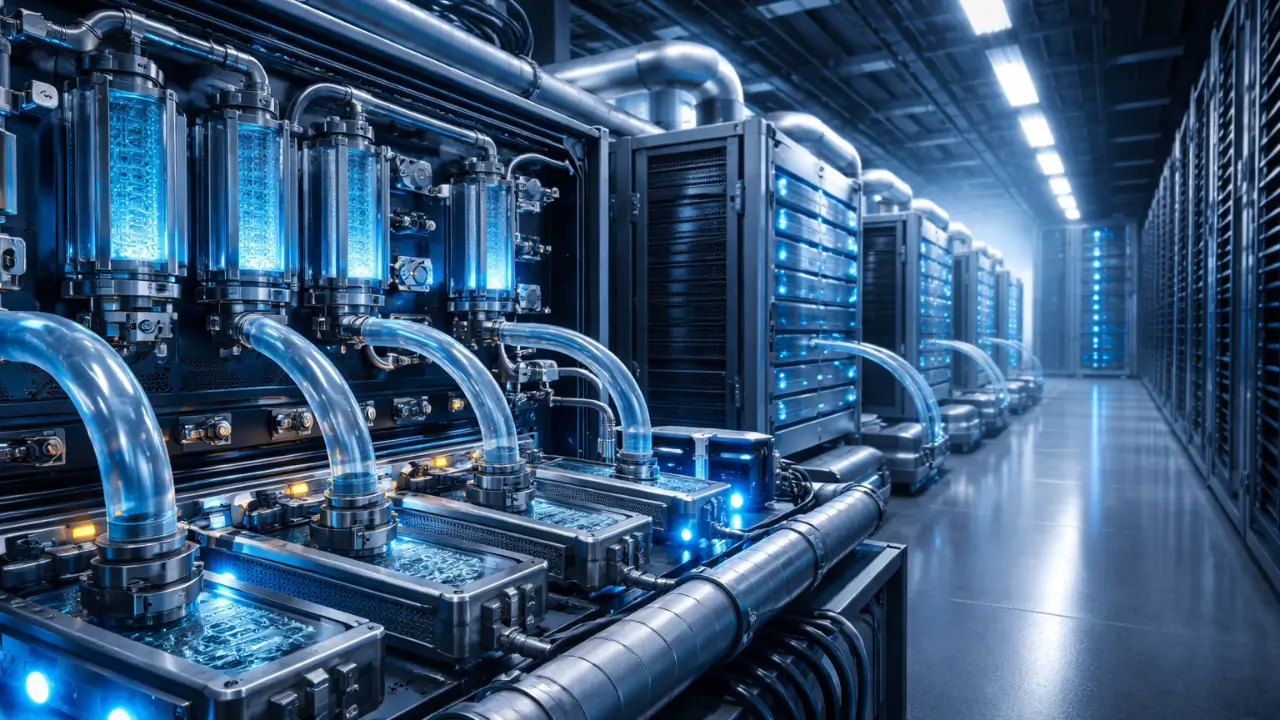
Electricity has quietly become the dominant variable shaping modern thermal infrastructure. As compute densities climb and conventional air cooling approaches strain under higher heat loads, liquid-based thermal systems are no longer evaluated only on engineering merit.
Their economic viability increasingly hinges on where electricity is cheapest, how reliably it can be delivered, and how power pricing structures interact with cooling efficiency. This dynamic has positioned power markets; not cooling hardware, as the decisive factor in liquid cooling adoption.
Liquid cooling systems reduce thermal resistance by transferring heat directly from processors into fluids with higher heat capacity than air. The technology is well understood. The economics are not. While liquid cooling often lowers overall energy consumption, it also reshapes how electricity is consumed across pumps, heat exchangers, and auxiliary infrastructure.
These shifts expose operators to electricity pricing in ways that vary sharply by region, grid structure, and generation mix. The cheapest advantage does not emerge uniformly; it concentrates where power economics align with liquid thermal loads.
Power Cost as the Primary Constraint
For high-density compute environments, electricity represents the single largest operating expense after capital investment. Power supports not only processors but also thermal systems, distribution losses, and mechanical redundancy.
In air-cooled facilities, cooling can account for 30 to 40 percent of total energy consumption, depending on climate and design. Liquid cooling changes that ratio by reducing fan power and enabling higher operating temperatures, but it does not eliminate the dependency on low-cost electricity.
The shift matters because liquid cooling increases the absolute concentration of power draw. Higher rack densities push megawatts into smaller physical footprints, amplifying exposure to marginal electricity prices. Regions with volatile pricing or constrained grid capacity can erase efficiency gains through demand charges, congestion pricing, or curtailment risks. As a result, the economic advantage of liquid cooling emerges most clearly where electricity is not only cheap but also predictable at scale.
How Liquid Cooling Reshapes Electricity Demand
Liquid cooling alters electricity demand profiles in three distinct ways. First, it reduces total cooling energy by replacing high-speed air movement with fluid circulation. Pumps consume less power per unit of heat removed than large fan arrays. Second, it enables higher inlet temperatures, which improves the efficiency of heat rejection systems such as dry coolers or cooling towers. Third, it shifts energy consumption toward continuous, steady-state loads rather than peak-driven mechanical bursts.
These characteristics favor grids that price electricity based on volumetric consumption rather than peak demand penalties. Markets with high demand charges can penalize dense liquid-cooled deployments even if overall energy use declines.
Conversely, regions with flat industrial tariffs or long-term power purchase agreements allow liquid cooling to translate efficiency into direct cost savings. This relationship sits at the core of liquid cooling power economics, where system efficiency alone does not guarantee financial advantage.
Regions Where Electricity Pricing Aligns Best
Globally, the cheapest electricity for liquid cooling tends to cluster in regions with abundant baseload generation, limited congestion, and industrial-scale pricing frameworks. Parts of Northern Europe, select U.S. power markets, and regions in the Middle East have emerged as consistent examples. The common denominator is not climate alone but electricity market structure.
Hydropower-heavy grids offer stable, low marginal costs that align well with continuous liquid cooling loads. Nuclear-dominant systems similarly provide predictable pricing with minimal volatility. In contrast, grids reliant on spot-priced fossil generation can expose operators to sharp price swings during peak periods, undermining thermal efficiency gains.
In emerging markets, low nominal electricity prices do not always translate into advantage. Grid instability, transmission losses, and curtailment risks can offset cost benefits, particularly for liquid-cooled environments that rely on continuous circulation and tight thermal tolerances.
Industrial Tariffs and Load Negotiation
Liquid cooling favors environments where large, predictable loads can be negotiated directly with utilities or generation providers. Industrial tariffs often differ substantially from commercial or retail pricing. These structures reward steady consumption profiles, which align with liquid cooling’s operational characteristics.
In some markets, off-peak pricing incentives further amplify advantages. Liquid-cooled systems maintain thermal stability without large diurnal swings, allowing operators to benefit from time-of-use pricing where available. The economics improve further when waste heat can be rejected without active chilling, reducing dependency on high-cost peak electricity. These dynamics reinforce liquid cooling power economics as a function of tariff design rather than technology alone.
Grid Congestion and Location Sensitivity
Electricity pricing reflects not just generation costs but also transmission constraints. Dense compute deployments often locate near fiber hubs or urban centers, where grid congestion elevates prices. Liquid cooling enables higher densities in smaller footprints, which can intensify exposure to constrained substations and distribution networks.
The cheapest power advantage emerges in locations where land availability allows proximity to generation assets or underutilized transmission corridors. In such environments, liquid cooling supports higher utilization without triggering costly infrastructure upgrades. Conversely, urban grids with limited expansion capacity can negate efficiency gains through connection fees and congestion pricing.
Heat Rejection Without Mechanical Chilling
One of liquid cooling’s most significant economic levers lies in heat rejection. By operating at higher coolant temperatures, systems can often reject heat through ambient air or water without energy-intensive chillers. This capability directly links cooling economics to local electricity prices, as mechanical chilling is among the most power-hungry components of thermal infrastructure.
Regions where ambient conditions support dry cooling for much of the year see amplified benefits. However, the decisive factor remains electricity cost. Where power is cheap, even partial elimination of chillers yields substantial savings over time. Where power is expensive, residual mechanical cooling can dominate operating expenses.
Capital Costs Versus Operating Economics
Liquid cooling carries higher upfront costs due to specialized plumbing, manifolds, and compatibility requirements at the rack level. The economic justification depends on operating expense reduction over the system’s lifecycle. Electricity pricing determines whether efficiency gains offset capital premiums within acceptable timeframes.
In low-cost power markets, payback periods shorten as operating savings accumulate steadily. In high-cost markets with volatile pricing, uncertainty complicates long-term modeling. This divergence explains why liquid cooling adoption often accelerates first in regions with stable, low electricity prices rather than in areas with the most acute thermal challenges.
Power Reliability as an Economic Variable
Cheap electricity loses value without reliability. Liquid cooling systems depend on uninterrupted circulation to maintain thermal equilibrium. Power interruptions can introduce rapid temperature changes that stress components and increase operational risk. Regions with frequent outages impose additional costs through redundancy requirements, backup generation, and maintenance overhead.
As a result, the cheapest power advantage emerges where reliability complements low pricing. Mature grids with industrial reliability standards allow liquid cooling to operate closer to design limits, maximizing efficiency without excessive contingency infrastructure.
Electricity Pricing and Scalability
Scalability amplifies the influence of electricity pricing. As liquid-cooled environments scale from tens to hundreds of megawatts, small differences in per-kilowatt-hour pricing translate into significant cost divergence. Markets that support incremental capacity expansion without steep pricing escalations enable sustained economic advantage.
This scalability factor reinforces liquid cooling power economics as a strategic consideration tied to long-term power planning rather than short-term efficiency metrics.
Global Power Arbitrage and Thermal Strategy
Some operators increasingly evaluate liquid cooling deployment through the lens of global power arbitrage. By aligning high-density thermal systems with regions offering structural electricity advantages, organizations decouple compute growth from traditional metropolitan constraints. Liquid cooling becomes an enabler of geographic flexibility rather than merely a response to heat density.
This trend reflects broader shifts in infrastructure planning, where power availability and pricing shape site selection as much as latency or connectivity. Liquid cooling’s compatibility with remote or nontraditional locations expands the range of economically viable power markets.
The Limits of Cheap Electricity
While low electricity prices create favorable conditions, they do not guarantee success. Regulatory stability, grid governance, and long-term pricing visibility remain critical. Sudden policy changes or subsidy withdrawals can alter economics rapidly. Liquid cooling investments, with lifecycles measured in decades, require confidence that power advantages will persist.
Moreover, cheap electricity must be accessible at scale. Fragmented grids or limited industrial capacity can constrain growth even when nominal prices appear attractive.
Conclusion: Economics Follow the Grid
Liquid cooling’s cheapest power advantage does not reside in the technology itself but in the electricity ecosystems that support it. Efficiency gains translate into economic value only where pricing structures, reliability, and scalability align with liquid cooling’s operational profile. The global pattern is clear: regions with stable, low-cost, industrial-grade electricity unlock the full economic potential of liquid-based thermal systems.
As compute densities continue to rise, the interplay between cooling technology and power markets will deepen. Liquid cooling will remain a critical enabler, but electricity pricing will determine where its advantages are most fully realized.