
Opening Context
Data center standardization breakdown has emerged as a defining structural shift in global digital infrastructure development. For years, data centers were deployed using largely uniform design templates that could be replicated across geographies with limited modification. These standardized models supported predictable build timelines, consistent operational performance, and scalable expansion across regions.
That uniformity is now weakening. Regulatory divergence, regional planning controls, and localization pressures are increasingly influencing how data centers are designed, permitted, and constructed. As a result, global infrastructure strategies that once relied on design repetition must now account for region-specific constraints that affect everything from building form to system configuration.
This blog examines why data center standardization is breaking down across regions and how regulatory impact, environmental conditions, and localization requirements are reshaping facility design worldwide.
Understanding the Data Center Standardization Breakdown
The data center standardization breakdown reflects the growing mismatch between global design frameworks and regional implementation realities. Early data center expansion relied on harmonized engineering assumptions, including consistent power architectures, mechanical systems, and redundancy models. These designs were transferable across borders with minimal adjustment.
As data center development expanded into new regions, those assumptions became harder to maintain. Local zoning laws, infrastructure limitations, and regulatory oversight introduced constraints that global reference designs could not fully absorb. Facilities increasingly required site-specific engineering adaptations to meet approval and operational requirements.
Rather than a single global standard, data center design now reflects a spectrum of regional interpretations shaped by compliance frameworks and physical conditions. This shift marks a structural change in how infrastructure is planned and executed at scale.
Regulatory Divergence as a Primary Driver
Regulatory fragmentation is a central factor in the data center standardization breakdown. Data center projects are governed by different construction codes, safety standards, and permitting processes across jurisdictions. These rules influence facility layout, building materials, and system redundancy requirements.
In some regions, planning authorities impose strict limits on building height, land use, and visual impact. In others, construction approvals depend on localized interpretations of electrical safety or fire protection standards. These differences require engineering teams to redesign facilities to comply with regional mandates rather than applying uniform global templates.
As regulatory scrutiny increases, regional compliance increasingly dictates facility configuration. This reduces the feasibility of deploying identical data center designs across multiple markets.
Localization Pressures Reshaping Facility Architecture
Localization pressures extend beyond formal regulation and further accelerate the data center standardization breakdown. Data centers must integrate with regional infrastructure systems, including power grids, transportation networks, and municipal services. These dependencies vary significantly across geographies.
Power grid characteristics differ widely in capacity, reliability, and connection approval processes. In some markets, limited substation availability or delayed transmission upgrades influence electrical design choices. Facilities may require alternative distribution layouts or staged capacity deployment that diverges from standardized electrical rooms.
Water availability also affects mechanical system design. Regions with constrained water resources impose limits on usage and monitoring, influencing cooling system selection and redundancy planning. Even where water use is permitted, reporting obligations vary, requiring region-specific instrumentation and controls.
Workforce and Safety Requirements
Labor regulations and occupational safety standards introduce further design variation. Maintenance access, equipment spacing, and service workflows must align with regional safety codes and certification requirements. These factors influence internal layouts and operational zoning within data centers.
Differences in workforce availability also affect facility design. Regions with limited technical labor pools may prioritize simplified maintenance access and modular service strategies, while others support more complex system configurations. These adaptations contribute to design divergence without altering core performance objectives.
National Policy and the Data Center Standardization Breakdown
National digital policies increasingly shape how data centers are planned and distributed. Governments now view data centers as critical digital infrastructure tied to data governance, economic strategy, and national security. This perspective influences facility location, scale, and operational controls.
Data localization regulations require certain data sets to be stored within national borders. While these rules do not directly dictate mechanical design, they affect capacity planning and site distribution strategies. Facilities may be smaller, more numerous, or placed closer to population centers, influencing physical design choices.
Security regulations further contribute to divergence. Requirements for physical access control, surveillance systems, and compliance reporting vary by country. These mandates affect building layout and access zoning, reinforcing the data center standardization breakdown across regions.
Compliance-Driven Design Variation
Compliance requirements increasingly shape facility form. Audit processes, documentation standards, and inspection regimes differ by jurisdiction, affecting how infrastructure systems are configured and monitored. These variations limit the effectiveness of globally uniform design approaches.
As compliance frameworks become more prescriptive, facilities must embed region-specific controls into their physical and operational architecture. This reinforces localized design outcomes even when core engineering principles remain consistent.
Climate and Geography Accelerating Design Divergence
Environmental conditions amplify the data center standardization breakdown. Climate factors such as temperature ranges, humidity levels, and airborne contaminants influence cooling system design, filtration requirements, and building envelopes.
Facilities in seismic zones require structural reinforcements and equipment anchoring that are unnecessary in other regions. Flood-prone areas mandate elevated construction and drainage systems. These environmental adaptations increase design variability across regions.
As data centers operate at higher densities, tolerance for environmental variance decreases. Engineering teams must optimize facilities for local conditions, reducing reliance on uniform global designs.
Urban Constraints and Land Availability
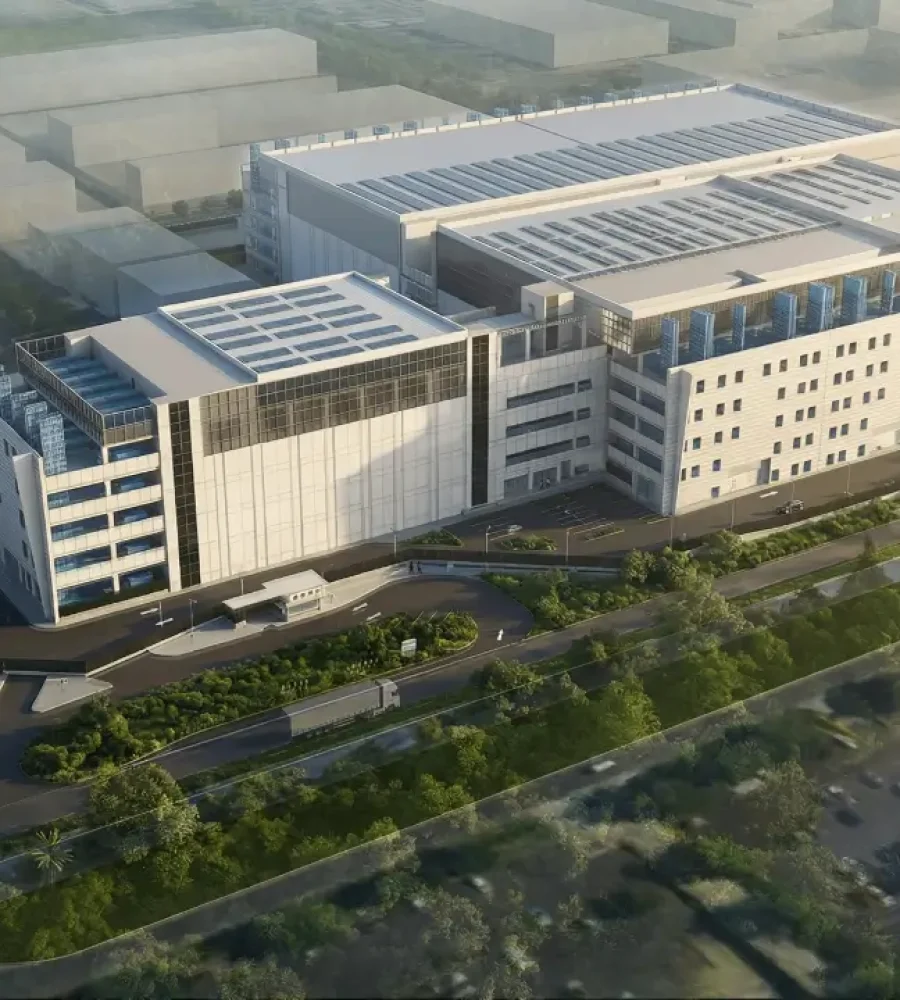
Urban development pressures further drive divergence. In dense metropolitan areas, data centers must adapt to limited land availability, vertical construction, and mixed-use zoning. Noise regulations, visual impact requirements, and transportation access constraints influence building design and site layout.
By contrast, facilities in industrial or rural zones allow for horizontal expansion and standardized campus layouts. These contrasting environments produce fundamentally different facility architectures, even when serving similar workloads.
Operational Implications of the Data Center Standardization Breakdown
The data center standardization breakdown affects operational consistency without undermining reliability. Facilities designed to meet regional requirements operate under different compliance regimes, maintenance practices, and reporting standards. This increases coordination complexity across global infrastructure portfolios.
Procurement strategies are also impacted. Region-specific designs may reduce component interchangeability, influencing inventory planning and lifecycle management. Vendor qualification increasingly depends on regional certification compatibility rather than global availability.
Despite these challenges, regional divergence reflects the sector’s adaptation to real-world constraints. Standardization now emphasizes performance outcomes and operational frameworks rather than identical physical designs.
Redefining Global Standards
Global alignment increasingly occurs at the system and process level. Reliability targets, resilience metrics, and operational benchmarks remain consistent, while physical implementation varies by region. This evolution allows data centers to meet local requirements without compromising global performance expectations.
Conclusion
The data center standardization breakdown illustrates how global infrastructure development is adapting to regional realities. Regulatory diversity, localization pressures, and environmental constraints now shape facility design as much as engineering best practices.
Rather than signaling fragmentation, this shift reflects a more context-aware approach to infrastructure development. As data center deployment continues to expand globally, regional adaptation has become an integral component of scalable and compliant facility design.