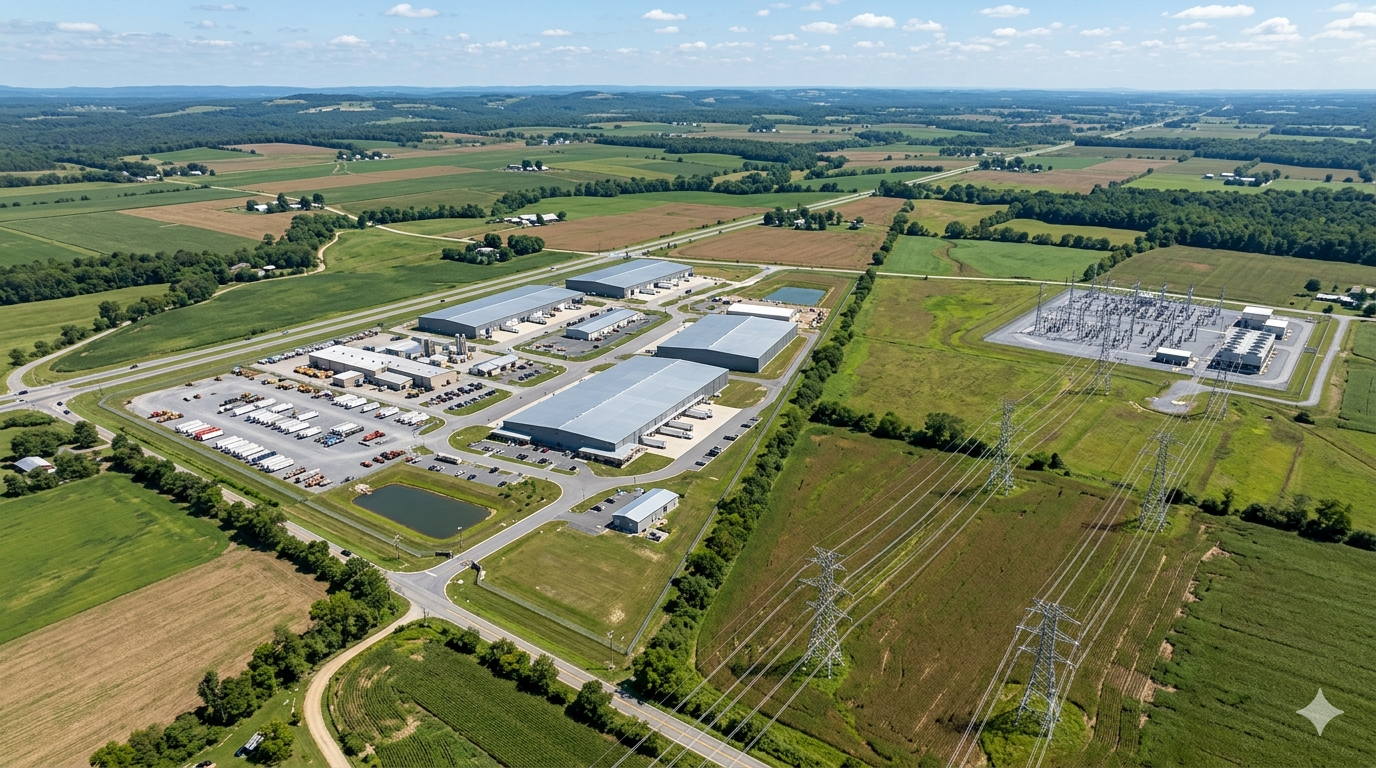
For most of the commercial internet era, data center site selection followed a logic that the industry understood well and executed reliably. Proximity to population centers minimized latency for end users. Access to carrier-neutral fiber reduced connectivity costs and improved redundancy. Favorable tax environments and land costs shaped the financial model. Once a market established itself as a data center hub, network effects reinforced its dominance. Northern Virginia, Silicon Valley, Chicago, Amsterdam, Frankfurt, and Singapore accumulated capacity because the infrastructure ecosystems operators needed were already there. The circular logic of established markets attracting more investment defined how compute geography organized itself for two decades.
AI infrastructure has broken that logic. Not gradually, and not in ways that allowed the industry to adapt incrementally. The arrival of GPU-dense workloads at commercial scale introduced site requirements that the established market framework was not built to satisfy. Power delivery at sustained high densities, grid interconnection positions that do not require years of queue navigation, land areas sufficient for campus-scale development, and cooling infrastructure that air cooling cannot support at AI rack densities. These requirements do not concentrate in the same places that made Northern Virginia and Silicon Valley dominant. In some cases they actively conflict with the characteristics that made those markets attractive under the old model.
The result is a fundamental rewriting of how site selection gets done, what inputs drive the analysis, and which markets emerge as competitive when the criteria change. That rewriting is still in progress. The operators and developers navigating it most effectively are those who recognized earliest that the old framework was not a starting point for modification. It was a framework to replace entirely.
Power First, Everything Else Second
Power availability has replaced proximity to population centers as the primary site selection criterion for AI infrastructure. That reversal changes every subsequent decision in the development process. The traditional sequence started with market selection based on demand signals, moved to site identification within that market, and then addressed power as a permitting and procurement exercise once the site was secured. Power was a constraint to be managed, not a starting point for analysis.
AI workloads require sustained power delivery at rack densities that approach or exceed the design limits of conventional utility distribution infrastructure in many established markets. A campus-scale AI training facility drawing several hundred megawatts of continuous load represents a demand signal that most utility service territories were not designed to accommodate without significant infrastructure investment. That investment takes time to plan, permit, and construct. The interconnection study process adds further delay that compounds as queue backlogs grow in markets where AI infrastructure demand concentrates. Developers who begin site selection without first mapping power availability and interconnection queue conditions are not conducting site selection. They are producing an expensive illusion.
The developers who have restructured their process around power availability as the primary criterion begin with transmission system capacity data, interconnection queue statistics, and utility load forecasting assumptions before evaluating land markets. They identify substations with available capacity and work backward to the parcels those substations can serve. This inversion of the traditional sequence produces a different set of candidate sites. Many fall outside the established markets where conventional site selection would have focused attention. Developers who have made this transition consistently find that their candidate site lists look fundamentally different from those produced by conventional market analysis.
Why Queue Position Has Become a Strategic Asset
The interconnection queue problem constraining AI infrastructure development in established markets is not a temporary administrative backlog. It reflects a structural mismatch between the rate at which AI infrastructure demand generates new requests and the rate at which the study process was designed to process them. Every new request entering a congested queue adds to the study burden for requests already in it, because studies must account for the cumulative impact of all preceding requests. The sequential nature of this process means that queue depth compounds in ways that make clearing backlogs progressively more difficult.
Operators who secured interconnection positions in constrained markets before the AI-driven demand surge now hold assets whose value extends well beyond the power capacity they represent. A queue position in a market where new requests face multi-year study timelines translates directly into development timelines that competitors without equivalent positions cannot match. That timeline advantage compounds in commercial negotiations with hyperscaler customers who need capacity delivered on specific schedules. The secondary market for queue positions that has begun to emerge in the most constrained markets reflects the economic value developers have assigned to these positions. Sites with existing interconnection rights trade at premiums that reflect timeline value, not just land and infrastructure value.
The Capital Allocation Shift
The economics of the power-first approach also change how development capital allocates across the project timeline. Conventional development economics treated power procurement costs as late-stage capital items that emerged from interconnection agreements secured after site selection. Power-first development recognizes that the value of power access is often the primary driver of site value. Acquiring sites with existing interconnection rights or advanced queue positions carries a premium that reflects the timeline advantage those positions represent. Developers who model this timeline value accurately identify acquisition opportunities that competitors using conventional site valuation approaches systematically undervalue. This shift in capital allocation logic is one of the clearest markers separating operators who understand the new site selection framework from those still applying the old one.
The Geography of Stranded and Shovel-Ready Power
The sites that offer the most attractive combination of available power and developable land frequently do not appear in conventional data center market analyses. Former industrial facilities, retired power generation sites, and areas that held large manufacturing operations have in many cases retained electrical infrastructure whose capacity significantly exceeds what current land uses require. These sites represent a category of opportunity that the traditional framework consistently underweighted. Their other characteristics, distance from fiber networks and absence of established operational ecosystems, disqualified them from consideration when connectivity and proximity drove the analysis.
AI training workloads are relatively insensitive to geographic location in ways that inference workloads serving real-time user requests are not. A training cluster running a multi-day model training job does not require low-latency connectivity to end users. It requires reliable high-bandwidth connectivity between cluster nodes and to cloud platforms that supply training data and retrieve results. Long-haul fiber connections can achieve this from formerly remote sites. The economics of extending fiber to a site with secured grid access and confirmed AI infrastructure demand differ fundamentally from speculative fiber extension to a site without confirmed demand. Developers who secure power-advantaged sites before announcing hyperscaler demand anchor can negotiate fiber extension economics that reflect certain demand rather than speculative demand.
How Stranded Assets Become AI Infrastructure Opportunities
The revaluation of formerly industrial sites as AI infrastructure opportunities follows a pattern that repeats across different geographic contexts. A site carrying environmental remediation obligations and community relations complexity presents a development profile that conventional real estate developers avoid. An AI infrastructure developer who can absorb those complexities in exchange for the interconnection position and power infrastructure that the industrial site retains is accessing value that the conventional market has mispriced. The Appalachian region of the United States illustrates this at a market level. The industrial history of West Virginia, Pennsylvania, and Ohio created electrical infrastructure whose capacity reflects the demands of heavy manufacturing that no longer generates the loads it once did. Transmission infrastructure connecting these areas to major grid interconnects was built for industrial load profiles that dwarf most conventional data center developments.
The brownfield redevelopment model aligns with policy priorities that create regulatory and financial incentives not available for greenfield development in established markets. Economic development agencies in communities affected by industrial decline have strong incentives to support AI infrastructure development that brings capital investment and employment to replace what industrial closure removed. These incentives can take the form of tax abatements, expedited permitting, and utility cooperation that meaningfully improve development economics relative to greenfield sites in competitive markets where local governments face less urgency to attract investment.
Cooling Geography and Water Availability
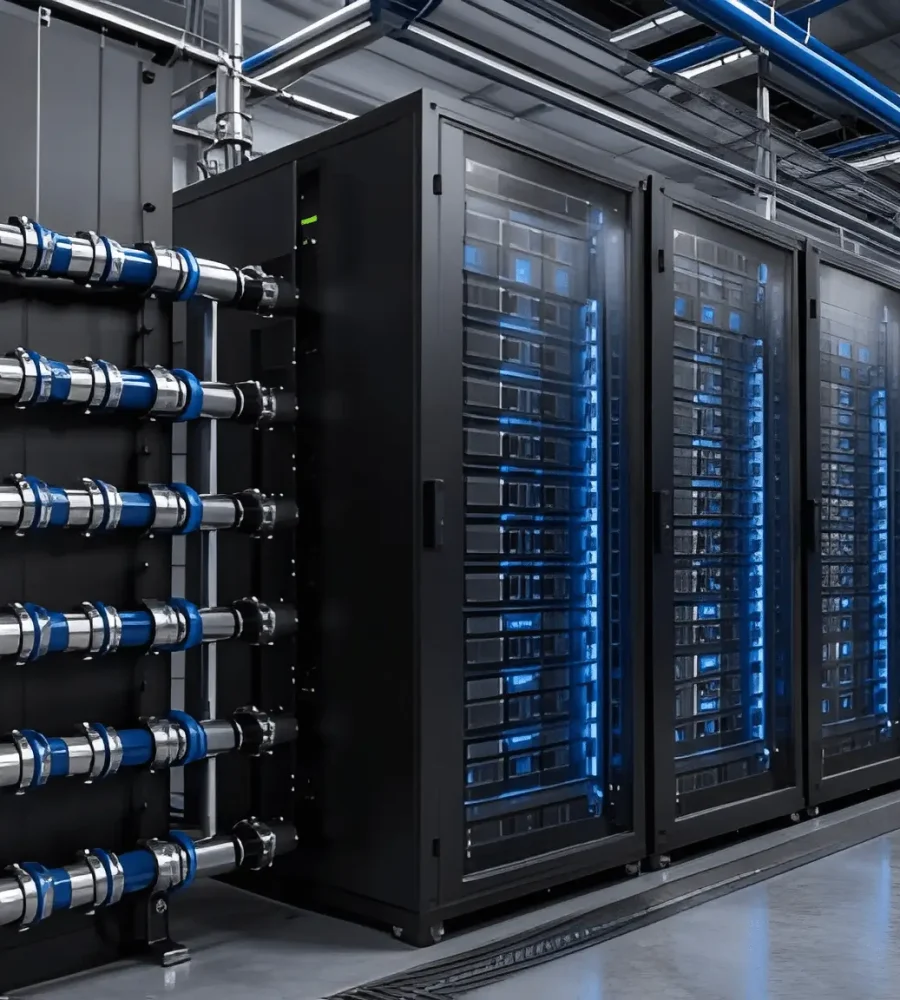
The thermal management requirements of AI hardware introduce a geographic dimension to site selection that the conventional framework addressed primarily through facility-level engineering decisions. Air-cooled facilities can be built almost anywhere that power and land are available, because air cooling does not create meaningful geographic dependencies beyond ambient temperature considerations. Liquid cooling systems, which AI workload density requirements are making the baseline design assumption for serious infrastructure development, introduce water availability as a site selection criterion that can constrain or eliminate candidate sites in markets where conventional cooling approaches would have been feasible.
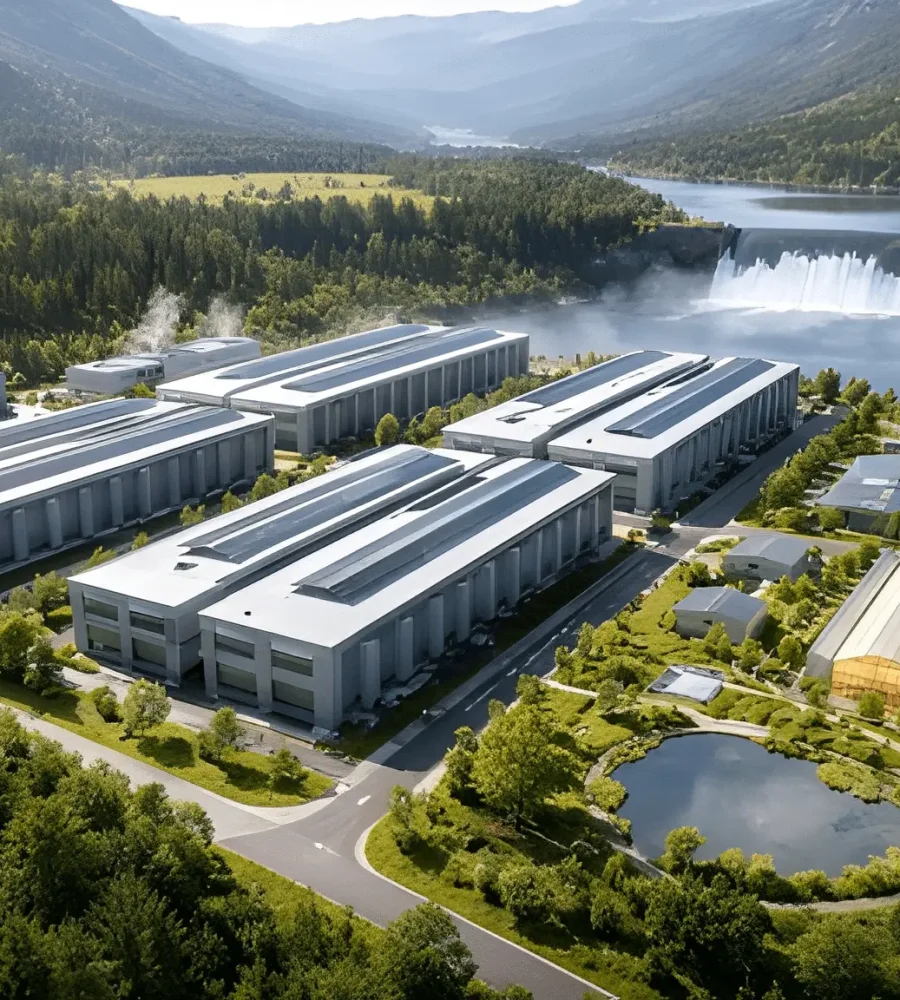
Direct liquid cooling systems that reject heat through cooling towers or evaporative coolers consume water in proportion to the heat they reject. In markets where water availability is constrained by climate, regulatory limitations, or competition from agricultural and municipal users, this water consumption profile creates operational sustainability challenges that site selection analysis must address before committing capital. The Nordic markets attracting significant AI infrastructure investment benefit not just from abundant renewable energy but from climates that allow cooling systems to operate efficiently without high water consumption, using outside air for heat rejection during periods that in warmer climates require mechanical cooling.
How Climate Advantage Compounds Site Economics
Markets with favorable natural cooling climates allow facilities to operate with higher supply water temperatures or greater reliance on air-side economization. Both reduce capital investment in cooling equipment and operational energy consumption. These savings compound across the operating life of a facility in ways that development economics may understate if the analysis uses conventional cooling assumptions rather than AI-workload-specific thermal profiles.
The secondary effect on power usage effectiveness creates competitive cost advantages in power markets where electricity is priced by consumption volume. A facility in a naturally cool climate that achieves lower power usage effectiveness than a comparable facility in a warm climate converts a geographic characteristic into a lasting operational cost advantage. Over the ten-to-twenty-year operating life of a major AI infrastructure facility, this advantage represents a present value that should feature prominently in site selection economics. It often does not, because conventional development models treat power usage effectiveness as a facility design variable rather than a site-specific geographic characteristic.
Land Strategy at AI Infrastructure Scale
The land requirements of campus-scale AI infrastructure development differ from conventional development in ways that demand a different approach to land acquisition strategy. A hyperscale AI training campus requires land area that reflects not just the building footprint of current development but the expansion area necessary to grow capacity as customer commitments increase. Developers who acquire land sufficient for initial development without securing options over adjacent expansion parcels face renegotiation risks that can materially affect the economics of subsequent development phases.
The integration of on-site power generation into AI infrastructure campuses adds a land requirement that conventional development did not have to accommodate. A campus co-locating natural gas generation, solar arrays, or battery storage alongside computing infrastructure needs land area for generation equipment that can substantially exceed the land area of the computing facilities themselves. Solar generation at the scale required to meaningfully offset AI workload power consumption requires large land areas that urban and suburban sites rarely offer. This pushes solar-integrated AI infrastructure development toward rural and exurban locations where land economics and power geography both favor development.
Phasing Land Acquisition to Protect Economics
Phased land acquisition strategies that secure options on expansion parcels while committing capital only to initial development phases protect developers against land price inflation driven by the success of their own development programs. These strategies require relationships with landowners, local governments, and community stakeholders that take time to develop. That creates a first-mover advantage for developers who establish these relationships before competitive dynamics in specific markets make them expensive to build. The developers who have built systematic land relationship programs in markets they identify as strategically important before those markets become competitive are accessing optionality that later entrants cannot replicate at comparable cost.
The Regulatory Dimension of AI Site Selection
The regulatory environment in which data center development occurs has become a more complex and consequential dimension of site selection as the scale of AI infrastructure investment has attracted legislative attention that conventional development rarely encountered. Communities and governments that previously competed to attract data center investment with tax incentives and streamlined permitting are in some cases reassessing those positions as the power demands and water consumption of AI infrastructure development have become visible.
Water use restrictions emerging in markets like Singapore, Arizona, and parts of Europe create constraints on cooling technology choices and facility operating conditions. These regulatory constraints introduce a time dimension to site selection that extends beyond the development horizon of specific projects. A facility built to comply with today’s water use regulations in a water-stressed market may face operating constraints as regulations tighten in response to AI-driven demand growth that regulators did not anticipate when current frameworks were established. Developers who treat regulatory risk as a site selection criterion manage this dimension more effectively than those who design to current requirements without scenario analysis of how those requirements may evolve.
Utility rate structures that govern how large industrial customers pay for power, the cost allocation mechanisms for grid upgrades triggered by large load additions, and the treatment of behind-the-meter generation in utility tariff frameworks all vary across jurisdictions. These variations affect the total cost of power delivery in ways that nameplate energy prices do not capture. Developers who conduct detailed regulatory analysis of power procurement economics in candidate markets identify total cost differences that headline energy price comparisons miss entirely.
Sovereign AI Policy and Site Selection
The sovereign AI priorities that governments across Asia, Europe, and the Middle East have elevated to national policy create a site selection dynamic with no precedent in the conventional data center market. Governments that want AI infrastructure within their borders as a matter of national strategy are creating regulatory requirements, financial incentives, and partnership opportunities that change the economics of development in markets that conventional analysis would not have prioritized.
Japan’s approach, exemplified by Microsoft’s $10 billion commitment to domestic AI infrastructure development in partnership with SoftBank and Sakura Internet, illustrates how sovereign AI policy creates development opportunities that the traditional demand-driven model does not generate. The demand signal driving that investment is not commercial data center demand in the conventional sense. It is national policy that treats AI infrastructure as strategic infrastructure requiring domestic development regardless of whether pure market economics would have directed investment there. Developers and operators who build organizational capability to navigate sovereign AI policy frameworks and public-private partnership structures access development opportunities that pure market actors cannot reach through conventional demand analysis alone.
How Site Selection Capability Becomes Competitive Advantage
The cumulative effect of these changes is that data center site selection has evolved from a relatively standardized analytical process into a complex, multi-criteria strategic capability. The organizations executing most effectively on AI infrastructure development are those that have invested in the people, data systems, and analytical frameworks that the new site selection logic requires. Power systems engineers who understand grid interconnection processes. Regulatory specialists who can analyze utility tariff structures across multiple jurisdictions. Land acquisition professionals who understand how to structure option agreements that protect development economics across multi-year timelines. Government relations capabilities that can navigate sovereign AI policy frameworks and public-private partnership structures.
These capabilities are not individually exotic. Together, however, they form a combination that a single organization can deploy rapidly across multiple candidate markets simultaneously. That combination represents a genuine competitive advantage that competitors cannot quickly replicate. The developers who secured the best positions in the current AI infrastructure buildout did not do so primarily because they had more capital. They did so because they understood the new site selection logic earlier and invested in the organizational capability to execute against it before the best positions disappeared.
The Workforce and Supply Chain Dimensions
Site selection decisions carry workforce implications that the conventional framework addressed primarily through proximity to metropolitan labor markets. The operational complexity of high-density liquid-cooled facilities requires expertise that is genuinely scarce regardless of market. Workforce availability in a specific market therefore matters less than organizational capability to attract and retain specialized talent globally. The construction of AI infrastructure campuses in markets like West Virginia and rural Nordic regions creates temporary construction workforce requirements that local labor markets may not satisfy without substantial in-migration of specialized trades.
The supply chain requirements of AI infrastructure development introduce a site selection variable that conventional development addressed primarily through procurement relationships rather than geographic proximity. Transformers, switchgear, cooling system components, and structural components draw from global supply chains whose lead times have extended substantially as global demand for electrical and mechanical equipment has grown. Sites in markets where major equipment suppliers maintain manufacturing or distribution presence offer supply chain proximity advantages that reduce the risk of delivery delays affecting construction schedules. Developers who factor supply chain proximity into their analysis alongside power, land, and regulatory criteria identify markets where the combination of attributes produces total development risk profiles that individually superior sites do not match.
The Financial Modeling Gap in Conventional Site Selection
The financial models that conventional data center development uses to evaluate candidate sites were designed for a world where power costs, land costs, and construction costs were the primary variables that differed meaningfully across markets. Tax incentive comparisons, labor cost differentials, and connectivity pricing variations completed the picture. These models are not wrong within the assumptions they were built around. They are simply inadequate for evaluating the full range of variables that determine site quality for AI infrastructure development.
The most significant modeling gap involves the treatment of timeline risk. Conventional models evaluate sites on the basis of expected development timelines, with risk adjustments for permitting complexity or construction market conditions. They do not typically assign explicit value to the option of developing sooner rather than later, because in conventional markets the timeline difference between a strong site and a weak site rarely exceeded months. In AI infrastructure markets where the timeline difference between a site with secured interconnection and a site entering a congested queue can exceed two years, the option value of earlier development is substantial. It can dominate the site economics analysis if modeled accurately.
Secondary Market Dynamics and Portfolio Effects
The emergence of secondary markets for interconnection queue positions, stranded power assets, and land options in constrained markets creates portfolio management opportunities that individual site analysis does not capture. An operator who holds a portfolio of queue positions across multiple markets can allocate development capital to the positions where interconnection timelines are most favorable while maintaining options on positions in markets where conditions may improve. This portfolio approach to site selection requires organizational capability to manage multiple active positions simultaneously, track changing queue conditions across markets, and make capital allocation decisions that reflect the relative value of competing positions at any given point in time.
Why Portfolio Management Justifies the Overhead
The portfolio effects of site selection capability extend beyond queue position management to encompass land option strategies, regulatory relationship investments, and supply chain capacity reservations. Developers who have built portfolios of these inputs across multiple markets have created infrastructure for rapid development response when market conditions align.
The organizational overhead of managing these portfolios is real and it represents a cost that developers must weigh against the development optionality the portfolios provide. The developers who have done this analysis carefully and concluded that portfolio management costs are justified by the development optionality they enable are building the infrastructure layer of AI site selection capability that will define competitive positions for years ahead.
Data center site selection has always rewarded operators who understood the market better than their competitors. In the conventional era, that meant understanding demand patterns, connectivity ecosystems, and real estate markets. In the AI era, it means understanding power systems, regulatory frameworks, cooling geography, sovereign policy environments, and supply chain dynamics simultaneously. The organizations that build that understanding now, and invest in the organizational capability to act on it across multiple markets simultaneously, are building the foundation for AI infrastructure leadership that capital alone cannot purchase. Sites secured in power-advantaged markets that competitors overlooked add to the portfolio of positions from which future development can launch.
Regulatory relationships built in sovereign AI priority markets create access to future opportunities before those opportunities become broadly visible. Supply chain relationships established ahead of demand create procurement advantages that protect development timelines when equipment lead times extend across the industry. The organizations that understand site selection as a continuously compounding strategic capability, not a project-specific function, are the ones building the infrastructure that will define AI compute geography for the next generation.