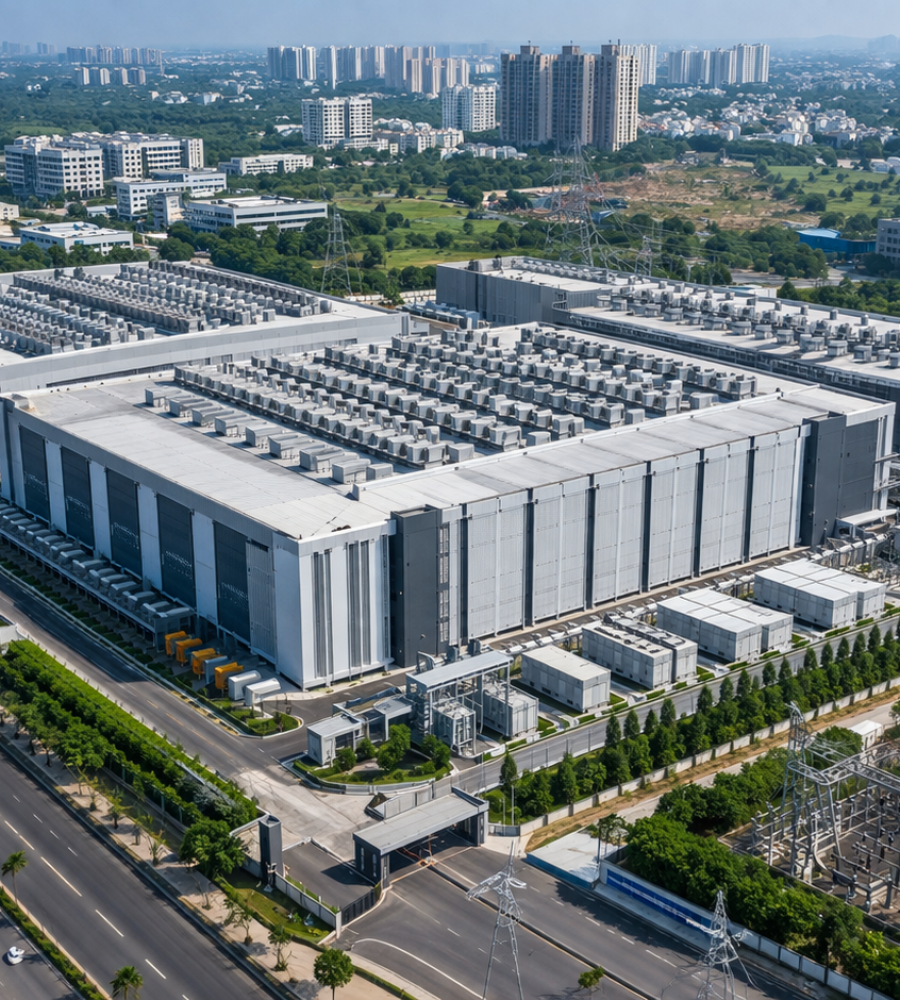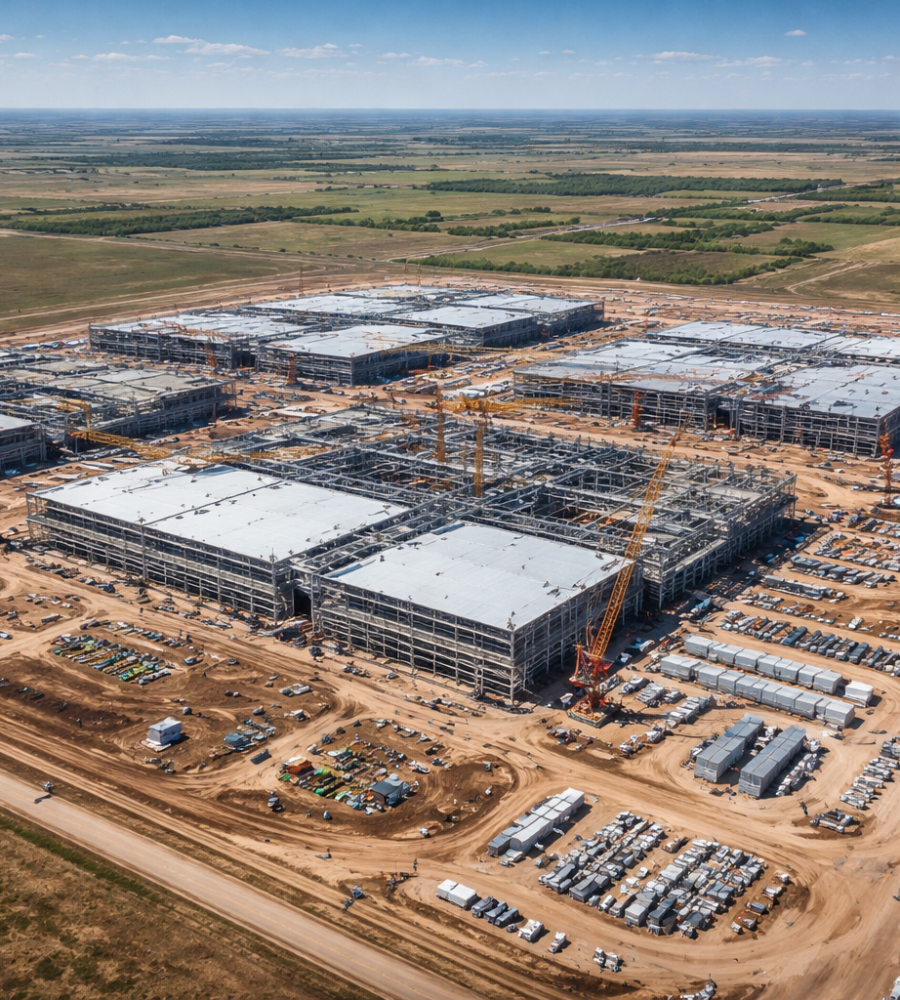
The AI infrastructure buildout is the largest peacetime investment project in human history. That phrase is not a headline. It comes from structured finance lawyers who worked through the aftermath of the 2008 financial crisis and are now watching similar patterns re-emerge in a different sector. The scale is different. The asset class is different. The urgency is different. However, some of the structural dynamics are familiar. Large off-balance-sheet obligations, complex financing vehicles, opacity in the underlying risk, and capital chasing yield into illiquid markets. Those who watched 2008 unfold recognise the rhythm, even if the instrument is different.
Hyperscalers are spending at a pace their cash flows cannot sustain alone. The five largest are collectively projected to spend over $600 billion on capital expenditure in 2026, with roughly three quarters of that tied directly to AI infrastructure. That level of spending exceeds the free cash flow these companies generate, even at their current scale. Something has to fill the gap. That something is debt, deployed across every available market, in structures that range from straightforward investment-grade bonds to complex off-balance-sheet vehicles that move obligations away from corporate balance sheets entirely.
Understanding how AI infrastructure financing works matters not just for investors, but for every operator, developer, colocation provider, and enterprise whose infrastructure strategy depends on the continued availability of the capital building the compute layer the industry runs on. The financing decisions made today will determine which projects get built, at what cost, and under what risk conditions. Those decisions carry consequences that extend well beyond the balance sheets of the companies making them, and the broader economy is only beginning to grasp the scale of exposure now accumulating.
From Cash to Debt: How the Model Changed
For most of the past decade, hyperscalers funded their infrastructure from operating cash flows. Amazon, Microsoft, Google, and Meta generated enormous free cash flow and deployed it into data center construction, server procurement, and network expansion without needing to tap external capital markets at meaningful scale. That self-funding model kept balance sheets clean and gave hyperscalers financial flexibility that competitors could not match. It also meant that the pace of infrastructure buildout was naturally constrained by the pace of revenue generation. You could only build as fast as the cash came in. That constraint acted as a natural discipline on overbuilding.
The AI compute buildout broke that model comprehensively. The scale of investment required to build AI training and inference infrastructure at the pace the market demands exceeds what internal cash generation can fund. The hyperscalers are still generating substantial cash flows, but those flows are no longer sufficient to cover capital expenditure plans that have grown faster than revenues. Capital intensity at some of the largest players has reached levels described by analysts as historically unthinkable, with spending representing a very high share of total revenue at companies that were previously the definition of capital-efficient business models. The gap between spending commitments and internal funding capacity is being filled by debt, and the pace at which that debt is accumulating is accelerating quarter by quarter.
Corporate bond markets were the first resort. Gross bond issuance by hyperscalers reached significant new levels in 2025, with most issuance structured as long-term debt at maturities exceeding five years, locking in funding for multi-year buildout programs. Long maturities reduce refinancing risk in the near term and give operators the timeline they need to bring infrastructure online and into revenue-generating operation before debt service becomes a pressure point. However, the volume of supply has driven credit default swap spreads higher for some hyperscalers, particularly those with more concentrated customer risk. That signal from credit markets reflects growing investor awareness that the debt-funded buildout carries risks that equity market valuations have not fully priced in.
The shift from cash to debt also changes the relationship between infrastructure investment and financial discipline in important ways. When companies fund expansion from cash flows, there is a natural feedback mechanism. If revenue disappoints, spending slows. Debt financing breaks that feedback loop. Once debt is raised and committed to a project, the spending proceeds regardless of near-term revenue performance. The project must be completed to generate the cash flows that service the debt. That dynamic creates momentum in the buildout that is difficult to slow even if market conditions change, and it concentrates the risk of a revenue shortfall in the debt service obligations rather than in the pace of expansion. The buildout becomes self-propelling in a way that pure equity-funded growth never was.
What Off-Balance-Sheet Actually Means
Corporate bonds are only part of the story. Alongside public debt markets, hyperscalers have built a parallel financing ecosystem using off-balance-sheet structures that keep obligations away from their reported balance sheets while delivering the same economic exposure. These structures are not new. They have been used in real estate, aviation, and utility financing for decades. Their application to AI infrastructure at this scale and pace is, however, genuinely unprecedented in speed, volume, and complexity.
The typical structure involves a special purpose vehicle, often organised as a joint venture between a hyperscaler and one or more financial sponsors. The vehicle acquires or develops data center assets. It raises debt through private credit markets, backed by long-term lease or capacity agreements from the hyperscaler. The hyperscaler holds a minority stake in the vehicle, commits to paying for capacity over a multi-year term, and may provide guarantees that support the vehicle’s credit rating without consolidating the debt onto its own balance sheet. Economically, this substitutes upfront capital expenditure with multi-year operating expenses while keeping most of the associated debt invisible to anyone reading the hyperscaler’s published accounts. Critics describe it as shadow borrowing. Proponents describe it as capital efficiency. Both descriptions are accurate.
Meta’s joint venture with Blue Owl Capital is the clearest and most consequential example of this model at scale. The structure combined off-balance-sheet treatment with investment-grade credit and a residual value guarantee from Meta that covered technology obsolescence risk for sixteen years. That combination allowed the vehicle to raise tens of billions in debt at a spread attractive to institutional investors while keeping the obligation out of Meta’s consolidated accounts. It was the first hyperscale project to combine these three structural elements. It established a template that others are now following, and the pace of replication is accelerating. Off-balance-sheet AI infrastructure finance has moved from a novel structure to a standard market practice in less than eighteen months.
The Residual Value Guarantee: Why It Matters
The residual value guarantee is the structural lynchpin of these off-balance-sheet deals, and understanding it is essential to understanding the risk profile of the entire financing ecosystem. AI hardware has a fundamental depreciation problem that distinguishes it from most other infrastructure assets. GPUs and other AI accelerators cycle rapidly. A facility built around today’s hardware may require significant capital investment to accommodate the hardware generations that arrive in three to five years. An investor holding a twenty-year bond against a data center asset cannot accurately model how much capital will be needed to keep the facility competitive across multiple hardware generations.
The residual value guarantee transfers that technology obsolescence risk back to the hyperscaler, which is the party best positioned to understand the hardware roadmap and absorb the cost of upgrades. Without the guarantee, institutional investors holding long-duration debt against data center assets face a risk they cannot accurately price, because the rate of AI hardware evolution is not a variable they can model with confidence from the outside. With the guarantee, the risk sits with the party that can see it most clearly. From a structural standpoint, that is an efficient allocation of risk. From a balance sheet standpoint, the guarantee is a contingent liability that sits on the hyperscaler’s accounts in a different form, and its true cost will only become visible when hardware transition cycles force upgrades that the guarantee was written to cover.
Rating agencies treat the presence and quality of the residual value guarantee as a primary determinant of credit ratings on these vehicles. Remove the guarantee, and the debt rating falls to reflect the underlying technology risk. That relationship between guarantee quality and debt cost is reshaping how hyperscalers think about their off-balance-sheet commitments. Writing a better guarantee lowers the borrowing cost of the vehicle but increases the contingent liability on the hyperscaler’s own books. That trade-off is being made dozens of times across the market simultaneously, and the cumulative contingent exposure is growing faster than any public disclosure currently captures.
Private Credit Fills the Gap Traditional Banks Cannot
The scale of AI infrastructure financing is straining traditional lending markets in ways that have pushed a significant share of the funding toward non-bank institutions. Banks face regulatory capital constraints that limit how much they can lend against a single asset class or borrower concentration. For a buildout at this scale, those constraints become binding quickly. A single AI infrastructure project requiring several billion dollars of debt can represent a meaningful fraction of a bank’s allowable exposure to the technology sector, leaving little headroom for the dozens of comparable projects competing for financing simultaneously.
Private credit has stepped into that gap with speed and scale that would have seemed implausible five years ago. Asset managers running private credit vehicles can provide large-ticket, long-duration, tailored financing that banks either cannot or choose not to underwrite. They can move faster, structure more flexibly, and accept illiquidity premiums that compensate for the lack of secondary market trading in these instruments. Their investors, primarily pension funds, insurance companies, and sovereign wealth funds, need long-duration, yield-producing assets to match their liability profiles. AI infrastructure debt, structured with investment-grade ratings and backed by hyperscaler credit, fits that need precisely. Data centers are transforming into power infrastructure companies, and the capital markets that fund them are evolving to match that transformation from technology assets into long-duration infrastructure assets that institutional capital can hold.
The volume of private credit flowing into AI infrastructure has grown at a pace that has surprised even seasoned infrastructure investors. AI-related projects tapped debt markets for very large sums in 2025, with private credit transactions consistently reaching and exceeding the ten-billion-dollar threshold. That capital does not come without cost. Private credit lenders charge premium spreads over investment-grade corporate bond rates, reflecting the illiquidity, concentration, and complexity of the structures involved. Those spreads feed directly into the cost of capital for AI infrastructure development, which in turn affects the economics of every project in the pipeline. Higher financing costs mean higher revenue requirements to achieve acceptable returns, which tightens the economic case for marginal projects and concentrates development activity in the projects with the strongest anchor tenant commitments.
The Insurance Sector’s Exposure Is Building
A significant portion of private credit funding for AI infrastructure ultimately comes from insurance companies, either through direct investment or through private credit funds where insurers are anchor investors. Insurers are attracted to AI infrastructure debt for the same reasons as other institutional investors. They want long duration, investment-grade ratings, and yield premiums that exceed what public bond markets offer for comparable credit quality. AI infrastructure debt, structured carefully around a residual value guarantee from a hyperscaler with a strong credit profile, can deliver all three simultaneously.
However, the concentration risk is building in ways that regulators are beginning to notice. As data center loans increase, insurers who provide credit protection to lenders are beginning to reach capacity limits in some segments of the market. The interconnection between insurers, private credit funds, banks, and hyperscalers through these financing structures creates transmission channels for stress that did not exist before the AI infrastructure buildout began. If a major off-balance-sheet vehicle faces refinancing pressure, the ripple effects could reach insurance balance sheets, pension fund returns, and bank credit facilities that most observers would not associate with AI data center construction. The BIS has described these arrangements as creating new shock transmission channels through the financial system, noting that procyclical shifts in private credit appetite could amplify stress in ways that are difficult to predict from existing risk models.
The Neocloud Financing Problem
While hyperscalers can access bond markets at investment-grade spreads and construct residual-value-guaranteed joint ventures with institutional partners, neoclouds and smaller AI infrastructure operators face a fundamentally different financing environment. Their credit profiles do not support investment-grade ratings. Customer concentration, often dependent on a single large hyperscaler as anchor tenant, creates risk that lenders price heavily. Hardware assets, primarily GPUs, depreciate faster than the debt structures written against them. Additionally, operating histories are short, giving lenders limited data on which to base long-term credit assessments.
The competitive dynamics between neoclouds and hyperscalers are already complex without the financing asymmetry. With it, they become structurally more challenging. Hyperscalers can fund expansion at lower cost, in larger volumes, and with greater structural flexibility than any neocloud operator. That cost-of-capital advantage translates directly into the ability to build capacity faster, price services more competitively, and absorb the financial impact of hardware transitions that smaller operators cannot afford to sustain. The financing gap between hyperscalers and neoclouds is not just a matter of scale. It is a structural competitive disadvantage that compounds over time and is likely to drive further consolidation in the operator tier below the hyperscaler level.
GPU-backed debt structures, which underpin much of the neocloud financing ecosystem, carry a specific risk that is rarely discussed in public. There is no liquid secondary market for enterprise GPUs at scale. Hyperscalers have direct Nvidia allocation and do not purchase used silicon at scale. Colocation providers and cloud enterprises have their own procurement channels. If a neocloud operator faced a credit event, lenders holding GPU-backed debt would have limited options for realizing the value of their collateral. The secondary market that would need to exist to make GPU collateral reliably realizable simply does not exist at the depth the current volume of GPU-backed debt assumes. That gap between the theoretical liquidity of the collateral and the practical liquidity available in a stress scenario is a systemic risk in the neocloud financing ecosystem that deserves more attention than it currently receives.
The Geography of AI Infrastructure Capital
The debt markets funding the AI infrastructure buildout are not distributing capital evenly across geographies, and the patterns of concentration are shaping which countries can participate in the AI infrastructure era on their own terms. Capital concentrates where it is most confident of returns, and that confidence follows established markets, proven regulatory frameworks, and hyperscaler anchor commitments. Northern Virginia, the US Sun Belt, Northern Europe, and Singapore have attracted the bulk of institutional AI infrastructure investment because they offer the combination of grid access, regulatory predictability, and hyperscaler demand that debt investors require to underwrite long-duration commitments.
Emerging markets that want to participate in the AI infrastructure buildout face a capital availability problem that goes beyond risk appetite. The financing structures that work at scale in established markets often cannot be replicated where legal frameworks for special purpose vehicles are less developed, where currency risk adds complexity to long-duration debt, or where the track record needed for investment-grade ratings simply does not exist.
Development finance institutions have begun deploying capital into AI infrastructure in emerging markets, but their capacity falls short of what the investment requirements demand. Strategic capital is driving compute supremacy in ways that concentrate development where institutional confidence is highest. The gap between where developers are building AI infrastructure and where the world’s population lives is a structural feature of the current financing model, not a temporary imbalance.
The Capacity Timing Risk Nobody Is Pricing
The financing structures built around AI infrastructure assume that the revenue this infrastructure generates will ultimately service the debt. That assumption has not yet faced a test at scale, and the timing risk embedded in the current buildout is significant and underappreciated. Lenders typically structure infrastructure debt around the assumption that facilities will reach revenue-generating operation within a defined window after construction ends. When that window slips, debt service begins before cash flows arrive, creating pressure on operators that the original financing did not anticipate.
The time-to-power crisis that constrains how quickly operators can bring new AI infrastructure capacity online directly affects the revenue timing assumptions built into every debt structure in this market. Grid connection delays, transformer and switchgear shortages, and permitting processes are pushing project completion timelines well beyond original projections. Delayed infrastructure generates no revenue while the debt behind it accrues interest. A project financed on an 18-month completion assumption that instead takes 30 months has a materially different return profile than the one underwritten by its lenders. Those differences compound across a pipeline of hundreds of projects simultaneously, and the aggregate timing risk across the global AI infrastructure buildout has never been quantified publicly.
The enterprise AI adoption curve adds further timing complexity. Enterprises are deploying AI at scale, but the pace at which they commit to long-term capacity agreements does not match the pace at which developers are financing and building infrastructure. Hyperscalers and data center operators are building ahead of contracted demand, betting that demand will materialise to fill capacity within the financing window. That bet has worked so far, but nobody has placed it at this scale before, and a significant demand shortfall in a market carrying hundreds of billions of debt outstanding would send consequences far beyond the technology sector.
The Transparency Question
The growth of off-balance-sheet AI infrastructure financing has drawn serious attention from policymakers and regulators on both sides of the Atlantic. US senators have publicly called on the government to investigate how technology companies are turning to complex and opaque debt markets to borrow at scale. The concern is not primarily about whether individual deals are well structured. Most of them are. The concern is about systemic transparency. When large amounts of economic exposure sit in structures that do not appear on corporate balance sheets, the financial system loses its ability to assess aggregate risk accurately, and history offers clear lessons about what happens when that kind of opacity builds at scale.
The BIS has noted that off-balance-sheet AI infrastructure arrangements create new shock transmission channels. Banks support the special purpose vehicles with funding lines. Private credit funds hold the senior debt. Insurance companies anchor those funds as investors. Refinancing pressures at the vehicle level could trigger procyclical shifts in private credit appetite. Guarantee activations could hit hyperscaler balance sheets in ways that credit analysts relying on published accounts cannot currently see. The interconnections are real, their full implications have not been mapped, and the speed at which this ecosystem has assembled itself leaves limited time for careful systemic risk assessment.
None of this means the AI infrastructure buildout will fail or that its financing is fundamentally unsound. The demand for compute is real, the revenue opportunity is large, and the companies at the centre of this buildout carry financial resources that can absorb significant stress. However, the speed at which this ecosystem has assembled itself, the complexity of the structures involved, and the opacity from moving obligations off balance sheets all deserve more scrutiny than they currently receive. The industry is laying the physical foundation of the AI economy on a capital structure whose full implications nobody yet fully understands, not the companies deploying it, not the regulators overseeing it, and not the institutional investors whose retirement savings are increasingly exposed to it. The time to understand those implications is before stress arrives, not after.
What Comes After the Build
The current debt-funded buildout is creating a physical AI infrastructure layer that will define the competitive landscape for the next decade. However, the financial structures driving that buildout will create their own competitive dynamics once the construction phase gives way to the operational phase. Operators who locked in low-cost long-term debt during the current cycle will hold structural cost advantages over those who need to refinance in a higher rate environment or build new capacity at whatever cost of capital prevails after the current wave of institutional enthusiasm cools.
The data center assets that off-balance-sheet structures are creating will likely trade as a distinct asset class once they reach operational maturity. AI infrastructure-backed securities, combining hyperscaler credit quality with real asset collateral and long-duration cash flows, could become a significant component of institutional portfolios in the same way that other infrastructure asset classes have over the past two decades. The precedent the Meta-Blue Owl structure set is not just a financing innovation. It is the opening act of a new asset class whose long-term characteristics the market pricing it today does not yet understand.
The sustainability of the current financing pace ultimately depends on two things. First, AI revenue must grow fast enough to service the debt that operators are issuing to build the infrastructure generating it. That relationship is circular in a way that creates both opportunity and fragility. If AI adoption accelerates faster than the most optimistic current projections, operators service the debt easily and the returns justify the capital deployment. If adoption plateaus or if the revenue per unit of compute falls faster than the cost of building new compute, the financing model faces stress that the current structures cannot absorb gracefully.
Second, the institutional appetite for AI infrastructure debt must remain robust enough to absorb the issuance volumes the market requires. That appetite is currently strong, driven by the yield premium and credit quality combination that AI infrastructure debt offers. However, institutional appetite for any asset class is not unlimited, and the pace of issuance is testing capacity in some segments of the market already. If private credit appetite shifts, if insurance regulators impose concentration limits on data center exposure, or if a high-profile financing failure changes the risk perception of the asset class, the cost of capital for AI infrastructure development could rise sharply and quickly. At the current pace of debt issuance, even a modest repricing of risk would have significant implications for projects in planning and development that have not yet locked in financing.
The AI infrastructure buildout will continue regardless. The compute demand is real, the commercial opportunity is large, and the capital committed to this cycle will be deployed. However, the next phase of this buildout, the one that scales AI infrastructure to meet global enterprise AI adoption, will need to be funded on terms that are still being negotiated. On one side sits an industry that needs capital faster than markets have ever moved before.
On the other sits a financial system that is still working out how to price assets that have never existed at this scale or speed before. How that negotiation resolves will determine not just the economics of AI infrastructure, but the structure of the financial system that funds the AI economy for the decade ahead. The physical buildout is the visible story. The capital structure underneath it is the story that will matter most when the cycle turns.