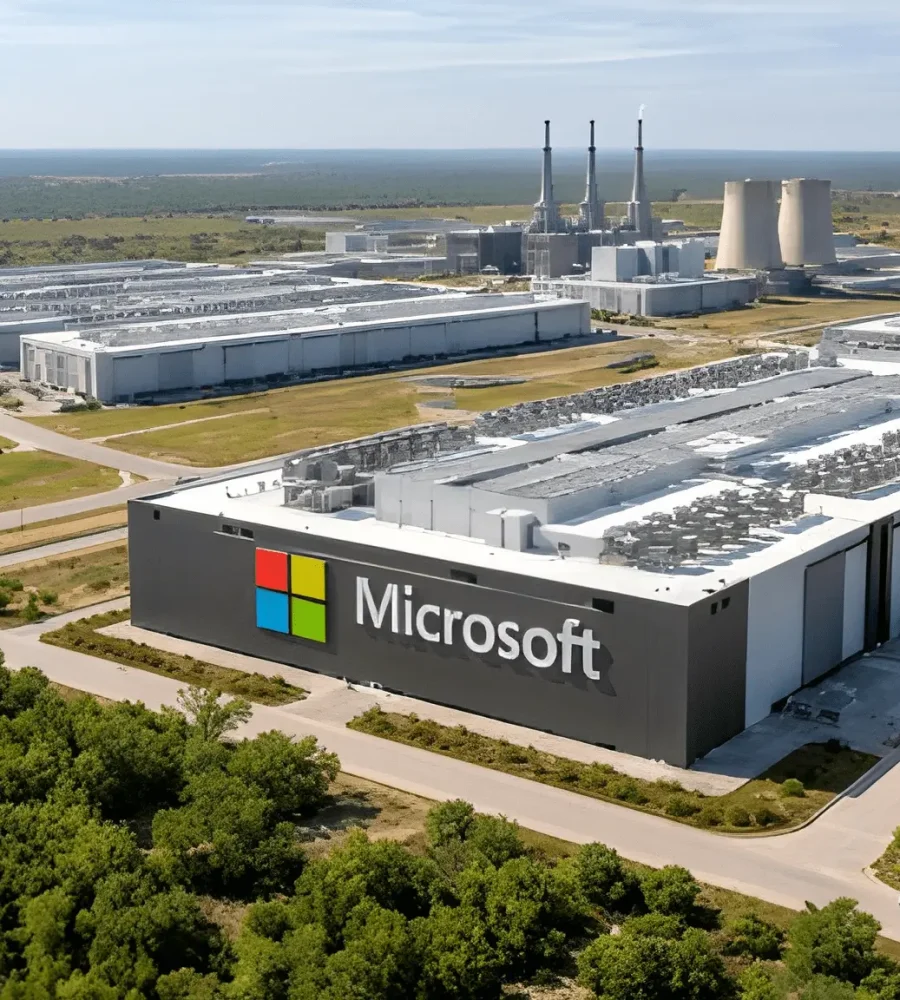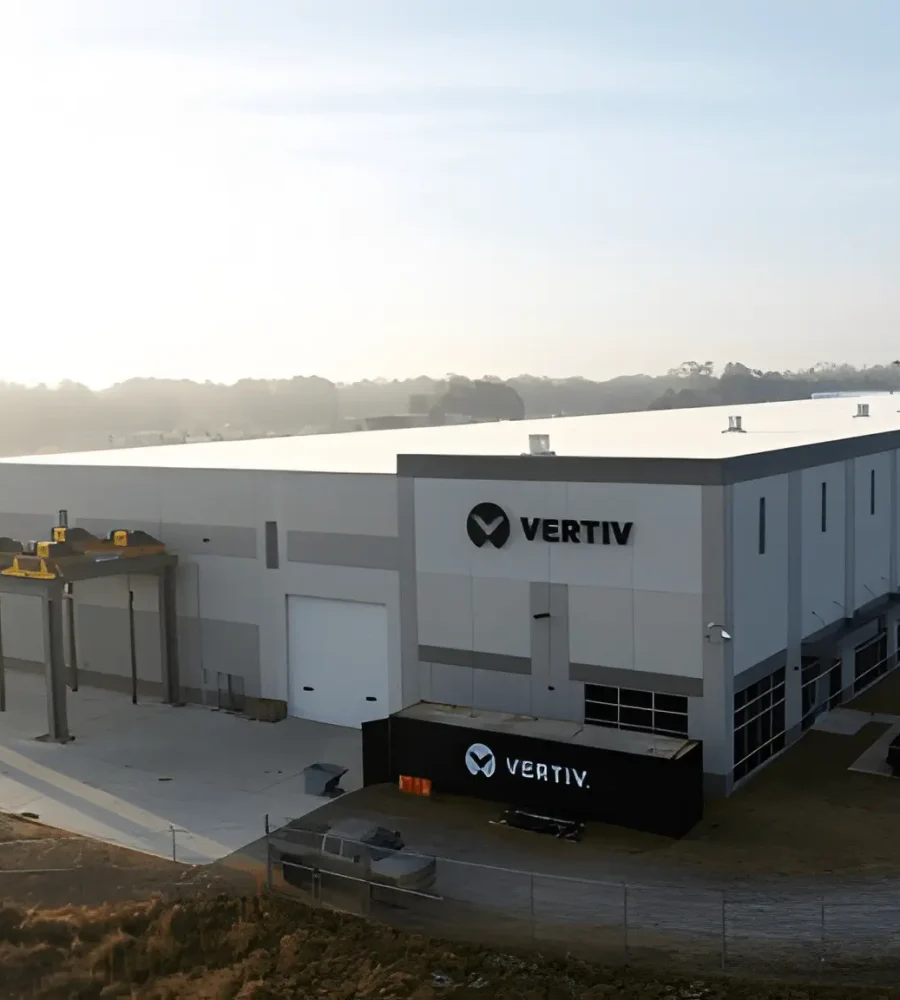
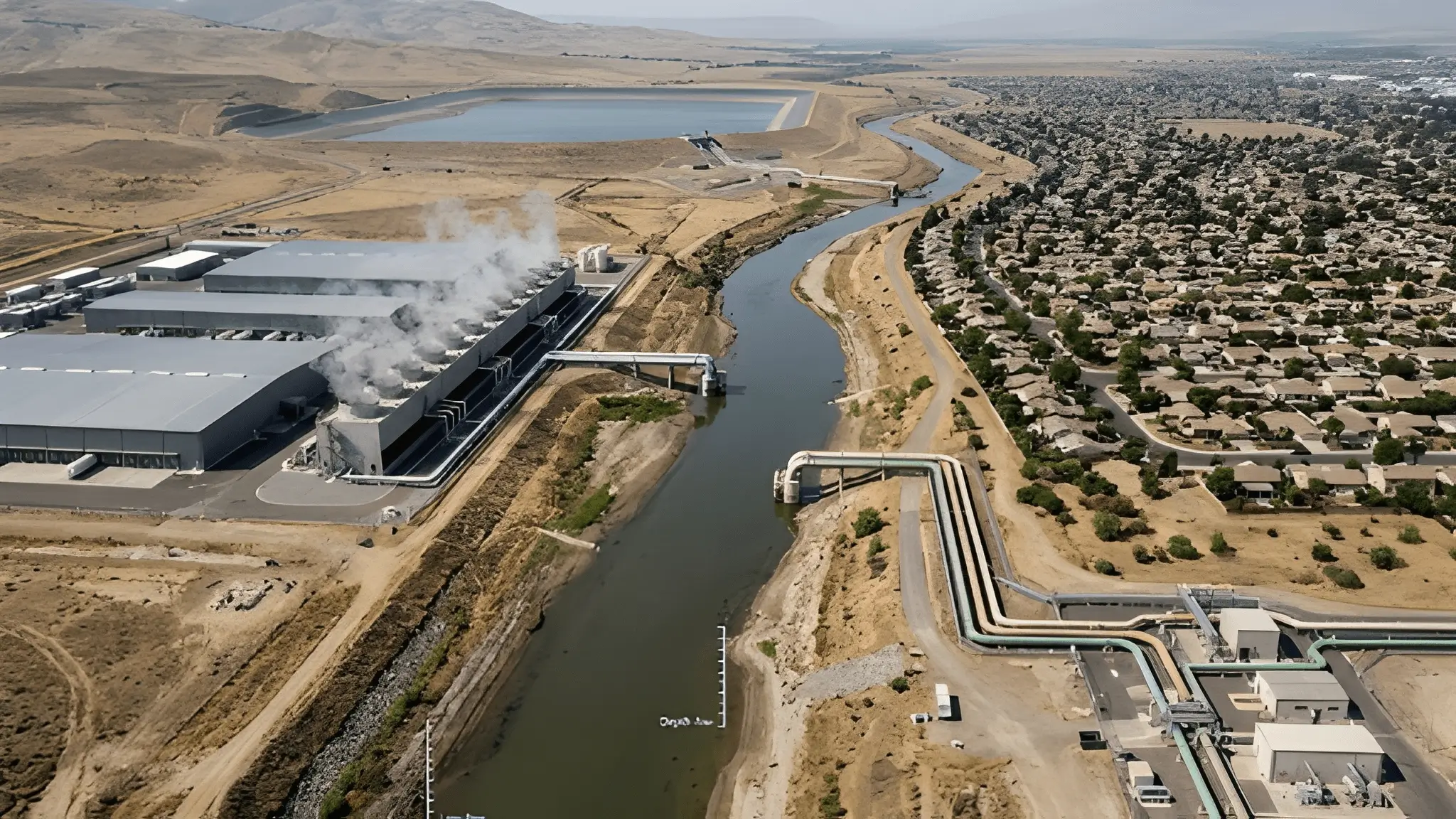
Modern metropolises no longer define their silhouettes solely by residential high-rises or commercial centers. Windowless, monolithic structures of hyperscale data centers now dominate the urban skyline. These sprawling complexes represent a new kind of urban predator. They do not consume physical space as much as they consume the fundamental lifeblood of the city. While public discourse centers on the electrical appetite of artificial intelligence, a visceral conflict unfolds beneath the pavement. Every localized calculation and every neural network training session requires a physical cooling mechanism. This mechanism draws directly from the same reservoirs that sustain human life. This silent competition marks a pivotal shift in our infrastructure. Digital expansion is no longer an invisible layer of society. It acts as a physical rival for terrestrial resources. Liquid cooling requirements have transformed water into a strategic asset of the compute era.
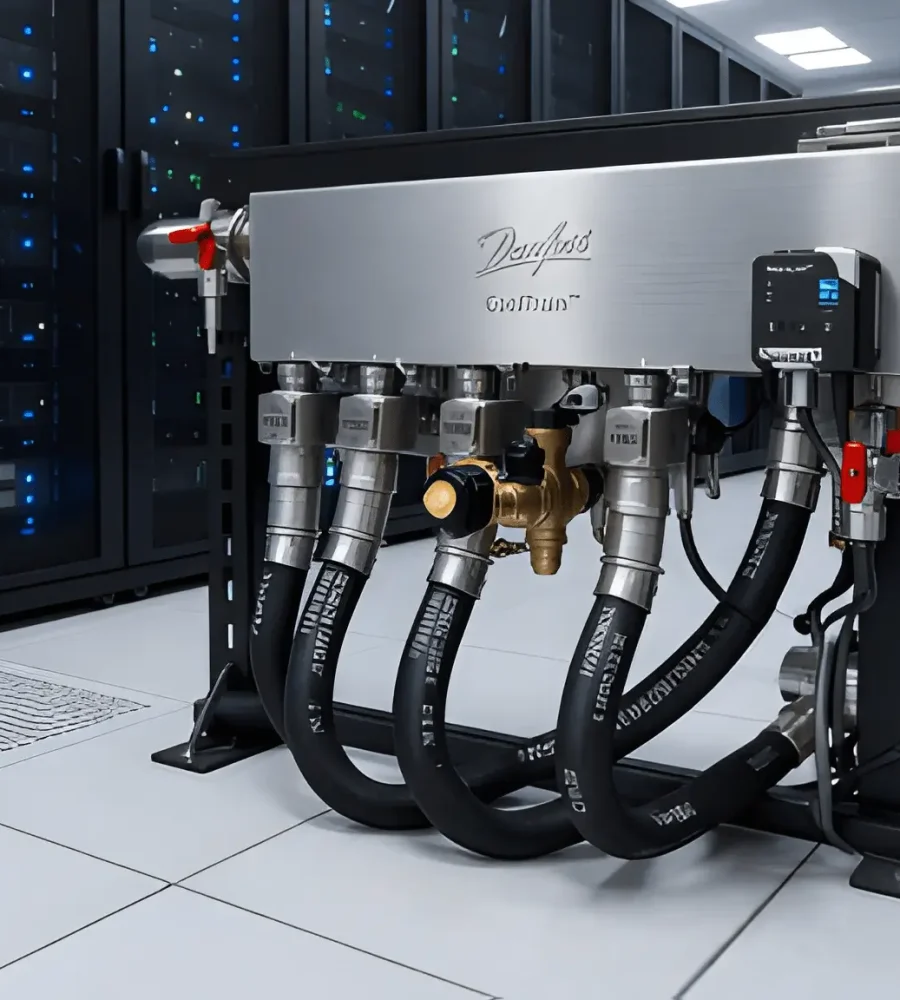
Every localized calculation and many neural network training sessions require cooling mechanisms, which in some cases draw from shared municipal or recycled water sources depending on the cooling technology used. This silent competition marks a pivotal shift where digital expansion is no longer an invisible layer of society but a physical rival for terrestrial resources. The liquid cooling requirements of high-density racks have transformed water from a utility into a strategic asset of the compute era.
Urban Water Budgets Are Becoming Compute Allocation Models
City administrators face an unprecedented challenge in the wake of the AI boom. They must view municipal water supply through the lens of algorithmic throughput and hardware efficiency. Managers balance the hydration needs of growing populations against the cooling requirements of digital infrastructure. This shift forces a total reevaluation of how urban water budgets function. Traditional seasonal models are giving way to constant-load compute models. Municipalities are increasingly acting as resource allocators for emerging AI infrastructure, managing permits and distribution priorities while maintaining regulatory frameworks that prioritize essential human consumption. The scarcity of high-quality water creates a zero-sum game for every local official. Every gallon diverted to a cooling tower leaves the domestic supply chain forever. Urban water management is transforming into an exercise in resource-linked compute allocation.
The integration of AI infrastructure into the urban grid requires new measurement tools for municipal authorities. Traditional water management focused on residential demand peaks in the morning and evening. Data centers present a flat, relentless consumption curve that defies these historical cycles. City planners now adopt real-time monitoring systems to treat data centers as high-priority industrial nodes. These systems allow for the dynamic shifting of water resources during localized heatwaves. However, this level of prioritization often creates a hierarchy between digital services and human needs. The resulting budget models are no longer purely fiscal documents. They serve as blueprints for the physical survival of both the city and the machine. Engineers must now account for the thermal mass of millions of processors running simultaneously. A spike in global digital activity can lead to a localized drop in water pressure.
Precision Modeling for Fluid Compute
Forward-thinking cities currently invest in digital twins of their entire water infrastructure. These simulations allow engineers to see the impact of AI growth on the metropolitan district. High-density server racks alter the pressure gradients across entire neighborhoods in the simulation. By modeling the fluid dynamics, administrators identify potential bottlenecks before infrastructure fails. This movement toward surgical allocation ensures water reaches the point of highest economic return. Such precision highlights the reality that water acts as a commodity for generating intelligence. The city no longer exists just as a place for human habitation. It has become a cooling loop for the global network. Public officials must navigate this technical landscape with transparency to maintain public trust. Without clear communication, the technical shift could alienate the very citizens it aims to serve.
AI Density Is Forcing Multi-Decade Urban Resource Planning Shifts
The sheer density of heat generated by modern AI hardware renders traditional planning cycles obsolete. Planning departments now project resource requirements across multi-decade horizons for future stability. These long-term models must account for the increasing heat of the urban environment. They also consider the dwindling reliability of traditional rain-fed water sources for the city. Architecting a city today requires an understanding of how liquid-to-chip cooling will scale. AI models grow in complexity and hardware becomes more compact every single year. The physical footprint of the city undergoes a massive redesign for these clusters. Massive pipelines and pumping stations now service high-density AI corridors in major hubs. Urban planning no longer focuses on human movement alone. It prioritizes the efficient movement of thermal energy away from machines.
Multi-decade shifts necessitate a complete overhaul of underground utility networks in major cities. Many existing water mains cannot handle the volume required by modern hyperscale facilities. This realization has triggered a wave of infrastructure projects to retrofit old neighborhoods. Industrial-grade plumbing now serves as a requirement for any high-density compute zone. The financial burden of these upgrades falls on both the public and private sectors. Technology companies often share the cost of expanded capacity with local governments. However, the long-term implications of these projects dictate the direction of urban growth. Cities that fail to plan for this thirst risk becoming technological backwaters. Those that succeed may inadvertently transform themselves into industrial server farms. Every new pipe laid in the ground cements the city’s future as a compute hub.
Designing for Technological Flexibility
The complexity of these planning shifts is compounded by the fact that the hardware itself is evolving at a much faster rate than the physical city can adapt. A data center built today may require entirely different cooling technologies in a decade, yet the pipes leading to it are meant to last for a lifetime. This temporal mismatch forces planners to design for maximum flexibility, creating modular water systems that can be upgraded as technology advances. Engineers are exploring the use of deep-well storage and artificial aquifers as potential tools to buffer long-term variability in water demand, including future industrial and compute-related use cases. These projects represent some of the largest civil engineering challenges of the century, requiring a coordination of labor and capital on a massive scale. Ultimately, aspects of urban infrastructure are being adapted to ensure that growing digital and industrial demands can be supported without disruption.
Quantifying Urban Trade-Offs in AI Water Allocation
Defining the value of a gallon of water presents a complex sociological problem today. Cities weigh human necessity against digital progress in every new development deal. Analysts develop metrics to quantify the return on investment for water allocation. Data center usage compares directly to water used for public parks or agriculture. Structured metrics allow city councils to justify the massive draw of these new facilities. They point to the economic benefits or technological advancements the AI provides. However, qualitative trade-offs remain much harder to capture in a simple spreadsheet. The loss of local greenery or strain on household budgets creates real human cost. Quantification often reveals a disparity between global benefits and hyper-local costs. Water rights remain the most contested asset in the modern urban territory.
Mathematical modeling of trade-offs involves the creation of sophisticated weighted averages for policy. Cities assign a specific value to high-paying jobs created by a data center. They compare this value to the environmental cost of the water consumed daily. These equations appear during public hearings to provide a veneer of scientific objectivity. Critics argue that these models often undervalue the long-term ecological health of a region. Immediate economic gains often take precedence over the preservation of local aquifers. There is a growing concern regarding the data used in these complex models. Companies that stand to benefit often provide the consumption data themselves. As a result, the quantification of trade-offs serves as a central point of political contention. Transparency acts as the only tool that can bridge the gap between residents and tech.
Reevaluating Water Rate Structures
Furthermore, the introduction of these metrics is forcing a reevaluation of how water rates are structured for both industrial and residential users. In many cases, evolving demand patterns are influencing discussions around tiered pricing structures, although such models are already widely used across water utilities. This evolving dynamic reflects growing intersections between resource management and digital infrastructure economics, even though formal pricing linkages remain indirect. If broader economic or strategic benefits are demonstrated, cities may consider incentives or support mechanisms for infrastructure development, though these are not typically tied directly to water metrics. Conversely, if the data suggests that the environmental cost is too high, the city may implement steep levies to discourage further expansion in the area. This push toward quantified governance is transforming the relationship between the city, its people, and the machines that power its economy.
Water Scarcity Is Redefining Site Selection Economics
Traditional criteria for data center site selection are rapidly becoming secondary to water. Tax incentives, fiber proximity, and cheap land no longer define the ideal location. Hyperscale operators treat water risk as a primary financial liability for their shareholders. Regions once attractive for low energy costs now face abandonment by tech. Depleted aquifers or over-allocated water rights render a site non-viable for compute. A new geography of compute emerges where wet regions hold the most value. Real estate developers and tech giants employ hydrologists to scout locations years in advance. The economic viability of a data center depends on the local watershed’s health. Investors now demand hydrological reports before approving any new facility construction. Water represents the new gold in the digital real estate market.
Movement toward water-rich regions brings a new set of logistical and legal challenges. These areas often have higher land costs and more stringent environmental regulations. Companies must weigh high capital expenditure against the operational risks of arid climates. Specialized site-selection firms now focus exclusively on the intersection of water and compute. They utilize satellite imagery and geological data to identify hidden water sources. Predicting water availability fifty years into the future acts as a core competency. The map of the digital world follows the flow of the earth’s liquid. Regions with high precipitation and stable reservoirs attract the most investment. This migration shifts the economic balance toward areas traditionally seen as industrial laggards. The search for water decentralizes the tech industry away from dry hubs.
Revitalizing Industrial Water Rights
In addition to searching for new water sources, operators are also looking for ways to revitalize underutilized industrial water rights in older urban centers. In certain redevelopment scenarios, operators may leverage existing industrial water rights to streamline project approvals and infrastructure use. This strategy allows them to tap into existing infrastructure while simultaneously contributing to the urban renewal of depressed areas. However, this also means that the water which once supported a diverse range of local manufacturing is now being funneled into a single, highly specialized industry. This concentration of resource use can shape local economic dependencies over time, although outcomes vary significantly across regions and industries. The redefinition of site selection economics is therefore as much about risk management as it is about physical resource acquisition.
High-Growth Corridors Are Becoming Water Conflict Zones
In some high-growth corridors, overlapping pressures from urban expansion and AI infrastructure are emerging as localized points of tension around water allocation. In high-growth corridors, the demand for new housing often clashes directly with the water permits requested by massive new data center projects. Local communities may face usage restrictions during drought conditions while large industrial facilities continue operations under regulated allocations. These conflict zones serve as early indicators of the challenges that will face every major metropolitan area in the coming decades. The political fallout from these tensions can lead to delayed projects, increased litigation, and a general cooling of the relationship between tech companies and their host cities. The social license to operate a data center is now inextricably linked to the operator’s ability to prove they are not harming the local water table.
Historically, limited transparency around facility-level water usage has contributed to public concern, although disclosure practices are gradually improving. Many operators treat their water usage data as a trade secret, which only serves to deepen the mistrust of the local community and activists. When residents see their own water bills rising or their local greenery dying while a windowless building consumes millions of gallons, the potential for social unrest is high. In some regions, grassroots organizations have begun forming to monitor and challenge the expansion of water-intensive infrastructure. These groups are becoming highly sophisticated, utilizing public record requests and scientific analysis to challenge the environmental impact statements of major corporations. This has contributed to a more legally and socially contested environment in certain jurisdictions, particularly where water stress is acute.
Lack of Transparency and Public Mistrust
To mitigate these tensions, forward-thinking companies enter into long-term community benefits agreements. These agreements fund the construction of new wastewater treatment plants for the city. They also pay for the replacement of aging residential water pipes to reduce leaks. By becoming a partner in water security, the data center builds political capital. This investment represents a necessary cost of doing business in a stressed world. Successful navigation of these zones requires both engineering and proactive community diplomacy. Without this integration, high-growth corridors could become desolate industrial zones in the future. Stewardship must replace extraction as the primary model for corporate engagement. A company that protects the city’s water also protects its own long-term viability. Collaborative resource management remains the only path to sustainable and peaceful growth.
Water-Constrained Permitting Is Emerging as an AI Bottleneck
The regulatory landscape for data center expansion is shifting from power-centric approvals to stringent water evaluations. Government agencies now require detailed water-impact studies for every new hyperscale project in the pipeline. These permitting hurdles act as a significant bottleneck for the rapid deployment of hardware. In many jurisdictions, securing a water permit takes longer than actual facility construction. This delay forces companies to rethink their expansion strategies across the entire continent. The legal right to water acts as the ultimate gatekeeper for digital growth. Regulators now look at the cumulative effect of multiple centers on a single watershed. Without a sustainable water plan, a billion-dollar project can stall indefinitely.
Permitting complexity increases due to the overlapping jurisdictions of local, state, and federal authorities. A single project might need approval from a municipal board and a regional commission. Each entity maintains its own set of standards and priorities for resource protection. For a hyperscale operator, any delay results in millions of dollars in lost potential revenue. This pressure drives a new era of legal and technical specialization in the industry. Companies now hire armies of hydrologists to manage their regulatory affairs full-time. Navigating this bottleneck represents a key competitive advantage in the high-stakes compute world. Success requires a deep understanding of local water law and environmental policy.
Innovation Driven by Regulatory Constraints
Moreover, the shift toward water-constrained permitting is forcing the industry to adopt more sustainable cooling technologies much faster than they would have otherwise. In select jurisdictions, stricter requirements around potable water usage are being introduced, encouraging alternative cooling approaches. The regulatory environment is encouraging the adoption of more water-efficient cooling technologies, alongside cost and performance considerations. While these solutions are often more expensive and complex to maintain, they are becoming the only viable path forward in many water-stressed markets. The regulatory environment is thus acting as a powerful driver of technological change, pushing the industry toward a more resource-efficient future. Ultimately, the bottleneck of permitting is reshaping the very architecture of the machines that power our digital world.
Energy-Water Coupling Is Reshaping Urban Compute Footprints
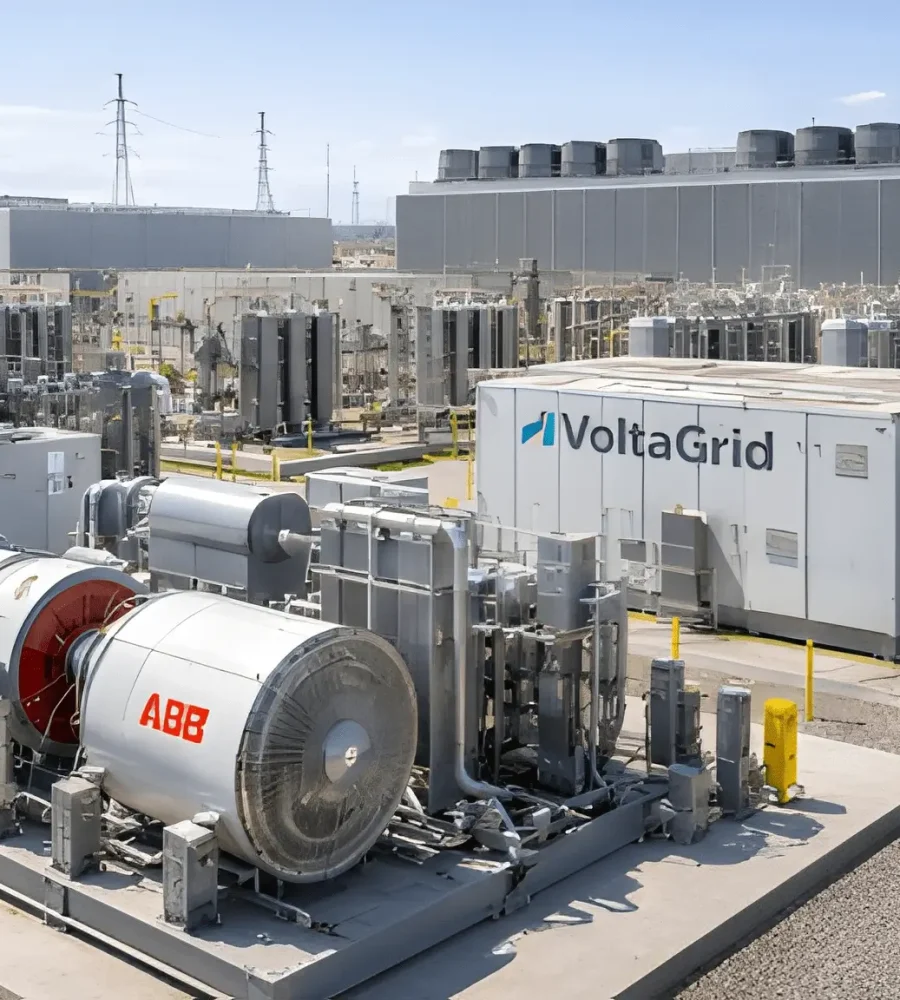
The relationship between electricity generation and water consumption is a critical but often overlooked factor in the total environmental impact of AI. Most forms of power generation, from nuclear to coal and even some renewables, require vast amounts of water for cooling or steam production. When a data center draws power from the grid, it is indirectly responsible for the water consumed at the power plant, creating a double-impact on local resources. This energy-water nexus means that reducing electricity usage is also a primary strategy for reducing water consumption across the entire urban ecosystem. Cities are starting to look at the total water-intensity of the energy they provide to industrial users like data centers. Understanding this coupling is essential for creating a truly sustainable urban compute footprint that does not bankrupt the city’s natural reserves.
The indirect water cost of electricity is particularly high in regions that rely on aging thermoelectric power plants or massive hydroelectric dams. In these areas, every kilowatt-hour consumed by a data center can represent several gallons of water lost to evaporation or reservoir displacement. This hidden fluid cost often dwarfs the direct water usage of the data center’s own cooling systems, making the total footprint much larger than it appears on paper. As cities move toward carbon-neutral goals, they are discovering that they must also move toward water-neutral energy production. This realization is driving a push for more efficient power generation technologies that do not require massive amounts of cooling water. The transition to a green grid is therefore not just about carbon, but about the long-term security of the urban water supply.
Strategies for Water-Efficient Power Generation
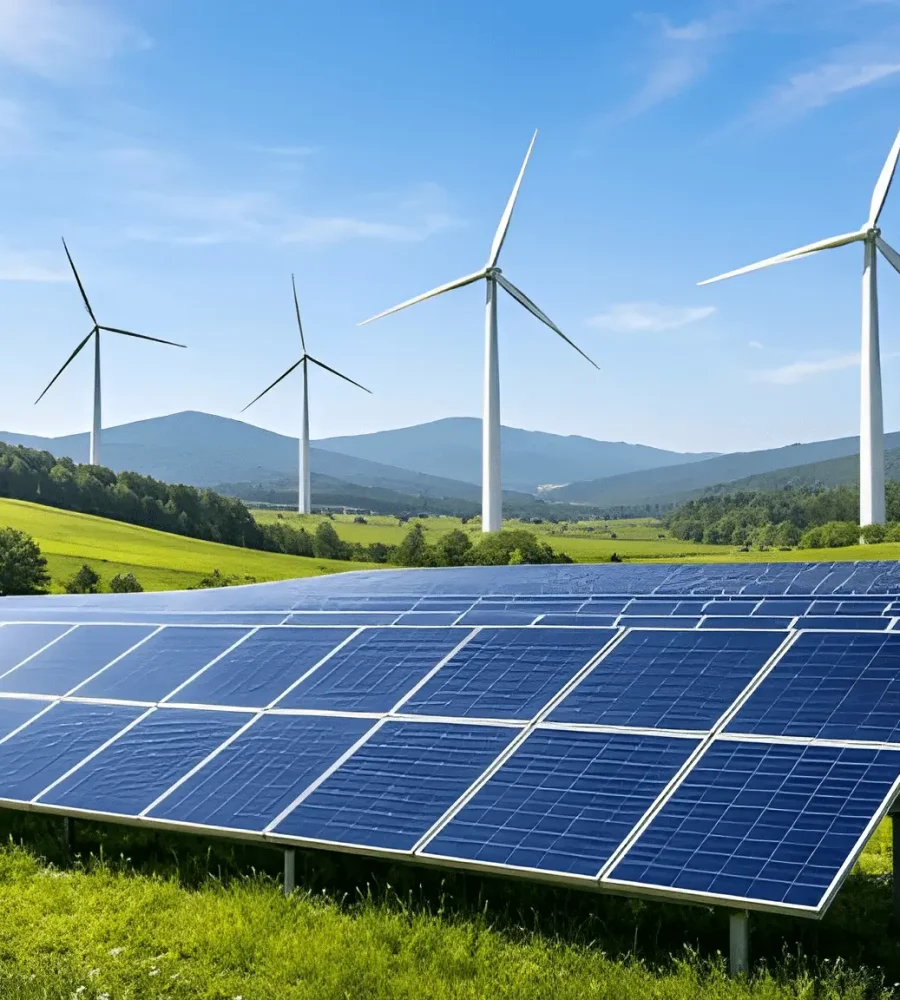
To address this coupling, some tech giants are investing directly in their own renewable energy projects that are specifically designed for low water intensity. For example, wind and solar power require significantly less water than traditional fossil fuel or nuclear plants, making them ideal partners for the AI industry. By matching their power consumption with water-efficient renewable energy, companies can claim a lower total environmental impact for their operations. This approach requires a high level of coordination between energy providers, tech companies, and municipal regulators. However, it offers a path forward where the growth of digital infrastructure does not inevitably lead to the depletion of the city’s water resources. The future of the urban compute footprint is thus being shaped by a holistic understanding of the liquid cost of every electron.
Data Centers Are Entering the Urban Social Contract Debate
The physical presence of data centers in residential areas is prompting a deep questioning of the social contract between private industry and the public good. Citizens are asking why a facility that employs relatively few people should be granted access to the same water resources as thousands of homes. This debate touches on the fundamental purpose of urban infrastructure and the rights of residents to have their basic needs prioritized. Data centers are no longer seen as benign neighbors but as active participants in the competition for survival in a warming world. The industry is being challenged to prove that its presence provides enough local value to justify its significant resource consumption. This social pressure is driving a new era of transparency and community reinvestment by the major players in the AI space.
The core of this debate lies in the perception that the benefits of AI are global and intangible, while the costs are local and physical. While a data center may power an AI that helps cure diseases or optimize global logistics, the people living next door are primarily concerned with the noise, the traffic, and the water pressure. This disconnect creates a fertile ground for political mobilization against the expansion of digital infrastructure in urban cores. City councils are increasingly caught in the middle, trying to attract high-tech investment while also responding to the legitimate concerns of their constituents. The urban social contract is increasingly being debated to include expectations around responsible resource use and community impact. Companies that fail to understand this shift risk finding themselves on the wrong side of a very angry and politically active public.
Towards a Public Utility Model for Compute
Furthermore, the urban social contract debate is forcing a discussion about the ownership and control of the infrastructure that sustains modern life. If a private company is allowed to draw heavily from a public water supply, should it have an obligation to help maintain that supply for everyone? Some advocate for a model where data centers are treated more like public utilities, with higher levels of regulatory oversight and community accountability. This would involve regular public audits of water usage and mandatory contributions to municipal water security funds. Such a shift would represent a fundamental change in the relationship between the tech industry and the public sector. Ultimately, the question is whether the digital economy can exist as a partner to the city rather than just a tenant.
AI Workloads Are Driving Unequal Water Distribution Across Regions
The geographic concentration of AI processing power in a few select “hubs” is creating a massive imbalance in water demand across different regions. Some cities find themselves overwhelmed by the liquid requirements of the world’s compute needs, while others remain relatively untouched. This concentration can lead to localized ecological crises even if the global water supply remains ostensibly stable. In some cases, compute-rich regions may also experience heightened water stress, particularly where resources are already constrained. This inequality raises questions about the ethics of exporting the environmental cost of global digital services to specific local watersheds. Policy makers are starting to look at ways to redistribute these workloads to regions where water is more abundant and less contested.
The regional disparity in water demand is often driven by a combination of historical infrastructure advantages and favorable local business climates. Cities that were early adopters of fiber optic networks and high-capacity power grids are now the primary targets for AI expansion, regardless of their hydrological stability. This creates a situation where a city in a desert may be hosting a massive compute cluster simply because it has the right cables in the ground. As the water demand from these clusters grows, the city is forced to make increasingly difficult decisions about how to allocate its dwindling supply. In certain regions, rising demand can contribute to increased groundwater extraction or investment in alternative sources such as desalination. The result is a highly fragile and unsustainable regional economy that is built on a foundation of liquid debt.
Follow-the-Water Scheduling as a Solution
Addressing this inequality requires a global perspective on how compute workloads are distributed across the planet’s surface. There is growing discussion around ‘follow-the-water’ workload strategies, although implementation remains at an early stage.. This approach utilizes the global network of data centers to balance the environmental load of the industry as a whole. However, this level of coordination is technically difficult and requires a high degree of transparency between different service providers. It also raises concerns about data sovereignty and the security of information as it moves across national borders. Despite these challenges, the redistribution of workloads is becoming an essential tool for managing the environmental impact of the AI revolution.
Infrastructure Stacking Is Amplifying Local Water Stress
In many high-growth corridors, data centers are not the only large-scale water consumers; they are often co-located with semiconductor fabs and other industrial facilities. This infrastructure stacking creates a compounded demand on the local water system that can exceed its natural recharge rate. Fabs, in particular, require ultra-pure water for the manufacturing of the very chips that end up in the data centers, creating a feedback loop of resource consumption. When these industries cluster together to take advantage of shared power or transport links, they inadvertently create a water vacuum. City managers must look at the cumulative impact of these intertwined industries rather than evaluating them in isolation. The stacking of high-demand infrastructure represents a significant threat to the long-term viability of urban water supplies.
The challenge of infrastructure stacking is particularly acute in technological hubs where the entire supply chain is geographically concentrated. In these areas, the water required to build the servers, cool the servers, and power the servers all comes from the same local watershed. This concentration makes the entire ecosystem highly vulnerable to localized climate events such as prolonged droughts or unexpected heatwaves. If the water supply is interrupted, the entire chain of production and operation can come to a grinding halt simultaneously. To mitigate this risk, some cities are encouraging the dispersal of these industries across a wider geographic area. However, the economic benefits of clustering, such as shared talent pools and reduced logistics costs often outweigh the environmental concerns for the companies involved.
Integrated Industrial Water Networks
To manage this compound thirst, urban planners are exploring the concept of integrated industrial water networks that share resources between different types of facilities. For instance, the high-quality wastewater from a semiconductor fab might be suitable for use in a data center’s cooling towers after minimal treatment. This level of cross-industry cooperation requires a sophisticated regulatory framework and a willingness to share technical data between competitors. It also requires the construction of specialized infrastructure to move water between different industrial sites within a city. While difficult to implement, these circular systems offer a way to reduce the total water draw of a technological hub. The success of these systems will be a key factor in the long-term sustainability of the world’s leading innovation centers.
Upstream Water Dependencies Are Expanding AI’s Urban Footprint
The water footprint of a data center is not limited to what passes through its cooling towers; it includes the massive amounts of water used in the upstream production of its hardware. From the mining of rare earth minerals to the precision cleaning of silicon wafers, the entire AI supply chain is a liquid-intensive process. This means that a city hosting a data center is also indirectly tied to the water security of manufacturing hubs across the globe. As these upstream dependencies become more apparent, the urban footprint of AI is expanding to include these distant but essential resource nodes. Companies are being pressured to account for this total embedded water in their sustainability reports. Understanding these upstream links is vital for creating a truly resilient and ethical digital infrastructure.
The complexity of tracing these dependencies is immense, as a single server can contain components from dozens of different countries and hundreds of different suppliers. Each of these suppliers has its own local water environment and its own set of environmental challenges. For example, the production of a single high-performance GPU requires thousands of gallons of ultra-pure water that must be treated to an incredible degree. If the region producing these chips faces a water crisis, the entire global supply of AI hardware can be disrupted. This creates a highly interconnected and vulnerable system where the city’s digital growth is dependent on the hydrological stability of the entire planet. Recognizing this interdependence is the first step toward a more sustainable and responsible approach to technological development.
Water-Conscious Procurement and Supply Chain Reform
To address these upstream impacts, some leading tech companies are starting to implement water-conscious procurement policies for their hardware suppliers. These policies might favor suppliers that utilize advanced recycling technologies or are located in regions with lower water stress. This creates a powerful economic incentive for the entire supply chain to become more water-efficient over time. However, the highly competitive nature of the hardware industry means that cost and performance often remain the primary drivers of purchasing decisions. Transitioning the entire global supply chain to a more sustainable model will require a level of industry-wide cooperation that is currently in its early stages. Nevertheless, the expansion of the AI footprint to include these upstream dependencies is an essential evolution in our understanding of the true cost of technology.
AI Infrastructure Must Integrate Into Urban Water Ecosystems
The future of artificial intelligence depends not just on the brilliance of its algorithms but on its ability to exist harmoniously within the physical limits of the earth’s water cycle. As AI infrastructure continues to compete with cities, the only path forward is a total integration of these systems into a single, adaptive urban utility. This means moving beyond a model of extraction and toward a model of coexistence and mutual benefit. Data centers must become active contributors to the urban water ecosystem, utilizing recycled water, generating waste heat for city use, and funding the restoration of local watersheds. The digital and the physical must be managed as one integrated whole to ensure the survival and prosperity of both. Only then can the true potential of AI be realized without compromising the fundamental needs of the human population.
A Moral and Technical Challenge for the Future
The concept of the circular water city provides a potential roadmap for this integration, where every drop of water is treated as a reusable asset rather than a disposable commodity. In this model, the data center acts as a thermal engine that helps to move and treat the city’s water as part of its cooling process. The waste heat from the racks can be used to drive desalination systems or to provide low-cost heating for residential buildings. This turns a resource-intensive facility into a resource-generating one, creating a powerful incentive for the city to welcome further tech investment. Achieving this level of integration will require a complete rethinking of urban engineering and a new level of cooperation between utility providers and tech operators. It is a vision of a future where the machine and the city breathe together in a single, balanced ecosystem.
This dynamic reflects broader tensions between technological expansion and finite natural resources. The resolution of this conflict will require both technological innovation and political courage on a global scale. We must be willing to redefine our concepts of value, ownership, and responsibility in the face of an increasingly thirsty world. The machines we build must be as resilient and adaptable as the cities that host them if they are to survive the challenges of the coming decades. Integrating digital infrastructure with physical resource systems is increasingly viewed as important for long-term sustainability. The journey toward this integrated future has already begun in the pipes and the reservoirs of the world’s growing metropolises.