What does it take for country to lead AI revolution? Not all nations are on equal footing, and AI readiness in Ireland shows why strategic planning matters. Over the past fifteen years, Ireland has built world-class talent pipelines, robust infrastructure, and regulatory frameworks that together turn AI potential into real innovation. From multinational tech hubs to thriving startups, the country has quietly positioned itself to compete at a global scale.
The Foundation: Two Decades of Digital Groundwork
To understand Ireland’s current AI readiness, one must appreciate the institutional scaffolding constructed over the past two decades. The country’s trajectory in technology excellence did not begin with artificial intelligence. Instead, Irish policymakers recognized early that digital literacy and computational capabilities would become foundational to economic competitiveness. They understood these capacities would underpin future growth. This conviction translated into sustained educational investment, aligned government incentives, and deliberate efforts to attract multinational technology operations. Together, these choices reshaped Ireland’s economic profile.
The quantitative evidence today reveals the magnitude of this investment. Across the Irish adult population, 73 percent possess basic digital skills, substantially exceeding the European Union average of 56 percent. This metric, seemingly abstract to those unfamiliar with skills economics, carries profound implications. It signals that nearly three-quarters of Ireland’s working-age population arrives in the labor market with foundational competencies in digital tools and systems, substantially reducing the distance between current capabilities and emerging AI-dependent roles. More impressively, Ireland ranks third across the entire European Union on this dimension, trailing only the Netherlands and Finland.
This digital foundation converts to concrete advantages when measured against specific skill demands. Demand for machine learning expertise within Ireland has accelerated at a pace of 383 percent, reflecting the rapid evolution of local economic requirements and labor market appetites. Employers now seek capabilities that barely existed at scale a decade ago. The country simultaneously maintains the highest concentration of STEM graduates per capita across the European Union—a supply-side advantage that directly translates into a deeper talent pipeline for mathematics-intensive disciplines like artificial intelligence, quantum computing, and advanced data science.
Ireland’s Digital Skills and AI Adoption Competitive Position in Europe
These enrollment and competency metrics gain further significance when viewed alongside demographic realities. The Irish tech sector projects the creation of roughly 40,000 technology-focused jobs between 2025 and 2030. Software and applications development roles alone are expected to grow by 132 percent during this seven-year period.
Yet this rapid demand faces a significant challenge. Around 83 percent of employers in Ireland report difficulties in finding sufficiently skilled professionals to meet operational and strategic needs. Consequently, a gap emerges between rapid job creation and constrained talent supply. This gap represents the central tension shaping Ireland’s AI readiness agenda and highlights the urgency of targeted workforce development.
Strategic Infrastructure: Where Hardware and Policy Converge
Beyond talent pipelines, AI ambitions rely on robust physical infrastructure. Manufacturing, operating, and iterating advanced computational systems require specialized facilities. Without such infrastructure, AI strategies remain largely theoretical. In this context, Ireland occupies a unique position within Europe. Intel’s multi-billion-euro semiconductor operations, combined with a growing ecosystem of specialized facilities, anchor this advantage.
Intel’s Semiconductor Hub in Ireland
Intel’s Leixlip campus in County Kildare stands as Europe’s most advanced semiconductor fabrication facility. Since 1989, the company has invested $15 billion across its Irish operations. Consequently, this transformed the country into a European hub for leading-edge chip production.
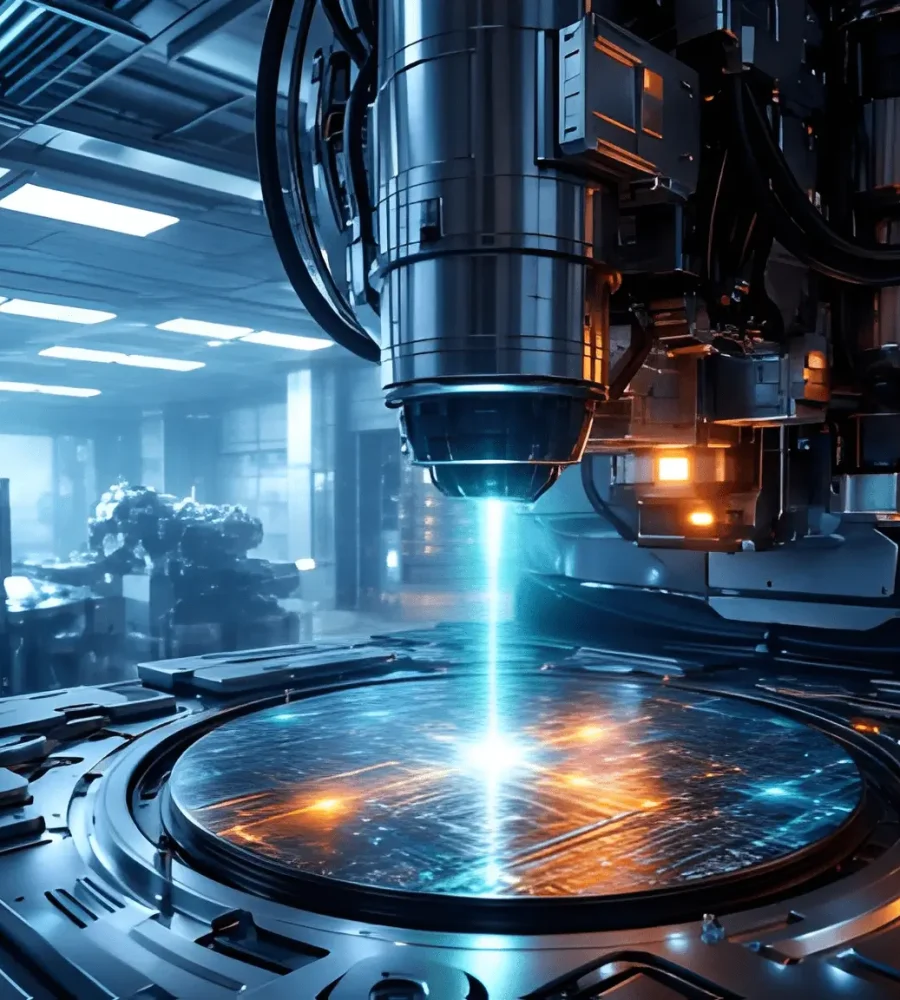
A key milestone arrived in 2023 when Fab 34 began high-volume manufacturing using Intel 4 technology and extreme ultraviolet (EUV) lithography. This marked the first mass production of this advanced process technology in Europe. EUV lithography allows transistor production at scales near ten nanometers, a point where traditional optical lithography fails.
AI Advantages Through Advanced Chips
For AI workloads, which rely on massive parallel processing and enormous parameter spaces, EUV processors provide clear advantages. Specifically, they deliver higher computational density and improved power efficiency. Moreover, these benefits grow even more significant as AI models increase in size and complexity.
The broader economic footprint of Intel’s operations in Ireland is equally significant. The company contributes roughly €921 million annually to the national economy. It also supports over 7,550 jobs across the broader ecosystem, including direct employment, supplier networks, and induced economic activity. As a result, Intel’s presence strengthens both the economy and Ireland’s position in global AI infrastructure.
Downstream Benefits for AI-Adjacent Industries
Equally important, hosting Europe’s most advanced semiconductor manufacturing brings downstream advantages for AI-adjacent industries. Medical device manufacturers, pharmaceutical companies engaged in complex molecular modeling, and advanced manufacturing operations all benefit from proximity to cutting-edge chips. Consequently, these sectors gain faster access to high-performance processors, enabling real-time optimization of production processes and large-scale innovation.
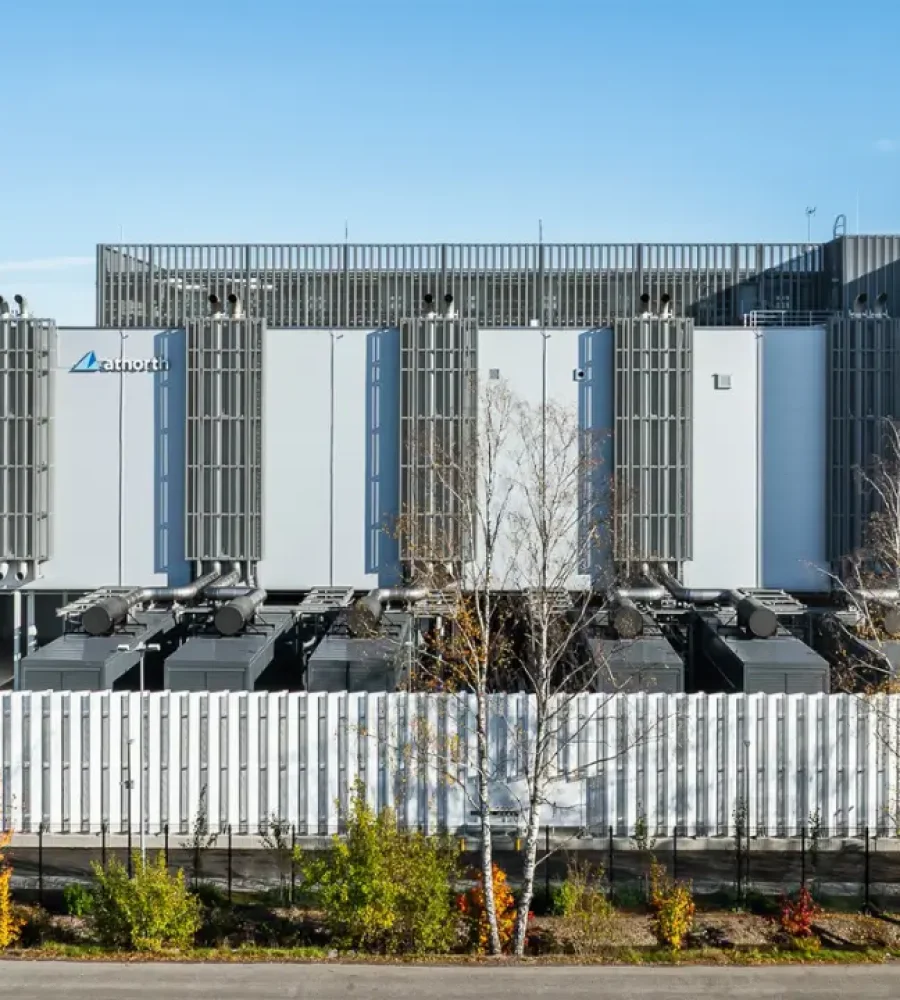
Beyond Intel, Ireland is attracting specialized AI infrastructure companies that were previously concentrated in North America or East Asia. For instance, Crusoe Energy, an operator focused on energy-efficient data center infrastructure, established its European headquarters in Dublin in 2025. This move signals a new type of energy–compute partnership.
Importantly, Crusoe’s business model directly addresses Ireland’s strategic challenge: integrating computational density with renewable energy. By targeting the intersection of high-performance computing and sustainable power, the company exemplifies how infrastructure innovation can align with national energy priorities.
The Regulatory Architecture
The European Union’s Artificial Intelligence Act, the world’s first comprehensive legal framework governing AI systems across a continental economy, entered into force on August 2, 2024. For technology companies, regulators, and policymakers across Europe, this represented a watershed moment: theoretical governance frameworks transformed into binding legal obligations. With this shift, AI governance moved from white papers into law. Ireland’s response to this regulatory inflection reveals sophisticated strategic thinking about how to simultaneously comply with stringent requirements while maintaining competitive advantages.
Ireland’s Distributed Enforcement Model
Rather than establishing entirely new bureaucratic structures, Ireland designated 15 existing national authorities to implement the AI Act, each drawing on pre-existing sectoral expertise. This approach avoided duplicating institutions and knowledge. For example, the Central Bank of Ireland oversees financial AI applications, the Data Protection Commission applies its established privacy expertise to AI systems, healthcare regulators address medical AI deployments, and specialized authorities manage AI in telecommunications, energy, transportation, and workplace safety. Each body focuses on risks and use cases in its own domain. International legal analyses recognize this distributed model as one of the most comprehensive enforcement architectures established under the AI Act.
Sector Expertise as Strategic Advantage
Effective AI regulation requires more than legal prohibitions; it demands deep sectoral knowledge and institutional credibility. Rules alone are insufficient to manage fast-moving technical systems. A telecommunications regulator understands the technical architectures and market dynamics of connectivity systems more profoundly than a generalist AI authority. Similarly, a healthcare regulator grasps the clinical context and patient safety implications of medical AI more thoroughly than a technology-focused agency. By distributing enforcement responsibility to domain experts, Ireland created regulatory conditions more likely to achieve proportionate oversight, strict enough to prevent genuine harms, yet flexible enough to accommodate legitimate innovation. That balance is central to the country’s AI positioning.
Coordinating AI Governance: The National AI Office
Complementing this enforcement architecture, Ireland announced the establishment of a National AI Office by August 2, 2026. This institution will serve as the central coordinating mechanism for cross-sectoral AI governance, hosting a regulatory sandbox where companies can test AI systems under relaxed conditions while gathering compliance data. In addition, it will function as a bridge between regulators and industry. The regulatory sandbox approach, proven effective in fintech, autonomous vehicles, and other rapidly evolving domains, explicitly acknowledges that rigid rule-making struggles when technologies and business models remain fluid. Adaptive oversight becomes a competitive advantage.
The Investment Cascade
Regulatory credibility and technical infrastructure attract investor confidence. Over the past 18 months, the country has witnessed a remarkable sequence of major corporate AI commitments, each reinforcing the narrative that Ireland is becoming a genuine hub for European AI operations and innovation. These announcements compound one another’s signaling power, sending clear messages to global investors and technology leaders.
Major Corporate AI Investments: 2022–2025
Workday, the enterprise software company, announced a three-year €175 million investment to establish an AI Centre of Excellence in Dublin, creating 200 specialized technology positions. The decision reflected deliberate strategic reasoning: the company operates its EMEA headquarters in the city and recognized that concentrating advanced AI research and product development in Dublin, proximate to European regulatory authorities, adjacent to a deep talent market, and positioned within a vibrant innovation ecosystem, offered compelling advantages. Few other cities combine these factors at similar scale. Beyond operational expansion, Workday committed to collaborative partnerships with Irish universities, including Trinity College Dublin and Dublin City University, embedding academic research talent directly into commercial teams. This approach tightens feedback loops between theory and practice.
IBM announced plans to add 800 AI-related positions within its Irish operations during 2024, substantially expanding its workforce. Microsoft established an AI R&D Centre in Dublin, committing resources to advanced research initiatives. PayPal created a dedicated AI and Fraud Data Science Centre, supporting 100 specialized roles, while Equifax and EXL launched AI Innovation Labs, collectively adding hundreds of technical positions. Together, these announcements signal strong conviction that Ireland represents a compelling location for AI innovation previously concentrated in San Francisco, Seattle, Boston, or Singapore.
Global AI Companies Choose Dublin
Leading AI developers OpenAI and Anthropic selected Dublin for their European headquarters. OpenAI opened its initial European operations in 2023, expanding to approximately 60 employees by 2025, with further growth planned in 2026. Anthropic designated Dublin as its Europe, Middle East, and Africa headquarters upon opening in 2024, recently seeking 25,000 square feet of office space for anticipated expansion. These choices indicate that Ireland provides superior advantages for regulatory compliance, serving European customers, and policy engagement. Dublin effectively becomes their European AI nerve center.
Ireland’s Startup Ecosystem Gains Momentum
Domestic startups are also thriving. In 2024, Irish technology startups collectively raised €978 million across 308 companies, a 15 percent increase from the previous year. Q1 2025 produced record-breaking results, with €634 million raised in a single quarter, driven by growth-stage investments in LetsGetChecked (digital health), XOCEAN (autonomous ocean robotics), and Tines (AI-powered automation). Enterprise Ireland backed 157 new startups, with 90 designated as High Potential Start-Ups. This reflects strong investor conviction that AI-focused entrepreneurs in Ireland can build globally competitive enterprises.
While Dublin dominates, emerging technology hubs in Cork, Galway, and Limerick are attracting investor attention and founder activity. A more polycentric tech map is gradually forming, signaling that Ireland’s AI opportunity is expanding beyond the capital.
The Talent Story: Abundance and Scarcity in Parallel
Ireland’s competitive advantage ultimately rests on human capital, the collective expertise of researchers, engineers, product managers, and domain specialists capable of building and deploying sophisticated AI systems. While infrastructure and policy matter, people ultimately decide outcomes. Examining the story further reveals genuine constraints alongside achievements.
Academic Programs Fueling AI Expertise
On the positive side, Ireland has invested substantially in AI-focused academic programs. Trinity College Dublin offers an MSc in Computer Science with an Intelligent Systems (AI) strand, affiliated with the ADAPT Centre for Digital Content Technology, ranked among the top 100 globally according to QS methodology. Graduates gain both brand recognition and research depth. University College Dublin provides an MSc in Artificial Intelligence, ranked 126th globally, emphasizing deep learning and natural language processing. The program maintains direct connections with Intel and IBM, bridging academic theory with practical industry application.
Several other institutions—including Dublin City University, the University of Limerick, and Technological University Dublin—offer specialized master’s programs in AI, machine learning, and data science. Collectively, these programs generate a steady pipeline of advanced practitioners entering the market with internationally competitive expertise. Still, demand currently exceeds supply.
Expanding Research Infrastructure
Research infrastructure has grown alongside academic programs. University College Dublin operates AURA, an AI supercomputer with GPU capacity configured for large-scale AI research. This capability remains unique among Irish universities. UCD also upgraded its SONIC HPC (high-performance computing) cluster with a €1.45 million investment.
CeADAR, Ireland’s National AI Hub under the European Digital Innovation Hub network, manages Leon computing infrastructure and the AIMSIR stack. Together, these resources make UCD the most computationally powerful campus for AI and HPC research in Ireland. The facilities attract both faculty and industry collaborations, reinforcing the country’s research ecosystem.
Skills Shortages and Labor Market Constraints
Despite strong academic and research achievements, structural labor market constraints persist. Approximately 76 percent of employers across Ireland report skills shortages as a barrier to organizational transformation by 2030, a rate 13 percentage points above the global average.
Manufacturing companies indicate that 80 percent struggle to source workers with digital and AI competencies. IT and data skills remain the most difficult to locate across sectors. These shortages slow adoption and increase operational costs. The paradox is striking: Ireland produces graduate-level AI talent, yet supply cannot meet projected demand of 40,000 new technology positions through 2030. Competition from London, continental Europe, and North America intensifies the challenge. Effective retention and attraction policies are therefore critical to sustaining Ireland’s AI ambitions.
The Infrastructure Constraint: When Electricity Becomes Strategy
Beneath organizational achievement and human talent lies a fundamental requirement: electricity infrastructure capable of supporting increasingly power-hungry AI systems. Without reliable power, these systems, deployed at scale across data centers for cloud services, model training, and inference, cannot function effectively. As a consequence, Ireland faces a growing and urgent constraint in this area.
Rising Data Center Energy Demand
Data centers currently consume approximately 21 percent of Ireland’s total electricity, up from just 5 percent in 2015. Consequently, growth has been both steep and concentrated. Projections indicate this share could reach 23-30 percent by 2030, potentially making data center demand the largest electricity category nationally. This surge reshapes energy planning and heightens tension between Ireland’s AI ambitions and its physical power capacity.
In 2024, the Irish electricity grid operator, EirGrid, halted new connection agreements for Dublin-based data centers, warning of a potential “data centre exodus” without urgent grid expansion. AWS signaled that further investment would be delayed unless renewable energy integration and offshore wind capacity improved, citing Spain and Germany as comparatively favorable alternatives. Together, these developments emphasize the competitive nature of energy policy. Hyperscale computing companies base multi-billion-dollar infrastructure decisions on electricity availability, cost, and carbon footprint, making energy strategy critical.
Policy Innovation and Renewable Integration
Ireland has responded by recognizing the strategic importance of energy infrastructure. Policies now require new data centers to provide onsite dispatchable generation, through renewable energy or battery storage, matching or exceeding their electrical demand. In effect, compute growth must fund new power. This approach links digital expansion directly to decarbonization. Crusoe Energy exemplifies this strategy by designing energy-efficient computing operations that complement renewable generation.
The country is targeting 80 percent renewable electricity by 2030, a sharp increase from current levels where wind and solar supply roughly 40 percent. Achieving this will require rapid grid upgrades, regulatory approvals for offshore wind, battery storage deployment, and accelerated demand-side management. Ultimately, success depends on execution speed, not just targets.
Strategic Window for AI Leadership
The next 24 months could determine whether Ireland transforms its current positioning into a durable competitive advantage. The nation benefits from a digitally literate population, advanced semiconductor manufacturing, early AI jurisdiction positioning, and a growing cluster of multinational centers and startups. Additionally, emerging quantum capabilities and regulatory frameworks balance innovation with responsibility. However, countervailing pressures persist. Skills shortages, energy bottlenecks, and regional concentration of resources could hinder growth if not addressed rapidly.
Ireland’s AI readiness is not static but an evolving trajectory. Its technological, regulatory, human capital, and institutional foundations are strong. Nevertheless, sustained competitive advantage will require immediate policy, investment, and educational action. The world is watching, and the opportunity window remains open, but decisive steps are necessary to capitalize on it.