
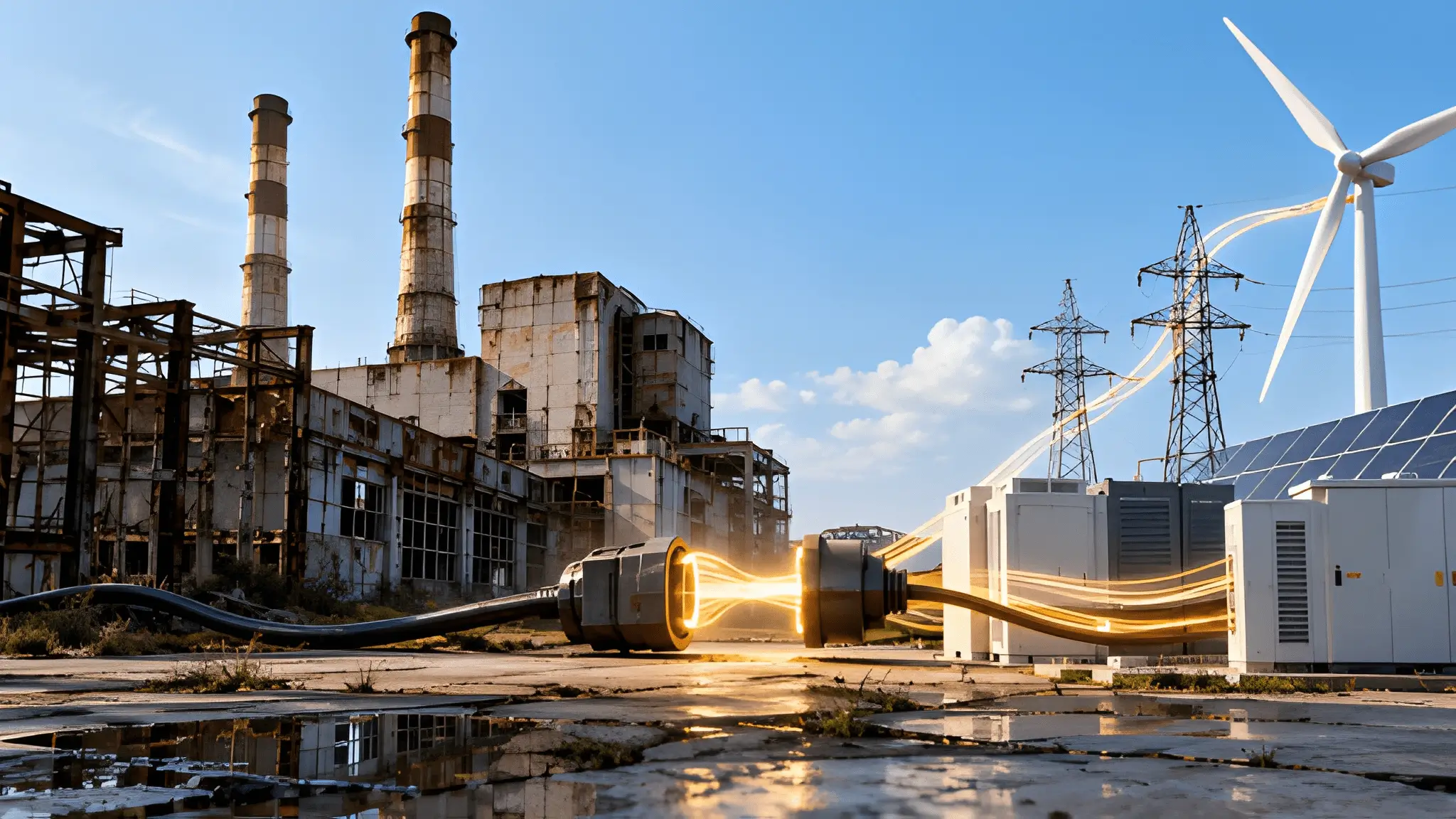
The most strategically relevant power site may not always be the one that still produces power. Across former industrial landscapes, the value conversation is shifting toward what remains after generation stops: the electrical pathways, industrial zoning, hardened ground, water connections, transport access, and local familiarity that once supported a very different form of industry. A retired generating site can therefore carry an unusual combination of liabilities and advantages, because the same history that complicates redevelopment can also leave behind infrastructure that a new high-load user would otherwise have to assemble from scratch. That matters as artificial intelligence infrastructure increases the importance of grid capacity, transmission access, construction logistics, and local permitting in site selection.

Flexibility adds another layer because a prospective large load does not always have to behave like an inflexible industrial customer that demands an unchanged operating profile at every moment. When the load can respond to grid conditions, onsite generation can operate as part of a broader power strategy, and physical development can proceed in stages, a site once written off as obsolete can become a candidate for a different form of infrastructure reuse. The opportunity is not to preserve an old power asset for its own sake, but to understand whether its industrial inheritance can support a more adaptable infrastructure model.
Why Empty Sites Are Suddenly Worth More Than Operating Ones
An empty industrial site can appear less useful than an operating power station because its original function has disappeared, yet that view can overlook the infrastructure and site characteristics that remain available for assessment. Former generation sites can retain electrical infrastructure, established industrial access, utility corridors, roads, drainage systems, engineered grades, and prior connections to the surrounding power network that may provide attributes a new location would need to establish separately. The value of those assets does not mean every connection remains available, because an old interconnection can require engineering review, equipment replacement, protection changes, transmission studies, or an entirely different regulatory treatment before a new load can use it.
What matters is that the site begins the assessment with a physical and institutional history rather than a blank sheet, giving developers existing information from which to evaluate how the property relates to surrounding infrastructure. A brownfield assessment therefore needs to examine the condition, location, capacity, ownership, and continuing usability of infrastructure instead of treating the property as undeveloped land with contamination attached. That approach becomes especially relevant when the intended reuse is a large computing load whose electrical requirements must align with both the site and the wider grid rather than with the property boundary alone.

The value moves from generation to inheritance
The potential value becomes clearer when developers view the site as an inherited development platform rather than solely as abandoned generation. A former coal or gas location may already have industrial zoning, established access routes, utility corridors, water systems, drainage systems, and other infrastructure associated with prior industrial activity, although every attribute still requires independent verification before it enters a development model. A greenfield location may offer a simpler starting geometry and fewer legacy environmental constraints, but the developer can also face the task of establishing utility connections, access arrangements, drainage systems, road improvements, construction staging areas, and approvals for a new industrial use. Brownfield reuse reverses that sequence by starting with an existing physical language and asking which parts can remain, which parts need removal, and which parts can adapt to a new operating model.
Brownfield becomes a timing asset only when flexibility is designed in
The strongest brownfield case does not depend on assuming that every former generation site offers an intact shortcut to energization, because interconnection rights, equipment condition, transmission constraints, and ownership arrangements can change after retirement. Instead, the advantage comes from combining inherited infrastructure with a load architecture that can adapt to what the grid can actually provide during each stage of development. A flexible AI facility can potentially coordinate computing activity, onsite generation, storage, cooling systems, and other electrical processes so that its demand profile does not remain completely rigid under every grid condition. That does not make a constrained site unconstrained, but it can create more room for negotiation around how the load behaves while network upgrades, power arrangements, or later phases develop.
Research into data-center load flexibility has specifically examined load shifting and onsite energy strategies because large computing loads can create challenges for regional grids while also presenting opportunities for more responsive demand. The resulting model is less about finding a site with unlimited power and more about finding a site where power, load behavior, physical development, and grid conditions can be evaluated together without requiring every development requirement to arrive simultaneously. That is where an empty industrial footprint can become more valuable than its appearance suggests, because flexibility can convert inherited infrastructure from a static historical asset into part of an active development strategy.
The Queue Position You Cannot Build, Only Inherit
Interconnection history can form part of a former generation site’s technical identity, even though that history alone does not guarantee future access to the grid. A generating station that once operated through an established transmission connection already occupied a defined position within a network of substations, lines, protection systems, studies, operating procedures, and utility relationships, creating a body of information that can matter when engineers evaluate a new use. That history cannot simply transfer to a new load as a contractual right, because the proposed electrical configuration may differ materially from the retired generator and may trigger new studies or network requirements. Yet prior infrastructure and system information can give engineers an established starting point for evaluating the site’s electrical relationships rather than requiring them to assess those relationships from an undeveloped condition.
Environmental history creates a parallel form of inherited information that can influence how developers assess a brownfield site’s redevelopment risks. Former industrial properties often require investigation of soil, groundwater, structures, historical operations, contaminants, cleanup obligations, land-use controls, and engineering measures before redevelopment can proceed, and those issues can affect both design and long-term operation. A site with a well-documented environmental record may still carry significant obligations, but uncertainty can fall when previous investigations, regulatory decisions, cleanup work, and continuing controls have clear documentation and a place within the reuse plan. That information can help developers place buildings, electrical equipment, roads, drainage systems, cooling infrastructure, and construction zones around known constraints instead of discovering them after major design decisions.
The invisible asset is the information around the infrastructure
An important part of an inherited power site can be the information surrounding its infrastructure rather than the infrastructure itself. Historical drawings, utility records, environmental assessments, equipment inventories, operating knowledge, access arrangements, land boundaries, drainage records, industrial permits, and previous engineering studies can help developers understand how the site actually works before they begin redesigning it for a new purpose. That information cannot replace current engineering surveys, because aging assets may have deteriorated and historical assumptions may no longer match present conditions. It can nevertheless reduce information gaps that engineers must address during redevelopment, particularly when the site has documented historical records or has undergone structured closure and remediation.
For a large AI development, this matters because electrical, mechanical, civil, water, communications, security, and emergency systems must eventually converge within one physical operating environment. A site that provides credible information across several of those layers can support more informed sequencing, while a site with incomplete records can require developers to treat even apparently obvious infrastructure as an unresolved technical question. The inherited value therefore sits partly in the documentary trail that surrounds the land, because flexibility becomes easier to engineer when the development team understands what the site has already been designed to do and where that legacy stops being reliable.
Flexibility Makes a Difficult Location a Negotiable One
A difficult industrial location can become difficult when the proposed use introduces a new pattern of electrical demand into an area that was not designed around that load. A large computing load can therefore face questions about grid behavior, local infrastructure, cooling, traffic, construction activity, water use, emergency planning, and the relationship between the site and surrounding communities. Flexibility gives the developer another variable to bring into those discussions because the proposed operation can follow defined responses to grid conditions rather than treating electricity consumption as completely immovable. Federal energy research has examined demand flexibility as a means of reducing or shifting load in response to system needs, while data-center research has explored load shifting and onsite energy as possible tools for managing grid impacts.
The same principle can influence the social and planning conversation because communities do not experience a power project only through its electrical connection. They encounter construction traffic, land use, noise, water requirements, visual change, emergency access, employment patterns, and the long-term identity of an industrial location, while local authorities must reconcile those factors with existing zoning and environmental requirements. A former industrial site may offer a familiar industrial context because the surrounding area has previously accommodated heavy infrastructure or industrial activity, although that familiarity should never become a proxy for community approval. The redevelopment process still needs clear information about environmental conditions, proposed reuse, community concerns, and the measures required to protect health and the surrounding environment.
Industrial zoning becomes more useful when the load can adapt
Industrial zoning can provide an advantage at a former generation site because the property may already sit within a land-use environment shaped around energy, manufacturing, heavy transport, utility infrastructure, or other industrial activity. That does not mean the intended AI development automatically fits every local requirement, because zoning classifications, permits, environmental restrictions, building requirements, and operating conditions vary by jurisdiction and site. It does mean that the site’s previous function can provide an established planning context that may differ from an undeveloped location where an industrial use must enter a new setting. Existing roads, utility corridors, water systems, drainage arrangements, and neighboring industrial uses can further reinforce that context when engineers evaluate how a new development would physically operate.
A flexible load adds value because it gives planners and utilities a more nuanced operating profile to evaluate instead of a single fixed demand assumption that remains unchanged regardless of grid conditions. That can support more detailed evaluation of phased construction, onsite generation, storage, electrical redundancy, cooling systems, and the timing of later expansion, provided the proposed operating commitments remain technically credible and enforceable where required. Brownfield redevelopment therefore becomes less about finding a forgotten industrial property and more about identifying whether the site’s zoning, infrastructure, environmental condition, and flexible operating model can reinforce one another as one coherent development pathway.
What Concrete, Steel and Water Rights Tell You Before Fiber Does
Fiber often enters the site-selection conversation because computing depends on communications, but a former industrial site can reveal important physical and utility information before the network route receives assessment. Concrete pads, heavy foundations, equipment yards, substations, utility corridors, drainage structures, water connections, wastewater pathways and established access roads can show how the property previously handled industrial loads and how much of that physical logic remains usable. Those features do not automatically translate into suitability for an AI facility because their condition, ownership, environmental restrictions and engineering limitations require separate investigation. They do, however, provide evidence about the site’s historical physical configuration and can help determine whether the property can accommodate equipment requiring substantial structural support, controlled access, mechanical systems and coordinated utility services.
Concrete deserves particular attention because industrial foundations can influence where new equipment can go even after the original machinery disappears. A former turbine area, equipment yard or industrial building may leave behind slabs, foundations or reinforced surfaces that can support construction logistics, temporary equipment, electrical systems or other elements of a new development, although engineers must verify structural integrity before assigning any reuse value. The same principle can apply to retained steel structures because they can provide information about access, clearances, equipment handling and the physical relationships between buildings and utility systems. Existing grades also matter because industrial sites often underwent extensive earthwork to move heavy equipment, manage stormwater and create predictable working surfaces around large structures.
Water pathways can matter as much as electrical pathways
Water can become one of the least visible constraints in the redevelopment of an industrial site because its relevance extends beyond supply into treatment, discharge, drainage, environmental protection and long-term operating controls. A former generating station or manufacturing site may already have established water infrastructure, stormwater arrangements, wastewater pathways or discharge systems, yet each connection requires evaluation against its present condition and the requirements of the proposed reuse. Cooling design makes that examination particularly important because different approaches can place very different demands on water supply, treatment, drainage and discharge systems. A brownfield site does not become water-ready merely because an industrial operation once consumed water there, since historical systems may have disappeared, changed use, faced restrictions, or no longer meet current environmental requirements.
Rail access and heavy-haul routes add another layer that can become important long before computing equipment reaches the property. Industrial sites that previously received heavy machinery, fuel, construction materials or bulk industrial inputs may retain road alignments, loading areas, bridges, turning arrangements and transport relationships that support redevelopment. Those assets can reduce the need to redesign every movement pattern around a new project, although current bridge ratings, road restrictions, ownership arrangements and local transportation requirements still determine whether historical access remains useful. Laydown areas can also become valuable because AI infrastructure construction requires coordinated movement of large equipment, mechanical systems, electrical components and building materials before the site reaches its operating state. A greenfield site can certainly create those spaces, but an industrial site may already contain hardened areas where temporary logistics can occur without consuming land that the final operating configuration needs.
How the Shape of the Land Decides the Shape of the Build
Greenfield development often begins with a blank geometry that allows the designer to organize buildings, roads, utility corridors, setbacks and future expansion around a preferred master plan. Brownfield development starts from an existing geometry that may contain irregular boundaries, legacy structures, protected areas, environmental controls, drainage corridors and established access points. That apparent limitation can become useful when the development strategy values staged expansion instead of one predetermined campus configuration. A site with several usable zones can allow construction to proceed around environmental controls or retained infrastructure while leaving other areas available for later development. Such an arrangement can support a more modular AI infrastructure strategy because computing blocks, electrical systems, cooling equipment and supporting functions do not necessarily have to occupy one continuous footprint.
Grading can be equally important because a site shaped by previous industrial construction may already contain engineered slopes, drainage channels, retaining structures and stabilized work areas. Those features can influence where new buildings can sit, where water can move and where heavy construction equipment can operate without extensive regrading. A development team can use that inherited geometry to separate functions, protect environmental controls and create independent construction zones, provided the underlying conditions meet current engineering standards. Buffer areas can also become useful because they may separate operating equipment from neighboring properties, protected environmental areas or legacy structures that cannot be disturbed. Instead of forcing the entire site into a uniform campus, developers can use those boundaries to create distinct operating and construction zones that support different phases of development.
Phasing can turn constraints into design boundaries
Phasing becomes more powerful when developers treat existing constraints as permanent design inputs instead of temporary problems to eliminate. An environmental control, drainage corridor, retained foundation or utility easement can define the edge of one development zone while leaving another area available for construction, equipment staging or future expansion. That arrangement can reduce the temptation to overbuild the entire site before the operating model becomes clear, which matters when AI workloads, cooling requirements and electrical strategies continue to evolve. A phased brownfield project can also coordinate remediation with construction because areas that require additional investigation or treatment do not necessarily have to determine the schedule for every other part of the property. Such sequencing requires careful environmental and engineering management because construction activity cannot compromise cleanup controls or create new exposure pathways.
The operational value of that approach becomes clearer when flexibility becomes a property of both the physical plant and the electrical load. A computing site that can alter its demand profile may not need every generation, storage, cooling and grid-support component to reach final configuration before the first computing systems begin operating. Physical phasing can therefore align with electrical phasing, allowing infrastructure to expand as the site’s power arrangements become more defined. This does not remove the need for reliable service because critical computing operations still require carefully engineered continuity, redundancy and protection. It does create a development sequence in which individual zones can undergo commissioning, testing and integration without forcing every future requirement into the first construction package.
The Operational Ecosystem That Lingers After Industry Leaves
The physical assets of an industrial site receive most of the attention during redevelopment, but the surrounding operating ecosystem can remain valuable after the original industry closes. Communities that have supported power generation, manufacturing, refining, mining or heavy industrial activity may retain contractors, equipment operators, maintenance specialists, emergency responders, transportation providers and technical trades familiar with complex industrial environments. That does not guarantee that the available workforce has the skills required for AI infrastructure, because modern computing systems demand specialized electrical, mechanical, controls, networking and operations expertise. It can nevertheless provide a base of industrial knowledge around equipment handling, safety procedures, heavy construction, maintenance discipline and emergency coordination that a completely new industrial location may need to develop over time. The Department of Energy has specifically identified skilled workforces and transportation access among the attributes that can support reinvestment at former coal plant sites.
Heavy-haul logistics provide another form of continuity because industrial communities often understand the requirements associated with moving large and sensitive equipment. Roads, bridges, staging areas, permitting relationships and local traffic patterns can influence whether construction deliveries proceed smoothly, especially when equipment arrives in sequences that depend on tight coordination between civil, electrical and mechanical work. A former industrial location may also have contractors accustomed to working around energized equipment, restricted areas, environmental controls and complex construction environments. That familiarity does not replace formal project requirements or specialized training, but it can make the local operating environment more predictable. Emergency response can benefit from similar institutional memory when local responders already understand industrial hazards, access points, utility corridors and site-control requirements.
The local ecosystem can become part of infrastructure resilience
Infrastructure resilience often depends on response capability rather than on equipment alone, because an electrical fault, cooling problem, transport disruption or mechanical failure requires people who can reach the site and act within an established operating structure. Brownfield redevelopment can benefit from communities that already understand the property’s industrial history, access patterns and relationship with surrounding utilities. That familiarity can support faster coordination when a new operator establishes emergency procedures, contractor networks and maintenance arrangements, although the new facility still needs to build its own operating standards and train its own personnel. Industrial maintenance culture can also influence how equipment teams inspect, document, isolate and repair systems, which becomes increasingly important as AI infrastructure brings together electrical, mechanical, thermal and control systems in tightly coupled environments.
There is also a longer-term benefit in how a redevelopment project can reconnect an industrial site with the economic network around it. Former generation locations can leave communities with experienced contractors, transport providers, trades and industrial services even after the original employer exits, creating a local base that can participate in redevelopment when the project structure supports it. A new AI facility will require different skills and operating practices, but its construction and ongoing maintenance still depend on many disciplines that overlap with broader industrial activity. That overlap can create pathways for existing contractors to expand their capabilities rather than forcing every service relationship to originate outside the region. The same network can support future modifications because a flexible site is unlikely to remain physically unchanged throughout its operating life.
The Sites Written Off Are Now Writing the Playbook
The future of stranded generation sites will not depend on whether their former generators can return to their previous role. Their relevance will depend on whether the infrastructure, land, industrial relationships, environmental conditions and grid position left behind can support a new operating model that matches the needs of emerging large loads. AI infrastructure makes that question more immediate because the value of a site increasingly depends on how electrical access, physical expansion, cooling, communications and operating behavior fit together rather than on any single attribute considered in isolation. Recent federal actions around large-load integration have also placed greater attention on flexible large loads, co-located generation and alternative arrangements for connecting energy-intensive users to the grid. That direction reinforces a broader shift in site selection toward locations where generation, load and infrastructure can work together instead of operating as disconnected assets.
That shift also changes how executives should interpret the word stranded when evaluating industrial power assets. A site can remain stranded as a generation asset while retaining strategic connections to transmission, transportation, water, industrial land and local capability. Its previous economics may have disappeared, yet its physical relationships can continue to matter to the next generation of infrastructure. Flexibility provides the bridge because it allows the new load to interact with those inherited relationships without requiring every part of the replacement system to behave exactly like the industrial system that came before it. A flexible operating model can coordinate demand with available power, integrate onsite resources, support staged development and create additional options when grid conditions change.
The next AI sites may begin where the old industrial map ends
The most consequential brownfield opportunities will emerge where several inherited conditions reinforce one another rather than where a single legacy asset looks attractive on paper. A useful site may combine an established industrial footprint with credible electrical infrastructure, workable environmental conditions, transportation access, water pathways, local industrial capability and enough physical flexibility to support phased development. The presence of those attributes does not eliminate the need for rigorous due diligence, but it can change the order in which developers investigate the opportunity. Instead of beginning with a search for untouched land and then asking how to build every supporting system, the process can begin by asking what an existing industrial site already provides and what remains technically reusable. That approach is particularly relevant as large computing loads place greater pressure on the availability and integration of electrical infrastructure.
What makes this shift important is not the simple reuse of abandoned land, but the possibility that flexibility changes which kinds of industrial sites can participate in the AI infrastructure buildout. A remote generating location with no credible operating flexibility can remain difficult even when it has substantial historical infrastructure. A site with flexible load behavior, adaptable physical planning, usable industrial systems and a credible path through environmental and grid requirements can present a different development proposition. The resulting model does not treat brownfield redevelopment as a temporary workaround until better greenfield opportunities appear, because the inherited infrastructure can become an intentional part of the long-term architecture. It also avoids treating stranded generation as a dead-end category, since the value of the location can migrate from generation into interconnection history, physical infrastructure, industrial access and operational adaptability.











