Skip to content
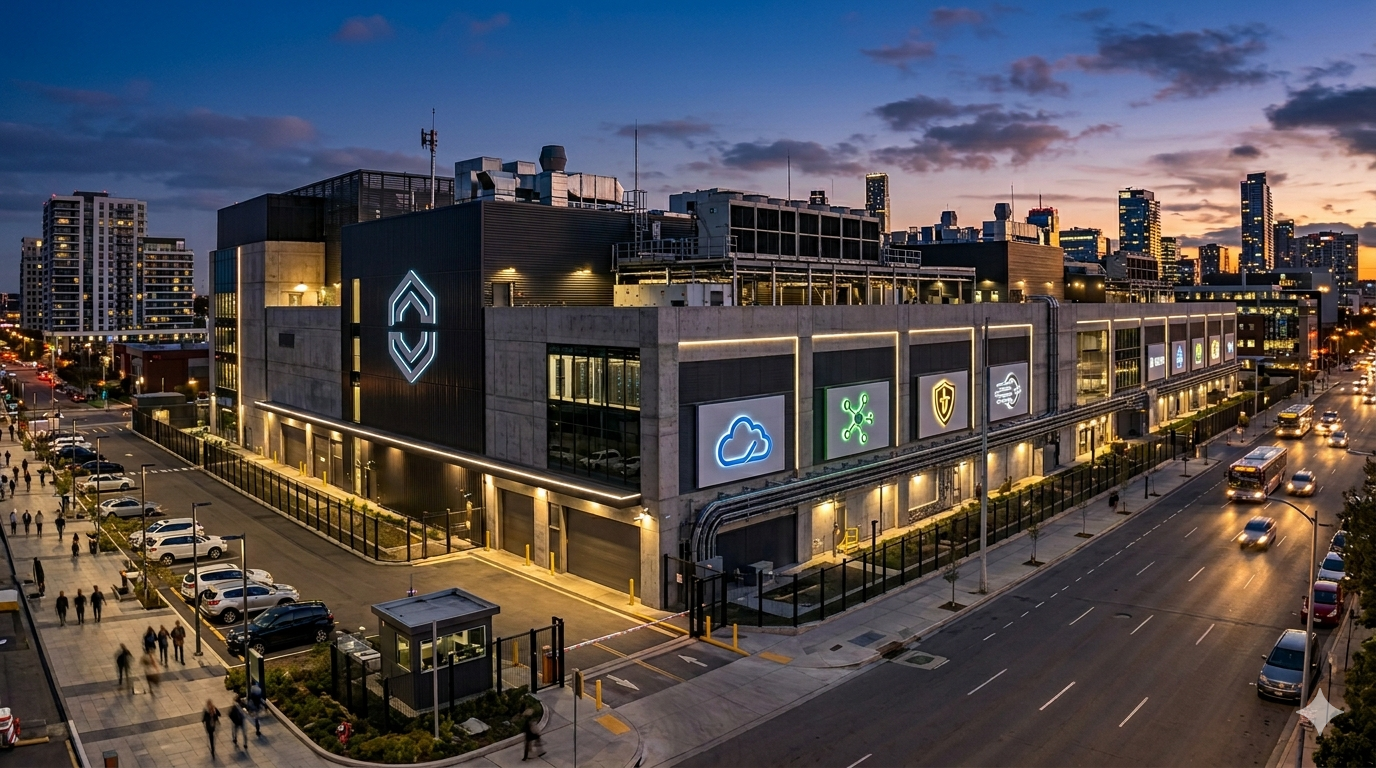
The colocation data center model has been remarkably durable. For three decades, the business logic was simple and consistently proven. Enterprises needed data center space, power, and connectivity. Building and operating their own facilities was expensive, distracting, and inefficient for all but the largest operators. Colocation providers built shared facilities, spread fixed costs across multiple tenants, and delivered infrastructure at a unit cost that individual enterprises could not match independently. The model worked across multiple technology cycles, survived the cloud era’s initial assault, and adapted to serve enterprises maintaining hybrid infrastructure strategies that combined colocation with public cloud consumption.

The AI infrastructure cycle is different. It is not simply adding a new workload category to the colocation market’s existing demand base. It is restructuring the demand base itself in ways that simultaneously remove the most commercially attractive customer segments from the colocation market while concentrating the remaining demand in a form that mid-tier colocation operators cannot efficiently serve. The colocation market faces AI infrastructure disruption from both ends simultaneously. The operators caught in the middle are facing a competitive environment that has no precedent in the industry’s history.
How Hyperscalers Are Consuming the Top of the Market
The most visible force pulling the colocation market apart is hyperscaler demand for large-scale dedicated capacity. Hyperscalers have historically been the largest and most profitable customers for wholesale colocation operators, leasing significant blocks of space and power under long-term agreements that provided the revenue certainty wholesale operators need to justify the capital investment in their facilities. That relationship has not ended. It has transformed in ways that fundamentally change its economics for colocation providers.
Hyperscalers are now consuming colocation capacity at such scale that individual facilities are being effectively dedicated to single tenants. A hyperscaler that leases two hundred megawatts in a facility with two hundred and fifty megawatts of total capacity is not a colocation tenant. It is a wholesale infrastructure purchaser who has displaced the multi-tenant model that defines colocation economics. The facility operator collects predictable revenue from a creditworthy tenant but foregoes the pricing premium that multi-tenancy and shorter lease terms historically commanded. The hyperscaler’s negotiating leverage, derived from the scale of its commitment, forces wholesale pricing that compresses operator margins to levels closer to those of a pure real estate business than those of an infrastructure services provider.

The Build-to-Suit Replacement
The more significant competitive challenge for mid-tier colocation operators is not hyperscaler demand for existing facilities but hyperscaler preference for purpose-built facilities that bypass the colocation market entirely. Microsoft, Google, Amazon, and Meta are all building or contracting owned campuses at unprecedented scale in markets where they have historically been colocation customers. These campus programs produce infrastructure optimized specifically for hyperscaler AI workloads, delivering power densities, cooling architectures, and networking configurations that multi-tenant colocation facilities cannot provide without fundamental redesign.
As hyperscalers shift from colocation tenancy to owned campus development, the colocation market loses not just individual tenant relationships but also the category of demand that has historically anchored wholesale colocation economics. The 200-to-500 megawatt hyperscaler lease that once represented a colocation operator’s most valuable asset is giving way to build-to-suit arrangements or owned campuses that no longer appear in colocation market statistics. As a result, the colocation market is not simply losing revenue. It is losing the demand category that once justified the capital investment and revenue certainty on which its current infrastructure was built.
Power Density Mismatch Accelerates the Gap
AI data center workloads require power densities that create a technical mismatch between what hyperscalers and AI-native operators need and what most existing colocation facilities can provide. A colocation facility designed for enterprise IT workloads at five to ten kilowatts per rack cannot economically support GPU clusters drawing fifty to one hundred kilowatts per rack unless operators rebuild its power distribution, cooling infrastructure, and structural systems. That redesign costs more than the economic return available from serving the AI workload market at rates that can compete with purpose-built alternatives.
Mid-tier colocation operators sitting on existing infrastructure built for enterprise IT economics therefore face a choice that has no good options. They can try to serve AI workloads at their existing facilities, accepting the performance and density limitations their infrastructure imposes, at rates that cannot compete with purpose-built alternatives. Another option is to invest in major facility upgrades that their balance sheets may not support and that may not generate adequate returns given the competitive environment they are entering. They may also choose to focus on the enterprise IT workload segment that their existing infrastructure serves well, while accepting that this segment is itself under pressure from the forces described below. None of these paths leads to the revenue growth and margin expansion that investors in the colocation sector expected when they made their commitments.
How Neoclouds Are Consuming the Middle of the Market
The forces pulling the colocation market apart from below are equally consequential, if less visible, than those pulling it apart from above. The traditional enterprise colocation customer, maintaining private infrastructure in a shared facility as part of a hybrid cloud strategy, is increasingly migrating toward neocloud alternatives that offer the economics of colocation without the operational burden of managing private infrastructure.
The migration is driven by the economics of AI inference at scale. An enterprise that previously collocated its own servers to run workloads it could not efficiently move to public cloud is discovering that neocloud inference capacity offers better AI workload economics than continuing to own and operate private GPU infrastructure in colocation space. The colocation facility captures space and power revenue from the enterprise’s existing infrastructure, but it loses that revenue as the enterprise decides that owned private infrastructure no longer makes sense when neocloud alternatives deliver better performance at lower total cost.
The Enterprise Infrastructure Decision Is Being Made Differently
Infrastructure teams have historically driven enterprise colocation demand by making decisions based on control, security, and performance. Those teams chose colocation over public cloud when they needed the performance and control of dedicated hardware without the capital commitment of owned facilities. The AI era is changing the basis of that decision in two ways that simultaneously reduce its attractiveness as a colocation driver.
First, the performance advantages of dedicated enterprise infrastructure over public cloud infrastructure are eroding in the AI segment. Neocloud operators providing dedicated GPU capacity with isolation guarantees, performance commitments, and custom configurations are delivering what the colocation model promised without the operational burden of maintaining private hardware. Second, the capital and operational overhead of owning GPU infrastructure in a colocation facility is growing relative to the alternatives as GPU hardware refresh cycles accelerate. An enterprise that commits to owned GPU infrastructure in a colocation facility faces hardware obsolescence risk on a shorter cycle than any previous IT infrastructure investment. The economics of that risk look increasingly unfavorable compared to neocloud alternatives that absorb the hardware lifecycle risk themselves.
Connectivity Is No Longer a Colocation Differentiator
The connectivity advantage that colocation facilities have historically offered, carrier-neutral interconnection to multiple networks and direct cross-connects to major cloud providers, is also eroding as AI infrastructure networking evolves. The multi-cloud interconnection capabilities that CoreWeave and other neocloud operators are developing, as demonstrated at Google Cloud Next 2026 this week, are reducing the practical advantage of colocation interconnection for enterprises running AI workloads. An enterprise that previously chose a specific colocation facility for its interconnection to AWS, Azure, and Google Cloud simultaneously can now access equivalent connectivity through neocloud platforms without maintaining physical infrastructure in a colocation facility.
The erosion of the connectivity differentiator removes one of the last defensible arguments for enterprise AI workloads in multi-tenant colocation. As the AI workload mix that drives enterprise infrastructure investment grows, the enterprise segments where colocation’s connectivity advantage is most valuable are increasingly the non-AI segments where spend growth is slowest. As covered in our analysis of the time-to-power crisis as AI’s hidden scaling ceiling, the structural constraints on AI infrastructure development are creating a competitive environment where differentiation on every dimension matters for survival. Colocation operators who relied on connectivity as a differentiator must now find new ground to defend.
The Mid-Tier Operator’s Impossible Position
The operators most severely affected by the dual compression of the colocation market are those in the middle segment: facilities with between 20 and 100 megawatts of total capacity, serving a mix of enterprise and wholesale customers across multiple markets. These operators are too small to compete with the wholesale colocation giants on hyperscaler deals and too large to pivot quickly to a specialized niche that the AI infrastructure cycle has not disrupted.
Their capital structures reflect the colocation market as it existed before the AI infrastructure cycle accelerated. They have financed facility construction and land acquisition against revenue projections that assumed continued growth in enterprise colocation demand from the segments now migrating to neoclouds and continued growth in wholesale demand from hyperscalers who are increasingly building owned capacity. Both projections are diverging from reality simultaneously, creating balance sheet pressure that neither operating leverage improvement nor cost reduction can fully offset.
The Refinancing Cliff
Several mid-tier colocation operators are approaching debt maturity dates while current revenue no longer supports the refinancing terms their capital structures require. They financed many facilities during the pre-AI-cycle period using valuations based on enterprise and wholesale demand projections that the market is now revising downward. As a result, they face refinancing conversations with lenders who apply very different underwriting frameworks from those that governed the original loans. The combination of revenue compression from top-line disruption and valuation compression from market reassessment creates a refinancing cliff that will force consolidation across the mid-tier colocation segment over the next two to three years.
The consolidation will not eliminate the mid-tier colocation market. Viable operators with differentiated facilities, strong customer relationships in defensible geographic or sector niches, and capital structures that can absorb the transition period will emerge as acquirers or survivors. However, the mid-tier colocation segment that emerges from this consolidation will look smaller and more specialized than the one that entered the AI infrastructure cycle. The operators who survive will do so by having found a specific position in the market that the forces pulling the colocation market apart from both ends do not directly threaten.
The Talent and Operational Gap
Beyond capital structure, mid-tier colocation operators face a talent gap that the AI infrastructure cycle is making more acute. Operating AI-optimized infrastructure at the performance levels that hyperscaler and neocloud alternatives deliver requires engineering expertise in GPU infrastructure, AI workload optimization, high-density cooling, and advanced power management that most colocation operations teams have not historically needed. Hiring and retaining engineers with this expertise is expensive and competitive in a market where hyperscalers, neoclouds, and AI companies are all recruiting from the same limited talent pool.
The talent gap is not simply a hiring problem. It is a capability development problem that affects the range of services a colocation operator can credibly offer. An operator without deep AI infrastructure expertise cannot position itself as a managed services provider for AI workloads regardless of how good its physical infrastructure is. Building that expertise requires years of investment in hiring, training, and operational experience that operators who start today will not have available when they need it most. The operators who recognized this dynamic early and began investing in AI infrastructure expertise before the competitive pressure made it urgent are now in a materially stronger position than those who are recognizing it as a competitive disadvantage only after losing customers to better-equipped alternatives.
The Wholesale Market Transformation
The wholesale colocation segment, serving hyperscalers and large enterprises with dedicated capacity blocks, is experiencing its own structural transformation that differs from the mid-tier disruption but is equally consequential. Wholesale colocation grew rapidly during the 2015-to-2023 period as hyperscalers expanded their data center footprints faster than their own development teams could build owned capacity. The wholesale operators who captured that growth, building large campus facilities in the markets where hyperscaler demand was strongest, accumulated significant revenue and developed strong relationships with the largest technology companies in the world.
The dynamics of that relationship are changing. Hyperscalers who once needed wholesale colocation capacity to bridge the gap between their demand and their owned capacity development are now building owned capacity at a pace that reduces their dependence on wholesale colocation in primary markets. The hyperscaler that signed a five-year wholesale lease in 2021 may not renew at the same scale in 2026 because its owned campus in the same market is operational and provides better infrastructure than the wholesale facility at a lower effective cost per unit of capacity. The wholesale colocation operator loses not just the renewal but the anchor tenant relationship that justified the facility’s existence in that market.
The International Markets Exception
The one area where wholesale colocation demand from hyperscalers remains robust and is growing is international markets where hyperscaler owned campus development has not yet reached the scale achieved in primary North American and European markets. Southeast Asia, the Middle East, Latin America, and parts of Africa are all experiencing hyperscaler demand for wholesale colocation capacity that mirrors the dynamics of the US and European markets in the 2018-to-2022 period. Wholesale colocation operators with established international platforms are therefore capturing growth in these markets even as primary market dynamics compress.
The international growth opportunity is real but does not fully offset primary market pressure for most wholesale operators. Building or acquiring colocation capacity in international markets requires capital investment, local expertise, and relationship development that takes years to produce revenue. Wholesale operators who have not yet developed international platforms face a difficult choice between investing in markets where the growth is occurring and managing the deterioration of their primary market positions where the capital is already deployed. The operators who made international bets early, building presence in markets like Singapore, Dubai, and São Paulo before the AI-driven demand surge arrived, are now harvesting the returns on those investments while their competitors scramble to catch up.
Where Mid-Tier Operators Can Find Defensible Ground
The colocation market is not uniformly under pressure from AI infrastructure disruption. Specific segments and positions within the market are more defensible than others, and the operators who identify and occupy those positions before their competitors do will build durable businesses despite the macro pressures on their sector.
Geographic specialization in markets where hyperscaler campus development is not occurring and where neocloud alternatives are not yet well-developed represents the clearest near-term defensive position. Tier-two and tier-three markets, where enterprise IT infrastructure demand is real but where the AI infrastructure cycle has not yet displaced traditional colocation economics, offer growth opportunities that the primary markets no longer provide. Mid-tier operators who shift capital investment toward these markets while reducing exposure to primary markets where both hyperscaler and neocloud pressure is most acute are repositioning ahead of the most severe competitive pressure rather than reacting to it after it arrives.
The sectors with genuinely defensible colocation demand are those where regulatory, compliance, or operational requirements prevent the migration to neocloud or public cloud alternatives that is happening in the general enterprise market. Financial services firms that run trading infrastructure with latency requirements cloud alternatives cannot meet, healthcare organisations that maintain patient data in facilities with specific compliance certifications, and government contractors that operate under data sovereignty requirements that preclude foreign cloud infrastructure all represent customer segments where structural protections shield colocation demand from the competitive pressures disrupting the general enterprise market.
The Edge and Hybrid Opportunity
Edge computing requirements are growing because latency-sensitive AI inference applications cannot run efficiently from centralized cloud or neocloud infrastructure. This shift is creating demand for colocation capacity in locations that hyperscalers and neocloud operators cannot practically serve through their existing campus programmes. For example, an AI inference application that requires sub-five-millisecond response times for a specific geographic market needs infrastructure within that market, not in a hyperscale campus three hundred miles away. As a result, mid-tier colocation operators with strategically located facilities in edge markets are finding that the AI infrastructure cycle, while devastating for operators in primary markets competing for hyperscaler and enterprise workloads, is creating new demand in markets where geography rather than scale differentiates their facilities.
The need for hybrid infrastructure, where enterprises maintain some private infrastructure while using cloud and neocloud services for other workloads, is also creating a more specialised colocation demand profile that mid-tier operators are well positioned to serve. Enterprises running regulated workloads that cannot move to shared cloud infrastructure, maintaining on-premise AI fine-tuning capabilities for proprietary model development, or operating latency-sensitive applications that require dedicated hardware in specific locations represent customer segments whose colocation demand neocloud alternatives are not displacing at the same pace as the general enterprise segment. As covered in our analysis of transformer and substation supply chains, even modest edge deployments create power infrastructure procurement challenges that operators must address proactively rather than reactively.
The Managed Services Pivot
The most strategically significant transformation available to mid-tier colocation operators is the pivot from pure infrastructure provision to managed services. A colocation operator that provides space, power, and connectivity is selling a commodity that is being priced out of the market by operators with lower cost structures and better-suited facilities. A managed services provider that uses its colocation infrastructure as the platform for delivering fully managed AI infrastructure, handling hardware procurement, deployment, operations, and optimization on behalf of enterprise customers who want the economics of neocloud without the relationship management complexity, is selling a service with genuine differentiation.
The managed services pivot requires capabilities that most colocation operators have not historically developed. AI workload expertise, hardware lifecycle management, vendor relationships with GPU suppliers, and the operational processes required to deliver consistent AI performance at enterprise service levels represent investments that take years to build and cannot be acquired through facility construction. However, the mid-tier operators who begin making those investments now will be in a materially stronger competitive position in three years than those who continue optimizing their pure colocation offering in a market that is structurally less favorable than it was two years ago.
What the Colocation Market Looks Like in 2028
Projecting the colocation market two years forward requires accepting significant uncertainty about the pace of the forces disrupting it. However, several outcomes appear robust across a range of scenarios. The wholesale colocation market will be substantially smaller in primary markets as hyperscaler owned campus development displaces wholesale demand, while remaining healthy in international markets where owned campus development lags. The mid-tier colocation market will experience meaningful consolidation as operators with unsustainable capital structures either fail or are acquired, producing a smaller number of better-capitalized operators with clearer market positions.
The colocation market that emerges from this transition will serve a different demand profile than the one that entered it. Regulated and compliance-sensitive enterprise workloads, edge infrastructure requirements, hybrid deployment needs, and the tail of enterprise IT applications that are not migrating to cloud or neocloud alternatives will form the core of a colocation market that is structurally smaller but also more defensible than the market that existed before the AI infrastructure cycle changed its competitive environment.
The operators who understand this destination and position themselves for it now, rather than defending a market position that is eroding around them, are the ones who will define what colocation means in the era of AI infrastructure. The colocation market is being pulled apart from both ends. The question is not whether operators will feel that pull. It is whether they will respond to it strategically or reactively, and whether they will make that choice before or after the market forces it on them.