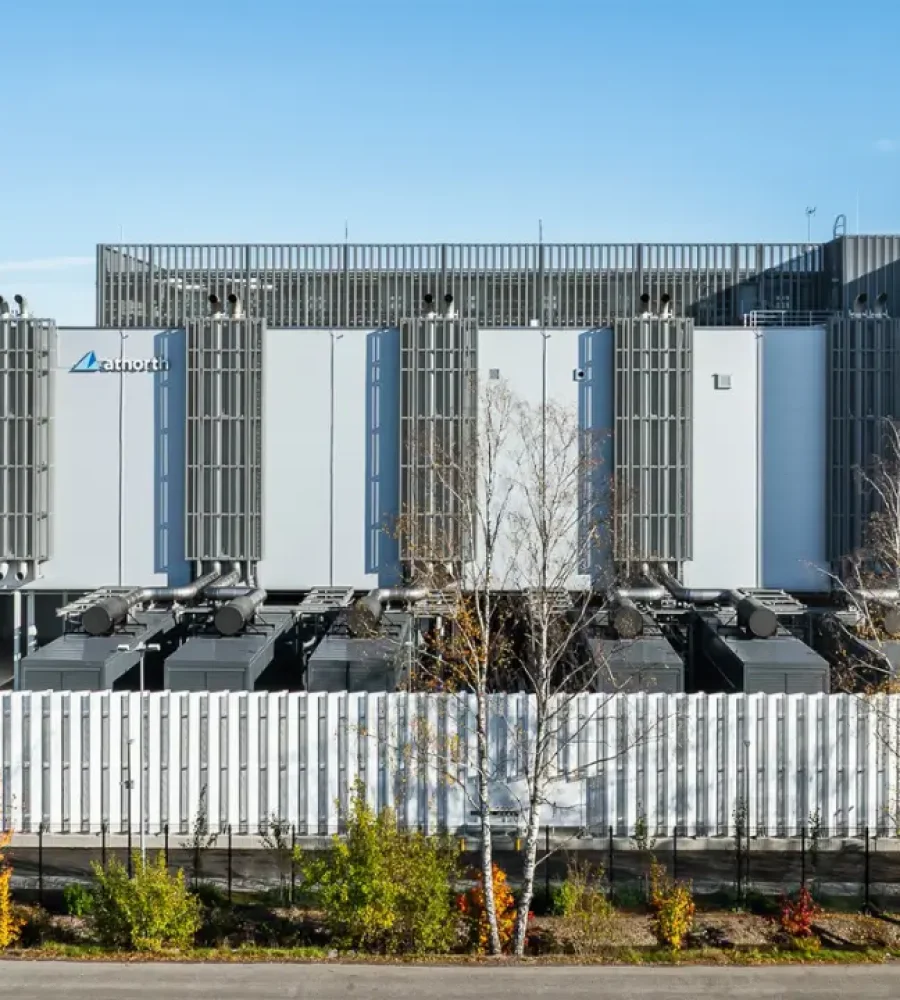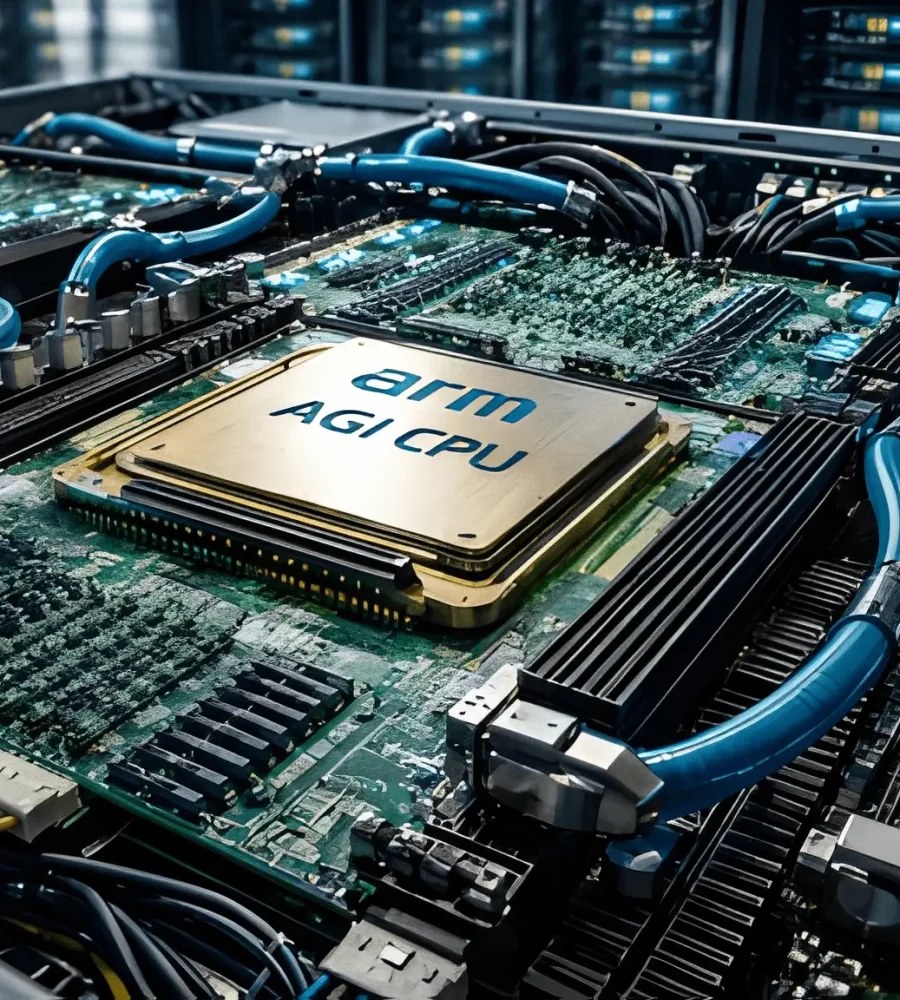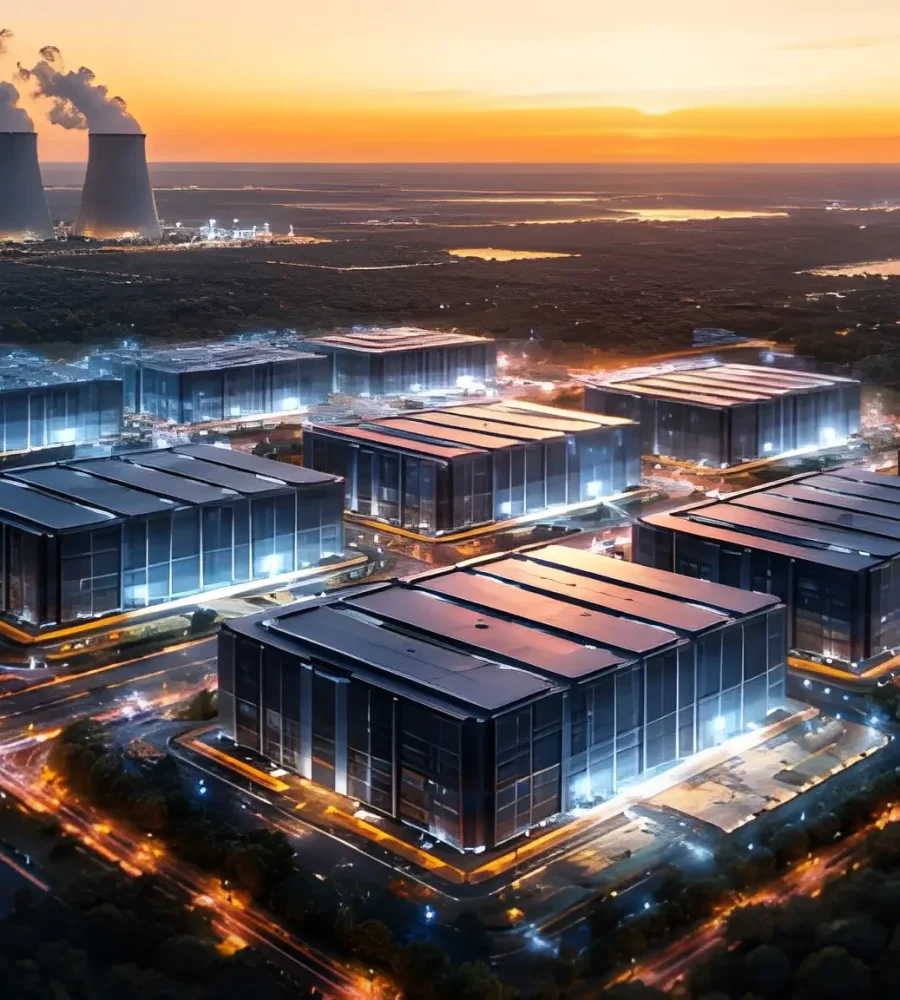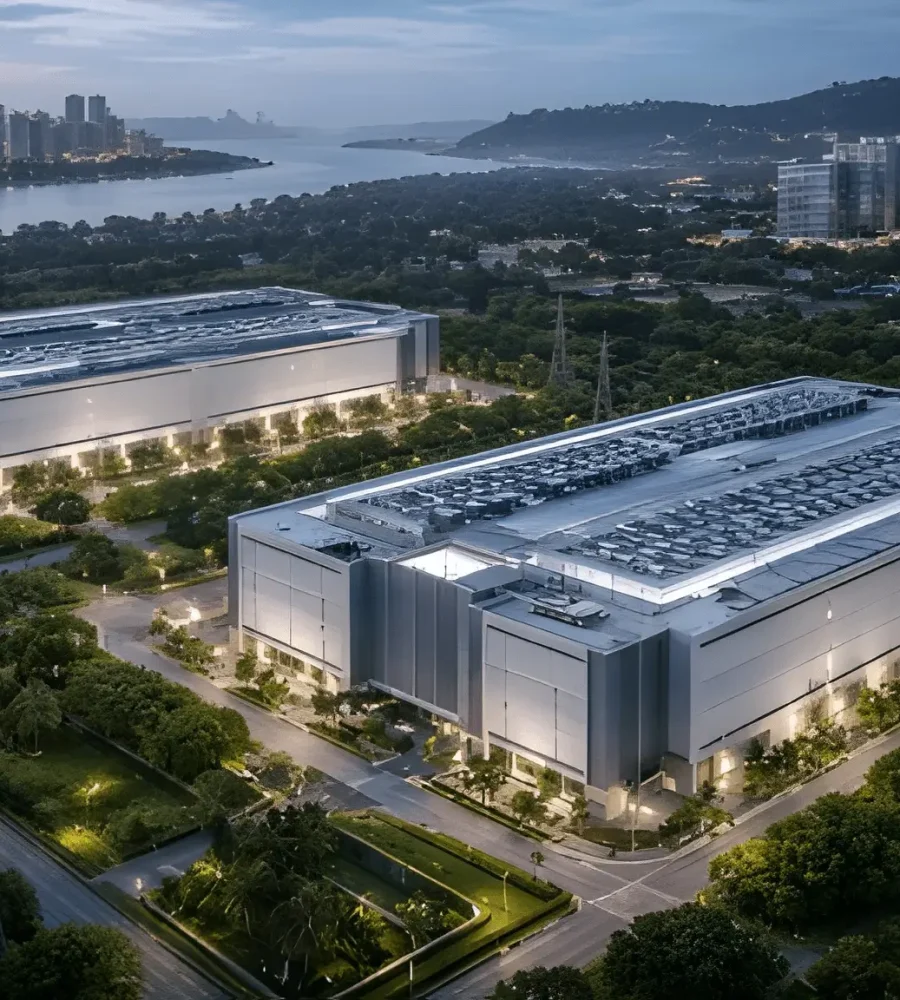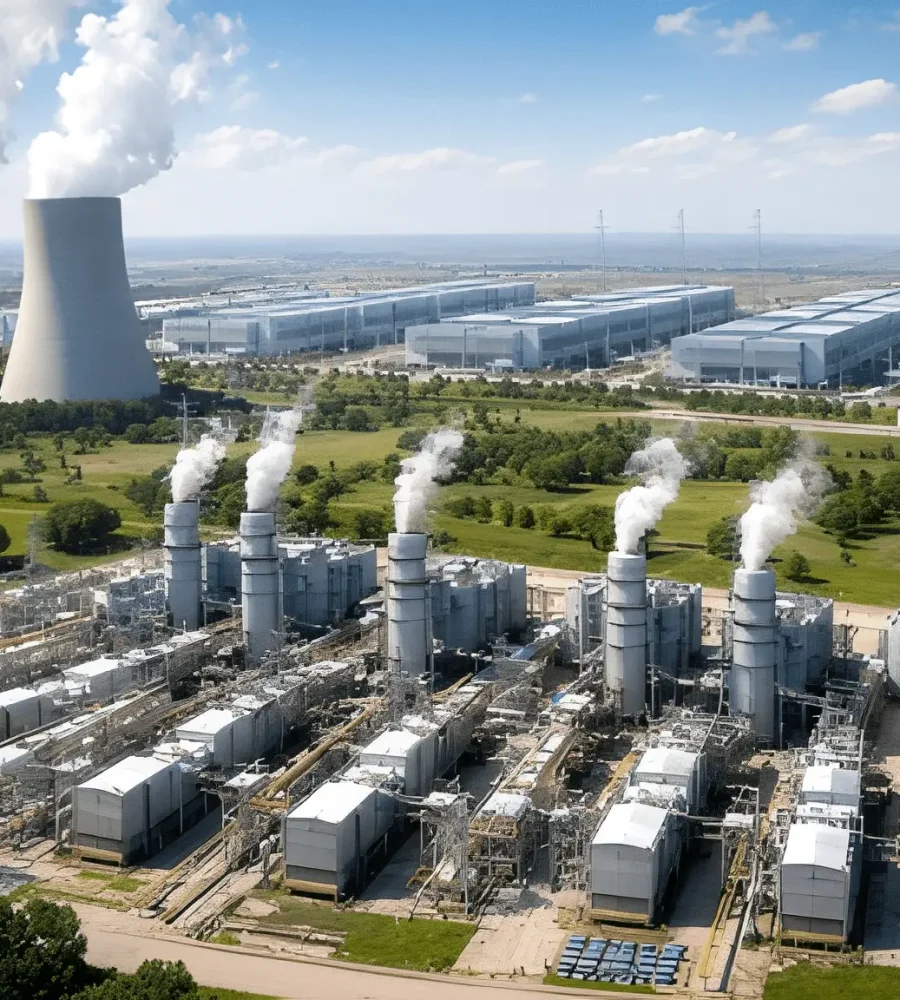

The rapid expansion of large-scale model training and inference has transformed data centers into some of the most energy-intensive industrial facilities ever constructed. Consequently, the AI sector now operates within constraints historically associated with heavy manufacturing, utilities, and national infrastructure planning rather than traditional information technology.
This shift carries profound implications for the digital economy. Data centers were once designed as self-contained environments where reliability, cooling, and redundancy could be engineered largely within the facility boundary. That assumption no longer holds. Today, the defining limitation facing AI infrastructure lies upstream, in the availability, cost, and stability of electrical power. Grid interconnection timelines, regional transmission capacity, and regulatory approval processes increasingly determine where AI systems can be deployed and at what scale. In many leading markets, limited access to power has become a major barrier to AI growth.
Power Density and Operational Risk
AI workloads impose power densities far exceeding those of general-purpose computing, driven by the widespread adoption of GPUs and specialized accelerators. These systems concentrate enormous electrical and thermal loads into small physical footprints. As a result, facility design and grid operations face unprecedented challenges. The emerging risk profile directly ties volatility in power pricing, cooling efficiency, and uptime to financial exposure measured in billions of dollars.
At the macro level, this energy intensity reshapes electricity markets and utility planning. Data centers now rank among the fastest-growing sources of electricity demand globally, with concentrated impacts in specific regions rather than uniform national growth. Localized grid congestion, capacity price spikes, and prolonged interconnection queues are increasingly common in established data center hubs. These factors create systemic uncertainty for operators, investors, and regulators, especially as AI-driven demand accelerates faster than grid modernization efforts.
Facility-Level Implications
On the ground, the transition to high-density AI computing has forced a re-architecture of power distribution, cooling systems, and redundancy models. Capital expenditure is now dominated by electrical and thermal infrastructure rather than compute alone. Overprovisioning, once a conservative design choice, carries prohibitive costs, while underprovisioning risks catastrophic downtime in environments where a single day of disruption can erase hundreds of millions of dollars in value.
This convergence of macroeconomic pressure, infrastructure complexity, and operational risk exposes a fundamental limitation in traditional data center design and management. Static models, design-time assumptions, and human intuition struggle to capture the non-linear interactions between workloads, power delivery, cooling behavior, and environmental conditions. As AI facilities scale toward gigawatt-class deployments, these interactions become too complex, dynamic, and consequential to manage through conventional approaches.
Digital Twins: Predictive Infrastructure Management
Within this context, data center digital twins have emerged as a foundational capability rather than an optional optimization. A digital twin provides a continuously updated virtual representation of physical infrastructure, integrating real-time telemetry across electrical systems, cooling networks, IT loads, and environmental inputs. Importantly, operators can simulate system behavior before it manifests in the physical world. This approach transforms infrastructure management from reactive response to predictive control.
The strategic value of digital twins lies in their ability to address multiple layers of the AI energy crisis simultaneously. At the grid interface, they support scenario analysis, demand flexibility, and regulatory engagement by modeling responses to curtailment, load shifting, and co-located generation. At the infrastructure level, digital twins enable capital-efficient design by validating power and cooling architectures prior to construction. Operationally, they provide thermodynamic and workload awareness necessary to prevent performance degradation, thermal throttling, and energy waste in real time.
Applying Digital Twins Across AI Systems
This report examines how digital twins are leveraged to tackle the AI energy and infrastructure cost crisis through a systems-level perspective. It begins by analyzing the macroeconomic and energy landscape influencing AI deployment, including grid constraints, power market volatility, and regional capacity stress. Next, it explores the hardware-driven escalation of power density and its implications for infrastructure cost and risk. Finally, it moves inside the data center to detail how digital twins operate across thermofluid dynamics, workload scheduling, and real-time control to enhance efficiency and resilience.
Additionally, the report addresses digital twins’ roles in capital planning, regulatory compliance, cybersecurity, and long-term sustainability. It concludes with a strategic roadmap toward autonomous, agent-driven infrastructure management. Throughout, the emphasis remains on practical mechanisms rather than speculative futures, highlighting how simulation-first approaches are essential to sustaining AI at scale.
The Economic Imperative of Predictive Infrastructure
As AI continues to tie computation to energy systems, the capacity to model, predict, and optimize physical infrastructure will define the sector’s economic viability. Digital twins do not remove the energy constraint, but they provide critical analytical leverage. In an environment where every additional watt carries financial, regulatory, and operational consequences, this leverage has become indispensable.
The Macro-Economic and Energy Landscape of the AI Era
The trajectory of AI energy demand represents an unprecedented challenge for utility planners. Projections suggest that U.S. data center load alone could nearly triple by 2028. Specifically, it could reach between 74 and 132 gigawatts. This growth is not evenly distributed across the country. Localized grid crises are surfacing in primary hubs like Northern Virginia. In that region, capacity pricing increased by 42% year-over-year.
Globally, the International Energy Agency projects that data center demand will more than double by 2030. Aggressive estimates suggest levels as high as 1,200 TWh by 2035. The fundamental challenge lies in the disparity between AI workloads and general-purpose compute infrastructure. A single AI query consumes approximately 2.9 Wh of electricity. This is nearly ten times the 0.3 Wh required for a standard web search.
High-Performance Hardware and Rack Density
The shift from Central Processing Units (CPUs) to GPUs drives this volatility. Hardware manufacturers have emphasized energy efficiency for individual chips. For example, NVIDIA reported that the 2024 Blackwell GPU is 25 times more efficient than its predecessor. However, the absolute magnitude of power required per rack continues to climb. High-performance AI racks are projected to consume around 1,000 kW by 2029.
This creates large, inflexible blocks of baseload demand. These loads strain grid operations and have contributed to wholesale electricity cost increases. In some regions, costs have risen by up to 267%. Furthermore, traditional capacity planning models are failing to account for these spiky demand profiles. Operators are now exposed to extreme power volatility and over-provisioning penalties.
The Evolution of the Infrastructure Cost Crisis
The financial stakes of the AI infrastructure boom are staggering. Hyperscale providers are expected to invest nearly $200 billion in Capital Expenditure (CapEx) in 2024 alone. This figure is projected to grow by over 40% in 2025. Companies are rushing to build the computational power needed for next-generation AI models. McKinsey estimates that companies will invest almost $7 trillion in global data center infrastructure by 2030.
AI-related CapEx currently accounts for about 5% of U.S. GDP. It contributed more to growth in early 2025 than consumer spending. The shift toward high-density computing has created a cascade effect. Traditional data centers were built around low-voltage distribution. The rise of GPU-based servers has necessitated a re-architecting of electrical systems. This is required to manage the immense heat generated.
Financial Risk and Operating Margins
For operators, the cost of failure is astronomical. For a 1-gigawatt AI factory, every day of downtime can cost over $100 million. Consequently, the precision of virtual modeling has become a financial necessity. Without these tools, companies risk committing billions to infrastructure that may be obsolete before commissioning.
Data Center Spending Allocation (2024)
- IT Infrastructure: Accounts for 78.0% of total spending. Key components include servers (61%), networking (10%), and storage (7%).
- Facility Infrastructure: Accounts for 12.0% of total spending. This includes electrical systems (6.5%) and cooling systems (3.2%).
- Other Costs: Accounts for 10.0% of total spending. This category covers land acquisition, site preparation, and construction labor.
The Architectural Genesis of Data Center Digital Twins
To manage this complexity, operators are turning to digital twins. These are virtual models that replicate the structure and behavior of a physical data center. A Data Center Digital Twin (DCDT) is a living digital replica. It is connected via a bidirectional data flow often called the digital thread. This allows the twin to analyze, learn, and optimize operations in real-time.
Digital twins typically consist of three distinct parts. These are the physical object, the digital representation, and the communication channel. Moreover, digital twins are categorized into three subtypes that track the lifecycle of an asset. The Digital Twin Prototype (DTP) consists of designs and analyses used during planning. It allows for virtual prototyping of cooling systems before construction begins.
Lifecycle Stages of the Digital Twin
The Digital Twin Instance (DTI) is the next phase. Once a data center component is operational, its DTI is linked to it for its remaining life. This collects real-time performance data. Finally, the Digital Twin Aggregate (DTA) combines multiple DTIs. This allows operators to understand how a fleet of assets performs under real-world conditions.
The utility of the DCDT lies in its ability to handle non-linear interactions. Traditional human intuition often fails to capture these complex environmental behaviors. DCDTs operate within a granularity range of minutes to hours. This is fast enough for interactive decision-making. However, it remains slow enough to maintain practical consistency with physical systems. Consequently, they complement existing management tools by providing advisory functionalities.
Thermofluid Dynamics and Energy Efficiency Optimization
Cooling systems are the largest overhead in data center operations. They account for 30-40% of total electricity usage. In AI facilities, servers and cooling can dominate up to 86% of the total energy draw. Traditional air cooling is often insufficient for extreme power densities. This has led to the adoption of liquid cooling and hybrid solutions.
Digital twins address this challenge through thermal surrogate models. By leveraging Computational Fluid Dynamics (CFD), engineers can evaluate cooling solutions in real-time. A DCDT unifies telemetry from a vast network of sensors. These sensors measure temperature, humidity, airflow, and power draw. Therefore, operators gain a precise understanding of the facility’s thermal state.
Preventing Thermal Throttling with Proactive Models
One significant insight provided by DCDTs is the identification of thermal throttling risks. GPUs generate intense heat during high-intensity computing. If heat removal fails, the GPU decreases its core voltage to protect itself. This can degrade performance by as much as 34.2%. Digital twins enable operators to foresee these hotspots proactively. Consequently, they can adjust cooling or workloads to maintain throughput.
Cooling Strategies and Digital Twin Impact
- Air Cooling Optimization: Achieves a 15% – 25% energy reduction. It adjusts fan speeds and aisle containment based on real-time modeling.
- Direct Liquid Cooling (DLC): Achieves a 10% – 20% energy reduction. It uses real-time flow rate adjustment to track dynamic IT load changes.
- AI-Driven Autonomous Cooling: Achieves a 30% – 40% energy reduction. It uses deep neural networks to predict needs based on weather and workloads.
Case Study: Google and DeepMind Optimization Results
The implementation of machine learning for data center cooling by Google serves as a proof-of-concept. Google’s data centers consume vast amounts of energy. Cooling is a primary contributor to this consumption. By applying DeepMind’s machine learning, Google reduced its cooling energy by up to 40%. This translated to a 15% improvement in overall Power Usage Effectiveness (PUE).
The DeepMind system utilizes an ensemble of deep neural networks. These are trained on historical sensor data, including temperatures and pump speeds. The AI framework predicts future PUE and future pressure over the next hour. Specifically, it simulates recommended actions to ensure the data center stays within operating constraints. This general-purpose framework allows the system to adapt to external changes like weather.
Strategic Sustainability and Scalability
In later iterations, Google noted the system stably delivered around 30% average cooling savings. These gains are enormous in an industry where single-digit improvements are notable. Furthermore, the AI maintained or improved overall thermal conditions. This means efficiency was gained without sacrificing hardware reliability. Consequently, the system reduced the facility’s carbon footprint significantly.
Physics-Informed Neural Networks and GPU Thermal Modeling
A technical innovation in digital twinning for AI is the shift toward Physics-Informed Neural Networks (PINNs). Unlike black-box models, PINNs integrate fundamental thermodynamic laws into the training process. This ensures that recommended control actions are physically consistent. Additionally, researchers have developed local physics-based data-learning approaches. These are often derived from proper orthogonal decomposition (POD) and Galerkin projection (GP).
These models offer accurate predictions of temperature across an entire GPU. They represent a significant improvement over traditional numerical solvers. Specifically, research has shown a nearly three-order improvement in computational efficiency over the finite element method (FEM). By using GPUs to simulate GPUs, operators achieve massive reductions in computational time.
Enhancing Spatiotemporal Resolution
When maximum temperature is the only concern, computational time can be reduced over 1.1 million times. This speed allows the digital twin to act as a real-time decision support system. It can adjust GPU frequencies in concert with cooling system setpoints. Therefore, operators can manage thermal safety without degrading inference performance in high-density clusters.
Simulation Performance Benchmarks
- Finite Element Method (FEM): Serves as the baseline for precision. It is primarily used for rigorous design validation.
- LEnPOD-GP: Operates 4,380x faster than FEM. It maintains a low error margin and is ideal for capturing dynamic hot-spots.
- PINNs (on GPU): Provides nearly instantaneous simulation. It is used for real-time thermal control and feedback loop integration.
Workload-Aware Simulation and Hierarchical Control
AI workloads are fundamentally heterogeneous and time-varying. This creates irregular compute demands across GPU racks. To solve this, advanced digital twins utilize a hierarchical control framework. On the upper level, the digital twin models the power characteristics of workloads. This identifies the optimal workload parallelism to reduce reconfiguration overhead.
On the lower level, the system adopts temperature-aware scaling. It adjusts GPU frequencies according to thermal conditions. Experimental results from such frameworks demonstrate significant energy savings. Specifically, they show a 24.2% reduction in computing-energy consumption. Furthermore, they achieve a 31.2% reduction in cooling-energy savings without impacting latency.
Thermal Dynamics of LLM Inference Phases
A nuanced insight is the difference between inference phases. The prefill phase has significantly higher peak power consumption than the decode phase. Specifically, prefill can exceed the decode phase by nearly 90W. Prefill is predominantly compute-bound, while decode is memory-bound. Consequently, digital twins must model these distinct phases to optimize peak power demand.
The Token-to-Thermal Relationship in High-Density AI
Digital twins enable the mapping of AI tokens to specific heat loads. For operators, throughput is a primary metric. However, heat imbalances can cause massive performance drops. Modern research identifies the steady state when batch sizes saturate. Notably, problem-solving tasks can consume 25x more energy per response than text conversation.
Digital twins enable thermal-aware workload schedulers (TAWS). These maximize throughput under high ambient temperatures. Moreover, this can reduce the energy consumed by cooling infrastructure by up to 35%. This leads to the strategic concept of federated model training. Digital twins can model how to distribute training jobs across multiple sites.
Mitigating Heat Concentration in 3D Architectures
New 3D-stacked architectures exhibit higher overall temperatures. They are more prone to localized thermal hot spots than conventional designs. For example, the maximum temperature gap between hot spots in 3D architecture is 11.1 °C. In contrast, it is only 2.5 °C in 2D architecture. Digital twins provide the spatial awareness needed to manage this “heat concentration effect” in next-generation silicon.
Capital Efficiency and the Economics of Simulation-First Construction
The financial impact of digital twins is realized through CapEx deferral and right-sizing. McKinsey research indicates that digital twins could improve capital efficiency by 20% to 30%. In the context of the $7 trillion in projected spending, this represents a potential value of over $1.4 trillion. Therefore, digital twins are becoming essential for long-term financial planning.
NVIDIA has pioneered the simulation-first engineering approach. They used their Omniverse platform to plan a 1-gigawatt AI factory. The simulation breaks down engineering silos. It allows power, cooling, and networking teams to validate configurations before deployment. This reduces the risk of infrastructure failures that could cost millions per day.
Accelerated Site Selection and Design Iteration
AI-driven tools crunch huge datasets to pinpoint ideal sites. This can shorten the site selection phase from months to days. Moreover, it flags red-flag issues like hidden seismic risks or permitting hurdles. Consequently, teams avoid sunk costs on problematic sites. This accelerates the development timeline and de-risks the entire project lifecycle.
Value of Digital Twins Across Project Phases
- Planning & Design: De-risks site selection and layout. It can shorten the site selection process from months to days.
- Construction: Minimizes rework and on-site surprises. It provides a 5x improvement in the speed of multidisciplinary data integration.
- Commissioning: Allows for virtual testing of control logic. This saves significant time by accelerating system setup by months.
- Operations: Enables predictive maintenance and PUE optimization. Historical cases show up to a 15% reduction in overall data center energy consumption.
The Grid Integration Challenge: Digital Twins as a Regulatory Catalyst
The core operational risk for AI has shifted to the external grid. The relationship between operators and utilities is now a critical bottleneck. In major data center hubs, facilities are projected to consume up to 12% of national electricity by 2030. This figure has tripled in less than a decade.
The Federal Energy Regulatory Commission (FERC) has taken steps to address this. In late 2025, FERC directed grid operators like PJM to establish rules for co-located load. This applies to large data centers physically connected to generators, such as nuclear plants. These rules help data centers achieve interconnections more quickly without burdening other customers.
Flexible Load Integration and Demand Response
Digital twins are essential for navigating this regulatory landscape. They provide the high-fidelity models needed to prove a data center’s flexibility. For example, they support non-firm contract demand options. These are interruptible services for loads willing to curtail during grid emergencies. Consequently, they offer a faster pathway to grid connection.
Duke Energy’s research found that utilities could accommodate massive new loads without adding more generation. This assumes data centers accept short-duration curtailments of less than 50 hours per year. Digital twins allow data centers to act as Virtual Power Plants (VPPs). By modeling the energy ecosystem, operators can shift non-essential consumption to off-peak periods.
Organizational and Technical Barriers to Implementation
Digital twin projects frequently fail or stall in the pilot phase. For every success, many projects result in nothing more than an attractive visual dashboard. These lack the depth required to drive operational change. Furthermore, a digital twin is only as trustworthy as the data feeding it.
Valuable data is often trapped in fragmented silos like Building Management Systems (BMS). Without master data integration, a twin produces numbers but not knowledge. Additionally, maintaining a living model requires keeping disparate data sources synchronized. Intermittent connectivity can lead to a stale model. Moreover, as data centers scale, coverage gaps often create blind spots.
Cybersecurity Risks and Data Integrity Concerns
The integration of digital twins introduces significant cybersecurity challenges. A compromised digital twin could unlock everything from intellectual property to physical control systems. Vulnerabilities include unauthorized access and data theft. Attackers could subtly alter sensor inputs to produce misleading insights, a tactic known as AI poisoning.
Furthermore, many IoT devices lack robust encryption or receive few updates. These devices provide a foothold for infiltration. Ironically, the same technology used for optimization can support security teams. They use twins to construct attack graphs. These visualize every potential path an adversary might exploit. Consequently, they can prioritize the remediation of high-risk choke points.
Digital Twin Standards and Maturity Frameworks
To resolve fragmentation, the industry has established international standards. These guide the design and operation of digital twins across multiple sectors. Specifically, the ISO/IEC 30186:2025 standard provides a maturity model for evaluating these systems. It evaluates maturity across six interrelated aspects, including capability and trustworthiness.
Key International Digital Twin Standards
- ISO/IEC 30186:2025: Provides a framework to evaluate twin maturity. It emphasizes iterative upgrades rather than high-risk “big-bang” projects.
- ISO 23247: Outlines a four-layer framework for data integration. This ensures smooth communication between physical and virtual systems.
- NIST IR 8356: Addresses cybersecurity issues specifically in digital twin systems. It focuses on standardized exchange protocols and verification.
- IEEE P2806: Standardizes data inputs for digital representation. This is crucial for industrial and high-density computing settings.
Evaluating Convergence and Capability
Convergence assesses the integration of diverse data streams. Mature twins break down silos by combining IT and operational technology (OT) knowledge. Capability specifies the range of functions the twin performs. As they mature, twins move from monitoring to autonomous control and strategic decision-support.
Strategic Roadmap: From Reactive Maintenance to Agentic AI
The future of data center energy management lies in proactive optimization. Advances in AI and reduced sensor costs are making digital twin implementation more accessible. Specifically, 70% of industrial companies are expected to have a digital twin by 2026. The transition moves from simple monitoring to autonomous control.
The NVIDIA Omniverse blueprint points toward a future of agentic AI. In this vision, AI agents optimize thermal stability through real-time simulation. These agents will adapt continuously to changing hardware conditions. They will move beyond advisory roles to trigger automated responses. Specifically, they may adjust security policies or update building control setpoints without human intervention.
The Role of On-Site Power and Nuclear Integration
Data centers seek reliable, 24/7 baseload power that renewables cannot always provide. Consequently, a shift toward on-site power generation is likely. Industry leaders are exploring co-location with small modular reactors (SMRs) and fuel cells. Digital twins will be the critical management layer for these hybrid complexes. They will ensure that heat recovery and high-density compute clusters function harmoniously.
Advanced Scheduling and Infrastructure Orchestration
New distributed compute engines like Ray are integrating with infrastructure managers. Ray can handle complex workloads across CPUs, GPUs, and TPUs. Partnership between Ray and Kubernetes forms a “distributed operating system” for AI. Early benchmarks show a 30% increase in workload efficiency through vertical scaling.
Digital twins play a critical role here by providing the “infrastructure awareness” these schedulers need. They enable gang scheduling, which prevents partial startups that waste power. Furthermore, they allow high-priority inference jobs to preempt lower-priority training jobs dynamically. Consequently, resources are allocated to the most valuable tasks in real-time.
Scaling Multi-Tenant Colocation Facilities
Small and mid-sized colocation providers face unique scaling challenges. Unlike single-tenant hyperscale sites, they must adapt to hundreds of owners with different needs. Digital twins help these providers unify fragmented data from various Building Automation Systems. This preserves existing investments while opening a path to rapid growth. Notable providers like Equinix are already linking executive compensation to PUE targets.
Conclusion and Operator Playbook
The convergence of artificial intelligence and physical infrastructure has created a profound energy crisis. With energy demand threatening to outpace grid capacity, reactive management is no longer tenable. Digital twins represent a critical technological solution for this gap. They bridge the high-intensity requirements of AI with the constrained reality of energy systems.
By providing the analytical depth to optimize cooling and improve capital efficiency, digital twins have become strategic assets. Operators should prioritize iterative adoption following the ISO maturity model. Success will be defined by simulation-first strategies where every watt is pre-validated virtually. Organizations that leverage these replicas will solve the cost crisis. However, failure to adopt these tools will leave operators flying blind in a volatile landscape.