Modern AI systems no longer operate in episodic bursts that align with traditional enterprise workloads, because their training and inference cycles persist across uninterrupted time horizons. This shift forces infrastructure architects to evaluate power systems not as passive utilities but as active determinants of performance continuity and operational feasibility. Energy supply must now match the deterministic and always-on nature of compute, which exposes limitations in existing grid structures and renewable integration strategies. Variability in power delivery introduces constraints that propagate through silicon, networking, and orchestration layers, which alters how systems behave under sustained load. The emerging divide between firm and flexible power reflects a deeper transformation in how infrastructure aligns physical resources with computational demand.
The expansion of AI infrastructure continues to reveal structural dependencies that were previously abstracted away in cloud computing models that prioritized elasticity over continuity. Data centers that host AI workloads now operate with utilization patterns that resemble industrial processes more than digital services, because they require consistent throughput and predictable execution windows. This operational model requires power systems that can sustain stable output without interruption, which places firm energy sources at the center of infrastructure planning. Renewable energy introduces benefits in sustainability and cost variability, yet its intermittency requires additional layers of compensation that reshape system architecture. The interplay between these energy types defines how infrastructure evolves to meet both environmental goals and operational demands. Understanding this divide requires a closer examination of how energy characteristics align or conflict with AI workload requirements.
Always-On Compute Meets Always-Available Power
AI workloads often operate with extended and sustained execution patterns that challenge conventional assumptions about demand variability in digital infrastructure environments, even though not all workloads run continuously and some inference systems follow application-specific demand cycles.Training processes require sustained execution over extended periods, and interruption can lead to inefficiencies that affect both performance and cost structures. Inference systems embedded into real-time applications also maintain persistent activity, which reduces the opportunity for energy demand to fluctuate in response to external conditions. This continuous demand pattern establishes a baseline requirement for power systems that can deliver consistent output regardless of environmental variability. Dispatchable energy sources provide the control necessary to meet these requirements, which aligns them with the deterministic nature of AI compute. Infrastructure designers increasingly treat uninterrupted power as a prerequisite rather than an optimization target.
Continuous Demand Redefines Infrastructure Assumptions
The transition toward always-on compute introduces a structural change in how infrastructure systems manage resource allocation across all layers of operation. Energy systems must now support sustained output that does not align with cyclical demand patterns seen in traditional workloads, which creates new constraints for grid interaction. The deterministic execution of AI workloads requires a matching level of predictability in power delivery, which contrasts with the variability inherent in renewable generation. Engineers must design systems that ensure continuity even when external supply conditions fluctuate beyond expected thresholds. This requirement leads to tighter coupling between energy systems and compute infrastructure, which reduces flexibility in operational design. The result is a redefinition of infrastructure assumptions that places energy reliability at the center of system architecture.
Power delivery systems must now integrate with compute orchestration frameworks to ensure that energy availability aligns with workload scheduling requirements across distributed environments. This integration requires advanced monitoring and control mechanisms that can respond to changes in both demand and supply conditions without introducing latency or instability. The coordination between energy and compute systems becomes more complex as infrastructure scales, because dependencies increase across multiple layers. Engineers must address these challenges through design strategies that prioritize resilience and redundancy in power delivery mechanisms. The continuous nature of AI workloads leaves little margin for error in energy supply, which reinforces the importance of deterministic power systems. This evolution marks a departure from earlier models that treated energy as a static input rather than a dynamic component of infrastructure performance.
Intermittency vs Determinism: A Mismatch in System Design
Renewable energy systems generate power based on environmental conditions that fluctuate across time, which introduces variability into supply profiles that infrastructure must accommodate. AI clusters require deterministic performance characteristics that benefit from stable and predictable power delivery, even though buffering systems such as uninterruptible power supplies and workload schedulers partially decouple compute execution from instantaneous grid conditions.This divergence extends beyond simple variability, because it affects how systems respond to changes in operating conditions.Variations in power supply can indirectly influence throughput and overall system efficiency through events such as outages or power throttling, although they do not typically introduce real-time latency variation under normal buffered operating conditions.Operators must implement compensatory mechanisms that bridge the gap between intermittent supply and continuous demand, which adds complexity to infrastructure design. The mismatch between intermittency and determinism defines one of the central challenges in modern AI infrastructure.
Operational Risk Emerges from Variability
Variability in energy supply introduces risks that propagate across multiple layers of AI infrastructure, which affects both hardware stability and software performance under continuous load. Latency-sensitive operations become particularly vulnerable to fluctuations in power quality, because even minor deviations can impact execution consistency. Systems designed for deterministic performance must incorporate safeguards that mitigate the effects of unpredictable energy input. Engineers often rely on redundancy and buffering mechanisms to maintain stability, which increases both system complexity and cost. The need to manage these risks grows as AI workloads scale in size and intensity, which amplifies the consequences of power instability. This dynamic reinforces the importance of aligning energy systems with the deterministic requirements of compute infrastructure.
Infrastructure operators must also consider how variability in power supply affects long-term system reliability and maintenance cycles across hardware components. Fluctuations in energy input can introduce stress conditions that accelerate wear and reduce the lifespan of critical infrastructure elements. This impact extends beyond immediate performance considerations, because it influences total cost of ownership over time. Engineers must design systems that can withstand these conditions without compromising operational continuity. The integration of energy and compute systems requires a holistic approach that addresses both short-term performance and long-term reliability. This perspective highlights the broader implications of mismatched system design in AI infrastructure.
Capacity Factor as the New KPI for Data Center Energy
The evaluation of energy systems in AI infrastructure has shifted toward metrics that capture consistency and reliability rather than focusing solely on cost efficiency. Capacity factor reflects the ability of a power source to deliver sustained output over time, which aligns closely with the continuous demand patterns of AI workloads. High capacity factor sources provide stable energy that supports uninterrupted compute operations, which enhances overall system efficiency. Operators increasingly prioritize these characteristics alongside cost, carbon considerations, and availability when selecting energy solutions for large-scale deployments, rather than treating any single metric as universally dominant.This shift changes the criteria used to evaluate energy investments, which influences infrastructure design decisions. The emphasis on capacity factor reflects a broader transition toward reliability-driven energy strategies.
Stability Becomes More Valuable Than Cost
The traditional emphasis on minimizing energy costs gives way to a more nuanced approach that considers the impact of variability on system performance and efficiency. Intermittent energy sources may offer cost advantages under certain conditions, yet their variability introduces hidden inefficiencies that affect overall operations. Stable energy supply enables more efficient utilization of compute resources by reducing downtime and variability in performance. Operators must evaluate trade-offs between cost and reliability to achieve optimal outcomes in infrastructure design. This evaluation often favors energy sources that provide consistent output over those that fluctuate unpredictably. The evolving role of capacity factor underscores the importance of stability in modern AI infrastructure.
Energy procurement strategies now incorporate considerations related to utilization stability and operational continuity, which reflects the changing priorities of infrastructure operators. Contracts and agreements increasingly emphasize reliability metrics that align with the needs of continuous compute workloads. This shift influences how energy markets interact with data center demand, which creates new dynamics in pricing and availability. Operators must navigate these complexities while ensuring that energy supply meets stringent performance requirements. The integration of capacity factor into decision-making processes represents a significant evolution in how energy systems are evaluated. This change highlights the growing importance of reliability as a core determinant of infrastructure performance.
The Hidden Cost of Bridging Power Gaps
Bridging the gap between intermittent renewable generation and continuous AI compute demand requires a layered infrastructure approach that extends far beyond primary power procurement. Operators must deploy energy storage systems, backup generation assets, and overprovisioned grid connections to ensure uninterrupted supply under varying conditions. Each of these components introduces additional capital and operational complexity that can reshape the economic profile of AI infrastructure deployments depending on system design, integration strategy, and scale of implementation.The cost of maintaining reliability in the presence of variability often remains obscured within broader infrastructure budgets, which leads to underestimation during planning stages. Engineers must design systems that can seamlessly transition between different energy sources without introducing instability or latency. This hidden layer of infrastructure becomes essential in environments where power availability cannot align naturally with compute demand.
Complexity Expands Beyond Core Infrastructure
The introduction of compensatory systems for energy variability extends infrastructure complexity into domains that were previously peripheral to data center design. Storage systems must integrate with power management frameworks that coordinate supply and demand in real time, which increases system interdependence. Backup generators require maintenance cycles and fuel logistics that add operational overhead, which affects long-term sustainability considerations. Overprovisioning grid connections introduces redundancy that ensures availability but also increases costs associated with unused capacity. Engineers must manage these interconnected systems to prevent cascading failures that could disrupt compute operations. This expansion of infrastructure highlights the broader implications of relying on flexible power sources in AI environments.
The orchestration of multiple energy systems requires sophisticated control mechanisms that can adapt to dynamic conditions without compromising performance stability. Power management platforms must monitor generation, storage, and consumption patterns simultaneously to maintain equilibrium across the system. This level of coordination introduces new challenges in system design, because dependencies increase across multiple layers of infrastructure. Engineers must ensure that these systems operate cohesively under both normal and stress conditions to avoid performance degradation. The integration of these components transforms energy management into a critical aspect of infrastructure operations. This shift underscores the hidden complexity associated with bridging power gaps in AI deployments.
Why Grid Reliability Is Now a Competitive Advantage
The reliability of regional power grids has emerged as a decisive factor in determining where AI infrastructure can operate effectively at scale. Data center operators evaluate grid performance in terms of stability, redundancy, and resilience to disruptions that could impact continuous operations. Regions with consistent power quality provide an environment where infrastructure can operate with reduced dependence on backup systems, although hyperscale data centers still deploy layered redundancy regardless of grid conditions.This advantage extends beyond immediate operational considerations, because it influences long-term scalability and cost efficiency. Reliable grids enable operators to focus on optimizing compute performance rather than compensating for energy instability. This dynamic positions grid reliability as a key differentiator in the global competition for AI infrastructure investment.
Geography Shapes Infrastructure Strategy
The geographic distribution of reliable power infrastructure directly influences the strategic decisions that shape AI deployment at a global level. Regions with robust grid systems attract greater investment, because they offer the stability required for continuous compute operations. Infrastructure planners must consider not only current grid performance but also future resilience when selecting locations for deployment. Power availability and reliability become intertwined with other factors such as connectivity and environmental conditions. This interplay creates a complex decision-making process that determines where infrastructure can achieve optimal performance. The role of geography in shaping infrastructure strategy highlights the importance of energy systems in enabling technological advancement.
Grid reliability also affects the operational flexibility of data centers, because stable power supply reduces the need for complex energy management strategies. Operators can allocate resources more efficiently when they do not need to compensate for variability in energy availability. This efficiency translates into improved performance and reduced operational risk across the infrastructure. Engineers must design systems that leverage the advantages of reliable grids while maintaining resilience to potential disruptions. The alignment of infrastructure with stable energy systems enhances overall system performance. This relationship reinforces the strategic importance of grid reliability in AI infrastructure planning.
Energy Storage Is Not a Silver Bullet—Yet
Energy storage technologies play a critical role in addressing the variability of renewable energy sources, yet their current capabilities impose limitations on their effectiveness in supporting continuous AI workloads. Storage systems can absorb excess energy during periods of high generation and release it during periods of low output, which helps balance supply and demand. However, the duration for which these systems can sustain output remains constrained by technological and economic factors. AI workloads require consistent power over extended periods, which exceeds the capabilities of many existing storage solutions. Engineers must integrate storage systems carefully to complement rather than replace firm power sources. This limitation defines the current role of storage in AI infrastructure.
The effectiveness of energy storage depends on its ability to deliver power over durations that align with the needs of continuous compute workloads. Short-duration storage systems can address transient fluctuations in supply, yet they cannot sustain output during extended periods of low renewable generation. Long-duration storage technologies continue to develop, yet they face challenges related to scalability, efficiency, and cost that limit widespread adoption. Operators must evaluate these constraints when designing energy systems that rely on storage as a component. The integration of storage requires careful planning to ensure that it enhances rather than complicates system performance. This reality highlights the need for diversified energy strategies in AI infrastructure.
Storage systems also introduce additional considerations related to lifecycle management and operational efficiency that influence their role in infrastructure design. Engineers must account for degradation over time, which affects the reliability and performance of storage solutions under continuous use. Maintenance requirements and replacement cycles add to the complexity of managing these systems within a larger energy framework. Operators must balance these factors against the benefits provided by storage in mitigating variability. The integration of storage into AI infrastructure requires a comprehensive understanding of its limitations and capabilities. This perspective reinforces the role of storage as a complementary rather than primary solution.
The Rise of Hybrid Power Stacks in Data Centers
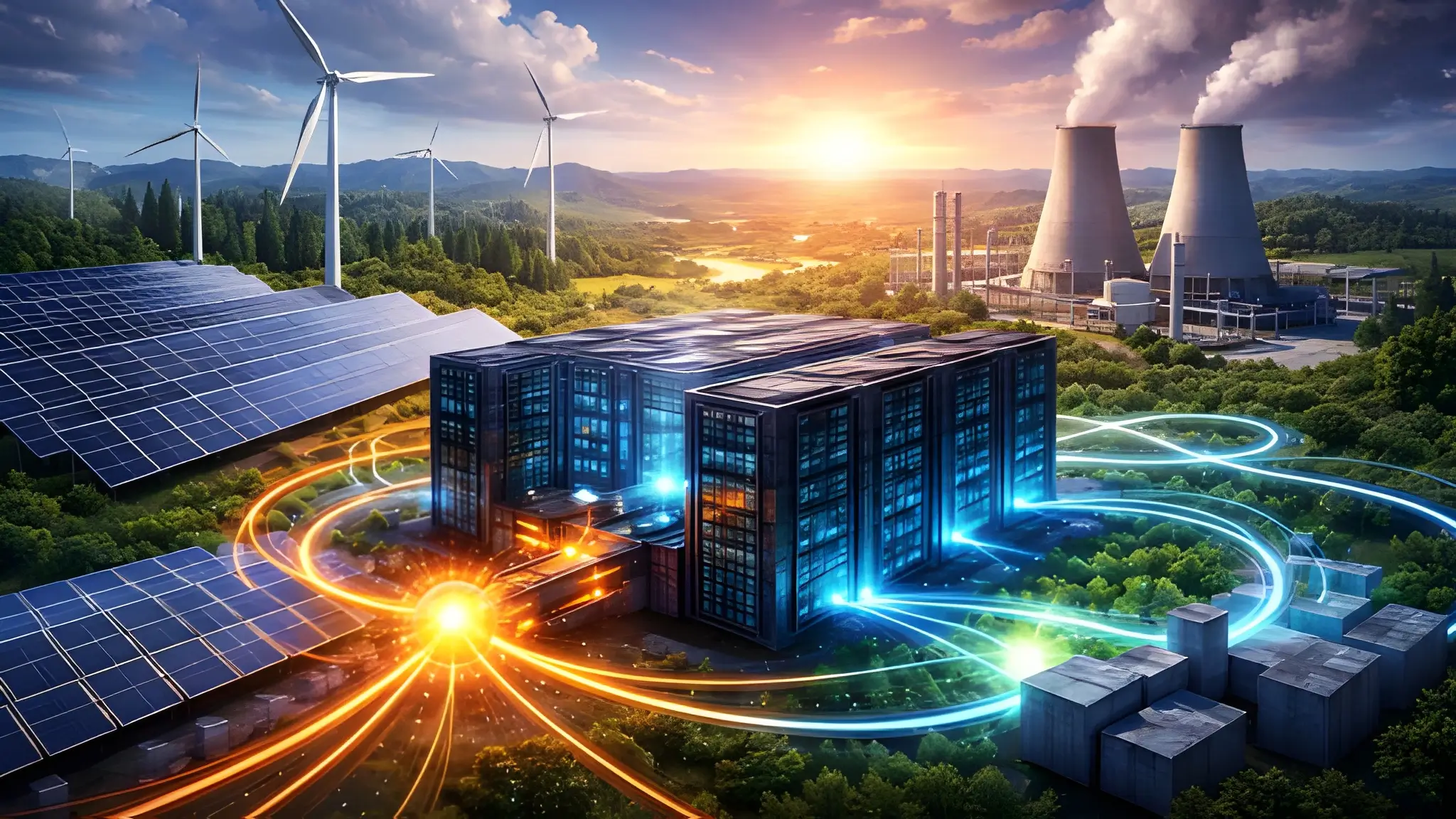
Hybrid energy systems have emerged as a practical approach to addressing the challenges associated with balancing reliability and sustainability in AI infrastructure. Operators combine renewable energy sources with dispatchable power such as natural gas or nuclear to achieve a stable and continuous energy supply. This integration allows infrastructure to benefit from the environmental advantages of renewables while maintaining the reliability required for continuous compute operations. Hybrid systems require advanced coordination mechanisms that can manage the interaction between different energy sources effectively. Engineers must design these systems to ensure seamless transitions between energy inputs without introducing instability. This approach represents a pragmatic response to the limitations of individual energy sources.
Balancing Competing Priorities
Hybrid power stacks address the competing priorities of reducing environmental impact while ensuring operational reliability in AI infrastructure. Operators must navigate trade-offs between sustainability goals and the need for consistent power supply that supports continuous workloads. The integration of multiple energy sources provides flexibility in managing these trade-offs under varying conditions. Engineers design systems that optimize performance while maintaining resilience to changes in energy availability. The ability to leverage different power sources enhances system stability and efficiency across infrastructure deployments. This balance becomes essential in supporting large-scale AI operations.
The implementation of hybrid systems also introduces new considerations related to system integration and operational complexity that must be addressed during design and deployment. Engineers must ensure that different energy sources can operate cohesively within a unified framework that supports continuous compute demand. This integration requires sophisticated control systems that can manage variability without compromising performance. Operators must also consider the long-term implications of hybrid systems on infrastructure scalability and adaptability. The success of hybrid approaches depends on the ability to balance complexity with reliability. This dynamic underscores the importance of thoughtful system design in AI infrastructure.
Renewable energy generation often follows patterns that vary based on time-of-day and environmental conditions, which influences pricing structures in energy markets. Solar energy availability peaks during daylight hours, while wind generation fluctuates based on weather patterns that are not always predictable. AI workloads operate continuously and require consistent power supply that does not align with these temporal variations. This mismatch creates challenges in optimizing energy costs while maintaining reliability in infrastructure operations. Operators must navigate pricing models that reflect supply variability rather than demand consistency. The divergence between energy availability and compute demand complicates economic planning for AI infrastructure.
Cost Optimization Faces Structural Constraints
Efforts to optimize energy costs must account for the limitations imposed by the continuous nature of AI workloads that do not adapt to fluctuations in energy availability. Time-of-use pricing models may offer cost advantages during specific periods, yet they cannot fully address the need for uninterrupted power supply. Operators must balance cost considerations with the requirement for consistent energy availability that supports continuous compute operations. This balance introduces inefficiencies that affect overall system performance and economic outcomes. Infrastructure planners must develop strategies that mitigate these challenges while maintaining operational stability. The complexity of energy management reflects the structural constraints inherent in aligning variable supply with constant demand.
Energy procurement strategies must also consider the implications of long-term contracts and pricing structures that influence cost stability over time. Operators must evaluate how fluctuations in energy pricing affect overall infrastructure economics under continuous demand conditions. This evaluation requires a comprehensive understanding of market dynamics and their interaction with operational requirements. Engineers must design systems that can adapt to these conditions without compromising performance. The integration of economic considerations into energy planning highlights the multifaceted challenges of managing power in AI infrastructure. This perspective underscores the importance of aligning cost strategies with operational realities.
Power Curtailment and the Inefficiency Paradox
Renewable energy systems often produce electricity that cannot be fully utilized due to transmission constraints, demand mismatches, or grid balancing requirements, which leads to curtailment. This phenomenon reflects a structural inefficiency where available clean energy remains unused while demand persists elsewhere in the system. AI infrastructure, which requires guaranteed and continuous power, cannot rely on these surplus conditions because availability does not align with operational requirements. The coexistence of curtailed energy and unmet demand can highlight a disconnect between generation and consumption patterns in certain regions, depending on grid structure, transmission capacity, and geographic distribution of supply and demand.Operators must design systems that ensure consistent supply regardless of these inefficiencies in the broader grid. This paradox underscores the challenges of integrating intermittent energy into environments that demand deterministic performance.
System Constraints Limit Utilization
Grid infrastructure limitations play a central role in determining how effectively renewable energy can be distributed and utilized across different regions. Transmission bottlenecks prevent excess generation from reaching areas with high demand, which results in localized imbalances that reduce overall system efficiency. AI data centers require reliable power that remains unaffected by these constraints, which necessitates alternative solutions to ensure continuity. Operators must account for these limitations when designing infrastructure that depends on external energy systems. Engineers must develop strategies that mitigate the impact of curtailment on operational performance. This dynamic highlights the importance of aligning infrastructure design with the realities of grid constraints.
The inefficiency paradox also reflects broader systemic challenges in coordinating energy production and consumption across complex networks that span multiple regions and technologies. Renewable generation continues to expand, yet its integration into existing grid systems remains constrained by infrastructure limitations. AI workloads, which operate continuously, cannot adapt to these inconsistencies without compromising performance. Operators must implement solutions that ensure consistent energy availability despite these systemic inefficiencies. This requirement introduces additional layers of complexity that influence infrastructure design and operation. The persistence of curtailment highlights the need for more integrated and resilient energy systems.
Infrastructure Lock-In: Designing Around Power Constraints
Long-term energy agreements and infrastructure investments create conditions where data centers become closely tied to specific power sources and grid configurations. These commitments influence design decisions that extend across the lifecycle of the infrastructure, which limits flexibility in adapting to new technologies or changing conditions. Operators must evaluate these long-term implications when selecting energy strategies for AI deployments. The integration of power systems into data center architecture creates dependencies that shape future operational capabilities. Once established, these systems become difficult to modify without significant cost and disruption. This dynamic highlights the importance of strategic planning in energy selection.
Commitment Shapes Future Flexibility
Decisions made during the initial phases of infrastructure development have lasting impacts on the ability to adapt to evolving energy landscapes and technological advancements. Energy systems that support AI infrastructure must align with long-term objectives while accommodating potential changes in demand and supply conditions. Operators must assess risks associated with different energy sources and their implications for future scalability. The commitment to specific power solutions influences not only current operations but also the trajectory of infrastructure evolution. Engineers must design systems that balance stability with adaptability to ensure long-term resilience. This approach reflects the complexity of managing infrastructure in a rapidly changing environment.
Infrastructure lock-in also affects how organizations respond to regulatory changes and sustainability requirements that evolve over time. Energy policies and environmental considerations influence the viability of certain power sources, which can create challenges for infrastructure tied to specific systems. Operators must anticipate these changes and incorporate flexibility into their design strategies where possible. The interplay between regulatory frameworks and infrastructure design adds another layer of complexity to energy planning. Engineers must consider these factors when developing systems that can withstand external pressures. This perspective underscores the importance of forward-looking decision-making in AI infrastructure development.
The Future of AI Will Be Powered by Certainty, Not Just Sustainability
AI infrastructure continues to evolve under conditions where energy reliability defines the boundaries of what systems can achieve at scale. The transition toward continuous compute has created a demand for power systems that deliver consistent and predictable output under all operating conditions. Firm power sources provide the stability required to support these demands, while renewable energy, storage systems, and grid evolution collectively contribute to the broader energy mix that enables scalable AI infrastructure.Renewable energy remains a critical element in achieving sustainability goals, yet its integration requires complementary solutions that address variability. Operators must design energy systems that balance environmental considerations with operational reliability. This balance will determine the trajectory of AI infrastructure development in the coming years.
Balancing Sustainability with Operational Certainty
Sustainability objectives continue to influence energy strategies, yet they must align with the operational realities of AI systems that require uninterrupted power supply. Hybrid approaches that combine firm and flexible power sources offer a pathway to achieving this balance without compromising performance. Operators must evaluate energy solutions through a framework that prioritizes both environmental impact and system reliability. This evaluation influences long-term infrastructure decisions that shape the future of AI deployment. Engineers must design systems that adapt to evolving energy landscapes while maintaining consistent output. The interplay between sustainability and reliability defines the next phase of infrastructure innovation.
The role of power in AI infrastructure has shifted from a supporting function to a central determinant of system capability and scalability. Infrastructure planners now integrate energy considerations into every stage of design and deployment, which reflects the growing importance of power systems. This shift highlights the recognition that energy constraints can limit the potential of advanced technologies. Operators must ensure that energy systems align with compute requirements to achieve optimal performance. The convergence of energy and compute systems creates a new paradigm for infrastructure development. This paradigm emphasizes the importance of reliability in enabling technological progress.
Certainty as the Defining Metric of Future Systems
Certainty in power delivery emerges as the defining metric that underpins the performance and reliability of AI infrastructure at scale. Systems that provide consistent energy supply enable efficient utilization of compute resources while reducing operational risk. Operators must prioritize energy solutions that align with this requirement to maintain competitive advantage. The emphasis on certainty reflects the need for infrastructure that supports continuous workloads without disruption. Engineers must design systems that integrate reliability into every layer of operation. This focus will shape the evolution of AI infrastructure in the years ahead.