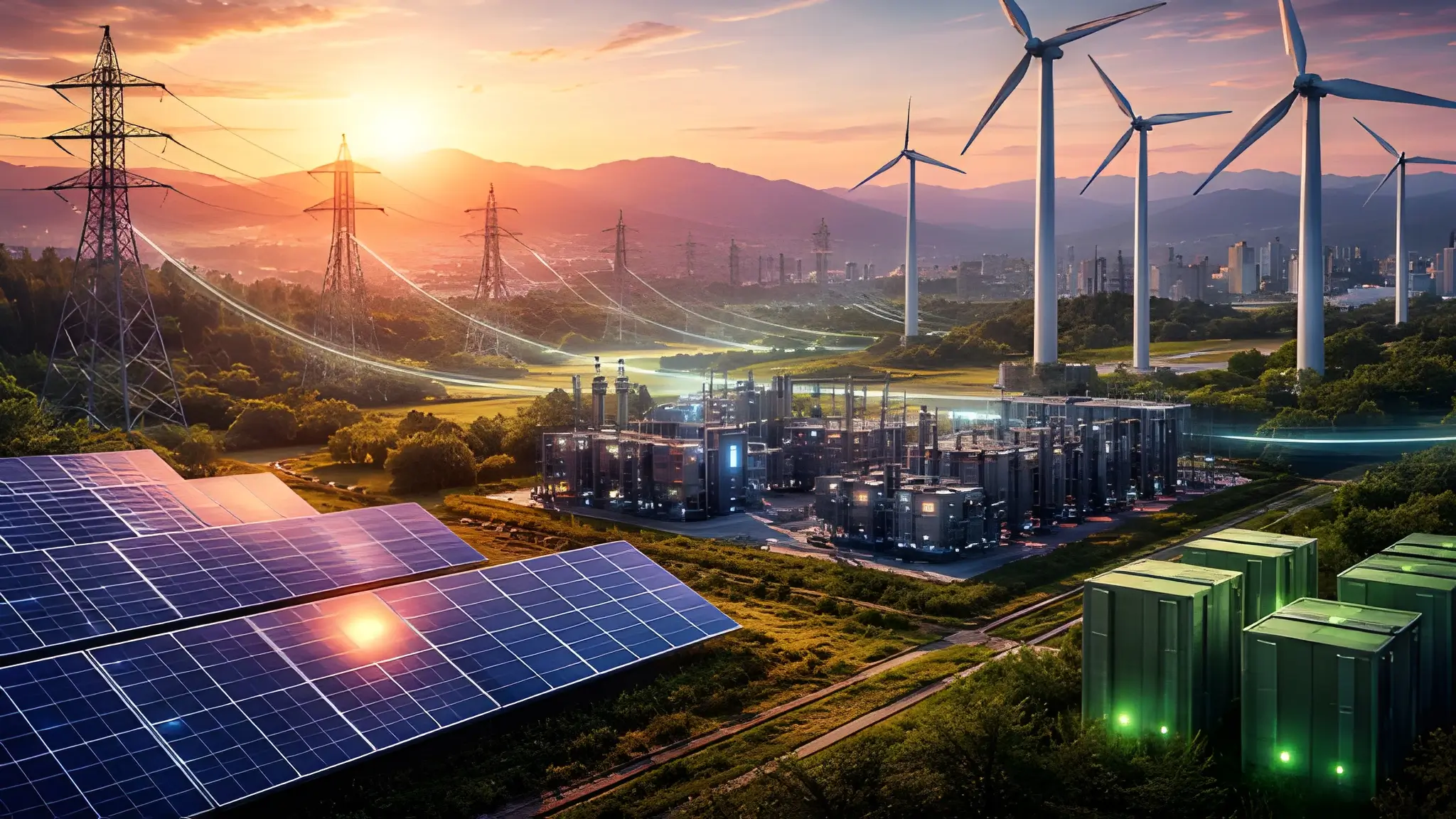
Electricity no longer struggles at the point of generation, yet it consistently encounters friction within the networks designed to deliver it. Renewable capacity continues to expand across geographies, but grid systems often fail to absorb or transmit that energy efficiently. Transmission corridors, substation configurations, and system control frameworks were originally built for centralized and predictable generation flows. Modern energy systems operate under entirely different conditions, where variability and decentralization dominate the operational landscape. This shift places the grid at the center of the transition, transforming it from a passive carrier into a critical constraint. Energy transition discussions now increasingly revolve around grid readiness rather than generation potential.
Grid readiness increasingly influences the pace of the energy transition, often acting as a key constraint alongside generation expansion and policy frameworks.Power infrastructure historically evolved around fossil-based generation hubs, which delivered stable and controllable output into linear transmission systems. Renewable energy introduces dispersed production patterns, which challenge the original design assumptions embedded within grid networks. Wind farms and solar parks inject power into nodes that often lack sufficient transmission capacity or flexibility. Grid operators must now manage multi-directional flows instead of predictable one-way delivery systems. This operational mismatch creates bottlenecks that limit how much renewable energy can actually reach consumers. Energy transition progress therefore hinges on grid transformation rather than generation expansion alone.
Structural Constraints Emerging Within Modern Grids
Grid limitations manifest not only in physical infrastructure gaps but also in system-level design rigidity that restricts operational flexibility. Control systems often lack the responsiveness required to manage rapid fluctuations in renewable output. Protection mechanisms and load balancing strategies reflect legacy assumptions that no longer align with present energy flows. Operators frequently encounter constraints that force them to limit renewable dispatch despite available generation capacity. These conditions reveal how deeply grid architecture influences the pace of energy transition. System modernization must therefore address both hardware limitations and control logic constraints simultaneously.
Transmission networks form the physical backbone that enables renewable energy to move from production sites to consumption centers. Renewable generation often occurs in geographically remote areas where resource availability is highest, such as deserts or offshore zones. These locations rarely coincide with urban demand clusters, creating a structural need for long-distance transmission infrastructure. Existing transmission lines in many regions struggle to accommodate the scale and direction of new energy flows introduced by renewable systems.Grid expansion therefore becomes essential to unlock the full potential of renewable deployment. Without this expansion, energy remains stranded at the point of generation.
Long-distance transmission requires not only new lines but also upgraded technologies capable of handling higher loads and variable conditions. High-voltage direct current systems increasingly play a role in enabling efficient transmission over extended distances. Grid planners must account for terrain, regulatory frameworks, and cross-border coordination while developing these networks. Transmission expansion projects often face delays due to permitting complexities and stakeholder alignment challenges. These delays directly impact renewable integration timelines and overall energy system performance. Infrastructure development must therefore align closely with renewable deployment strategies.
Reconfiguring Transmission for Future Energy Flows
Traditional transmission planning followed predictable demand growth patterns, which allowed incremental expansion over time. Renewable integration requires anticipatory planning that accounts for future generation patterns rather than current demand alone. Grid operators must design transmission corridors that accommodate fluctuating energy flows and evolving generation portfolios. This approach demands a shift from reactive infrastructure development to proactive system design. Planning frameworks must integrate long-term energy scenarios with infrastructure investment decisions. Transmission expansion therefore becomes both a technical and strategic challenge within the energy transition.
Substations act as critical nodes where voltage transformation, load balancing, and system control converge within the grid. Traditional substations were designed for stable input conditions and predictable load distribution patterns. Renewable energy introduces variability that requires substations to operate with greater flexibility and responsiveness. Bidirectional energy flows now occur frequently as distributed generation feeds power back into the grid. These dynamics demand new substation architectures capable of handling complex operational scenarios. Substations are increasingly evolving toward more dynamic control roles, although this transition remains uneven across different grid systems.
Modern substations incorporate digital monitoring systems that provide real-time visibility into grid conditions. Sensors, automation systems, and advanced control algorithms enable faster response to fluctuations in energy supply and demand. These capabilities allow substations to maintain stability even under variable renewable input conditions. Operators can adjust load distribution, voltage levels, and system configurations with greater precision. This transformation enhances overall grid reliability while supporting higher levels of renewable integration. Substation modernization thus becomes a foundational component of grid transformation.
Digital Substations and Intelligent Control Layers
Digital substations replace conventional analog systems with data-driven control frameworks that improve operational efficiency. Communication protocols enable seamless coordination between substations and central control systems. This connectivity allows grid operators to monitor system performance in real time and implement corrective actions quickly. Intelligent control layers support automated decision-making processes that reduce reliance on manual intervention. These advancements enhance system resilience and operational agility within modern energy networks. Substations therefore transition from passive infrastructure elements to active participants in grid management.
Large portions of existing grid infrastructure were built decades ago under fundamentally different energy system assumptions. These systems were optimized for centralized generation and predictable consumption patterns. Renewable integration introduces conditions that can challenge the design capabilities of aging infrastructure, requiring adaptation or targeted upgrades. Equipment degradation, limited capacity, and outdated control systems create vulnerabilities within the grid. These challenges necessitate comprehensive system renewal rather than incremental upgrades. Grid modernization must address both structural integrity and operational capability gaps.
Legacy infrastructure often lacks compatibility with modern digital technologies, which limits the effectiveness of system upgrades. Retrofitting existing systems can introduce complexity and operational risks if not executed carefully. Utilities must evaluate whether to upgrade or replace infrastructure based on long-term system requirements. This decision-making process involves technical, economic, and regulatory considerations. Infrastructure renewal must align with broader energy transition objectives to ensure cohesive system development. Aging grid systems therefore represent both a challenge and an opportunity for modernization.
Managing Variability: Grid Stability in a Renewable-Heavy System
Renewable energy introduces a level of variability that fundamentally reshapes how grid stability must be managed across interconnected systems. Solar and wind generation fluctuate based on environmental conditions, which creates rapid changes in supply that grids must continuously balance. Traditional systems relied on controllable generation sources that could adjust output in response to demand signals. Renewable-heavy grids require advanced balancing mechanisms that operate with higher speed and precision. Grid operators must anticipate fluctuations rather than simply react to them, which changes the nature of system control. Stability now depends on forecasting accuracy, flexible resources, and responsive infrastructure working in coordination.
Frequency regulation becomes more complex as variable generation replaces conventional synchronous machines within the grid. Traditional generators inherently provided inertia that stabilized frequency during sudden disturbances. Renewable systems lack this physical inertia, which introduces new risks for system stability under fluctuating conditions. Grid operators must deploy synthetic inertia solutions and advanced control systems to compensate for this gap. Energy storage systems and demand response mechanisms increasingly contribute to maintaining balance within the grid, although their deployment and effectiveness vary across regions.These technologies collectively enable grids to operate reliably despite the inherent variability of renewable energy sources.
Balancing Mechanisms in Dynamic Energy Systems
Balancing mechanisms evolve from centralized dispatch models toward distributed and automated control strategies within modern grids. Real-time data analytics allow operators to monitor system conditions with greater accuracy and responsiveness. Advanced forecasting tools improve the predictability of renewable generation, which supports proactive system management. Grid flexibility increases as storage systems and responsive loads participate in balancing operations. This distributed approach reduces reliance on traditional peaking power plants while maintaining system reliability. Stability management therefore shifts toward a coordinated ecosystem of technologies rather than a single control mechanism.
Grid congestion emerges when transmission capacity cannot accommodate the volume of electricity flowing through the network. Renewable energy projects often generate power in regions where transmission infrastructure remains underdeveloped or constrained. This mismatch creates situations where available renewable energy cannot be delivered to demand centers. Operators must then curtail generation to prevent overloading the grid, which results in unused clean energy. Curtailment often reflects infrastructure limitations, though it can also arise from market structures and operational constraints within the grid. Addressing congestion requires both physical expansion and operational optimization within the grid.
Congestion patterns vary across regions and often depend on network topology and demand distribution. Certain transmission corridors experience frequent bottlenecks due to concentrated renewable generation. Grid operators implement congestion management strategies that include re-dispatching power flows and adjusting generation schedules. These measures provide temporary relief but do not resolve underlying capacity constraints. Long-term solutions require investment in transmission expansion and grid modernization. Curtailment therefore signals the urgent need for structural improvements within the grid network.
Operational and Structural Responses to Congestion
Operational responses focus on optimizing existing infrastructure to manage congestion more effectively. Grid operators use advanced algorithms to reroute electricity flows and minimize bottlenecks within the network. These strategies improve efficiency but remain limited by physical infrastructure constraints. Structural responses involve expanding transmission capacity and upgrading network components to handle increased load. Both approaches must work in tandem to address congestion comprehensively. Grid modernization therefore requires a combination of immediate operational improvements and long-term infrastructure investment.
Interconnection processes determine how new energy projects connect to the existing grid infrastructure. These processes involve technical assessments, regulatory approvals, and infrastructure upgrades that ensure system compatibility. Delays often occur due to limited grid capacity, complex permitting requirements, and coordination challenges among stakeholders. Renewable projects frequently face extended waiting periods before they can deliver electricity to the grid. These delays increase project costs and slow the pace of energy transition. Efficient interconnection systems therefore play a critical role in enabling timely deployment of renewable energy.
Grid operators must evaluate the impact of new connections on system stability and infrastructure capacity. This evaluation process becomes more complex as the volume of renewable projects increases. Queue management systems often struggle to handle the growing number of interconnection requests. Projects may require network upgrades that add further delays and costs. Streamlining interconnection procedures requires both regulatory reform and infrastructure expansion. Addressing these challenges can help accelerate renewable deployment timelines, although outcomes depend on regulatory frameworks and implementation efficiency.
Reforming Interconnection Frameworks for Speed and Efficiency
Reforming interconnection frameworks involves simplifying processes while maintaining system reliability and safety standards. Standardized procedures can reduce administrative complexity and improve coordination among stakeholders. Digital tools enable faster data analysis and decision-making within interconnection assessments. Grid operators can prioritize projects based on readiness and system impact to improve efficiency. These reforms support a more dynamic and responsive grid connection process. Interconnection modernization therefore complements broader grid transformation efforts.
Digitalization transforms the grid from a static infrastructure into an adaptive and intelligent system capable of real-time decision-making. Sensors, communication networks, and data analytics provide continuous visibility into grid operations. This visibility enables operators to detect anomalies, predict failures, and optimize system performance. Digital systems enhance coordination between different components of the grid, improving overall efficiency. Automation reduces response times and minimizes the need for manual intervention. These advancements support the integration of renewable energy and distributed resources.
Smart grid technologies play a central role in enabling digital transformation within energy systems. Advanced metering infrastructure allows for detailed monitoring of energy consumption patterns. Distributed energy resources can communicate with grid operators and respond to system signals dynamically. This interaction creates a more flexible and responsive energy network. Digitalization also improves demand-side management by enabling real-time adjustments in consumption. The grid is gradually evolving into a more interactive system that can balance supply and demand more effectively, though this transformation remains in progress across many regions.
Data-Driven Operations and Predictive Grid Management
Data-driven operations rely on advanced analytics to optimize grid performance and anticipate system challenges. Predictive maintenance reduces equipment failures by identifying issues before they escalate. Machine learning algorithms enhance forecasting accuracy for renewable generation and demand patterns. These capabilities improve decision-making and operational efficiency across the grid. Data integration enables seamless coordination between different grid components and stakeholders. Digitalization therefore underpins the transition toward intelligent and resilient energy systems.
Modern grids must withstand increasingly complex challenges driven by climate variability and evolving demand patterns. Extreme weather events can disrupt transmission lines, substations, and distribution networks. Heatwaves, storms, and flooding introduce risks that traditional grid designs were not equipped to handle. Grid resilience requires infrastructure that can absorb shocks and recover quickly from disruptions. This capability ensures continuity of supply even under adverse conditions. Resilience therefore becomes a central objective within grid modernization efforts.
Demand patterns also shift as electrification expands across sectors such as transportation and industry. These changes introduce new load profiles that challenge existing grid capacity and operational strategies. Grid operators must adapt to fluctuating demand while maintaining system stability. Flexible infrastructure and advanced control systems support this adaptation process. Resilience strategies include redundancy, diversification, and enhanced monitoring capabilities. Modern grids increasingly integrate resilience into both design and operation, although full implementation remains uneven across global systems.
Designing Grids for Uncertainty and Extreme Conditions
Designing resilient grids involves anticipating a wide range of potential disruptions and incorporating safeguards into system architecture. Infrastructure must withstand environmental stress while maintaining operational integrity. Advanced materials and engineering practices improve the durability of grid components. Real-time monitoring systems enable rapid response to emerging threats. These measures collectively enhance the ability of grids to operate under uncertain conditions. Resilience thus becomes a defining characteristic of modern energy systems.
Distributed energy resources introduce a fundamental shift in how electricity flows through the grid. Rooftop solar systems, battery storage, and localized generation reduce reliance on centralized power plants. These resources inject energy directly into distribution networks, creating bidirectional power flows. Traditional grids were not designed to handle such decentralized interactions. Grid modernization must therefore accommodate this shift by enabling flexible and adaptive system operation. Distributed energy transforms consumers into active participants within the energy ecosystem.
Decentralization also enhances system resilience by reducing dependence on large centralized generation facilities. Localized energy production can continue to operate even if parts of the grid experience disruptions. Microgrids and community energy systems can provide additional layers of flexibility and reliability in specific contexts, particularly where localized energy management is feasible. These systems can operate independently or in coordination with the main grid. Integration of distributed energy requires advanced control systems and communication networks. The grid therefore evolves into a more complex but resilient structure.
Integrating Distributed Resources Into Grid Architecture
Integrating distributed resources requires new frameworks that coordinate generation, storage, and consumption across multiple nodes. Grid operators must manage a diverse set of assets with varying characteristics and operational behaviors. Advanced control systems enable seamless interaction between centralized and decentralized components. This coordination ensures efficient energy flow and system stability. Regulatory frameworks must also adapt to support decentralized energy models. Distributed integration therefore becomes a key element of grid modernization strategies.
Grid investment must align closely with broader energy transition goals to ensure cohesive system development. Renewable deployment targets often outpace infrastructure planning, creating mismatches within the energy system. Investment strategies must consider long-term demand growth, generation patterns, and technological advancements. Coordinated planning ensures that infrastructure supports future energy needs rather than reacting to current conditions. This alignment reduces inefficiencies and accelerates the transition toward sustainable energy systems. Grid modernization therefore requires integrated planning across multiple sectors.
Utilities and policymakers must collaborate to prioritize investments that deliver maximum system value. Funding mechanisms and regulatory frameworks play a critical role in enabling infrastructure development. Investment decisions must balance cost considerations with long-term system benefits. Strategic planning ensures that resources are allocated effectively across transmission, distribution, and digital systems. This approach can support a smoother and more efficient energy transition, depending on the effectiveness of coordination and policy implementation. Grid investment thus becomes a central driver of system transformation.
Coordinated Planning for Future Energy Systems
Coordinated planning integrates multiple dimensions of the energy system into a unified framework. This approach considers generation, transmission, distribution, and consumption as interconnected elements. Scenario analysis helps identify potential challenges and opportunities within the transition process. Stakeholder collaboration ensures alignment between different segments of the energy sector. Integrated planning supports efficient infrastructure development and system optimization. Grid modernization therefore depends on cohesive and forward-looking investment strategies.
Grid Modernization as the Foundation of the Energy Future
Grid modernization defines the trajectory of the energy transition by enabling systems to accommodate renewable integration and evolving demand patterns. Transmission networks, substations, and digital systems collectively shape how electricity flows across modern economies. Infrastructure upgrades address both physical constraints and operational challenges within the grid. These improvements unlock the full potential of renewable energy while enhancing system reliability and resilience. Modern grids must operate with flexibility, intelligence, and robustness to support future energy systems. Grid transformation therefore stands as the foundation upon which the energy transition progresses.
Energy systems continue to evolve as technological advancements and policy frameworks reshape how electricity is generated and consumed. Grid modernization ensures that infrastructure keeps pace with these changes, enabling efficient and reliable energy delivery. The transition toward sustainable energy is closely linked to the ability of grids to integrate diverse resources and manage complex interactions, alongside advancements in generation and policy support. Continuous innovation and investment drive the development of advanced grid systems. These systems support a resilient and adaptable energy future. Grid modernization ultimately underpins the success of the global energy transition.