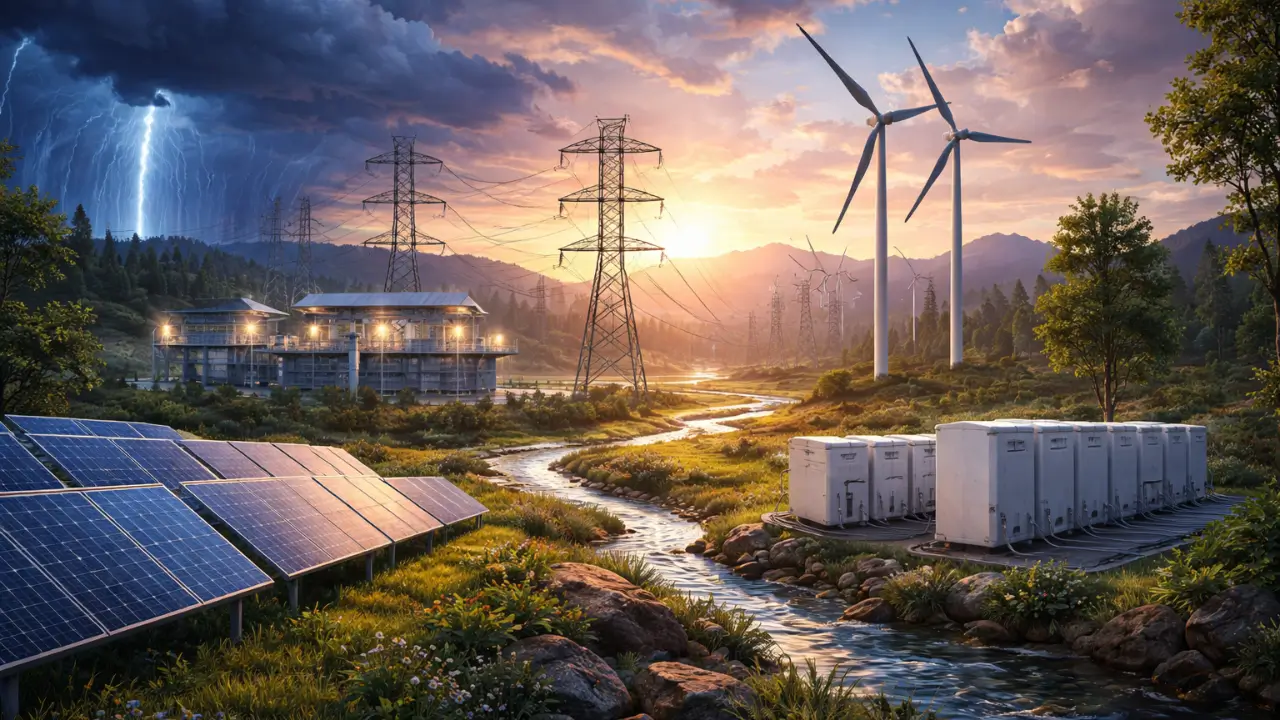
The era of climate volatility has exposed the vulnerability of energy infrastructure once designed primarily for efficiency and cost optimization; power systems built on assumptions of predictable weather and stable operational conditions now confront an environment of extreme weather events, unpredictable load patterns, and systemic stress that demand a complete rethinking of grid architecture in favour of resilience-oriented designs that can absorb shocks and sustain continuous operations.
From Efficiency to Endurance
Grid architectures across the world were historically engineered to maximize economic efficiency, reducing redundancy and capital expenditure while maintaining reliability under predictable operating conditions; this traditional paradigm assumed stable weather patterns, linear demand growth, and centralized generation feeding passive distribution networks.That model, however, is being tested by an increase in climate-related stressors that introduce non-linear and rapidly shifting demands on infrastructure, forcing planners and engineers to question whether a narrow focus on efficiency inadvertently amplifies vulnerability to disruptions.
The transition from cost-optimized systems to resilience-oriented frameworks requires reworking grid planning methodologies so that endurance and adaptability are prioritized alongside throughput and efficiency metrics; this evolution acknowledges that the cost of outage and infrastructure failure under climate extremes now outweighs traditional cost savings associated with lean designs.In practical terms, resilience-oriented grid design incorporates redundancy, modularity, and capacity to withstand and quickly recover from events such as heatwaves, flooding, and windstorms that previously lay outside design assumptions; resilience becomes a core performance attribute not only during normal conditions but also under stress.
This shift also entails embracing adaptive operational paradigms where real-time data and predictive modelling influence dispatch decisions, maintenance cycles, and network reconfiguration, ensuring the physical system’s endurance matches the volatility of the environmental forces acting upon it. Engineers increasingly measure grid success not by minimal expenditure and maximum utilization alone but by system performance during and following disruptive climate events, allowing infrastructure to endure without significant service interruptions.
Climate Volatility as a Structural Design Challenge
Legacy grid assumptions rest on historical weather patterns and statistical norms that no longer accurately represent the conditions grids now face, compelling designers to revise the foundational models that guide infrastructure development. Shifting frequency and intensity of weather extremes from prolonged heatwaves to intense rainfall events impose stresses that exceed the load and operational conditions grids were historically sized to handle, prompting failures in generation, transmission, and distribution components alike.Design assumptions embedded in legacy grid infrastructure, such as static conductor ratings and fixed environmental load parameters, fail to account for rapid changes in ambient temperature, water levels, and wind load dynamics, highlighting a pressing need to integrate dynamic environmental variables into planning processes.
This design challenge extends to generation assets as well; for example, thermal power plants experience derating and operational constraints when cooling water temperatures rise, reducing output during peak demand periods exactly when reliability matters most, underscoring the interdependence between climate trends and infrastructure design.Furthermore, sea-level rise and increasing frequency of storm surges force reevaluation of coastal substation siting, equipment elevation standards, and floodproofing measures to prevent catastrophic water ingress that can cripple network control centres and transmission hubs.Redesigning grid infrastructure now requires referencing climate projections and multi-decadal models rather than relying solely on historical operational data, a shift that moves architecture planning from retrospective assumptions to forward-looking resilience engineering.
Hardening the Physical Layer
Physical hardening of grid infrastructure involves enhancing the robustness of primary assets such as transmission towers, substations, cables, and poles so that they can withstand forces beyond previous design thresholds, reducing the likelihood of failure under extreme weather conditions.One approach includes using stronger materials and engineering reinforcements that resist wind loads and thermal stress, ensuring conductors and structural supports maintain integrity under duress, thereby reducing outage incidence and repair time following severe events. Undergrounding key transmission and distribution lines, although resource-intensive, eliminates exposure to surface-level hazards such as falling trees and high winds, significantly enhancing continuity of service where overhead lines would otherwise be damaged.
Adaptive substations equipped with elevated platforms, flood barriers, and reinforced housings protect critical switching and control equipment from inundation, ensuring grid control remains functional even during extreme precipitation and flood events that would incapacitate traditional low-lying installations. Reinforcing transmission corridors involves not only physical strengthening but also vegetation management, spatial planning to minimize exposure to high-risk zones, and incorporation of design redundancies such as parallel circuits that can carry load if one segment fails, thereby maintaining stability across the network. Comprehensive hardening integrates data-driven risk assessment, climate modelling, and proactive maintenance schedules that collectively optimise the allocation of reinforcement resources where they will have the highest impact on reducing vulnerability.
Decentralization as a Resilience Strategy
Centralized grid architectures concentrate generation capacity in large plants and transmit power across extensive distances, which inherently creates systemic vulnerability because disruption at a single node can cascade through the network and amplify instability across regions. Decentralized energy systems reduce this concentration risk by distributing generation closer to load centres through rooftop solar arrays, small wind installations, community-scale renewables, and flexible gas-fired assets that diversify supply sources within localized zones. Distributed generation enhances resilience by reducing dependence on long transmission corridors that are exposed to wind, wildfire, flooding, and heat stress, thereby lowering the probability that a single environmental event will sever access to electricity for large populations.
Localized energy ecosystems also enable faster restoration following disruptions because operators can isolate affected sections without shutting down entire regions, preserving service continuity in unaffected neighbourhoods and critical facilities.Grid modernization strategies increasingly incorporate advanced distribution management systems that coordinate distributed energy resources in real time, allowing decentralized assets to function cohesively rather than as fragmented, independent units.This strategic shift from centralized dominance toward hybrid and decentralized configurations strengthens structural resilience by embedding redundancy and flexibility directly into the architecture of energy delivery systems.
Microgrids and Islanding Capabilities
Microgrids represent autonomous energy networks capable of operating independently from the main grid, providing localized continuity of power supply during broader system failures triggered by extreme weather or infrastructure damage.Islanding capability allows a microgrid to disconnect seamlessly from the larger transmission network when disturbances occur, thereby shielding critical loads such as hospitals, emergency response centres, and data facilities from cascading outages.Engineered with integrated control systems, microgrids balance generation and load internally through automated dispatch algorithms that stabilize voltage and frequency even when the primary grid collapses under stress.
Communities exposed to recurring climate disruptions increasingly deploy microgrids around campuses, industrial parks, and residential developments to maintain essential services when storms or heatwaves disrupt central infrastructure. Designing microgrids requires careful coordination of generation diversity, storage integration, and protection schemes so that transitions between grid-connected and islanded modes occur without destabilizing equipment or endangering operators. These localized autonomous segments transform resilience from a reactive restoration process into a proactive design feature that preserves operational continuity during climate-induced instability.
Storage as a Stability Anchor
Energy storage systems function as temporal buffers within modern grids, absorbing excess generation during favourable conditions and releasing stored electricity when supply declines or demand spikes under extreme environmental stress.Grid-scale battery installations stabilize frequency and voltage by responding within milliseconds to fluctuations, thereby counteracting variability introduced by renewable generation and climate-related demand shifts.
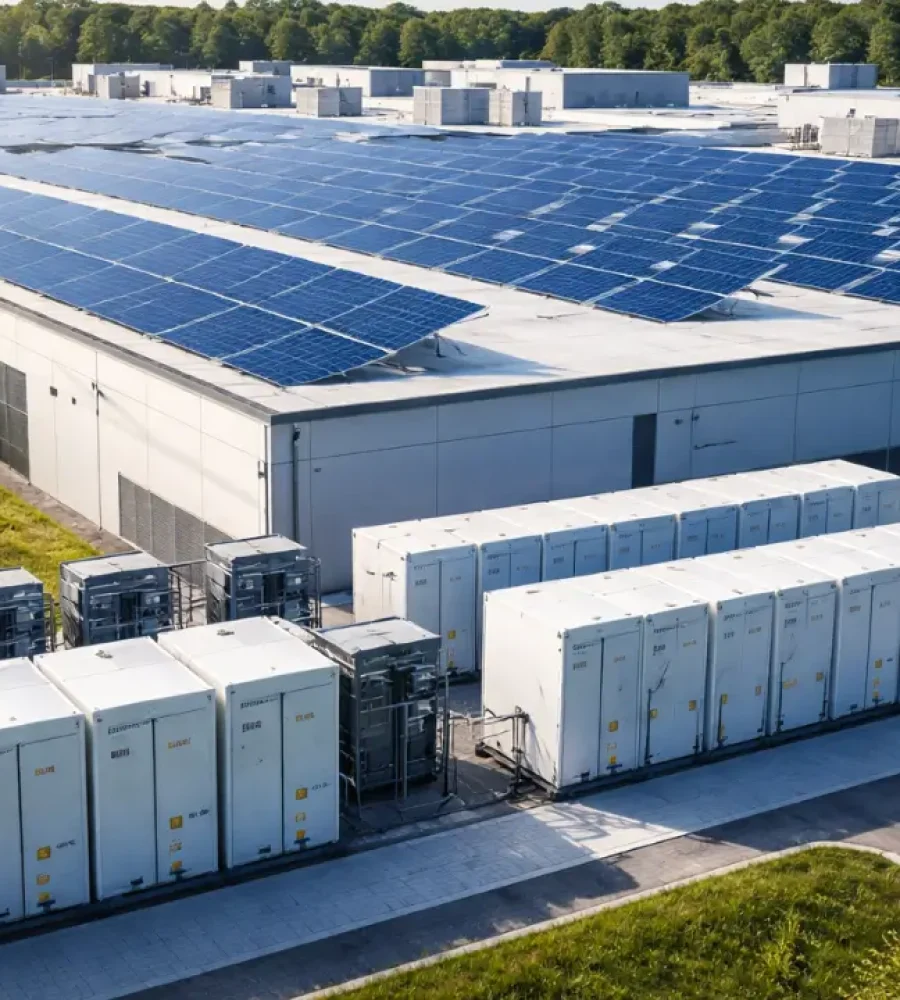
Storage also enhances resilience during outages by supplying power to critical infrastructure and enabling microgrids to sustain island operation for extended durations without reliance on fuel deliveries that may be disrupted by extreme weather.Thermal storage and pumped hydro systems contribute to stability by providing dispatchable capacity that mitigates prolonged heatwaves or drought conditions that constrain generation output from conventional plants. Integrating storage within transmission and distribution networks allows operators to strategically deploy capacity in high-risk zones where infrastructure faces recurring stress, thus reducing strain on vulnerable lines and substations. Storage anchors grid resilience by smoothing volatility, absorbing shocks, and sustaining continuity when environmental forces disrupt conventional supply patterns.
Climate volatility compels engineers to align grid infrastructure with environmental realities rather than resisting them through rigid and isolated design approaches that ignore natural systems.Nature-integrated infrastructure incorporates green buffers, elevated installations, and ecological restoration strategies that reduce exposure to flooding, erosion, and storm surge without relying solely on engineered barriers.Transmission corridors increasingly integrate landscape planning and vegetation management techniques that minimize wildfire risk while preserving ecosystem integrity, balancing operational safety with environmental stewardship.
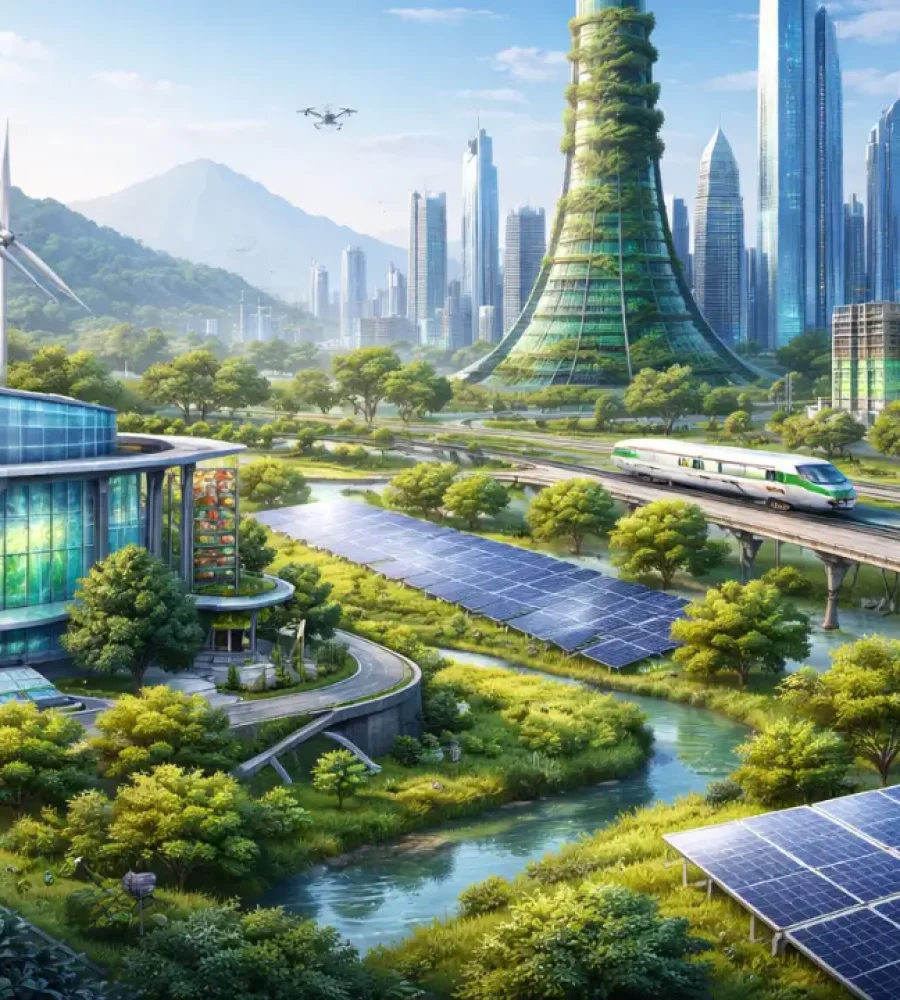
Substation design now considers watershed dynamics and soil stability to ensure long-term structural durability under changing precipitation patterns and temperature fluctuations.Urban grid planning incorporates permeable surfaces and distributed generation installations that coexist with green infrastructure, reducing runoff and thermal stress in dense metropolitan environments.This integration reframes resilience as a cooperative relationship between built systems and ecological processes, fostering adaptive networks capable of enduring evolving climate conditions.
Digital Foresight and Predictive Adaptation
Digitalization now forms the analytical backbone of resilient grid systems, enabling operators to anticipate environmental stress through high-resolution data streams and predictive models that assess risk before physical failure occurs.Advanced sensors embedded across transmission and distribution networks continuously monitor temperature, load, vibration, and environmental exposure, generating operational intelligence that allows pre-emptive interventions when thresholds approach unsafe levels.
Machine learning models process historical outage patterns alongside climate projections to identify infrastructure segments with heightened vulnerability, allowing utilities to prioritize reinforcement and maintenance activities in a forward-looking manner.Dynamic line rating technologies adjust transmission capacity in real time according to ambient conditions, replacing static assumptions with adaptive controls that reduce the risk of overheating during heatwaves or high-load intervals.Predictive maintenance frameworks leverage anomaly detection algorithms to flag irregular equipment behaviour long before catastrophic breakdown occurs, shortening recovery times and preventing cascading disruptions across interconnected assets.Digital foresight therefore transforms resilience from a reactive repair process into a continuous cycle of anticipation, monitoring, and adaptation that aligns operational intelligence with climate uncertainty.
Cyber-Physical Resilience
Modern grids operate as tightly integrated cyber-physical systems where digital control platforms govern physical infrastructure, meaning climate stress and cyber vulnerability now intersect in ways that amplify systemic risk.Extreme weather events can disrupt communication networks, data centres, and control systems that coordinate grid operations, weakening visibility and situational awareness precisely when operators require accurate information to stabilize the system.Simultaneously, heightened digital connectivity expands the attack surface for malicious actors who may exploit periods of climate-induced instability to compromise grid control systems and intensify operational chaos.
Integrated resilience planning therefore demands synchronized protection strategies that reinforce both substations and supervisory control systems, ensuring physical hardening and cybersecurity protocols evolve in tandem.Secure architecture design includes network segmentation, redundant communication pathways, and continuous monitoring of control platforms to maintain operational continuity even when one component fails under stress.Cyber-physical resilience acknowledges that safeguarding energy infrastructure requires unified defense mechanisms across mechanical, electrical, and digital layers rather than isolated protective measures.
Supply Chain Resilience in a Disrupted World
Climate volatility exposes vulnerabilities not only within grid infrastructure but also across global supply chains that deliver transformers, conductors, control systems, and replacement components. Extreme weather events disrupt manufacturing facilities and transportation networks, delaying delivery of essential equipment required for both planned upgrades and emergency restoration efforts.Utilities increasingly assess supply chain concentration risks and diversify sourcing strategies to reduce dependency on single manufacturing hubs or cross-border logistics routes vulnerable to disruption.Strategic stockpiling of critical components and modular design approaches shorten recovery timelines by enabling rapid replacement without complex customization or long lead times.
Regional manufacturing initiatives strengthen resilience by reducing transportation exposure and ensuring closer proximity between suppliers and grid operators.Resilient supply chains therefore form an essential extension of physical grid design, ensuring infrastructure adaptation remains feasible even under sustained climate stress.
Workforce and Operational Agility
Resilient grid architecture depends not only on hardware and software but also on a skilled workforce capable of rapid response under evolving environmental conditions. Utilities increasingly invest in cross-training programs that equip personnel with multidisciplinary expertise spanning digital systems, field operations, and emergency management.Decentralized decision-making structures empower regional teams to respond swiftly to localized disruptions without waiting for centralized authorization during critical moments. Scenario-based simulation exercises prepare operators for compound events such as simultaneous heatwaves and transmission faults, strengthening readiness through experiential learning rather than theoretical planning alone. Remote monitoring tools allow specialists to support field crews during hazardous conditions, reducing exposure risk while maintaining technical oversight. Operational agility therefore transforms resilience into a living capability embedded within human expertise and organizational design rather than remaining confined to infrastructure assets.
Regulatory frameworks historically emphasized reliability standards and cost containment, yet climate volatility compels policymakers to prioritize proactive resilience investments within grid planning mandates.Forward-looking regulations increasingly require utilities to integrate climate risk assessments into infrastructure planning, aligning capital allocation decisions with projected environmental stressors.Performance-based ratemaking structures incentivize resilience outcomes by linking revenue models to system robustness rather than solely to asset expansion or energy sales volume.
Planning standards now encourage incorporation of distributed resources, storage systems, and microgrids within integrated resource plans to strengthen regional reliability under uncertainty. Regulatory adaptation also facilitates cost recovery for undergrounding, hardening, and digital modernization projects that enhance durability against extreme weather. Policy evolution therefore underpins the architectural transformation of grids by aligning financial incentives with resilience objectives rather than short-term efficiency alone.
Community-Centered Grid Design
Resilient grid planning increasingly recognizes communities as active stakeholders rather than passive recipients of electricity, integrating local priorities into infrastructure design decisions. Public participation processes inform siting of distributed generation, storage installations, and transmission upgrades to ensure equitable distribution of resilience benefits across vulnerable populations.
Critical community facilities such as healthcare centres, water treatment plants, and emergency shelters receive prioritized resilience planning to maintain essential services during climate disruptions. Localized resilience hubs equipped with backup generation and storage strengthen neighbourhood preparedness while fostering trust between utilities and residents. Equity considerations guide infrastructure investment to prevent disproportionate exposure of marginalized communities to outage risk or delayed restoration timelines. Community-centered design embeds social stability within technical architecture, ensuring resilience strengthens both physical networks and societal cohesion.
Designing Grids for an Uncertain Climate Future
Grid resilience in the age of climate volatility now defines the central engineering narrative of modern power systems, as environmental unpredictability reshapes the principles that govern infrastructure design, operational philosophy, and long-term planning. Traditional optimization models that prioritized efficiency and asset utilization no longer provide sufficient assurance of continuity when heatwaves, floods, storms, and wildfire conditions introduce stress patterns that exceed historical baselines embedded within legacy architecture.
Resilience therefore emerges as a structural doctrine that integrates physical hardening, decentralization, storage, digital foresight, cybersecurity integration, supply chain diversification, workforce agility, regulatory alignment, and community engagement into a unified architectural framework. Modern grid planning now relies on forward-looking climate projections and adaptive design principles rather than retrospective data alone, ensuring infrastructure evolves in parallel with environmental shifts rather than reacting to failures after they occur.
Adaptive, modular network configurations enable systems to isolate disturbances, maintain localized service, and recover rapidly without widespread cascading failure that would previously have paralyzed entire regions.Resilient grids thus operate as dynamic ecosystems capable of absorbing environmental shocks, redistributing load intelligently, and sustaining societal continuity amid climate volatility.Infrastructure modernization must now treat uncertainty as a design parameter rather than an external anomaly, embedding flexibility within generation, transmission, and distribution layers to accommodate environmental variability.
Engineering Architecture for Climate Uncertainty
Engineering standards increasingly incorporate adaptive material specifications, elevated siting strategies, and environmental integration techniques that ensure long-term durability under evolving climate stressors.Digital monitoring platforms synchronize with physical reinforcements to create feedback loops that detect emerging vulnerabilities and initiate corrective measures before service degradation occurs.Energy storage and distributed resources reinforce system elasticity by buffering volatility and decentralizing risk exposure across numerous nodes rather than concentrating dependency in singular assets.Policy reform and regulatory modernization support this transformation by enabling proactive investment and aligning financial incentives with climate-aware resilience objectives.
Communities now play a decisive role in shaping resilient infrastructure, ensuring grid evolution reflects social priorities and equitable distribution of protection against climate-driven disruptions.Future grid architecture will continue evolving as climate science refines projections and technological innovation expands the toolkit available to engineers and planners navigating environmental volatility.
Institutional and Operational Continuity Under Stress
Resilience planning therefore requires iterative reassessment rather than static compliance, fostering continuous adaptation across hardware, software, governance structures, and human expertise.Integrated cyber-physical safeguards will remain essential as digitalization deepens, ensuring operational stability even when environmental stress intersects with technological complexity.Supply chain robustness and workforce preparedness must advance concurrently with technical upgrades to guarantee that adaptation strategies remain executable during periods of systemic disruption.
Nature-integrated design philosophies will likely expand as infrastructure planners recognize the protective value of ecological alignment alongside engineered defenses. The grid of the future will therefore embody adaptability, modularity, intelligence, and environmental awareness as core structural attributes rather than optional enhancements. Resilient systems will not eliminate climate volatility, yet they will mitigate its destabilizing effects through anticipatory architecture and coordinated operational strategies.
Designing grids for an uncertain climate future ultimately demands a comprehensive transformation that reframes reliability as endurance, efficiency as adaptability, and infrastructure as a living network capable of sustained stability under persistent environmental change.