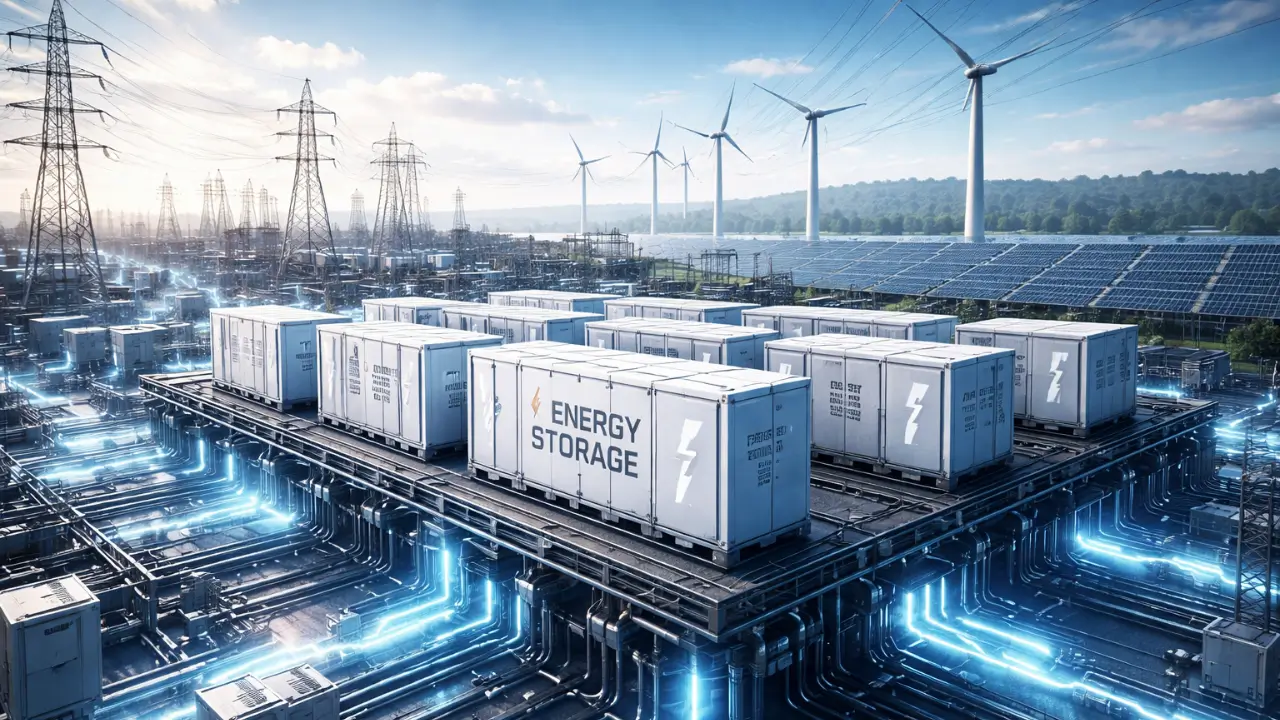
The modern power grid is undergoing transformation at a pace that was once considered radical only in theory, where the variability of renewable generation now challenges legacy systems built on centralized dispatch logic and predictable fuel-based generation. In this landscape, grid-scale energy storage no longer functions as an auxiliary buffer; it has begun to assume a structural role that shapes how electricity is produced, managed, and delivered across interconnected networks. By embedding extensive storage assets into the core architecture of the grid, system operators are reimagining the operational hierarchy, enhancing real-time balancing capabilities, and forging a more resilient bridge between the intermittent nature of renewables and the continuous demands of consumers. This redefinition of storage elevates it from a contingency tool to an essential backbone of grid reliability and flexibility.
Rethinking the Role of Storage
Grid-scale energy storage has made a deliberate shift from being perceived as a tactical remedy for rare system imbalances to a strategic resource embedded within core power system operations. Early storage systems were primarily employed to provide reserve capacity or act as a backup during contingencies, but they lacked a mandate within central dispatch and control frameworks. Today, they form an integral part of how utilities manage energy flows and maintain system stability in environments with high renewable penetration. Instead of reacting to imbalances after they occur, modern storage assets participate continuously in frequency regulation, reserve provision, and energy shifting services that were once the sole province of gas peaker plants or spinning reserve capacity. This role expansion reflects a broader industry acknowledgment that storage provides essential flexibility where traditional generation cannot.
Despite the conceptual acceptance of storage’s value, its framing as an enabler of system reliability rather than a marginal option has only recently accelerated due to technological innovation and cost reductions in electrochemical and mechanical storage technologies, including advanced batteries, pumped hydro, and compressed air energy storage. These systems now offer rapid dispatch capabilities, longer operational lifespans, and multiple grid services that intersect with frequency support, voltage control, and ancillary grid stability functions. As a result, storage is increasingly treated as a primary planning resource that directly influences portfolio design and transmission planning processes. Rather than waiting for periods of system stress, planners now account for storage in grid forecasts, capacity adequacy studies, and renewable integration roadmaps, solidifying its status as a core structural asset.
Energy storage has also begun to redefine contract structures and market participation models within wholesale and ancillary services markets, allowing storage assets to compete on equal footing with generation and demand response resources. This competitive integration has meant storage can provide multiple revenue streams not just energy arbitrage translating into a paradigm where storage is evaluated for system value rather than incremental reserve contribution alone. As the grid evolves, this rethinking underscores the shift toward prioritizing flexibility and responsiveness as central system characteristics.
Because grid-scale storage now contributes to both operational and planning horizons, utilities and grid operators can leverage these resources to defer investments in more costly transmission and generation infrastructure, replacing what were long-term capital expenditures with dynamic operational capabilities. This strategic shift further positions storage as more than a marginal luxury; it becomes a structural pillar in navigating a complex, decarbonizing grid landscape.
As storage assets scale and diversify, they are reshaping the expectations of system performance, enabling grid operators to respond faster to disturbances and maintain energy balance with precision that surpasses many conventional generators. In this transformed role, storage is no longer a secondary consideration but a foundational element that enables reliable operation under conditions that legacy designs were not built to address.
Stabilizing Renewable Integration
Renewable energy sources such as solar photovoltaic (PV) and wind have outpaced traditional resources in growth but present unique operational challenges for grid stability due to their variability and dependence on weather patterns. Because these sources can generate electricity only when environmental conditions permit, maintaining a stable balance between generation and demand requires systems that can absorb excess generation and release it when production wanes. Grid-scale storage fills this stabilizing role effectively, capturing surplus power during periods of high renewable output and discharging it during lulls, thus smoothing hourly and sub-hourly fluctuations that would otherwise stress system operations.
By providing this smoothing function, storage directly supports the grid’s ability to integrate higher levels of renewables without increasing reserve requirements or reliance on fossil fuel generation. Rather than allowing renewable outputs to be curtailed when generation exceeds demand, operators can store excess energy and use it strategically to meet needs later in real time. This capability is particularly valuable during times when renewable output declines suddenly due to changes in wind speeds or cloud cover, mitigating steep supply changes that can disrupt frequency and voltage levels.
In addition to smoothing variability, storage also provides essential frequency regulation services that help maintain grid stability. Advanced storage systems can respond within milliseconds to changes in grid frequency, supplying or absorbing power as needed to keep frequency deviations within acceptable bounds. This rapid response is critical because unmanaged frequency excursions can lead to equipment damage or widespread outages. Traditional generators provide inertia and governor response, but as thermal units retire or operate less frequently due to renewable uptake, storage assumes an increasingly critical role in ensuring frequency stability.
The importance of storage in stabilizing renewable integration also extends to voltage support and reserve capacity. During periods of high renewable penetration, maintaining voltage levels within technical limits becomes complex as power flows fluctuate across transmission networks. Energy storage systems can inject or absorb reactive power to support voltage regulation, contributing a level of control that complements other grid technologies. Their ability to rapidly shift between charging and discharging states enables a dynamic response that enhances the overall flexibility of the system.
From Flexibility to Grid Intelligence
Grid-scale storage does more than balance supply and demand; it introduces an intelligence layer that transforms static dispatch schedules into adaptive operational strategies driven by data and predictive modeling. Operators increasingly integrate storage management systems with advanced forecasting tools that anticipate renewable output and load patterns, enabling proactive rather than reactive balancing. This integration allows storage assets to charge and discharge in alignment with projected grid conditions, reducing volatility and enhancing reliability across interconnected networks. Such orchestration reflects a structural evolution in grid management, where energy flows respond to anticipated conditions rather than lagging behind them.
Modern storage installations interface with supervisory control and data acquisition platforms and advanced distribution management systems, creating a continuous feedback loop between generation assets, transmission infrastructure, and demand centers. These digital linkages empower operators to optimize dispatch intervals with higher granularity and to respond to disturbances within seconds rather than minutes. Storage therefore becomes a node of active decision-making rather than a passive reservoir of capacity. As predictive algorithms refine load and generation forecasts, storage assets execute control commands with precision that traditional mechanical systems struggle to match.
Artificial intelligence and machine learning models further elevate storage into an intelligent grid participant by analyzing historical patterns and real-time telemetry to forecast imbalances before they manifest physically. These models evaluate temperature variations, renewable generation curves, and consumption trends to orchestrate dispatch sequences that maintain equilibrium. Because storage systems respond electronically rather than thermally, they provide near-instantaneous corrections that reinforce grid stability. Intelligent coordination reduces stress on transmission assets and mitigates the risk of cascading failures during sudden load shifts.
Digital Control Architectures
Digital control architectures anchor this transformation by integrating sensors, distributed controllers, and cloud-based analytics platforms into unified operational ecosystems. Engineers design these systems to monitor voltage, frequency, and state-of-charge metrics continuously while adjusting operational parameters dynamically. Through high-speed communication networks, storage fleets act collectively rather than individually, providing coordinated responses across regional grids. This architecture converts dispersed storage assets into a cohesive operational backbone capable of shaping system behavior in real time.
Intelligent dispatch reshapes the very philosophy of power system management, replacing rigid generation hierarchies with responsive energy orchestration that treats storage as an equal participant alongside generation and demand response. Grid operators now deploy storage strategically to absorb midday solar surpluses, to supply evening peaks, and to buffer unexpected fluctuations. Through algorithmic coordination, storage transitions seamlessly between grid services without compromising reliability. Such responsiveness establishes a foundation for grids that adapt continuously to renewable variability and evolving consumption patterns.
Redefining Grid Hierarchies
Traditional grid architecture followed a centralized model in which large generation facilities transmitted electricity downward through hierarchical transmission and distribution networks. Renewable proliferation and distributed energy resources challenge this structure by introducing generation at multiple nodes across the grid. Storage accelerates this structural transformation by enabling energy to move bidirectionally and temporally rather than solely geographically. Instead of relying exclusively on central dispatch, localized storage supports regional balancing and reduces congestion within transmission corridors.
By embedding storage within distribution networks and substations, operators can alleviate localized stress without transmitting power across long distances. This capability enhances grid efficiency and decreases vulnerability to bottlenecks that once constrained renewable integration. Localized balancing also supports microgrids and community energy systems, empowering nodes within the grid to operate semi-independently during disturbances. Storage therefore reconfigures the power system from a top-down hierarchy into a more distributed and resilient mesh.
Microgrids equipped with storage demonstrate how hierarchical boundaries dissolve under modern grid logic. These systems can isolate from the main grid during disruptions while maintaining stable internal operation through stored energy reserves. When grid conditions normalize, they reconnect and resume coordinated participation in regional markets. Such flexibility transforms storage into a structural pivot that supports both centralized coordination and localized autonomy.
Distributed Control Nodes
Distributed control nodes redefine authority within the power system by shifting balancing capabilities closer to consumption centers. Engineers integrate storage into substations, commercial complexes, and renewable plants, allowing each node to manage fluctuations autonomously. This decentralization reduces reliance on large spinning reserves and enhances operational agility. The grid thus evolves into a network of intelligent nodes interconnected by digital communication and supported structurally by storage assets.
Storage’s presence within these nodes also influences transmission planning and system expansion strategies. Planners can defer or redesign infrastructure investments because localized storage mitigates peak congestion and voltage deviations. Consequently, storage shapes not only daily operations but also long-term grid topology. Through this influence, storage cements its role as a structural backbone rather than an auxiliary appendage.
Enabling Peak Shaving and Load Shifting
Peak demand periods have historically required utilities to activate fossil-fuel peaker plants that operate infrequently yet incur high operational and environmental costs. Grid-scale storage offers an alternative by storing energy during off-peak hours and releasing it during peak intervals, effectively flattening demand curves. This temporal shift optimizes asset utilization across the grid and reduces strain on generation and transmission infrastructure. By smoothing load cycles, storage supports stable pricing structures and operational efficiency without relying on additional combustion-based resources.
Load shifting also aligns renewable production with consumption patterns that often diverge geographically and temporally. Solar generation typically peaks during midday, while residential demand surges during evening hours. Storage bridges this gap by capturing excess daytime generation and deploying it when sunlight fades. Through this function, storage strengthens renewable viability and mitigates curtailment risks that undermine investment returns and system stability.
The ability to shave peaks extends beyond daily cycles into seasonal balancing strategies, particularly in regions where heating or cooling demands fluctuate significantly. Long-duration storage technologies support broader temporal shifting, allowing grids to navigate extended imbalances without resorting to emergency generation. This flexibility enhances reliability and strengthens planning frameworks that accommodate diverse renewable portfolios.
Operational Optimization
Operational optimization emerges as a direct consequence of storage-enabled load management. Dispatch algorithms incorporate state-of-charge data and forecasted demand curves to determine optimal charge and discharge windows. These strategies minimize system stress and extend equipment lifespan by reducing abrupt ramping requirements. Through coordinated scheduling, storage sustains equilibrium across varying demand cycles while preserving grid integrity.
Energy markets increasingly recognize the value of peak shaving and load shifting services, allowing storage to participate in capacity and ancillary service mechanisms. Market structures evolve to reflect the multidimensional contributions of storage, including ramping support and congestion mitigation. This integration reinforces the concept of storage as a central operational resource embedded within grid economics.
The Storage-Grid Feedback Loop
Energy storage now operates within a tightly coupled ecosystem of sensors, automation layers, and digital control systems that collectively form a responsive feedback loop across the grid. Advanced metering infrastructure, phasor measurement units, and distributed sensors continuously transmit granular data on voltage, frequency, and load behavior. Control platforms interpret this data and issue dispatch commands to storage assets within seconds, ensuring that deviations never escalate into systemic disturbances. This rapid exchange of information and action transforms storage into an active stabilizer embedded within grid reflex mechanisms. The grid therefore behaves less like a rigid mechanical network and more like a cyber-physical organism capable of self-regulation.
Artificial intelligence strengthens this feedback loop by correlating operational telemetry with weather forecasts, consumption patterns, and renewable generation curves. Algorithms detect subtle deviations that human operators might overlook and preemptively instruct storage systems to adjust charge states or provide ancillary services. Predictive maintenance models also analyze battery health and performance trends to optimize lifespan and prevent unexpected outages. These digital overlays elevate storage from static infrastructure to an adaptive participant in grid governance. System reliability improves because decision-making shifts from reactive correction to anticipatory orchestration.
The feedback relationship also reshapes planning cycles by integrating operational insights into long-term grid modeling. Planners incorporate storage performance data into simulations that forecast renewable growth and electrification trends. These models refine assumptions about capacity adequacy and transmission constraints, leading to more resilient infrastructure design. Storage therefore influences not only immediate balancing but also structural forecasting and expansion strategies. This cyclical exchange of data and action cements storage’s identity as a backbone component rather than a peripheral buffer.
Real-Time Grid Synchronization
Real-time synchronization across interconnected systems becomes feasible because storage reacts faster than thermal generation and complements inverter-based renewable resources. Power electronics interface directly with grid frequency and voltage signals, allowing instantaneous adjustments without mechanical inertia constraints. This responsiveness ensures seamless alignment between supply and demand across large geographic areas. Coordinated fleets of storage units behave as aggregated virtual power plants that deliver synchronized support. Such synchronization enhances grid coherence even as renewable penetration intensifies.
Cybersecurity considerations now intersect with storage operations because digital coordination introduces new exposure vectors within grid infrastructure. Operators deploy encryption, intrusion detection systems, and secure communication protocols to safeguard storage command pathways. These protective measures preserve the integrity of automated dispatch and prevent malicious interference. Storage thus participates in a secure digital ecosystem that balances openness for innovation with resilience against threats. Through this integration, the storage-grid feedback loop becomes both technically sophisticated and structurally secure.
Decentralized Storage Networks
Decentralized storage networks represent a structural expansion of the backbone concept, distributing energy reserves across communities, commercial facilities, and renewable generation sites. Instead of concentrating balancing capacity within a few large installations, planners now deploy storage in modular configurations that aggregate into coordinated fleets. These distributed assets provide localized reliability while contributing collectively to regional grid stability. By spreading capacity geographically, operators reduce dependence on single points of failure and enhance resilience during extreme events. Decentralization therefore aligns structural robustness with operational flexibility.
Community-level storage projects illustrate how localized assets strengthen grid autonomy and empower neighborhoods to manage energy flows proactively. Paired with rooftop solar arrays or community wind installations, distributed batteries enable energy sharing and self-sufficiency during outages. These systems can isolate temporarily from the main grid and maintain essential services until external supply resumes. Once reconnected, they reintegrate seamlessly and resume coordinated participation in broader grid operations. Storage thus bridges individual resilience and collective stability within a unified architecture.
Aggregation platforms coordinate thousands of smaller storage units into virtual fleets capable of providing grid services comparable to centralized plants. Through digital control networks, operators dispatch aggregated capacity for frequency regulation, peak management, and reserve support. This orchestration maximizes utilization across diverse assets and transforms distributed storage into a scalable structural resource. The grid benefits from redundancy and adaptability that centralized generation alone cannot provide. Decentralized storage therefore strengthens the backbone by distributing its structural support across multiple nodes.
Community Energy Resilience
Community resilience gains tangible reinforcement when storage supports critical infrastructure such as hospitals, water treatment plants, and emergency services. Localized reserves ensure uninterrupted operation during grid disruptions triggered by storms or system faults. Engineers design these installations with islanding capabilities that preserve stability without external supply. This design philosophy embeds storage directly within essential service architecture. Resilience emerges not as an auxiliary benefit but as an intrinsic property of structural storage deployment.
Decentralized networks also enable dynamic participation in energy markets by allowing communities to trade stored electricity during high-demand intervals. Market integration encourages efficient utilization while maintaining reliability safeguards. Storage thus facilitates economic engagement alongside technical resilience. Through distributed participation, the structural backbone extends beyond physical infrastructure into market ecosystems that reinforce grid stability. This multidimensional integration defines the emerging architecture of modern power systems.
Enhancing Resilience Against Disruption
Climate-driven extreme weather events increasingly test grid infrastructure with sudden load spikes, transmission damage, and prolonged outages. Storage mitigates these vulnerabilities by providing immediate backup supply and stabilizing voltage during system disturbances. Unlike conventional generators that require startup time or fuel delivery, storage assets activate instantaneously when disruptions occur. Their rapid response contains localized failures before they cascade across interconnected networks. Such capability strengthens systemic resilience under evolving environmental pressures.
Cyber and operational disruptions also challenge grid continuity in an era of digitalization and decentralized generation. Storage supports continuity by maintaining critical loads even if segments of the network experience communication failures or cyber incidents. Independent control systems allow storage to sustain operation autonomously until central coordination is restored. This autonomy reduces recovery time and limits service interruptions. Structural integration of storage therefore enhances both physical and digital resilience.
Demand shocks triggered by heatwaves or cold spells further underscore the need for flexible reserve capacity that does not depend on combustion resources. Storage supplies instantaneous ramping capability during these demand spikes, stabilizing frequency and protecting infrastructure from overload. Operators can deploy reserves strategically without activating carbon-intensive peaker plants. This capability preserves reliability while aligning with long-term decarbonization objectives. Resilience and sustainability converge within the structural role of storage.
Climate Adaptation and Grid Stability
Adaptation strategies increasingly integrate storage into climate resilience planning frameworks at regional and national levels. Policymakers recognize that distributed reserves complement transmission hardening and renewable diversification. Storage installations located near vulnerable load centers reduce the consequences of infrastructure damage. Engineers incorporate redundancy and modularity into design specifications to ensure continuity under stress. These measures position storage as a cornerstone of adaptive grid architecture.
Long-term resilience planning also accounts for the interaction between storage and renewable variability under shifting climate patterns. Forecasting models incorporate temperature trends and extreme weather projections to determine optimal storage capacity distribution. This analytical approach embeds storage within strategic adaptation roadmaps. By integrating operational flexibility with climate foresight, the grid evolves into a system capable of absorbing uncertainty without compromising reliability. Storage therefore anchors the adaptive capabilities of future energy systems.
Storage and Renewable Portfolio Diversity
Renewable portfolios rarely rely on a single generation source, because geographic and climatic diversity shape the availability of solar, wind, hydro, and emerging renewable technologies across regions. Grid-scale storage complements this diversity by harmonizing output characteristics that differ in timing and predictability. Solar generation follows diurnal cycles, wind output fluctuates with meteorological dynamics, and hydropower responds to seasonal water availability, yet storage bridges these temporal gaps without imposing rigid dispatch constraints. By absorbing surplus production from one source and releasing it when another underperforms, storage enables portfolio synergy rather than competition. This integrative role strengthens renewable reliability while preserving operational coherence across complex systems.
Hydropower reservoirs historically provided a natural balancing function for intermittent renewables, but geographic limitations restrict their availability in many regions. Electrochemical batteries, pumped hydro installations, compressed air systems, and emerging long-duration technologies extend balancing capacity beyond terrain constraints. Each technology exhibits distinct discharge profiles and operational characteristics, allowing planners to align storage type with renewable composition. Lithium-ion systems excel in rapid response and short-duration balancing, while pumped hydro and other long-duration assets support extended discharge requirements. Through this complementary deployment, storage reinforces portfolio resilience across varied energy landscapes.
Geographic dispersion of renewables often introduces transmission bottlenecks when high-output regions exceed local demand. Storage positioned strategically near generation sites mitigates congestion by retaining surplus energy until transmission capacity becomes available. This buffering effect reduces curtailment and enhances asset utilization without necessitating immediate infrastructure expansion. It also balances regional disparities by enabling controlled energy transfer across interconnected grids. Such orchestration positions storage as a mediator between renewable diversity and transmission constraints.
Technology Complementarity
Technology complementarity defines how multiple storage forms interact within diversified renewable systems. Engineers evaluate response speed, discharge duration, cycle life, and integration complexity to match storage characteristics with generation variability. Hybrid installations increasingly combine battery arrays with other storage media to capture short-term fluctuations and sustain longer discharge intervals. This layered configuration strengthens operational flexibility without overextending a single technology. Storage thus functions as a structural integrator that unifies diverse renewable assets into a coherent generation ecosystem.
Cross-regional renewable coordination also benefits from storage because time-zone differences and weather systems create asynchronous generation patterns. Storage supports interregional energy exchange by aligning output timing with demand cycles. Operators deploy stored energy strategically to smooth cross-border flows and stabilize interconnected markets. This coordination fosters reliability across broader geographic footprints. Through portfolio diversity alignment, storage cements its structural relevance in renewable-dominated systems.
Unlocking Grid Flexibility for Future Loads
Electrification trends across transportation, industrial processes, and building heating introduce new load patterns that challenge conventional grid planning paradigms. Electric vehicle charging clusters, industrial electrification projects, and heat pump adoption amplify peak variability and alter daily consumption curves. Storage provides the temporal flexibility necessary to integrate these emerging loads without destabilizing system equilibrium. By storing energy during low-demand periods and dispatching during electrification-driven surges, storage mitigates infrastructure strain. This function prepares the grid for structural transformation driven by decarbonization initiatives.
Transport electrification, in particular, generates concentrated charging demand that often aligns with residential evening peaks. Without storage, such convergence could intensify ramping requirements and stress local distribution networks. Distributed and utility-scale storage assets absorb midday renewable surpluses and redeploy them to meet charging loads later in the day. This alignment stabilizes frequency and reduces congestion in substations and feeders. Storage therefore operates as a temporal equalizer between electrified mobility and renewable supply cycles.
Industrial electrification introduces additional complexity because manufacturing facilities may require continuous high-capacity supply with minimal tolerance for interruption. Storage enhances reliability by offering backup and ramping support during grid disturbances or renewable fluctuations. Operators integrate storage into industrial campuses to maintain production stability and reduce exposure to volatility. These installations also enable participation in demand response programs that optimize broader system balance. The structural backbone thus extends into industrial corridors that anchor economic activity.
Preparing for Thermal Electrification
Heating and cooling electrification through heat pumps and advanced HVAC systems shifts seasonal load patterns in both temperate and extreme climates. Winter peaks may intensify in regions transitioning away from gas heating, while summer demand may fluctuate with cooling electrification. Storage mitigates these seasonal swings by smoothing ramping requirements and preserving transmission capacity margins. Long-duration storage technologies support extended balancing during prolonged cold or heat events. Through this seasonal buffering, storage reinforces system adaptability under evolving electrification scenarios.
Urban planning increasingly integrates storage into mixed-use developments and smart districts to accommodate future electrified infrastructure. Designers embed battery systems within substations and commercial complexes to manage anticipated load growth. This proactive integration reduces retrofitting costs and enhances long-term resilience. Storage thereby anticipates demand evolution rather than reacting after capacity constraints emerge. The backbone adapts structurally to future energy consumption patterns.
Storage as a Strategic Asset
Energy storage now occupies a strategic position within national energy frameworks because it strengthens energy independence and operational sovereignty. By retaining domestically generated renewable power, countries reduce reliance on imported fuels and exposure to geopolitical volatility. Storage enables governments to leverage indigenous renewable resources more effectively while maintaining grid stability. This strategic value transcends operational balancing and extends into energy security planning. The structural backbone thus intersects with policy architecture at the highest levels.
Strategic deployment also supports disaster preparedness by ensuring critical infrastructure continuity during supply disruptions. National resilience strategies increasingly include storage integration within defense, healthcare, and emergency response systems. These installations provide secure and autonomous energy reserves that sustain essential operations under stress. Policymakers view storage as a safeguard against both environmental and geopolitical uncertainties. Through this lens, storage emerges as a strategic instrument of stability.
Market frameworks evolve to reflect this strategic positioning, recognizing storage not merely as an energy commodity but as a systemic reliability asset. Capacity markets and ancillary service mechanisms incorporate storage participation rules that acknowledge its rapid response capabilities. Regulatory reforms facilitate interconnection and streamline permitting to accelerate deployment. Such alignment between policy and infrastructure reinforces the structural centrality of storage. The grid backbone thus integrates regulatory foresight with operational innovation.
Policy and Planning Integration
Energy planning agencies incorporate storage scenarios into long-term decarbonization roadmaps and transmission development strategies. Integrated resource plans model storage alongside generation and demand-side resources to evaluate system resilience. This comprehensive modeling elevates storage to parity with conventional assets in capacity planning processes. Strategic planning now anticipates storage growth as a foundational element of grid architecture. Policy and engineering converge around its structural significance.
International collaboration further strengthens strategic deployment by sharing best practices and technological innovations. Research partnerships accelerate advancements in battery chemistry, power electronics, and lifecycle management. Knowledge exchange enhances global resilience while respecting regional energy priorities. Storage thus operates within an interconnected policy and research ecosystem that shapes global energy transitions. The backbone extends beyond national boundaries into coordinated international frameworks.
Digitalization and Intelligent Storage
Digitalization amplifies storage performance by embedding analytics, automation, and remote monitoring capabilities within system architecture. Cloud-based platforms collect operational data and optimize dispatch strategies through advanced algorithms. Engineers monitor state-of-charge, temperature profiles, and performance metrics continuously to maintain operational efficiency. This digital oversight enhances transparency and supports proactive maintenance scheduling. Intelligent storage becomes a dynamic component within a broader smart grid ecosystem.
Machine learning applications refine charge-discharge cycles based on predictive weather models and consumption forecasts. These adaptive algorithms optimize cycling patterns to extend asset lifespan and maximize grid services. Storage thus aligns operational efficiency with structural reliability. Digital twins simulate performance under varying conditions to inform investment and deployment decisions. Intelligence integrates seamlessly into the physical backbone of the grid.
Automation platforms coordinate distributed assets into synchronized fleets capable of responding collectively to market and grid signals. High-speed communication networks ensure that dispatch commands propagate without delay. This synchronization enhances system coherence and reduces oscillatory behavior under stress. Storage therefore anchors the digital transformation of grid operations. Intelligent coordination reinforces its backbone identity within modern power systems.
Cyber-Physical Convergence
Cyber-physical convergence defines the integration of digital analytics with physical storage infrastructure. Engineers design secure interfaces that protect command pathways and safeguard data integrity. This convergence allows storage to interact with distributed sensors and automated substations without compromising security. Robust cybersecurity protocols preserve resilience amid expanding digital connectivity. The structural backbone thus incorporates both hardware and software layers.
Digital innovation also accelerates performance benchmarking and lifecycle assessment, guiding sustainable deployment strategies. Data-driven insights inform recycling pathways and second-life applications for battery systems. This holistic perspective enhances environmental stewardship while maintaining grid stability. Storage evolves as an intelligent and sustainable system layer. The backbone gains depth through digital sophistication and responsible lifecycle management.
The Economics of Structural Storage
Economic evaluation of storage has expanded beyond narrow cost comparisons toward holistic assessments of system value and operational flexibility. Analysts now examine avoided infrastructure investments, enhanced reliability, and renewable integration benefits when assessing storage deployment. This broader perspective captures structural contributions that traditional financial metrics often overlook. Storage delivers multi-service capabilities that reduce system stress and improve asset utilization. Its economic significance therefore aligns with its backbone function.
Market mechanisms increasingly reward flexibility and responsiveness, characteristics that storage provides inherently. Revenue streams from frequency regulation, reserve services, and energy shifting reflect storage’s multidimensional value proposition. These mechanisms encourage continued integration and technological refinement. Investment flows align with structural necessity rather than speculative experimentation. Economic rationale thus reinforces storage’s systemic centrality.
Long-term planning models incorporate scenario analysis that evaluates storage deployment under diverse electrification and renewable growth trajectories. Such modeling highlights resilience benefits and operational efficiencies that accrue over extended time horizons. Policymakers recognize that storage supports grid modernization without locking systems into fuel dependency. Strategic capital allocation therefore prioritizes structural adaptability. Economics and engineering converge around the backbone thesis.
Value Beyond Metrics
Structural value transcends immediate revenue by safeguarding grid continuity and enabling innovation across renewable portfolios. Storage facilitates experimentation with distributed generation and smart city infrastructure without jeopardizing reliability. This enabling function carries economic implications that extend into urban development and industrial competitiveness. Analysts increasingly frame storage as infrastructure investment rather than auxiliary equipment. Its value therefore manifests across multiple layers of the energy ecosystem.
Sustainable financing models also evolve to reflect lifecycle considerations and environmental responsibility. Green bonds and climate finance instruments support storage deployment as part of broader decarbonization frameworks. Investors evaluate resilience dividends alongside operational returns. This financial alignment accelerates structural integration within national grids. Storage secures its place not only in engineering diagrams but also in capital markets.
Storage as the Spine of the Future Grid
Grid-scale storage has transitioned decisively from peripheral support to structural backbone within modern electricity systems shaped by renewable proliferation and electrification. Through intelligent dispatch, decentralized deployment, and strategic integration, storage stabilizes variability while reshaping grid hierarchies and operational philosophy. It harmonizes renewable diversity, supports electrified transport and industry, and enhances resilience against environmental and digital disruptions. Digitalization amplifies its responsiveness, while policy and market frameworks increasingly recognize its systemic value. Storage therefore anchors a grid architecture defined by adaptability, security, and sustainability. The future grid will rely on storage not as an accessory but as its central spine, enabling a resilient and renewable-rich energy landscape.