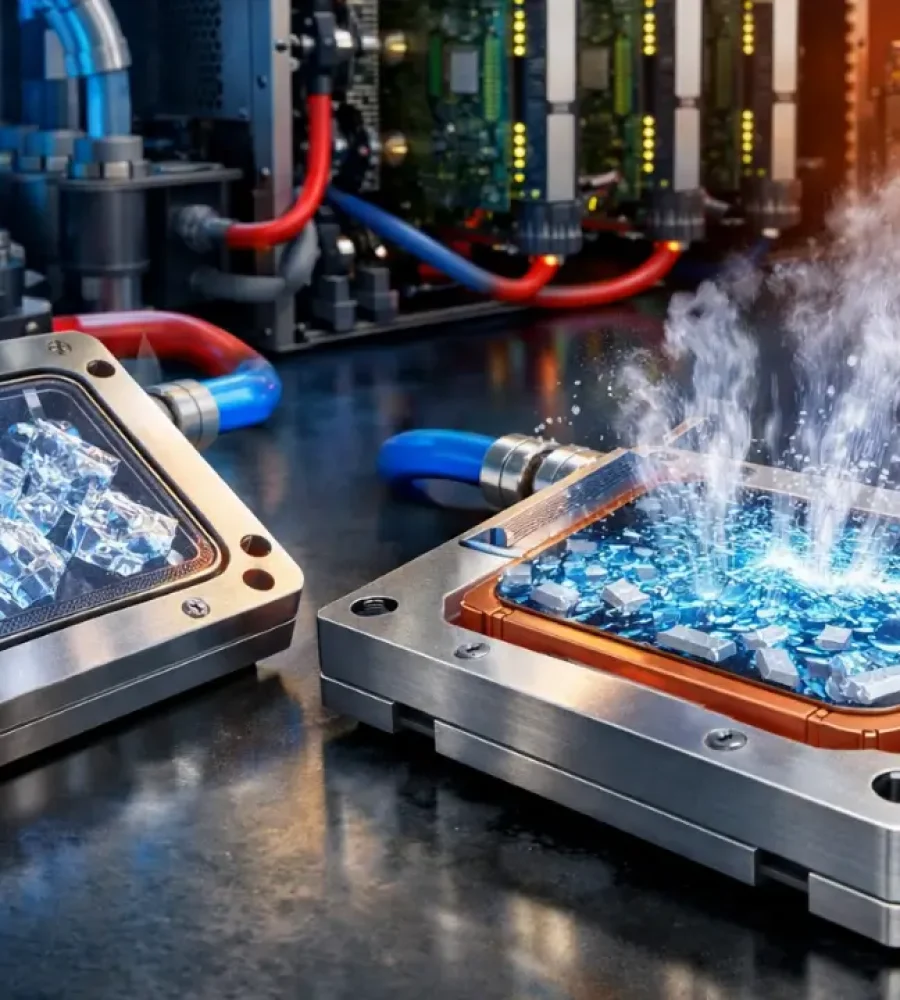

Thermal management now sits at the center of modern data center design as computing density rises across artificial intelligence, machine learning, and accelerated processing workloads. Traditional air cooling once dominated the industry because server power envelopes remained manageable and facility airflow systems scaled effectively with incremental upgrades. The rapid expansion of high-performance GPU clusters has changed that balance by introducing thermal loads that conventional airflow patterns struggle to remove consistently. Engineers therefore face a decision between maintaining familiar air infrastructure and adopting advanced liquid cooling methods that can dissipate heat directly from processors. A growing number of facilities have chosen a third path that blends both methods into a single architecture capable of supporting mixed compute environments. Hybrid cooling has therefore emerged as the most practical solution for facilities that must handle rising power density without abandoning operational stability.
The conversation surrounding liquid cooling often focuses on dramatic images of fully submerged servers and futuristic rack designs, yet the operational reality looks far more incremental across most production facilities. Data center operators rarely rebuild entire campuses simply to deploy a new cooling technology because infrastructure investments remain tied to decades-long lifecycles. Existing buildings already contain airflow management systems, raised floors, and containment structures that continue to function efficiently for conventional workloads. Replacing those systems entirely would introduce financial and operational disruptions that few operators consider acceptable during normal upgrade cycles. Hybrid cooling environments therefore allow operators to integrate liquid technologies gradually while preserving reliable airflow infrastructure. This balanced approach enables facilities to accommodate high-density workloads while maintaining compatibility with traditional server fleets.
The Architectural Evolution of Thermal Infrastructure
Cooling systems historically evolved alongside processor power consumption, with each generation of hardware pushing thermal management strategies into new territory. Early enterprise data centers relied on simple room-level cooling units that circulated chilled air across racks in relatively uniform patterns. Higher rack densities eventually required containment aisles, directional airflow engineering, and precision environmental controls to maintain stable operating conditions. Liquid cooling technologies entered the discussion once server components began generating heat levels that airflow alone struggled to remove effectively. Operators discovered that a combination of cooling approaches could deliver greater flexibility than relying on a single thermal strategy. Hybrid cooling now reflects that engineering philosophy by aligning cooling methods with workload characteristics rather than applying a uniform system across every rack.
Why Hybrid Cooling Is Becoming the Default Architecture
Modern facilities rarely pursue purely air-cooled or fully liquid-cooled infrastructure because each approach offers advantages in different operational contexts. Air cooling continues to handle moderate rack densities effectively through optimized airflow management and containment strategies. Liquid cooling excels at removing concentrated heat from high-performance processors where thermal loads exceed the limits of airflow efficiency. Hybrid architectures therefore combine both systems to deliver targeted cooling capacity while preserving existing facility infrastructure. Operators can deploy liquid loops where workloads demand extreme thermal performance while maintaining air cooling for conventional servers. This balance allows facilities to scale computing power without triggering large-scale mechanical redesigns.
The concept of hybrid cooling extends beyond simple coexistence between air and liquid systems because it introduces a layered thermal architecture across the facility. Rack density, processor type, and workload intensity determine which cooling method each section of the data hall receives. Air-cooled racks often occupy large sections of the floor because traditional enterprise applications still operate within manageable thermal limits. Liquid systems concentrate around AI training clusters, high-performance computing nodes, and GPU accelerators that produce intense heat. Infrastructure planners therefore design cooling systems with multiple thermal zones that correspond to different workload profiles. This architectural flexibility enables facilities to evolve alongside changing computing demands without undergoing disruptive redesign cycles.
Thermal engineers approach hybrid cooling as a system design strategy rather than a temporary compromise between competing technologies. Air cooling infrastructure already provides proven operational stability and predictable maintenance procedures across thousands of facilities worldwide. Liquid cooling introduces higher thermal transfer efficiency but also requires careful management of coolant distribution, leak prevention, and system integration. Hybrid architectures combine these characteristics to deliver targeted performance gains while preserving operational familiarity. Facilities therefore maintain established airflow systems while integrating liquid loops that support dense compute clusters. This design philosophy reflects a broader engineering principle that favors adaptability over technological uniformity.
The Density Divide: Where Air Still Works and Where Liquid Takes Over
Compute density has become the defining factor that determines which cooling method a rack requires inside a modern data center. Conventional enterprise workloads still operate comfortably within thermal limits that advanced airflow management can handle efficiently. Web services, storage clusters, and many application servers generate moderate heat loads that standard rack airflow systems can dissipate without difficulty. Artificial intelligence training environments, by contrast, concentrate enormous thermal output inside compact GPU-based servers. Those workloads often generate heat that overwhelms traditional airflow capacity even when facilities deploy advanced containment techniques. Hybrid cooling therefore assigns air cooling to moderate racks while directing liquid cooling toward concentrated compute clusters.
The separation between air-cooled and liquid-cooled infrastructure has created a new design language for data hall layouts. Operators increasingly organize racks according to thermal intensity rather than grouping hardware strictly by application type. High-density compute islands often occupy dedicated zones equipped with liquid cooling distribution units and specialized piping systems. Surrounding racks continue operating under air cooling because their thermal profiles remain within manageable ranges. This segmented approach allows facility planners to expand high-density clusters gradually without altering the cooling strategy of the entire building. Data center layouts therefore evolve into thermally stratified environments that match cooling methods to workload density.
Rack-level power density has forced cooling engineers to analyze heat transfer mechanisms with greater precision than earlier generations of facilities required. Air cooling removes heat by transporting warm air away from electronic components and replacing it with chilled airflow delivered through containment systems. Liquid cooling removes heat more directly because coolant absorbs thermal energy through contact with processor heat exchangers. The difference between those mechanisms becomes significant once compute density concentrates large heat loads into a confined physical space. Hybrid environments therefore allow facilities to apply the most effective heat transfer method to each workload category. This targeted cooling strategy improves thermal stability without introducing unnecessary mechanical complexity across the entire facility.
AI Clusters as the First Drivers of Partial Liquid Cooling
Artificial intelligence infrastructure has become the primary catalyst behind the recent acceleration of liquid cooling adoption across modern data centers. Training large neural networks requires clusters of GPUs that operate continuously under heavy computational loads for extended periods. These accelerators generate intense heat because their processing units consume large amounts of electrical power during sustained calculations. Conventional airflow systems struggle to maintain stable operating temperatures around such concentrated heat sources even when airflow engineering reaches advanced levels. Liquid cooling offers a direct thermal pathway that removes heat efficiently from processors while preserving system stability. Hybrid architectures therefore deploy liquid cooling around AI clusters while leaving the rest of the facility unchanged.
Many facilities implement liquid cooling only within the specific rows that house GPU training systems because the remaining infrastructure continues to function effectively with air cooling. Operators often treat AI clusters as specialized compute zones that operate under unique thermal requirements. Cooling infrastructure for those zones includes coolant distribution units, heat exchangers, and closed-loop circulation systems integrated directly into rack assemblies. Air-cooled sections of the facility remain untouched because their thermal profiles still fall within the design capacity of existing HVAC infrastructure. Hybrid cooling therefore enables facilities to incorporate AI workloads without rebuilding their entire cooling architecture. This targeted integration approach has accelerated the practical deployment of liquid cooling technologies across production environments.
AI clusters often operate as isolated high-density environments within otherwise conventional data center halls. Engineers design these clusters with localized cooling loops that remove heat directly from GPUs while maintaining stable environmental conditions around surrounding equipment. Thermal containment strategies prevent heat generated by AI workloads from spreading into adjacent racks that rely on airflow cooling systems. Hybrid cooling architectures therefore combine localized liquid systems with broader airflow management strategies across the facility. This arrangement maintains operational reliability while accommodating workloads that push thermal boundaries far beyond traditional server densities. Facilities gain the ability to scale AI infrastructure without destabilizing the cooling systems that support conventional workloads.
Retrofitting Reality: Why Existing Facilities Favor Hybrid Designs
Retrofitting existing data centers presents one of the most significant constraints that influence cooling architecture decisions across the industry. Many facilities operate inside buildings constructed long before artificial intelligence workloads introduced extreme thermal densities. These facilities already contain airflow management systems, mechanical chillers, and raised floor infrastructure that continue functioning effectively for traditional computing environments. Replacing those systems entirely would require major construction projects that disrupt ongoing operations. Hybrid cooling allows operators to integrate liquid technologies without dismantling the mechanical systems that still provide reliable performance. Incremental upgrades therefore represent the most practical pathway toward supporting new workloads inside legacy facilities.
Retrofitting often involves installing liquid cooling components only where thermal demand requires them, rather than redesigning the entire facility around liquid infrastructure. Engineers can add coolant distribution units near high-density racks while preserving existing airflow infrastructure throughout the rest of the building. This targeted approach reduces downtime and avoids the extensive mechanical reconstruction associated with full liquid cooling conversions. Facilities maintain operational continuity because the majority of racks continue running under established airflow systems. Hybrid cooling therefore provides a flexible upgrade strategy that aligns with the incremental nature of data center modernization. Operators can adapt infrastructure gradually while maintaining reliable service for existing workloads.
Data centers typically operate mechanical infrastructure for decades, which means cooling architecture decisions must account for long-term facility lifecycles. Air handling systems, chilled water loops, and containment structures represent substantial investments that remain operational for extended periods. Liquid cooling adoption therefore occurs within the context of those existing mechanical frameworks rather than replacing them outright. Hybrid designs allow facilities to integrate emerging cooling technologies without discarding functioning infrastructure prematurely. This lifecycle-aware approach supports technological evolution while respecting the economic realities of long-term facility operations. Cooling strategy therefore evolves gradually rather than through abrupt architectural transformation.
The Role of Rear-Door Heat Exchangers in Hybrid Environments
Rear-door heat exchangers have emerged as a bridging technology that connects traditional airflow systems with liquid cooling infrastructure inside hybrid data center environments. These devices attach directly to the back of server racks where exhaust air leaves the equipment after passing through the internal components. Heat exchangers capture that hot airflow and transfer the thermal energy into circulating coolant flowing through the door assembly. This process removes a significant portion of the heat before the air returns to the data hall, reducing the thermal load placed on room-level cooling systems. Engineers often deploy these systems in facilities where rack densities exceed the capacity of airflow containment alone. Hybrid architectures therefore use rear-door heat exchangers as transitional cooling solutions that enhance thermal performance without replacing existing mechanical systems.
Rear-door heat exchangers also support incremental adoption of liquid cooling because they integrate easily with conventional rack designs and airflow strategies. Facilities can install them on selected racks that host high-performance hardware while leaving the remainder of the data hall unchanged. Coolant distribution lines feed these systems through relatively simple plumbing networks that connect to facility water loops or dedicated cooling circuits. Thermal engineers appreciate this modular integration because it minimizes disruption to airflow management while delivering meaningful heat removal improvements. Hybrid cooling environments therefore benefit from rear-door heat exchangers as intermediate technologies that expand cooling capacity around dense compute clusters. Many operators view them as practical steps toward broader liquid cooling integration across future infrastructure upgrades.
Thermal Transfer at the Rack Boundary
Rear-door heat exchangers demonstrate how thermal management strategies can operate effectively at the boundary between air and liquid cooling systems. Exhaust air from servers still carries substantial heat energy after leaving internal heat sinks and processor assemblies. Capturing that energy before it spreads through the room prevents localized hot spots and stabilizes environmental conditions inside the facility. Coolant circulating through the heat exchanger absorbs the thermal load and transports it away from the rack toward centralized heat rejection infrastructure. This localized heat removal method significantly reduces the burden placed on traditional air conditioning equipment. Hybrid cooling architectures therefore use rear-door exchangers to balance thermal performance while preserving familiar airflow-based rack layouts. The technology illustrates how liquid systems can enhance rather than replace air cooling within modern facilities.
Rack-level liquid cooling has gained attention because it allows facilities to deploy advanced thermal management without redesigning entire data center buildings. Technologies such as coolant distribution units and direct-to-chip loops operate at the rack scale rather than across the entire mechanical plant. These systems circulate coolant directly to processors and accelerators where the majority of heat generation occurs. Engineers can install rack-level cooling loops alongside existing airflow infrastructure with relatively minor facility modifications. Hybrid environments therefore integrate liquid cooling where hardware density demands it while maintaining traditional cooling systems across most of the facility. This localized deployment model has accelerated the real-world adoption of liquid cooling technologies across production environments.
Coolant distribution units serve as central components in rack-level liquid cooling because they regulate coolant temperature, pressure, and flow across multiple racks. These units connect facility water loops with secondary cooling circuits that circulate coolant through servers and heat exchangers. Direct-to-chip cold plates attach directly to processors, memory modules, and accelerator components to capture heat at its source. Coolant absorbs thermal energy from these components and transports it back toward heat exchangers where the energy transfers into facility cooling infrastructure. Hybrid architectures therefore use rack-level cooling loops to isolate dense workloads without altering airflow strategies across the broader facility. Operators gain flexibility because they can expand liquid-cooled racks incrementally as computing density increases.
Rack-level liquid cooling supports modular infrastructure growth because facilities can expand cooling capacity alongside new computing deployments. Operators install additional coolant distribution units and liquid-cooled racks only when workload demand requires them. This modular scaling model avoids the extensive construction associated with facility-wide cooling transformations. Mechanical infrastructure therefore evolves gradually rather than through large-scale redesign projects. Hybrid environments benefit from this approach because airflow systems continue operating across the majority of racks. Engineers can focus liquid cooling resources precisely where compute density requires more aggressive thermal management. Modular infrastructure expansion therefore aligns closely with the incremental growth patterns typical across modern data center environments.
Cooling Infrastructure Economics: Why Full Liquid Is Hard to Justify
Economic considerations remain one of the strongest reasons why most data centers continue adopting hybrid cooling rather than transitioning fully to liquid systems. Building facility-wide liquid cooling infrastructure requires extensive plumbing networks, heat exchange systems, and coolant distribution equipment. These mechanical components introduce capital expenditures that significantly exceed the cost of maintaining existing airflow infrastructure. Facilities that already operate efficient air cooling systems therefore find it difficult to justify replacing those systems before they reach the end of their operational lifecycles. Hybrid cooling allows operators to deploy liquid technologies selectively without committing to a complete mechanical transformation. This financial flexibility aligns with the incremental investment strategies common across large infrastructure projects.
Air cooling infrastructure also benefits from decades of operational optimization that has refined airflow management techniques across the industry. Containment systems, high-efficiency fans, and advanced environmental monitoring have significantly improved the performance of traditional cooling architectures. Many facilities therefore achieve reliable thermal stability using airflow systems for the majority of workloads. Liquid cooling introduces additional cost factors related to plumbing installation, coolant management, and specialized maintenance procedures. Hybrid cooling models allow operators to retain cost-effective airflow infrastructure while deploying liquid systems only where thermal requirements demand them. Economic balance therefore plays a central role in the widespread adoption of hybrid architectures across modern facilities.
Infrastructure Investment Cycles
Data center infrastructure investments often follow long planning horizons that span multiple hardware generations. Mechanical systems such as chillers, pumps, and air handling units represent long-term assets that facilities expect to operate for extended periods. Replacing these systems prematurely would disrupt financial planning and operational stability. Hybrid cooling therefore aligns with existing infrastructure investment cycles by introducing liquid technologies gradually alongside ongoing facility upgrades. Operators can integrate new cooling solutions during scheduled modernization projects rather than undertaking abrupt system replacements. This phased approach allows facilities to adopt advanced thermal technologies without destabilizing long-term infrastructure planning. Financial sustainability therefore reinforces the continued dominance of hybrid cooling architectures.
Operational Risk and Maintenance Complexity
Operational risk remains another significant factor influencing cooling architecture decisions across modern data centers. Air cooling systems rely primarily on airflow management, which facility technicians understand well after decades of industry practice. Maintenance procedures for fans, air handlers, and containment systems remain familiar to operations teams across the global data center workforce. Liquid cooling introduces additional operational considerations related to coolant distribution, leak detection, and system monitoring. Engineers must ensure that fluid loops operate reliably without introducing contamination or equipment damage. Hybrid cooling architectures therefore limit liquid systems to controlled environments where technicians can manage these risks carefully.
Maintenance complexity also increases when facilities integrate plumbing infrastructure alongside traditional mechanical systems. Liquid cooling networks require pumps, valves, sensors, and heat exchangers that must operate continuously to maintain thermal stability. Monitoring systems track coolant flow rates, temperature gradients, and pressure conditions across the cooling loop. Skilled technicians must understand these parameters to diagnose and resolve operational anomalies. Hybrid environments therefore allow operations teams to gain experience with liquid systems gradually rather than confronting an immediate facility-wide transition. This controlled adoption pathway reduces operational risk while expanding technical expertise across facility management teams.
Cooling architecture changes often require corresponding shifts in workforce skills and operational training. Data center technicians historically specialized in airflow management, electrical distribution, and environmental monitoring systems. Liquid cooling introduces fluid mechanics considerations that require additional technical understanding. Training programs must therefore cover coolant chemistry, leak mitigation strategies, and pump system maintenance procedures. Hybrid environments create opportunities for operations teams to develop these skills incrementally while continuing to maintain established airflow systems. Workforce development therefore becomes a gradual process aligned with infrastructure modernization cycles. Facilities gain operational confidence with liquid technologies before expanding them across broader sections of the data center.
Compute hardware continues to evolve toward higher performance and greater power density, which places increasing pressure on traditional cooling architectures. Modern processors and accelerators generate intense heat because they concentrate enormous computational capability within compact semiconductor packages. Air cooling systems must move large volumes of air across racks to remove this heat effectively. Eventually airflow reaches physical and efficiency limits that make further density increases difficult to sustain. Liquid cooling offers a more direct thermal pathway that removes heat at the source rather than relying solely on air movement. Hybrid architectures therefore allow facilities to integrate liquid cooling where power density surpasses the capabilities of airflow management.
Many data centers currently operate mixed hardware environments where legacy servers coexist with high-performance accelerators and AI training nodes. Cooling strategies must therefore accommodate a wide range of thermal profiles across the same facility. Air cooling remains adequate for traditional server workloads that operate within moderate thermal limits. GPU clusters and specialized computing nodes often require liquid cooling to maintain stable operating conditions. Hybrid architectures allow these two environments to coexist without forcing facilities to redesign the entire cooling infrastructure. The gradual shift toward liquid cooling therefore follows the trajectory of computing density rather than replacing air cooling outright.
Thermal Limits of Airflow Systems
Airflow cooling relies on moving chilled air across server components where heat sinks transfer thermal energy into the air stream. Increasing rack density requires correspondingly greater airflow volumes to remove the additional heat generated by high-performance hardware. At extreme densities airflow becomes difficult to manage because fan speeds, air pressure, and containment structures reach practical engineering limits. Liquid cooling removes heat more efficiently because coolant absorbs thermal energy directly through conductive contact with processor heat exchangers. Hybrid architectures therefore combine airflow for moderate loads with liquid cooling for extreme density environments. This dual strategy extends the operational life of air cooling systems while supporting next-generation computing infrastructure. Thermal engineering therefore evolves alongside computing density rather than replacing existing cooling systems entirely.
Modern data centers increasingly divide their internal layouts into thermally distinct zones that correspond to different computing workloads. High-density compute clusters occupy areas equipped with liquid cooling infrastructure designed to handle intense heat output. Conventional server racks operate within airflow-cooled zones that continue to rely on containment and environmental management systems. Engineers plan these zones carefully to prevent thermal interference between different cooling environments. Hybrid architectures therefore treat the data center floor as a collection of specialized thermal regions rather than a single uniform environment. This zoned design approach allows facilities to support diverse workloads while maintaining stable operating conditions across the entire building.
Cooling zones often correspond to specific categories of computing workloads such as AI training clusters, high-performance computing environments, and traditional enterprise infrastructure. Each zone incorporates cooling technologies optimized for the thermal characteristics of the hardware deployed there. Liquid cooling infrastructure concentrates around racks that generate the most heat, while airflow systems continue supporting conventional server environments. Physical separation between these zones ensures that airflow patterns and thermal conditions remain stable across the facility. Hybrid cooling therefore enables a flexible facility layout that adapts to changing computing demands. Data center operators gain the ability to scale specialized workloads without disturbing the cooling systems that support other infrastructure.
Facility planners increasingly consider cooling zones during the earliest stages of data center design because mixed workload environments have become common across modern infrastructure. Artificial intelligence clusters, edge computing nodes, and enterprise workloads often coexist within the same facility. Cooling infrastructure must therefore accommodate dramatically different thermal characteristics across these workloads. Hybrid architectures provide the flexibility needed to support this diversity without creating operational instability. Engineers can allocate cooling resources precisely where thermal intensity requires them. Zoned facility design therefore reflects the broader evolution of data center infrastructure toward workload-specific architectural strategies. Cooling systems now align closely with the computing environments they support.
Hybrid Cooling as a Transitional Strategy for AI Infrastructure
Hybrid cooling frequently functions as a transitional strategy that allows facilities to integrate emerging computing technologies without abandoning proven infrastructure. Artificial intelligence workloads continue evolving rapidly, which makes it difficult for operators to predict long-term cooling requirements with complete certainty. Facilities therefore adopt flexible cooling architectures that accommodate current density demands while leaving room for future expansion. Hybrid systems provide this adaptability by combining established airflow technologies with emerging liquid cooling methods. Operators can expand liquid cooling zones gradually as AI infrastructure grows across the facility. Transitional cooling strategies therefore help organizations navigate technological uncertainty without committing prematurely to a single architectural model.
AI infrastructure deployments often begin with relatively small clusters before expanding into larger compute environments that require additional cooling capacity. Hybrid architectures allow operators to scale these clusters without disrupting the broader facility environment. Liquid cooling systems can expand alongside AI infrastructure while airflow systems continue supporting conventional workloads. This phased deployment strategy reduces risk because facilities gain operational experience with liquid cooling technologies over time. Hybrid cooling therefore serves as an architectural bridge between legacy infrastructure and future high-density computing environments. Facilities maintain operational continuity while gradually adapting to the evolving thermal demands of artificial intelligence workloads.
Technological change across computing infrastructure continues accelerating as artificial intelligence applications reshape hardware design and power consumption patterns. Data center operators therefore prioritize flexibility when planning new cooling systems. Hybrid architectures allow facilities to adapt gradually to shifting hardware requirements without committing entirely to a single cooling method. Air cooling infrastructure continues supporting conventional workloads while liquid cooling expands around high-density environments. This flexible approach reduces the risk associated with rapid technological transitions. Hybrid cooling therefore represents a pragmatic response to the uncertainty surrounding future computing architectures. Facilities maintain the ability to evolve alongside technological innovation without sacrificing operational stability.
Designing Facilities for a “Liquid-Ready” Future
New data centers increasingly incorporate design features that prepare facilities for future liquid cooling expansion even when initial deployments rely primarily on airflow systems. Engineers design mechanical spaces, piping pathways, and rack layouts that can accommodate liquid cooling infrastructure when computing density increases. These facilities often include structural provisions for coolant distribution units and heat exchange equipment that operators can install later. Hybrid architecture planning therefore extends beyond immediate cooling requirements to consider long-term infrastructure evolution. Facilities remain operationally air-cooled during early stages while retaining the capacity to integrate liquid technologies in the future. Liquid-ready design strategies reflect the growing expectation that high-density computing will eventually require advanced thermal management systems.
Architectural planning for liquid-ready facilities also includes careful consideration of floor loading, piping access routes, and mechanical redundancy. Engineers must ensure that structural systems can support the additional weight associated with coolant loops and distribution equipment. Mechanical layouts often reserve space for pumps, heat exchangers, and plumbing infrastructure that future cooling systems will require. Hybrid cooling strategies therefore guide the design of next-generation data centers even when liquid systems remain limited during initial deployment. Facilities gain the ability to expand cooling capacity rapidly when hardware density increases. This forward-looking approach ensures that infrastructure investments remain adaptable across multiple technology cycles.
Infrastructure preparedness has become a central consideration for facilities expected to support emerging computing technologies such as advanced artificial intelligence and accelerated analytics platforms. Hardware designers continue increasing computational capability while packaging processors and accelerators into increasingly compact systems. Cooling requirements therefore evolve alongside these hardware innovations. Hybrid cooling strategies encourage facilities to prepare for this evolution without abandoning reliable airflow systems prematurely. Engineers design facilities that can accommodate liquid cooling expansions while maintaining operational stability during early deployment phases. Prepared infrastructure therefore supports long-term technological adaptation without forcing immediate mechanical redesigns. Data center architecture increasingly prioritizes readiness for future density rather than relying solely on current cooling demands.
The Long Future of Hybrid Data Center Cooling
Hybrid cooling architectures represent a pragmatic response to the changing thermal realities of modern computing infrastructure. Facilities must support increasingly dense hardware environments while maintaining reliability across long-lived mechanical systems. Air cooling continues serving the majority of workloads effectively because many servers operate within manageable thermal limits. Liquid cooling provides essential performance benefits for high-density computing environments where airflow alone cannot remove heat efficiently. Hybrid architectures therefore combine both approaches to deliver targeted thermal management across diverse infrastructure environments. This balanced strategy enables facilities to evolve alongside emerging computing technologies without abandoning established operational frameworks.
The long-term future of data center cooling will likely continue reflecting this blended architectural model rather than shifting entirely toward liquid systems. Many facilities operate infrastructure designed to function for decades, which makes gradual evolution more practical than rapid transformation. Hybrid cooling allows operators to adopt advanced thermal technologies while preserving the reliability of proven airflow systems. Facilities can expand liquid cooling zones incrementally as computing density increases across artificial intelligence and high-performance computing workloads. This adaptive approach aligns with the broader philosophy of data center engineering that favors resilience, flexibility, and long-term operational stability. Hybrid cooling therefore appears poised to remain a dominant architectural strategy across the global data center landscape for many years to come.