
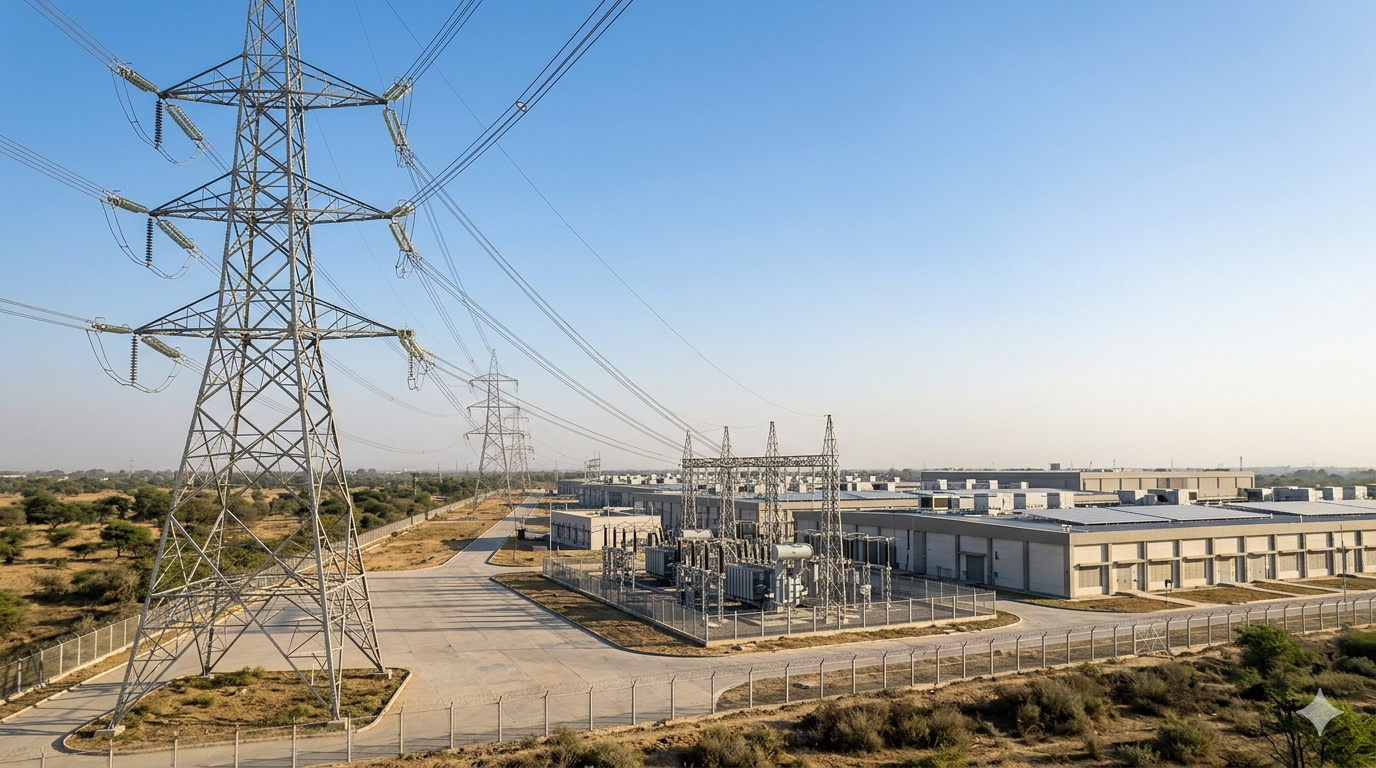
Power has replaced compute as the primary constraint on AI infrastructure expansion. The hyperscalers understood this shift before most of the market did, and they have been acting on that understanding for the past three years. The long-term power agreements that Amazon, Microsoft, Google, and Meta have been signing at record pace are not just procurement transactions. They are strategic moves that lock in competitive infrastructure advantage at a speed and scale that rivals cannot easily replicate. Understanding how these agreements work, what they cost, and what advantages they create reveals a dimension of the AI infrastructure competition that the hardware discussion consistently obscures.

The strategy is straightforward in principle. A hyperscaler that secures a 15 or 20-year power purchase agreement with a utility, a nuclear operator, or an independent power producer at today’s pricing locks in a cost structure that competitors face at tomorrow’s prices. As demand for firm, large-scale power grows faster than supply, the price of power access rises. The hyperscaler that signed early pays less for longer. The competitor that signs later pays more, or cannot access power at all in markets where capacity is fully committed. Over the lifetime of an AI data center, that difference in power economics compounds into a structural cost advantage that shows up directly in the competitive pricing of AI services.
Why Power Access Is the New Competitive Moat
The conventional competitive moats in cloud infrastructure were built on hardware procurement relationships, software ecosystem depth, and customer switching costs. All three remain relevant. However, they are being supplemented by a new moat that is harder to build quickly and harder to replicate once established: secured power capacity at scale.
Power is now the gatekeeper of AI infrastructure in ways that were not true for conventional cloud computing. A web server workload consumes relatively modest power and can run in any facility with basic electricity access. An AI training cluster consuming 100 megawatts or more requires power delivery infrastructure that most locations simply cannot provide. The scarcity of that infrastructure, particularly in the high-demand markets where hyperscalers want to deploy, means that power access has become a prerequisite for AI infrastructure deployment rather than a background utility cost.

The interconnection queue problem amplifies this scarcity. Grid connections for large industrial loads in major US markets now take three to five years to secure. A hyperscaler that wants to build a new AI data center in a prime market today faces a multi-year wait for the grid connection it needs. A hyperscaler that secured that connection two years ago is operational today while its competitor is still waiting. That temporal advantage translates directly into revenue, customer relationships, and market share that the late mover cannot recover by simply moving faster once the connection eventually arrives.
Why the Queue Problem Creates Permanent Advantage
The time-to-power crisis is the hidden ceiling on AI infrastructure scaling, and the hyperscalers most aggressively pursuing long-term power agreements are the ones that have most clearly understood this constraint. Their power procurement strategies are not conservative corporate treasury management. They are offensive competitive moves designed to acquire the scarcest resource in the AI infrastructure market before competitors can do the same.
The Structure of Hyperscaler Power Agreements
Long-term power agreements in the AI infrastructure context take several forms, each with different risk and reward profiles that reflect the hyperscaler’s specific strategic objectives and risk tolerance.
The most common structure is the power purchase agreement, or PPA, with a utility or independent power producer. Under a PPA, the hyperscaler commits to purchasing a defined quantity of power at a defined price for a term that typically runs 10 to 25 years. The power producer commits to delivering that quantity at the agreed price, absorbing the risk that generation costs rise above the contracted level. The hyperscaler absorbs the risk that its power needs fall below the contracted minimum, which in practice is not a significant concern given the trajectory of AI workload growth.
PPAs with renewable energy generators have been the most common form of hyperscaler power agreement for the past decade, driven by sustainability commitments and the favourable economics of wind and solar at scale. However, renewable PPAs deliver intermittent power that does not match the 24/7 demand profile of AI data centers. Hyperscalers executing renewable PPAs typically combine them with grid power for periods of low renewable generation, using the PPA to meet their renewable energy targets while relying on the grid for baseload reliability.
Why Firm Power Agreements Represent a Strategic Shift
The shift toward firm power agreements represents a qualitative change in hyperscaler power strategy. Firm power versus flexible power is the defining divide in AI infrastructure energy strategy, and the hyperscalers that are securing firm power commitments, whether through nuclear restart agreements, long-term natural gas contracts, or fuel cell deployment partnerships, are addressing a reliability requirement that intermittent renewables cannot meet on their own.
Microsoft’s 20-year agreement with Constellation Energy for 837 megawatts from the restarted Three Mile Island nuclear plant is the clearest example of a firm power PPA designed specifically for AI workload reliability. Nuclear power delivers capacity factors exceeding 90 percent, meaning the generator produces close to its rated output continuously regardless of weather conditions. For a hyperscaler running AI training clusters that cannot tolerate power interruptions without significant operational disruption, that reliability profile is worth a meaningful premium over intermittent renewable alternatives.
The Nuclear Strategy and What It Signals
The hyperscaler interest in nuclear power deserves specific examination because it reveals the depth of their long-term power strategy. Nuclear agreements are not short-term procurement decisions. They are multi-decade commitments that reflect a view about the energy landscape extending well beyond the current AI infrastructure cycle.
NuScale and the hyperscaler power choices intensifying around nuclear document how the major technology companies are positioning themselves across multiple nuclear technology pathways simultaneously. Microsoft has secured existing nuclear capacity through Three Mile Island. Google has contracted for future SMR capacity from Kairos Power. Meta has partnered with Oklo for a 1.2 gigawatt nuclear campus in Ohio. Amazon has secured 1.92 gigawatts from Talen Energy’s Susquehanna nuclear plant.
The aggregate of these commitments represents a long-term view that nuclear power will be a necessary component of the AI infrastructure energy mix. The hyperscalers signing these agreements understand that SMR delivery timelines are uncertain and that existing plant restarts carry execution risk. They are making these commitments anyway, as long-duration options on firm zero-carbon power that will be structurally scarce if AI infrastructure demand continues on its current trajectory.
Why Optionality Is as Valuable as Direct Procurement
The strategic logic is about optionality as much as direct power procurement. A hyperscaler with a nuclear power commitment in 2035 has secured a cost structure and carbon profile that will be advantageous relative to competitors who did not make equivalent commitments, if nuclear power is both available and premium-priced in that market. The commitment costs relatively little today in terms of financial exposure. Its value in 2035 depends on how the energy landscape evolves, but the asymmetry of the option is attractive.
Why Not All Hyperscalers Are Positioned Equally
The long-term power agreement strategies of the major hyperscalers reflect different strengths, different geographic footprints, and different energy philosophies that create meaningful differences in competitive positioning.
Amazon’s power strategy reflects its scale advantage. AWS has committed approximately $200 billion in capital expenditure for 2026, and its power procurement operates at a scale that gives it negotiating leverage with utilities, independent power producers, and nuclear operators that smaller competitors cannot match. Amazon’s agreement with Talen Energy for 1.92 gigawatts from the Susquehanna nuclear plant is the largest single nuclear power agreement signed by a technology company. Combined with its massive renewable portfolio and ongoing grid connection investments, Amazon’s power position is the most defensible of the major hyperscalers.
Google’s power strategy emphasises innovation alongside scale. The company signed the world’s first corporate SMR purchase agreement with Kairos Power, positioning itself at the frontier of advanced nuclear technology. Google has also been a leader in developing new structures for renewable energy procurement, including hourly matching agreements that align renewable energy delivery with actual consumption rather than annual accounting. That technical leadership in power procurement creates differentiation that goes beyond simply securing large quantities of power at competitive prices.
How Microsoft and Meta Are Positioned Differently
Microsoft’s power strategy is shaped by its global expansion, requiring navigation of complex regulatory environments in Japan and Europe where grid access is constrained by national policy rather than just infrastructure capacity. That regulatory navigation capability is a competitive asset that takes years to build. Meta’s power strategy has historically been more concentrated in renewable energy, but its partnership with Oklo for nuclear capacity and its Entergy partnership for seven new natural gas plants in Louisiana signal a pragmatic shift toward firm power as AI workload growth pushes reliability requirements beyond what renewables alone can satisfy.
The Behind-the-Meter Strategy
One of the most significant developments in hyperscaler power strategy is the systematic move toward behind-the-meter generation that bypasses the grid interconnection queue entirely. The grid queue problem is not solvable on the timeline that AI infrastructure deployment demands. Behind-the-meter generation, whether through fuel cells, gas turbines, or on-site solar with storage, provides power that does not require a grid connection and is not subject to interconnection queue delays.
Oracle’s 2.8 gigawatt fuel cell agreement with Bloom Energy, announced in April 2026, is the most visible example of behind-the-meter strategy at hyperscale. Bloom Energy delivered a fully operational fuel cell system to Oracle in 55 days, demonstrating that behind-the-meter power can be deployed on timelines that conventional grid connections cannot approach. The Eos Energy and TURBINE-X partnership announced in April 2026 represents a complementary approach, combining gas-fired generation with zinc-based battery storage in an integrated behind-the-meter system targeting hyperscale AI facilities.
Why Behind-the-Meter Is Becoming Mainstream
These developments signal that behind-the-meter power is transitioning from an experimental approach for grid-constrained sites to a mainstream power strategy for the AI infrastructure industry. Operators with behind-the-meter generation are less exposed to grid reliability events, grid price volatility, and utility rate increases than operators who depend entirely on grid power. That insulation from grid risk represents a meaningful operational advantage in an environment where grid constraints are tightening across major AI infrastructure markets.
The Cost Advantage That Compounds
The financial advantage of securing long-term power at today’s prices extends well beyond the immediate cost differential between contracted and spot market power. The compounding effect of a fixed energy cost base over a 15 or 20-year AI infrastructure buildout is substantial, and the hyperscalers that have modelled this effect have structured their power agreements accordingly.
A hyperscaler that secures 1 gigawatt of firm power at a contracted price of $40 per megawatt-hour for 20 years locks in an annual energy cost of approximately $350 million at full utilisation. A competitor that contracts for equivalent power at $60 per megawatt-hour five years later pays $525 million annually for the same capacity. Over the remaining 15 years of the original contract term, that $175 million annual difference compounds to a cumulative cost advantage of over $2.5 billion. At the scale of multiple gigawatts across dozens of facilities, the aggregate advantage across a large hyperscaler’s portfolio is measured in tens of billions of dollars over the life of the infrastructure.
How the Cost Advantage Flows Into AI Service Pricing
That cost advantage flows directly to AI service pricing. The hyperscaler with the lower energy cost base can price its AI compute services more aggressively while maintaining equivalent margins, or maintain higher margins at equivalent pricing and reinvest the difference in hardware, research, or customer acquisition. Either way, the power procurement advantage translates into competitive positioning that is difficult for less well-positioned competitors to overcome without making equivalent long-term commitments at the prices available to them.
The Geography of Power Advantage
Long-term power agreements create geographic competitive advantages that are as important as the cost advantages. A hyperscaler that has secured power access in a specific market has established a presence that competitors who have not secured power cannot replicate quickly. The combination of secured power and developed infrastructure in a market creates a flywheel: the power enables the facility, the facility enables the customer relationships, and the customer relationships create the revenue that funds further power and facility investment in the same market.
The geographic dimension is particularly relevant in emerging AI infrastructure markets. Southeast Asia, India, the Middle East, and parts of Latin America are rapidly developing as AI infrastructure destinations, driven by local demand, sovereign AI ambitions, and the geographic diversification strategies of global enterprises. In these markets, power access is often more constrained than in mature markets, and the hyperscalers that move early to secure long-term power agreements establish positions that late movers cannot easily challenge.
Why Regulatory Relationships Are Part of the Moat
The constraint is not just grid capacity but regulatory relationships. Securing large-scale power agreements in markets where energy infrastructure is government-controlled or heavily regulated requires relationships with national and regional authorities that take years to develop. Hyperscalers that have invested in those relationships in emerging markets are securing not just the power agreements themselves but the regulatory access that makes future agreements possible. That relationship capital is as defensible as any technical advantage.
The Risk Dimension Nobody Advertises
Long-term power agreements lock in advantages when market conditions evolve as expected. They create liabilities when they do not. The hyperscalers signing multi-decade power commitments are making bets on AI demand trajectories, energy market developments, and technology evolution that carry genuine uncertainty.
The most significant risk is demand underperformance. A hyperscaler that commits to purchasing 1 gigawatt of power for 20 years carries an obligation to pay for that power whether or not its AI infrastructure utilises it at the contracted levels. Power purchase agreements typically include minimum take-or-pay provisions that require payment for contracted capacity regardless of actual consumption. If AI demand growth slows, if hardware efficiency improvements reduce the power required per unit of AI compute more rapidly than anticipated, or if competitive dynamics shift AI workloads away from the committing hyperscaler, the contracted power obligation persists against a reduced revenue base.
The fuel transition risk applies to agreements tied to fossil fuel generation. A hyperscaler that contracts for long-term natural gas power today is locking in a carbon profile that may face regulatory and reputational pressure over a 20-year horizon as climate policy tightens and enterprise customers apply increasing scrutiny to the emissions embedded in the AI services they consume.
Why Technology Substitution Is the Least-Discussed Risk
The technology substitution risk is perhaps the most underappreciated dimension of long-term power agreement risk. A hyperscaler that signs a 20-year agreement for power at a specific location is implicitly betting that the location will remain relevant to its infrastructure strategy over that period. If AI compute becomes significantly more distributed, if edge computing reduces the concentration of AI workloads in centralised hyperscale facilities, or if new data center siting considerations emerge that favour different locations, a long-term power agreement at the original site becomes a stranded commitment rather than a competitive asset.
The Lessons for Mid-Tier Operators
The hyperscaler power agreement strategies carry lessons for mid-tier operators, neocloud providers, and regional data center operators competing in the AI infrastructure market without the scale advantages that make hyperscaler-style 1 gigawatt commitments feasible.
The core lesson is that early commitment at sustainable scale delivers the same structural logic as large-scale hyperscaler commitment. A regional data center operator that secures a 100 megawatt long-term power agreement today is locking in a cost and availability advantage over competitors who secure equivalent capacity at higher prices later. The competitive moat is proportional to the scale of the commitment and the degree to which the market tightens over the commitment term. Both dynamics favour early movers regardless of their absolute size.
The second lesson is that power strategy requires geographic specificity. The value of a long-term power agreement depends on whether power in that specific market is becoming scarcer and more expensive over the agreement term. A commitment in a market where power is abundantly available and unlikely to become constrained delivers less competitive advantage than an equivalent commitment in a constrained market.
Why Behind-the-Meter Options Apply at Smaller Scales Too
The third lesson is that behind-the-meter options are available at smaller scales than most mid-tier operators assume. Fuel cell systems, small-scale gas generation, and battery storage can be deployed at 10 to 50 megawatt scales appropriate for regional data centers and neocloud operators. The operational complexity and capital cost of these systems at smaller scales are higher per megawatt than at hyperscale, but the availability and queue-bypass advantages apply regardless of scale. Mid-tier operators who have not evaluated behind-the-meter options for their most constrained sites are leaving a strategic option unexamined.
The Sovereign Power Dimension
The long-term power agreement strategies of the hyperscalers increasingly intersect with sovereign energy policy in ways that add a geopolitical dimension to what might otherwise appear to be straightforward corporate procurement.
Governments developing sovereign AI infrastructure strategies recognise that their AI ambitions depend on securing power for their own data centers and for the hyperscaler facilities they want to attract. The competition for firm power capacity between national AI programmes and private hyperscaler expansion is real and intensifying. Several European governments have established priority frameworks for power allocation to data centers aligned with national digital sovereignty objectives, creating mechanisms through which government-backed AI infrastructure programmes can access power on preferential terms.
Conversely, hyperscalers that can offer to contribute to grid resilience, through demand response commitments, behind-the-meter generation capacity sharing, or waste heat recovery programmes that reduce net energy demand on constrained grids, gain regulatory goodwill and faster permitting timelines that have real economic value.
Why Trilateral Agreements Are the Future of Power Strategy
The pattern emerging is one where the largest long-term power agreements are increasingly structured as multi-party arrangements involving the hyperscaler, the power generator, and the host government, each contributing something the others need. The hyperscaler provides the long-term revenue commitment that makes power generation investment viable. The generator provides the firm, large-scale power that AI infrastructure requires. The government provides the permitting, the grid access, and in some cases the subsidy or guarantee structures that make the economics work. These trilateral agreements are more complex to negotiate and execute than bilateral PPAs, but they create more durable competitive positions than purely commercial agreements can achieve.
How the Competitive Landscape Shifts from Here
The power agreement strategies executed over the past three years have created a bifurcated competitive landscape. On one side are operators with secured firm power at scale, established behind-the-meter capabilities, and long-term agreements that protect their cost structures against rising energy prices. On the other side are operators entering the market now, facing higher prices, longer lead times, and fewer available sites in the most strategic markets.
That bifurcation will widen before it narrows. The pipeline of new power generation coming online over the next three years is insufficient to meet the aggregate demand from AI infrastructure development, renewable energy transition, electric vehicle charging, and industrial electrification. Power prices in constrained markets will rise. Grid interconnection timelines will lengthen as queues grow faster than grid operators can process applications. The operators who secured positions before this tightening will find their advantages growing rather than eroding.
The one dynamic that could compress this advantage faster than expected is hardware efficiency improvement. If the next generation of AI accelerators delivers dramatically better performance per watt than current hardware, the power requirements of equivalent AI compute capacity fall. An operator who secured 1 gigawatt of power for training workloads that future hardware can execute at 500 megawatts has excess committed capacity that generates cost without equivalent revenue.
Why the Decade Ahead Belongs to the Early Movers
The operators who are building the long-term power agreement strategies described in this analysis are not simply managing an operational cost line. They are constructing infrastructure competitive advantages that will define the AI services market for the next decade. Power strategy is infrastructure strategy, and infrastructure strategy is competitive strategy. The hyperscalers that understood this first have built leads that will take their competitors years to close, if they can close them at all.











