The thermal management systems inside modern data centers no longer operate quietly in the background of computing infrastructure. Artificial intelligence workloads, accelerated processors, and dense server architectures have placed unprecedented pressure on cooling systems that once relied almost entirely on air circulation. Operators increasingly deploy liquid cooling technologies that remove heat directly from chips and high-density server assemblies. Cooling therefore evolves from a passive environmental service into an integrated operational system tied directly to computing reliability. Technicians now interact with pumps, manifolds, fluid loops, and coolant chemistry rather than only airflow distribution and room temperature control. These shifts reshape daily operational routines across facilities teams and infrastructure operators. The learning curve surrounding liquid cooling reflects a deeper transformation in how digital infrastructure is managed and maintained.
The transition toward liquid cooling has not emerged as a sudden technological replacement for traditional air systems. Most modern facilities introduce fluid-based cooling gradually by integrating direct-to-chip cooling, rear-door heat exchangers, or hybrid architectures alongside established airflow systems. These deployments allow operators to support higher compute densities while preserving familiar rack layouts and server designs. Facility teams must coordinate the fluid loop infrastructure that carries heat away from processors and exchanges it with building-level cooling systems. Operational reliability depends on careful monitoring of coolant flow, pressure stability, and temperature consistency throughout the system. Each of these tasks demands a different set of operational instincts than those developed in purely air-cooled facilities. As liquid cooling becomes more common in AI-focused environments, infrastructure teams steadily develop new procedures that connect computing operations with mechanical system oversight.
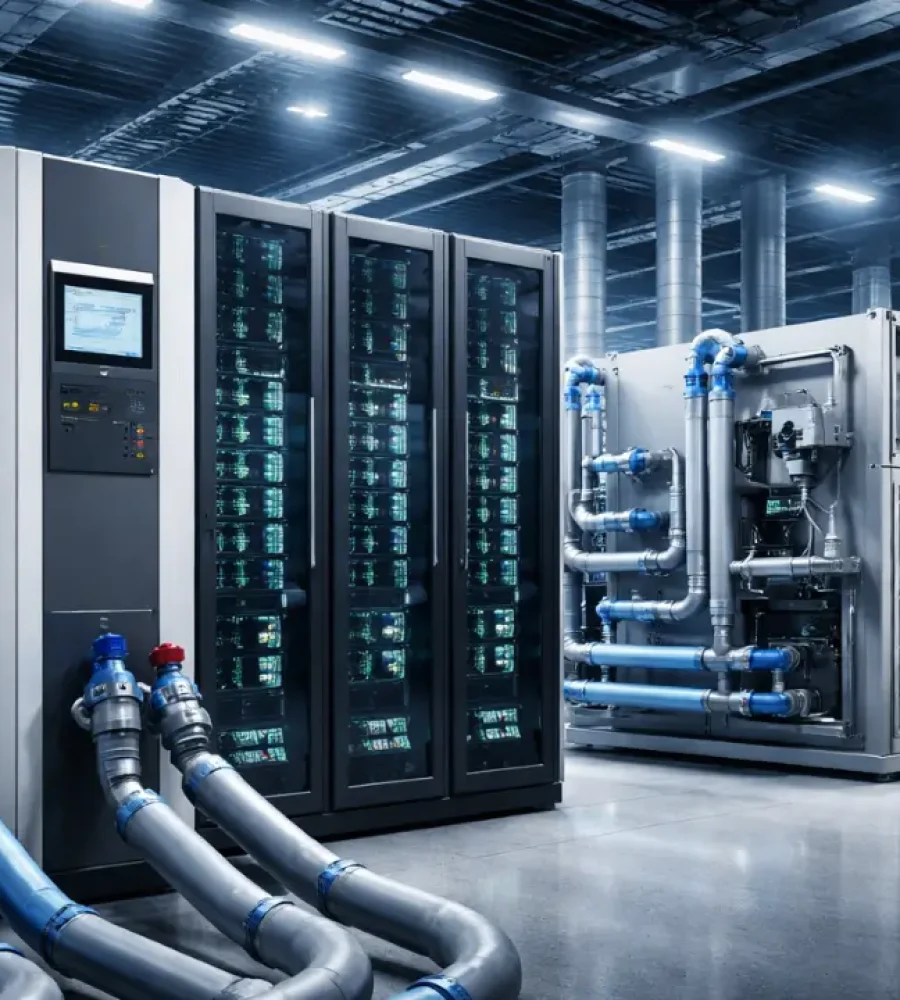
The operational implications of liquid cooling extend well beyond the physical installation of cold plates or coolant distribution units. Teams responsible for maintaining uptime must treat the cooling loop as an active infrastructure layer that operates alongside networking, compute hardware, and electrical systems. Pumps regulate fluid movement through server racks while heat exchangers transfer thermal energy away from the computing environment. Sensors continuously track flow rates, inlet temperatures, and system pressures so operators can identify anomalies before they affect server stability. Cooling fluids themselves require monitoring to maintain chemical stability and avoid corrosion or contamination inside the loop. This operational discipline introduces a level of mechanical awareness that previously remained confined to specialized facility engineering roles. The result is a data center environment where cooling infrastructure and compute hardware operate within a tightly coupled operational ecosystem.
When Cooling Becomes an Operational Discipline
Cooling historically remained a background process in conventional data centers because airflow systems functioned through large-scale environmental management rather than component-level thermal control. Computer room air conditioning units circulated chilled air through raised floors or containment aisles, and technicians monitored temperature ranges without directly interacting with the cooling medium itself. Liquid cooling disrupts that operational distance by routing coolant directly through equipment located inside server racks. Infrastructure teams must observe fluid behavior across pumps, connectors, and distribution manifolds that sit within the same operational footprint as computing hardware. Cooling therefore becomes increasingly visible to the teams responsible for maintaining compute reliability as rack-level liquid systems introduce operational oversight of thermal infrastructure alongside server management. Operators monitor temperature and flow conditions through control systems that integrate cooling telemetry with server performance data. This operational transparency reshapes the relationship between facility management and computing infrastructure oversight.
Technicians who previously relied on environmental monitoring systems now engage directly with the mechanical elements of liquid cooling infrastructure. Coolant distribution units regulate the circulation of fluid through cold plates attached to processors and graphics accelerators. Pumps, valves, and flow sensors require routine inspection to confirm that coolant moves through the system at stable rates. Monitoring platforms track these conditions continuously so that operators can detect irregular flow patterns or temperature deviations. Maintenance teams therefore incorporate cooling infrastructure into their daily operational checks rather than treating it as a background utility. This operational rhythm encourages closer collaboration between infrastructure engineers and server operations teams who share responsibility for system stability. As fluid infrastructure becomes embedded within server racks, operational awareness of cooling conditions grows more central to data center management.
Rethinking Infrastructure Workflows Beyond Air Management
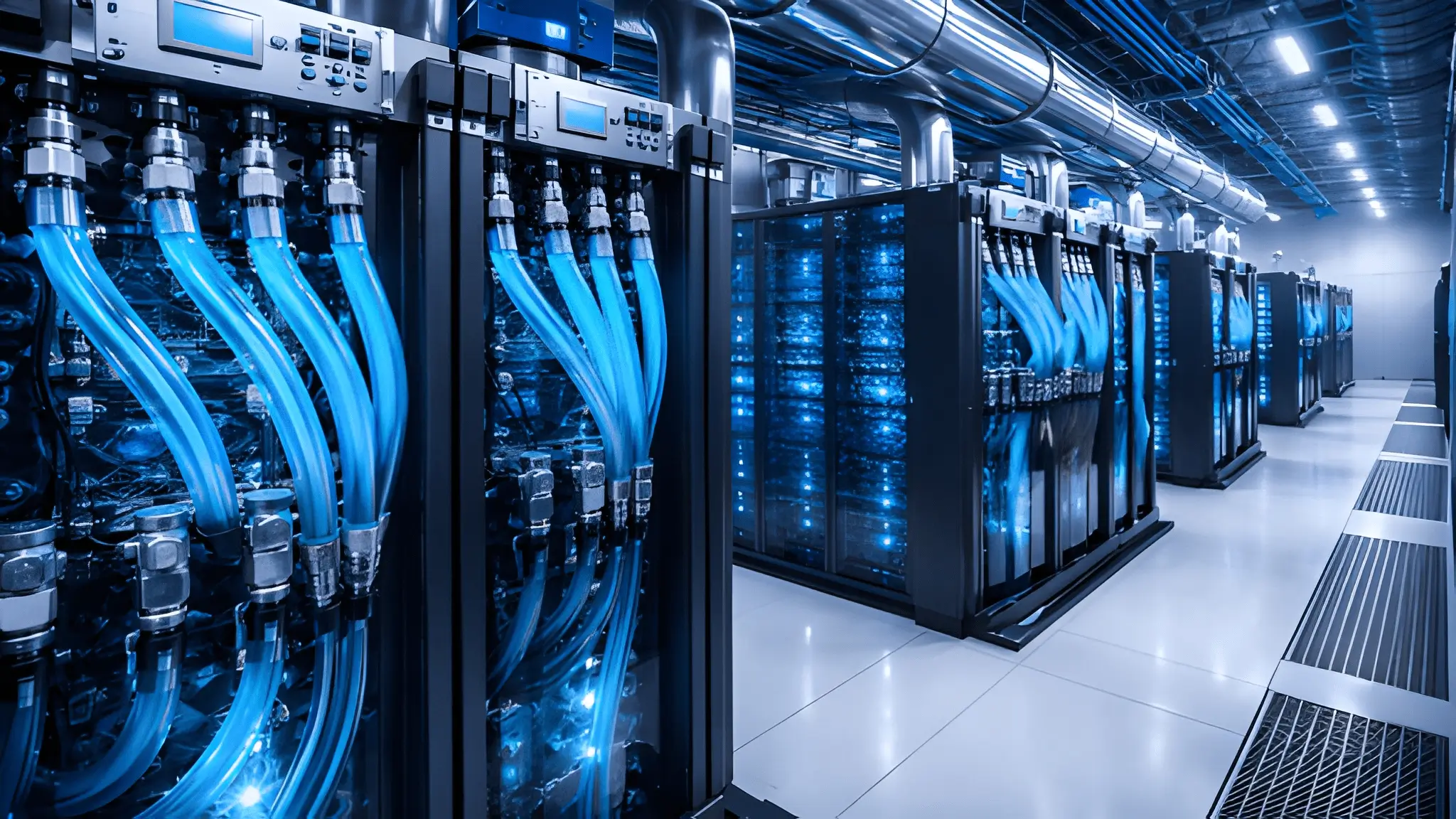
Operational workflows inside air-cooled facilities traditionally revolved around airflow management strategies such as aisle containment, vent tile placement, and temperature balancing across server rows. Liquid cooling changes these routines because thermal management occurs directly at the hardware level through circulating coolant rather than through large volumes of conditioned air. Teams must supervise pumps, piping connections, and coolant pathways that distribute fluid to processors generating significant heat loads. Each rack effectively becomes a small thermal network that interacts with facility-level heat rejection systems. Operational workflows therefore include fluid system inspections alongside traditional infrastructure checks. Engineers must confirm that connectors remain sealed and that fluid circulation remains stable across multiple rack loops. This adjustment transforms cooling management from spatial airflow control into a distributed fluid engineering discipline.
Fluid infrastructure introduces mechanical components that require inspection routines unfamiliar to teams accustomed to fan-driven cooling systems. Pumps must maintain stable pressure within coolant loops while valves regulate flow toward server cold plates. Quick-disconnect couplings allow technicians to isolate servers during maintenance, yet these connectors require careful handling to preserve sealing integrity. Operational teams monitor filtration systems that remove particulate contaminants from coolant streams circulating near sensitive electronic components. These inspections form part of the operational workflow that maintains reliability across liquid-cooled computing clusters. Cooling infrastructure therefore integrates with the same preventive maintenance schedules that govern electrical and networking equipment. Through this integration, cooling becomes a system that demands deliberate operational supervision rather than passive environmental management.
Preparing Operations Teams for Fluid-Based Infrastructure
Technicians entering liquid-cooled environments encounter a new technical vocabulary shaped by fluid dynamics and thermal engineering principles. Concepts such as pressure regulation, coolant chemistry, and hydraulic balancing influence the performance of cooling systems that run through server racks. Staff members who once focused on airflow optimization must now interpret sensor readings that describe fluid velocity and heat transfer within coolant loops. Training programs introduce these topics so that operators can diagnose irregularities and maintain stable cooling conditions. Teams also learn to work with specialized tools designed for handling valves, seals, and quick-connect fluid couplings. This knowledge ensures that technicians interact safely with infrastructure carrying coolant near high-performance computing hardware. Through continuous exposure to these systems, operations teams gradually integrate fluid engineering awareness into everyday infrastructure management.
Operational readiness in liquid-cooled data centers depends on technicians developing confidence in the physical components that deliver coolant to server hardware. Manifolds distribute fluid across racks while tubing networks guide coolant toward cold plates mounted on processors and accelerators. Pumps maintain the circulation required to carry heat away from high-density compute assemblies. Operators must understand how these components interact so they can isolate equipment during maintenance without disrupting adjacent racks. Training often includes supervised exercises that demonstrate how connectors detach and reseal under controlled conditions. These practical routines build familiarity with fluid systems that operate close to mission-critical computing equipment. Over time, technicians learn to treat liquid infrastructure with the same operational confidence they previously applied to power and networking systems.
The Cultural Shift Inside Data Center Operations
Data center operations historically separated mechanical infrastructure management from compute hardware oversight because cooling systems operated at the facility level rather than within the racks themselves. Liquid cooling changes that structure by introducing mechanical systems that interact directly with the computing hardware responsible for processing workloads. Pumps, manifolds, and fluid connectors operate within server rows, which places cooling infrastructure under the observation of technicians who previously focused on compute reliability alone. Daily operations therefore involve coordinated awareness between infrastructure teams responsible for cooling loops and IT teams managing high-performance processors. The proximity of fluid infrastructure to computing equipment encourages a more integrated operational culture across mechanical and digital systems. Operational decisions now require consideration of how thermal systems interact with server performance and hardware stability. This operational adjustment gradually reshapes how teams approach cooling responsibilities as rack-level liquid infrastructure introduces closer interaction between mechanical systems and computing hardware.
Operational coordination grows more complex when cooling infrastructure becomes embedded directly within server racks. Mechanical engineers traditionally supervised chillers, pumps, and building-level heat rejection equipment located outside the server hall environment. Liquid cooling places additional fluid systems inside the computing area where IT technicians perform hardware management tasks. Teams must communicate closely when installing servers connected to coolant loops because both mechanical integrity and compute reliability depend on correct installation procedures. Routine inspections often involve collaboration between facility engineers and IT technicians who verify cooling performance and server health simultaneously. This operational alignment encourages organizations to rethink how responsibilities divide across departments inside data center environments. Collaborative procedures ensure that cooling infrastructure supports computing performance without introducing operational uncertainty.
New Maintenance Rhythms in Liquid-Cooled Facilities
Air-cooled data centers typically organize maintenance schedules around environmental systems such as air handlers, fan arrays, and filtration equipment. Liquid cooling introduces additional infrastructure components that require inspection cycles aligned with computing operations. Pumps must maintain consistent circulation throughout coolant loops while heat exchangers transfer thermal energy away from server racks. Technicians inspect connectors, hoses, and valves to confirm that fluid distribution remains stable throughout the cooling network. Maintenance planning therefore expands to include systems that directly interact with rack-level compute hardware. These routines ensure that fluid loops operate reliably across environments hosting high-density computing workloads. Operational teams gradually develop maintenance rhythms that incorporate both mechanical infrastructure oversight and server hardware supervision.
Cooling fluids operate as the thermal transport medium within liquid-cooled data centers, which makes fluid condition an important operational consideration. Operators monitor coolant clarity, chemical balance, and filtration systems to maintain stable thermal transfer properties. Filters remove particulate contaminants that could accumulate within cold plates or narrow coolant channels located near processors. Routine inspections also verify that pumps operate smoothly and maintain steady pressure levels within distribution loops. Maintenance teams incorporate fluid management tasks into preventive maintenance programs designed to preserve cooling efficiency. These activities highlight the operational depth required to maintain stable cooling performance in environments supporting advanced computing systems. Over time, teams develop procedures that treat coolant management as a regular component of data center operations.
Handling Hardware Servicing in Liquid-Connected Racks
Hardware maintenance procedures change when servers connect directly to coolant distribution systems rather than relying solely on internal air circulation. Technicians must isolate coolant pathways before removing equipment from racks connected to liquid loops. Quick-disconnect fittings allow safe separation of fluid lines while minimizing coolant loss during servicing operations. Staff members follow structured procedures to ensure that connectors reseal properly when servers return to service. These routines prevent disruptions to adjacent racks sharing the same coolant distribution network. Hardware servicing therefore requires awareness of both computing components and the cooling infrastructure integrated into the rack environment. Teams adapt their servicing workflows so that liquid cooling systems remain stable throughout maintenance activities.
Servicing equipment inside liquid-cooled racks often requires coordination between multiple operational teams. IT technicians handle processor replacements, memory upgrades, and server diagnostics while facility engineers supervise coolant loop stability during maintenance procedures. Teams confirm that pumps continue circulating fluid through the remaining racks connected to the distribution system. Cooling connectors receive careful inspection before technicians reconnect hardware to the loop. These procedures ensure that cooling performance remains stable once servers return to operation. Maintenance coordination highlights how fluid infrastructure introduces new operational considerations into standard hardware servicing routines. Organizations refine these procedures over time to support reliable maintenance practices in liquid-cooled environments.
The Changing Role of Mechanical Infrastructure Teams
Mechanical infrastructure teams traditionally focused on maintaining building-level cooling systems such as chillers, cooling towers, and air conditioning units. Liquid cooling systems bring facility engineering responsibilities closer to the compute floor because fluid distribution networks extend directly into server racks. Facility engineers therefore interact more frequently with operational teams managing computing hardware. Cooling infrastructure requires monitoring of pump behavior, fluid temperatures, and system pressure across rack-level loops. Engineers also oversee heat exchangers that transfer thermal energy from coolant loops into facility cooling systems. These responsibilities place mechanical teams at the center of daily operational discussions about compute reliability. Their expertise in thermal management becomes directly relevant to the stability of high-performance computing environments.
The performance of liquid cooling infrastructure directly influences the stability of processors operating inside high-density racks. Facility engineers therefore contribute to operational planning related to compute deployments that generate large heat loads. Teams coordinate the installation of cooling distribution units before introducing clusters designed for artificial intelligence or scientific computing. Engineers review thermal conditions within coolant loops to confirm that cooling capacity aligns with expected compute performance. Operational monitoring systems integrate cooling telemetry with server metrics so that teams can detect irregularities early. These practices reinforce the connection between mechanical infrastructure oversight and computing system reliability. Cooling infrastructure thus becomes an operational component that engineers actively supervise throughout the computing lifecycle.
Operational Readiness for Fluid Infrastructure
Organizations deploying liquid cooling systems develop operational procedures designed to maintain safe and reliable handling of coolant infrastructure. Technicians perform scheduled inspections of pumps, manifolds, and connectors to confirm that cooling loops remain stable. Operational readiness involves documenting step-by-step procedures that guide technicians when interacting with fluid components. These routines help teams maintain consistent practices across facilities hosting liquid-cooled computing clusters. Training materials often describe how fluid systems operate so technicians understand the relationship between coolant flow and processor temperatures. Operational awareness ensures that teams approach liquid infrastructure with the same level of discipline applied to electrical systems. These procedures support safe operation within production environments that depend on reliable cooling performance.
Fluid connectors and distribution manifolds serve as key operational interfaces between cooling systems and computing hardware. Technicians must handle these components carefully because improper disconnection can disrupt coolant flow across the rack network. Operational procedures guide technicians through inspection routines that verify connector integrity and sealing conditions. Cooling loops require balanced flow conditions so that each server receives stable coolant circulation. Operators monitor these loops through digital control systems that display fluid temperatures and flow conditions. Regular observation helps technicians identify irregularities before they affect computing hardware connected to the system. Operational readiness therefore depends on disciplined monitoring and careful interaction with fluid infrastructure.
Coordination Between IT and Facility Operations
Operational boundaries between IT infrastructure teams and facility engineers have historically remained distinct within conventional data center environments. Server administrators focused on compute availability while mechanical teams maintained cooling systems positioned outside the immediate server environment. Liquid cooling alters that separation because coolant infrastructure operates directly alongside the hardware responsible for executing workloads. Cooling loops connect processors and accelerators to distribution units that rely on facility-level thermal systems for heat rejection. Teams therefore share responsibility for maintaining stable conditions that support continuous computing operations. Engineers and IT technicians review monitoring dashboards that present cooling telemetry alongside processor temperature readings and system alerts. This shared visibility creates operational alignment between departments that previously operated through parallel workflows.
Many modern monitoring platforms integrate mechanical telemetry with compute performance indicators inside unified operational dashboards used by data center operations teams. Operators observe coolant flow conditions, inlet temperatures, and pump activity while also tracking server health and workload stability. These integrated views allow teams to interpret how cooling behavior influences processor temperatures and system performance. Facility engineers may detect fluid circulation irregularities while IT technicians observe thermal changes within compute nodes. Collaborative analysis helps identify the origin of anomalies before they disrupt computing tasks. Teams therefore coordinate operational responses through shared monitoring environments that connect mechanical infrastructure with server management systems. This integration strengthens operational awareness across the entire data center ecosystem.
Adjusting Incident Response for Liquid-Cooled Environments
Incident response strategies inside liquid-cooled data centers require adjustments that reflect the presence of coolant distribution networks inside the server hall environment. Operational teams must consider both computing hardware behavior and fluid infrastructure conditions when responding to irregular system events. Cooling loops contain pumps, valves, and connectors that require inspection during troubleshooting procedures. Technicians evaluate whether coolant flow remains stable while also reviewing server diagnostics and processor temperatures. Incident response runbooks include instructions for isolating affected racks without interrupting fluid circulation across the broader system. These procedures allow teams to maintain operational continuity while investigating anomalies within the cooling infrastructure. Structured incident planning therefore becomes essential in facilities where cooling systems operate as active components of computing infrastructure.
Operational incidents involving cooling systems often require coordination between technicians who specialize in mechanical infrastructure and those responsible for compute hardware. A pump irregularity may influence processor temperatures within racks connected to the same coolant loop. Facility engineers review pump behavior and pressure stability while IT technicians analyze hardware telemetry that reflects temperature changes inside compute nodes. Teams communicate through established response channels that allow rapid exchange of diagnostic information. Cooling systems therefore become part of the operational incident landscape that technicians must understand during troubleshooting activities. Collaborative response procedures reduce uncertainty when teams encounter irregularities in environments where cooling infrastructure operates near sensitive computing hardware. This operational preparedness helps maintain service continuity across facilities supporting demanding workloads.
Training the Next Generation of Data Center Technicians
Workforce preparation for liquid-cooled facilities increasingly includes training programs that introduce technicians to fluid-based thermal management systems. Traditional data center training emphasized airflow management, electrical distribution systems, and server hardware diagnostics. Liquid cooling expands this knowledge base by introducing topics related to coolant circulation, hydraulic balancing, and connector integrity. Technicians must understand how cold plates transfer heat away from processors through circulating coolant loops. Training sessions often include demonstrations of fluid connectors and distribution manifolds so that technicians can observe how these systems interact with server racks. Exposure to these systems ensures that the workforce develops familiarity with the operational realities of liquid-cooled computing environments. This preparation supports safe and confident interaction with fluid infrastructure integrated into high-density computing clusters.
Hands-on operational experience plays an important role in helping technicians understand the practical dynamics of liquid cooling infrastructure. Teams often participate in supervised maintenance exercises where they practice isolating racks connected to coolant loops. These exercises demonstrate how quick-disconnect couplings operate and how coolant pathways remain sealed during servicing procedures. Technicians observe the behavior of pumps and sensors that regulate fluid circulation through distribution systems. Practical training helps operators recognize how thermal infrastructure interacts with computing hardware during everyday operations. These learning experiences gradually build familiarity with the equipment that supports liquid-cooled computing clusters. Through repeated exposure, technicians develop confidence in their ability to manage cooling systems integrated within server environments.
Operational Confidence in Liquid-Cooled Environments
Infrastructure teams initially approach liquid cooling systems with caution because fluid infrastructure operates close to valuable computing hardware. Over time, operational familiarity helps technicians understand the stability and reliability of well-designed cooling loops. Monitoring systems provide continuous visibility into coolant temperatures, pressure conditions, and flow stability. Operators learn how these parameters behave under normal workloads and during maintenance procedures. Experience allows teams to identify patterns that signal normal system behavior within liquid-cooled environments. This knowledge gradually reduces uncertainty surrounding fluid systems integrated into data center operations. Operational familiarity develops as technicians gain experience observing the stability and performance of liquid cooling infrastructure supporting high-density compute clusters.
Operational maturity develops through repeated interaction with cooling infrastructure and refinement of maintenance procedures. Teams document best practices that emerge from daily experience managing fluid systems within computing facilities. Runbooks evolve to include clear guidance on servicing servers connected to coolant loops and inspecting fluid connectors. Monitoring systems generate alerts that help technicians respond quickly when irregular conditions appear within cooling infrastructure. Operational knowledge accumulates through collaboration between mechanical engineers and server technicians. Over time, organizations establish standardized procedures that reflect lessons learned from operating liquid-cooled environments. These refined practices contribute to the overall reliability of data centers designed for advanced computing workloads.
From Experimentation to Routine Operations
Many organizations introduced liquid cooling through pilot deployments designed to support specialized computing workloads such as artificial intelligence training or scientific simulations. These initial installations allowed operators to observe how fluid infrastructure performed inside existing data center environments. Technicians monitored coolant flow behavior, system temperatures, and connector reliability while supporting demanding compute clusters. Early deployments therefore served as practical learning environments for teams adapting to fluid-based cooling architectures. Operational insights gathered during these deployments informed later infrastructure planning and maintenance practices. Engineers refined installation procedures, monitoring strategies, and maintenance routines based on observations gathered from pilot systems. These experiences helped transform experimental cooling deployments into operationally reliable infrastructure components.
Operational familiarity gradually shifts the perception of liquid cooling from experimental technology to routine infrastructure within modern data centers. Teams learn how fluid systems behave during normal workloads, maintenance operations, and hardware servicing activities. Monitoring platforms integrate cooling telemetry with server performance metrics to provide unified operational visibility. Engineers treat coolant loops as stable infrastructure components that support high-density computing clusters. Operational playbooks incorporate fluid infrastructure procedures alongside established electrical and networking maintenance practices. Facilities designed for advanced computing workloads now include liquid cooling as part of their standard thermal management architecture. These developments demonstrate how operational learning enables organizations to integrate fluid cooling systems into everyday data center management.
The Human Side of the Cooling Transition
The transition toward liquid cooling within modern data centers reflects more than a change in thermal engineering methods. Cooling infrastructure now operates as an active component of the computing environment rather than a distant facility utility. Technicians interact with pumps, manifolds, connectors, and fluid distribution systems that sit directly alongside high-performance computing hardware. These systems require operational awareness that combines mechanical engineering knowledge with traditional server management expertise. Teams therefore adapt workflows, maintenance practices, and training programs to accommodate the realities of fluid-based infrastructure. The operational learning curve surrounding liquid cooling highlights how technological change reshapes the human processes that support digital infrastructure. Through experience and collaboration, data center operations evolve to manage a new generation of thermal systems designed for the demands of modern computing.