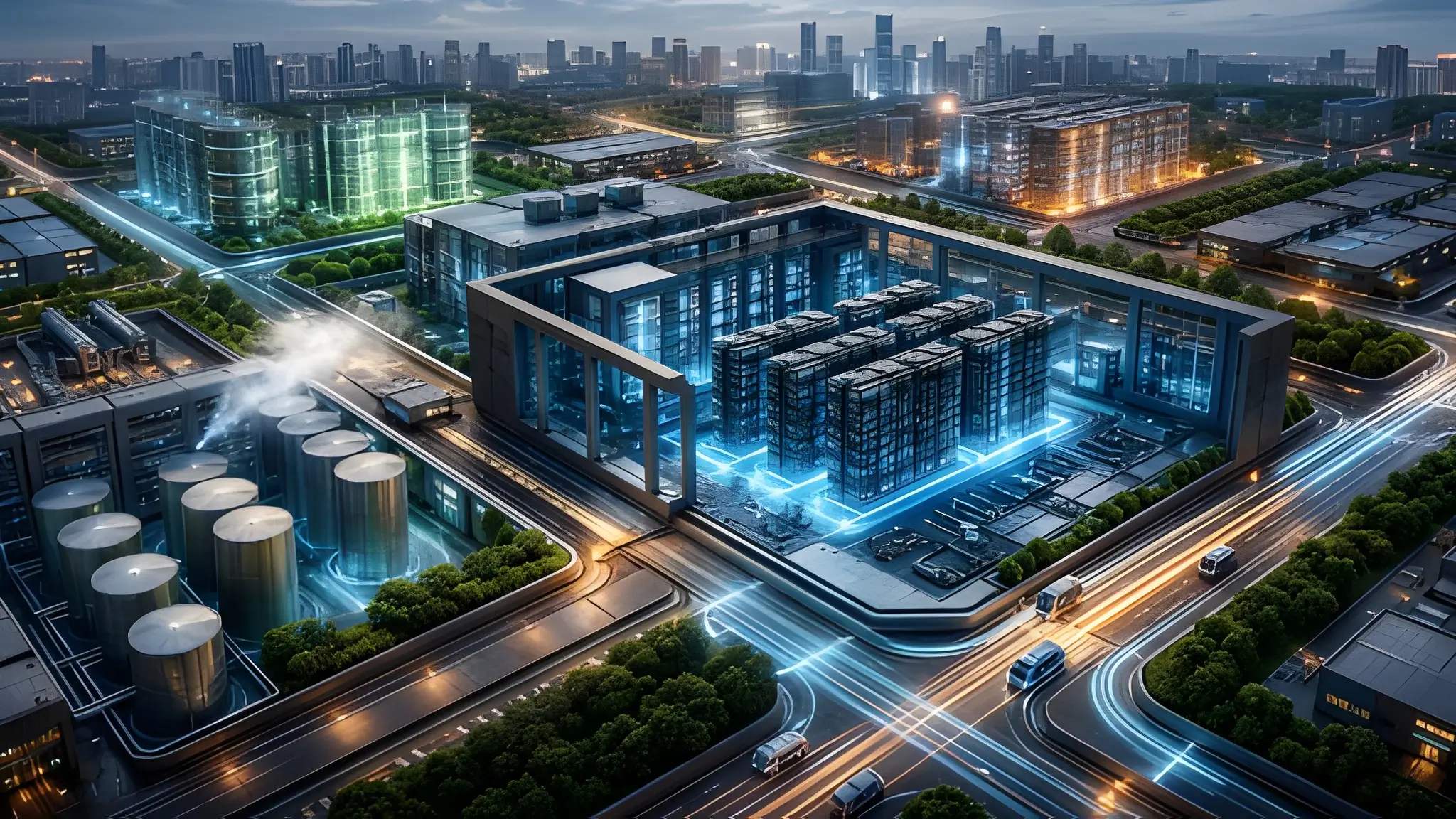
The idea of a single, unified data center has started to dissolve under the pressure of modern compute demands, where scale alone no longer guarantees efficiency or resilience. Hyperscale campuses now operate more like distributed ecosystems, where internal boundaries define behavior rather than external walls. Engineers no longer design facilities as monolithic entities because workload diversity introduces conflicting infrastructure requirements. Each segment inside a facility begins to act with its own logic, shaped by performance, power, and thermal needs. This shift reflects a deeper architectural transformation that aligns physical infrastructure with computational intent. The result forms a new paradigm where internal segmentation dictates how hyperscale environments evolve and perform.
The Campus Within a Campus
Hyperscale facilities increasingly resemble clusters of distributed environments that operate with varying degrees of independence based on workload and infrastructure design principles. Architects divide internal spaces based on operational requirements rather than structural convenience. Each segment often operates with tailored infrastructure configurations that align with specific workload requirements. This design approach removes the inefficiencies associated with uniform deployment strategies across diverse applications. Engineers treat each segment as a mini data center that aligns with a distinct performance profile. The broader campus then functions as an aggregation layer rather than a singular operational entity.
Shared infrastructure does not imply shared behavior inside modern hyperscale campuses. Each internal segment can maintain logical separation through control planes and orchestration layers designed to isolate workloads. This separation allows operators to deploy updates or reconfigure systems without affecting adjacent environments. Infrastructure teams gain flexibility because they can isolate issues within a confined segment rather than across the entire campus. This model reduces systemic complexity while improving operational clarity. The campus thus becomes a federation of controlled environments instead of a unified system.
Architectural Zoning Beyond Physical Layout
Physical layout no longer dictates architectural decisions in hyperscale facilities. Designers increasingly organize infrastructure based on workload sensitivity, latency requirements, and compute density rather than relying solely on spatial constraints. These zones operate with distinct infrastructure policies that govern power usage, cooling strategies, and network topology. Such zoning enables precise control over performance variables within each segment. It also supports rapid adaptation to evolving compute demands without large-scale redesigns. The facility therefore evolves through internal restructuring rather than external expansion.
The role of the central infrastructure layer shifts toward aggregation and coordination rather than direct control. Core systems now facilitate communication and resource sharing across segmented environments. Each segment contributes to overall capacity while operating with a degree of autonomy enabled by software-defined and distributed system design. This structure supports scalability without introducing unnecessary interdependencies. The aggregation layer ensures coherence across the campus without enforcing uniformity. It effectively redefines what constitutes the core of a hyperscale facility.
Workload-Specific Zones, Not Generic Halls
AI training workloads demand high-density compute environments with unique power and cooling requirements. Facilities increasingly deploy infrastructure optimized for AI training workloads, often separating these environments logically or physically to support their intensive requirements. Engineers design these zones with liquid cooling systems and optimized power delivery paths. This specialization improves performance while reducing inefficiencies associated with generalized infrastructure. It also ensures that resource allocation aligns with workload intensity. Each AI training zone operates as a focused compute environment within the broader campus.
Inference workloads require low-latency environments that prioritize rapid data processing over raw computational power. Designers configure infrastructure environments to support inference workloads with optimized data paths and latency-aware networking. This setup reduces latency while maintaining consistent throughput across applications. Operators adjust infrastructure parameters to align with real-time processing demands. The separation from training zones prevents resource contention and performance degradation. Each inference zone thus delivers predictable and efficient operational behavior.
Storage workloads introduce different performance and reliability requirements compared to compute-intensive tasks. Facilities allocate infrastructure resources that prioritize storage-specific requirements such as durability, redundancy, and access efficiency. Engineers implement tailored storage architectures that support both high-throughput and archival use cases. This segmentation ensures that storage operations do not interfere with compute performance. It also enables targeted optimization of data management processes. Each storage zone functions as a specialized environment within the campus.
Networking infrastructure is often architected as a distinct layer with configurations tailored to workload-specific data flow patterns. Engineers design these zones with customized topologies that align with specific data flow patterns. This approach enhances network efficiency while reducing congestion across the facility. It also allows for independent scaling of networking resources without affecting compute or storage environments. The separation ensures that network performance remains consistent under varying workloads. Networking thus becomes a distinct operational layer within hyperscale campuses.
Segmentation as a Performance Multiplier
Segmentation can improve throughput by reducing resource contention and aligning infrastructure with workload-specific requirements. Each zone operates with dedicated infrastructure that aligns with its performance requirements. This isolation eliminates bottlenecks that arise from resource contention. Engineers can fine-tune each segment to achieve optimal performance without compromise. The result leads to higher efficiency across the entire facility. Segmentation therefore acts as a multiplier for throughput rather than a constraint.
Latency can decrease when workloads operate within optimized environments that reduce unnecessary data movement. Designers position critical resources closer to the workloads they support. This proximity reduces communication delays and improves response times. Each segment maintains its own optimized network paths to support specific applications. The architecture ensures that latency-sensitive workloads receive prioritized treatment. Segmentation thus directly contributes to improved latency performance.
Resource Efficiency Through Targeted Allocation
Targeted allocation of resources within segmented environments enhances overall efficiency. Each zone receives infrastructure tailored to its specific workload demands. This approach prevents overprovisioning and underutilization across the facility. Engineers can dynamically adjust resource distribution based on real-time requirements. The system maintains balance without introducing inefficiencies. Segmentation therefore enables precise control over resource utilization.
Stability improves when workloads operate within isolated environments that shield them from external fluctuations. Each segment maintains consistent performance regardless of activity in adjacent zones. This stability ensures predictable behavior across diverse applications. Operators can maintain service quality without constant intervention. The architecture supports sustained performance under varying conditions. Segmentation thus reinforces stability within hyperscale environments.
Internal Multi-Tenancy Without External Colocation
Hyperscale operators increasingly implement internal segmentation strategies that share similarities with colocation-style isolation through virtualization and workload separation. Each internal environment functions as a logically isolated tenant with dedicated infrastructure and governance policies. Engineers configure resource boundaries to prevent interference between workloads that share the same physical campus. This design ensures predictable performance across diverse compute environments without requiring separate facilities. Operational teams manage these internal tenants through centralized orchestration frameworks that maintain consistency across segments. The approach allows hyperscalers to achieve tenant-like isolation while retaining full control over infrastructure.
Internal multi-tenancy introduces governance structures that mimic external service-level agreements without involving third parties. Each segment adheres to predefined operational policies that regulate performance, security, and resource usage. Engineers enforce these policies through automated control systems that monitor compliance in real time. This governance model supports accountability within a single organizational structure. It also enables granular control over infrastructure behavior across different segments. The result creates a structured environment that balances autonomy with centralized oversight.
Resource Partitioning Without Physical Separation
Physical separation no longer defines workload isolation within hyperscale campuses. Engineers achieve partitioning through virtualization, software-defined infrastructure, and network segmentation. Each internal tenant operates within its own resource pool that aligns with specific workload requirements. This method reduces the need for additional physical infrastructure while maintaining operational independence. It also supports efficient utilization of shared resources across the facility. Internal partitioning thus replaces traditional colocation boundaries with flexible architectural constructs.
Internal multi-tenancy enhances operational flexibility by allowing rapid reconfiguration of segmented environments. Teams can adjust resource allocations or modify infrastructure parameters without affecting other segments. This flexibility supports dynamic workload demands and evolving compute patterns. It also enables faster deployment of new services within isolated environments. Operators maintain control over changes while ensuring stability across the campus. The model therefore combines agility with reliability in hyperscale operations.
Micro-Architectures Driven by Compute Behavior
Burst workloads introduce unpredictable demand patterns that require flexible infrastructure configurations. Engineers design specific segments that accommodate rapid scaling without impacting steady-state environments. These segments operate with elastic resource pools that expand or contract based on workload intensity. This approach ensures responsiveness while maintaining efficiency across the facility. It also prevents resource contention between burst and continuous workloads. Each burst-oriented segment adapts dynamically to shifting compute demands.
Steady-state workloads require consistent performance over extended periods without significant fluctuations. Designers create segments that prioritize stability and predictable resource allocation. These environments operate with fixed infrastructure configurations that support continuous operations. This stability reduces the need for frequent adjustments or interventions. It also ensures reliable performance across long-running applications. Steady-state segments thus provide a foundation for sustained compute activity.
Real-time workloads demand immediate processing with minimal latency and high reliability. Engineers develop specialized segments that optimize for responsiveness and data proximity. These environments operate with dedicated network paths and prioritized resource access. This configuration supports applications that require instant data processing and decision-making. It also minimizes delays that could impact performance. Real-time segments therefore enable efficient handling of latency-sensitive workloads.
Behavioral Mapping to Infrastructure Design
Infrastructure design increasingly reflects the behavioral characteristics of workloads rather than hardware specifications. Engineers analyze compute patterns to determine optimal segmentation strategies. Each segment aligns with a specific workload behavior that dictates its infrastructure requirements. This mapping ensures that resources match operational needs without excess provisioning. It also supports efficient scaling and adaptation within the facility. Behavioral-driven design thus enhances alignment between infrastructure and compute demands.
Power Domains as Architectural Boundaries
Power distribution within hyperscale facilities now follows segmented architectures that create independent electrical domains. Each domain operates with its own power infrastructure tailored to specific workload requirements. Engineers design these domains to support varying density levels across different segments. This independence enhances reliability by isolating potential failures within confined areas. It also allows for targeted optimization of power usage. Electrical segmentation thus forms a critical component of modern data center design.
Different workloads require varying power densities that cannot be efficiently supported by uniform infrastructure. Designers allocate power resources based on the density requirements of each segment. High-density zones receive enhanced power delivery systems that support intensive compute operations. Lower-density areas operate with standard configurations that optimize efficiency. This targeted allocation prevents overloading and underutilization across the facility. Power segmentation therefore aligns energy distribution with workload demands.
Reliability Through Isolation
Isolating power domains reduces the risk of cascading failures within hyperscale environments. Each segment maintains its own backup systems and redundancy mechanisms. This setup ensures that disruptions remain localized and do not affect the entire facility. Engineers can address issues within a specific domain without impacting adjacent segments. This approach enhances overall system resilience. Power isolation thus contributes to improved reliability across the campus.
Adaptive power management systems enable dynamic control over energy distribution within segmented environments. Operators adjust power allocation based on real-time workload demands. This flexibility supports efficient energy usage while maintaining performance. It also allows for rapid response to changing compute requirements. Engineers integrate monitoring tools that provide visibility into power consumption across segments. Adaptive management therefore enhances operational efficiency within hyperscale facilities.
Thermal Micro-Climates Inside a Single Facility
Modern hyperscale campuses support multiple cooling technologies within the same facility. Engineers implement liquid cooling, air cooling, and hybrid systems across different segments. Each cooling method aligns with the thermal requirements of specific workloads. This coexistence enables efficient temperature management across diverse environments. It also supports high-density compute operations without compromising performance. Thermal segmentation thus allows for optimized cooling strategies within a unified campus.
Localized temperature control ensures that each segment maintains optimal operating conditions. Engineers deploy sensors and control systems that monitor thermal behavior within specific zones. This setup allows for precise adjustments based on real-time data. It also prevents overheating and improves energy efficiency. Each segment operates within its own thermal parameters that align with workload requirements. Localized control therefore enhances cooling effectiveness across the facility.
Thermal Isolation Between Zones
Thermal isolation prevents heat transfer between segments that operate under different conditions. Designers use physical barriers and airflow management techniques to maintain separation. This approach ensures that high-density zones do not impact adjacent environments. It also supports stable performance across diverse workloads. Engineers maintain consistent thermal conditions within each segment. Thermal isolation thus contributes to overall system stability.
Dynamic cooling systems enable real-time adaptation to changing workload demands. Operators adjust cooling parameters based on current thermal conditions within each segment. This flexibility supports efficient energy usage and prevents resource wastage. It also ensures that cooling systems respond effectively to fluctuations in compute activity. Engineers integrate automation tools that streamline these adjustments. Dynamic cooling therefore enhances operational efficiency within hyperscale campuses.
Network Fabrics That Mirror Internal Segmentation
Network design within hyperscale facilities reflects the segmentation of compute environments. Engineers create distinct network topologies that align with specific workload requirements. Each segment operates with a tailored network architecture that supports its data flow patterns. This alignment improves efficiency and reduces congestion. It also enables independent scaling of network resources. Segment-aligned networks thus enhance overall performance within the facility.
Data-intensive workloads require high-bandwidth network environments that support large data transfers. Designers allocate dedicated zones with enhanced network capacity to meet these demands. This setup ensures consistent performance without impacting other segments. It also supports efficient handling of large-scale data operations. Engineers optimize network configurations to align with workload requirements. High-bandwidth zones therefore enable efficient data processing within hyperscale campuses.
Latency-sensitive applications operate within network segments optimized for minimal delay. Engineers design these segments with direct communication paths and reduced network hops. This configuration improves response times and supports real-time processing. It also ensures consistent performance across critical applications. Each segment maintains its own network policies that prioritize latency reduction. Low-latency segmentation thus enhances responsiveness within the facility.
Network isolation protects segments from external threats and internal disruptions. Engineers implement security measures that restrict access between segments. This approach ensures that issues within one segment do not affect others. It also supports stable network operations across the facility. Operators maintain control over network interactions through centralized management systems. Network isolation therefore contributes to both security and reliability.
Decoupling Failure Domains Through Internal Isolation
Hyperscale facilities now treat failure containment as a primary design principle rather than an operational afterthought. Engineers define strict boundaries that prevent localized issues from spreading across the entire campus. Each segment operates with independent control systems that detect and isolate disruptions in real time. This containment approach reduces systemic risk while maintaining continuity across unaffected zones. It also allows teams to resolve incidents without triggering widespread performance degradation. Internal isolation therefore transforms failure management into a controlled and predictable process.
Redundancy no longer exists only at the facility level because each segment now embeds its own resilience mechanisms. Engineers design internal environments with dedicated backup systems that activate independently when required. This layered redundancy ensures that workloads continue to operate despite localized disruptions. It also reduces reliance on centralized failover systems that may introduce latency or complexity. Each segment maintains its own operational integrity under varying conditions. Redundant architectures within segments thus strengthen overall system resilience.
Independent Operational Recovery Paths
Recovery processes within segmented environments follow independent pathways that minimize cross-segment dependencies. Teams can initiate restoration procedures within a specific zone without affecting adjacent systems. This independence accelerates recovery times while maintaining stability across the campus. It also simplifies troubleshooting by narrowing the scope of investigation. Engineers design recovery workflows that align with the unique characteristics of each segment. Independent recovery paths therefore enhance operational efficiency during disruptions.
Architectural decisions increasingly incorporate awareness of failure domains during the design phase. Engineers analyze potential risk scenarios and map them to specific segments within the facility. This proactive approach ensures that infrastructure design supports effective containment strategies. It also enables better planning for redundancy and recovery mechanisms. Each segment reflects a deliberate balance between performance and resilience. Failure domain awareness thus becomes a foundational element of hyperscale architecture.
Dynamic Reconfiguration of Internal Zones
Software-defined systems enable dynamic control over segmented environments within hyperscale campuses. Engineers use orchestration platforms to modify infrastructure configurations without physical intervention. This capability supports rapid adaptation to changing workload requirements. It also allows for seamless integration of new technologies within existing segments. Each zone operates with programmable infrastructure that responds to operational demands. Software-defined control thus enhances flexibility within the facility.
Workloads can shift between segments based on real-time conditions and resource availability. Operators use automated systems to redistribute compute tasks without disrupting ongoing operations. This dynamic allocation improves efficiency while maintaining performance across the campus. It also supports balanced resource utilization across different segments. Engineers design systems that respond quickly to fluctuations in demand. Real-time redistribution therefore enables adaptive infrastructure management.
Infrastructure as a Fluid Resource
Infrastructure within segmented environments behaves as a fluid resource that can be reallocated as needed. Engineers remove rigid boundaries that limit flexibility while maintaining logical isolation. This approach supports continuous optimization of resource usage across the facility. It also enables rapid scaling of specific segments based on demand. Operators maintain control through centralized orchestration systems. Fluid infrastructure thus represents a key evolution in hyperscale design.
Automation drives continuous optimization within dynamically reconfigurable environments. Engineers deploy monitoring systems that provide real-time insights into infrastructure performance. These systems trigger adjustments that align resources with workload demands. This process reduces inefficiencies while maintaining operational stability. It also supports proactive management of infrastructure across segments. Continuous optimization therefore enhances performance within hyperscale campuses.
The Economics of Internal Fragmentation
Breaking a facility into micro-architectures improves capital efficiency by aligning investment with workload requirements. Engineers allocate resources to specific segments based on their operational needs. This targeted approach reduces unnecessary expenditure on generalized infrastructure. It also supports better utilization of existing assets across the campus. Operators can scale individual segments without expanding the entire facility. Segmentation thus enhances financial efficiency within hyperscale environments.
Segmentation enables precise utilization of resources by matching infrastructure to workload demands. Each segment operates with tailored configurations that prevent overprovisioning. This alignment improves overall efficiency across the facility. It also supports dynamic adjustments based on changing compute patterns. Engineers maintain balance through continuous monitoring and optimization. Optimized utilization therefore contributes to sustainable operations.
Cost Control Through Targeted Scaling
Targeted scaling allows operators to expand specific segments without affecting the entire campus. This approach reduces costs associated with large-scale infrastructure upgrades. It also supports incremental growth based on demand. Engineers design segments that can scale independently while maintaining integration with the broader system. This flexibility enhances financial planning and resource allocation. Cost control thus becomes more manageable within segmented environments.
Segmented architectures provide economic resilience by adapting to fluctuations in workload demand. Operators can adjust resource allocation across segments to maintain efficiency during varying conditions. This adaptability reduces the impact of demand variability on operational costs. It also supports long-term sustainability within hyperscale facilities. Engineers design systems that respond effectively to changing requirements. Economic resilience therefore strengthens the viability of segmented architectures.
Operational Orchestration Across Micro-Environments
Managing multiple micro-architectures requires unified control systems that coordinate operations across segments. Engineers implement centralized platforms that provide visibility into infrastructure performance. These systems enable consistent management while preserving segment autonomy. Operators can monitor and adjust resources across the campus from a single interface. This approach simplifies operational complexity while maintaining flexibility. Unified control layers thus support efficient management of segmented environments.
Telemetry systems provide real-time data that informs operational decisions within hyperscale facilities. Engineers collect and analyze performance metrics across different segments. This data enables proactive adjustments that optimize resource usage and performance. It also supports predictive maintenance and issue resolution. Operators rely on telemetry to maintain efficiency across the campus. Data-driven decision making therefore enhances operational effectiveness.
AI-Assisted Infrastructure Management
Artificial intelligence plays a growing role in managing segmented environments within hyperscale campuses. Engineers deploy AI systems that analyze data and recommend infrastructure adjustments. These systems improve efficiency by identifying patterns and optimizing resource allocation. They also support automated responses to changing workload conditions. Operators benefit from enhanced visibility and control over complex environments. AI-assisted management thus represents a significant advancement in data center operations.
Coordination mechanisms ensure that segmented environments operate cohesively within a unified campus. Engineers design systems that facilitate communication and resource sharing across segments. This coordination supports efficient operation without compromising isolation. It also enables seamless integration of new segments into the existing infrastructure. Operators maintain balance through centralized oversight and distributed control. Cross-segment coordination therefore enhances overall system performance.
From Modular to Granular: The Next Step in Design Evolution
Data center design has moved beyond modular container-based architectures toward more granular segmentation strategies. Engineers now focus on dividing infrastructure into smaller, highly specialized environments within fixed campuses. This transition supports greater flexibility and precision in infrastructure management. It also enables targeted optimization for specific workloads. Modular design principles still influence architecture but no longer define it completely. Granular segmentation thus represents the next stage in design evolution.
Granular architectures provide fine-grained control over infrastructure components within each segment. Engineers can adjust parameters at a detailed level to optimize performance and efficiency. This control supports customization that aligns with workload requirements. It also enables rapid adaptation to changing conditions within the facility. Operators maintain oversight through centralized systems that manage these adjustments. Fine-grained control therefore enhances operational precision.
Hyper-Specialization of Internal Zones
Internal zones within hyperscale campuses now exhibit high levels of specialization that reflect specific workload characteristics. Engineers design each segment with unique configurations that support distinct operational needs. This specialization improves performance while reducing inefficiencies. It also supports the coexistence of diverse workloads within a single facility. Operators manage these zones as part of a cohesive system. Hyper-specialization thus defines modern hyperscale architecture.
The shift toward granular segmentation transforms hyperscale facilities into distributed internal systems. Each segment operates as an independent node within a larger network. Engineers design these systems to communicate and collaborate while maintaining autonomy. This structure supports scalability and resilience across the campus. It also redefines how infrastructure operates within a single physical boundary. Distributed internal systems therefore represent the future of data center design.
The End of the Monolithic Data Center
The traditional concept of a single, unified data center no longer aligns with modern infrastructure realities. Hyperscale campuses now function as collections of independent environments that operate under a shared framework. Engineers design these facilities to support diverse workloads without enforcing uniformity. This shift reflects the growing complexity of compute demands across industries. It also highlights the limitations of monolithic architecture in addressing modern challenges. The definition of a data center therefore continues to evolve.
Internal distribution within hyperscale facilities has emerged as the new standard for infrastructure design. Each segment contributes to overall capacity while maintaining operational independence. Engineers leverage segmentation to optimize performance, reliability, and efficiency across the campus. This approach supports scalability without introducing unnecessary complexity. It also enables rapid adaptation to changing technological requirements. Internal distribution thus defines the future of hyperscale environments.
Alignment Between Infrastructure and Workloads
Modern data center design prioritizes alignment between infrastructure and workload characteristics. Engineers tailor each segment to support specific compute behaviors and operational needs. This alignment improves efficiency while reducing resource waste. It also enhances performance across diverse applications. Operators maintain balance through continuous optimization and monitoring. Infrastructure alignment therefore becomes a key driver of innovation in hyperscale design.
Hyperscale facilities now resemble internally distributed systems that operate within a unified physical boundary. Each segment functions as a node within a larger network that supports coordinated operations. Engineers design these systems to balance autonomy with integration. This structure enhances resilience and scalability across the campus. It also redefines how infrastructure supports modern compute demands. The monolithic data center has effectively transitioned into a distributed internal ecosystem.