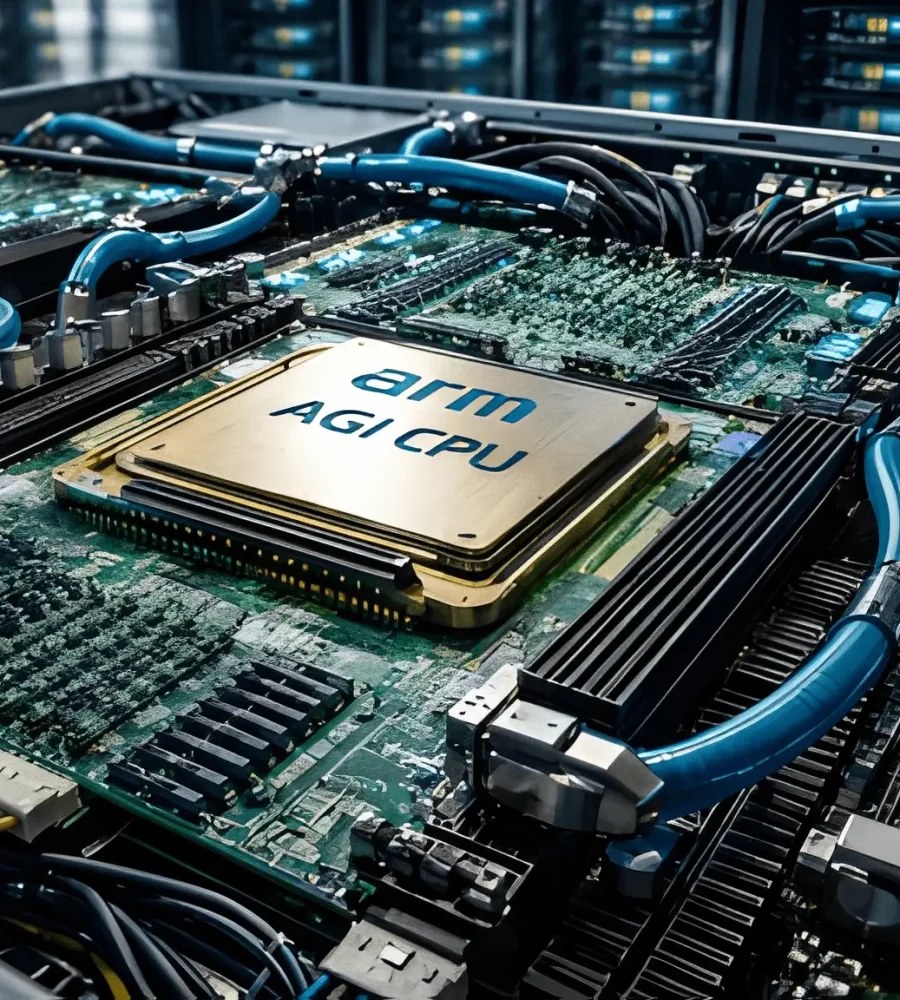
Cloud infrastructure no longer behaves like a static utility that teams provision and forget, as its role now aligns directly with how modern computation executes and evolves. The emergence of Neocloud reflects an evolving architectural direction where infrastructure increasingly integrates capabilities traditionally handled by separate platform and application layers. This shift does not simply expand capabilities but redefines how systems express intent, process data, and execute workloads at scale. AI workloads have accelerated this transformation by increasing the need for tighter coordination across compute, storage, and networking layers in specific high-performance environments. The result is an environment where infrastructure plays a more active role in workload execution through automation and orchestration capabilities. This transformation contributes to the concept of platformization, where cloud environments increasingly evolve toward more integrated and cohesive systems.
A Structural Shift in Cloud Thinking
Infrastructure once required operators to manually define configurations across multiple layers, leading to fragmentation and operational overhead. Neocloud aims to reduce this fragmentation by consolidating elements of infrastructure, runtime, and orchestration into more unified operational layers. This evolution does not merely optimize performance but changes how developers and systems interact with infrastructure entirely. The shift toward platformization enables systems to increasingly translate high-level intent into execution through declarative and policy-driven mechanisms. This capability becomes essential as AI workloads introduce variability, scale unpredictability, and require dynamic resource allocation. Neocloud responds by incorporating higher levels of automation into infrastructure behavior, often supported by telemetry and policy frameworks.
Infrastructure Becomes Declarative, Not Configured
Infrastructure management traditionally depended on explicit configuration, where engineers defined every parameter required for deployment and scaling. Neocloud builds on a declarative paradigm where users specify desired outcomes and systems work toward achieving them through automated reconciliation. This approach reduces complexity while increasing adaptability, as systems can respond dynamically to changing workload requirements. Declarative infrastructure aligns closely with AI workloads, which often require continuous optimization and rapid scaling adjustments. The platform can interpret certain aspects of desired state, such as scaling requirements, while performance and latency optimization often require additional configuration or tooling. This shift removes the burden of low-level configuration while enabling more consistent and predictable system behavior.
Control planes within Neocloud environments are evolving beyond basic orchestration toward more automated decision-making capabilities. These systems monitor workload behavior and environmental conditions, then modify resource allocation without requiring human intervention. Autonomy enhances system efficiency while reducing latency in response to changing demands.Infrastructure commonly supports self-healing and self-scaling capabilities, while optimization increasingly relies on additional monitoring and tuning mechanisms. This transformation creates a feedback loop where system performance informs future decisions in real time. Declarative models combined with autonomous control planes redefine infrastructure as an adaptive system rather than a static configuration layer.
Runtime Environments as the New Differentiation Layer
Neocloud competition is increasingly influenced by runtime environments that are optimized for specific workload types. AI training, inference, and data processing each require distinct execution characteristics that general-purpose environments cannot efficiently provide. Providers now design runtimes that optimize memory access patterns, parallel processing, and hardware utilization. These optimizations directly influence performance outcomes and developer productivity. Runtime environments become a key differentiator because they determine how efficiently workloads execute within the same underlying infrastructure. This shift moves competitive advantage away from raw infrastructure capacity toward execution efficiency and workload alignment.
Abstraction Meets Performance
Modern runtime environments balance abstraction with performance by exposing high-level interfaces while maintaining low-level optimization capabilities. Developers interact with simplified APIs that hide complexity, yet the underlying system executes tasks with hardware-level efficiency. This dual approach ensures that ease of use does not compromise performance outcomes. Neocloud platforms often integrate components such as schedulers and execution engines, while compilers and optimization layers may exist separately depending on the stack. Runtime environments evolve into programmable layers that adapt dynamically based on workload characteristics. This adaptability enables consistent performance across diverse workloads without requiring manual tuning.
Throughput Becomes the New Cloud Benchmark
Traditional cloud performance metrics focused on compute capacity, storage size, and network bandwidth, which no longer capture the full picture of system effectiveness. Neocloud introduces throughput as an increasingly important benchmark alongside traditional metrics such as latency, availability, and resource utilization. This shift reflects the needs of AI systems that depend on continuous data processing and rapid iteration cycles. Throughput measures how efficiently systems handle end-to-end workflows rather than isolated components. It provides a more accurate representation of real-world performance in complex environments. This change redefines how organizations evaluate and optimize cloud infrastructure.
Data Movement as a Bottleneck
Data movement is widely recognized as a critical factor influencing performance in many AI and data-intensive workloads. Neocloud platforms address this challenge by optimizing data locality, caching strategies, and network architectures. These optimizations reduce latency and improve overall system efficiency. Efficient data movement ensures that compute resources remain fully utilized rather than waiting for input data. Platforms integrate data pipelines directly into infrastructure to minimize transfer overhead. This integration transforms data handling from an external concern into a core infrastructure capability.
Neocloud transforms infrastructure into the central execution backbone for modern systems, integrating orchestration directly into its core behavior. This integration allows infrastructure to participate more directly in managing workflows, often in conjunction with orchestration systems. Systems operate more efficiently as orchestration becomes an inherent capability rather than an add-on. This shift simplifies architecture while enhancing reliability and scalability. Infrastructure increasingly influences how workloads execute through integrated orchestration and automation capabilities. This evolution positions Neocloud as a foundational operating model for AI-driven environments.
Orchestration capabilities embedded within Neocloud platforms enable seamless coordination of complex workflows across distributed environments. These capabilities handle scheduling, scaling, and dependency management automatically. Embedded orchestration reduces operational overhead while improving system responsiveness. Workflows become continuous processes rather than discrete tasks managed externally. This approach aligns with the dynamic nature of AI workloads, which require constant adaptation. Infrastructure evolves into a cohesive system that orchestrates itself based on workload requirements.
The Rise of Embedded Intelligence in Cloud Platforms
Neocloud control planes increasingly incorporate advanced automation and, in some cases, early-stage intelligent capabilities for improving decision-making. This evolution transforms control planes from static orchestration layers into adaptive systems capable of continuous optimization. These capabilities can support more responsive scaling behavior, although predictive demand handling remains limited to specific implementations. These systems rely on feedback loops that connect telemetry, execution data, and policy frameworks. This integration allows the platform to refine its behavior without requiring manual intervention from operators. The result is a system that evolves dynamically based on observed patterns and workload characteristics.
Agentic Automation Redefines Operations
Automation within Neocloud environments is evolving beyond scripted workflows, with early adoption of more context-aware systems in specific use cases. These agents analyze system states and execute decisions that align with predefined objectives such as efficiency, resilience, and performance. These approaches can reduce the need for human oversight in certain operational scenarios, though broad adoption remains in progress. Systems become capable of resolving conflicts, reallocating resources, and optimizing execution paths autonomously. This shift introduces a new operational paradigm where infrastructure actively participates in decision-making processes. The presence of embedded agents ensures that infrastructure behavior remains aligned with evolving workload demands.
Neocloud architectures increasingly position data platforms as a central component, particularly in AI and data-intensive environments. This centralization reflects the increasing importance of data in driving AI workloads and decision-making processes. Unified data layers provide consistent access, governance, and integration across all components of the platform. This approach aims to reduce fragmentation, although data silos and integration challenges still persist in many systems. Data platforms become integral to infrastructure behavior, influencing how workloads execute and scale. The central role of data ensures that systems operate with a consistent and reliable foundation.
Data Platforms Become the Core, Not an Add-On
Governance mechanisms within Neocloud data platforms help enforce policies, often in combination with external tools and organizational processes. These mechanisms integrate directly into the platform, enabling consistent enforcement of policies. Integration across compute, storage, and analytics layers ensures that data flows seamlessly between components. This seamless integration supports real-time processing and continuous workflows. Data governance becomes a built-in capability rather than an external requirement. The platform ensures that data integrity and accessibility remain consistent across all operations.
Security within Neocloud environments evolves from perimeter-based models to deeply embedded mechanisms that span all layers of the platform. This shift reflects the distributed nature of modern workloads and the limitations of traditional security approaches. Embedded security integrates directly into compute, data, and network layers, ensuring comprehensive protection. This integration enables consistent enforcement of policies and reduces vulnerabilities. Security is increasingly designed as an integral property of the system, though it still requires continuous management and enforcement. The platform ensures that protection mechanisms operate continuously across all components.
Continuous Verification
Neocloud platforms implement continuous verification processes that validate identities, access, and system behavior in real time. This approach complements traditional authentication models with continuous verification mechanisms. Continuous verification enhances security by ensuring that trust is never assumed and always verified. Systems monitor interactions and enforce policies based on contextual information. This dynamic approach reduces risk and improves resilience against threats. Security evolves into a proactive capability that adapts to changing conditions.
Neocloud platforms act as a central control surface that governs compute, data flows, and AI lifecycle management across environments. This unified interface can simplify operations by consolidating visibility and control, although integration across environments may vary. Developers and operators can manage workflows, monitor performance, and enforce policies through a cohesive platform. This consolidation reduces fragmentation and improves visibility across the system. The control surface enables consistent management of distributed resources. It ensures that all components operate in alignment with organizational objectives.
Policy-Driven Operations
Policy-driven frameworks within Neocloud platforms allow organizations to define rules that guide system behavior. These policies guide resource allocation and execution behavior, though not all operations are fully governed by policy frameworks. The platform interprets policies and applies them consistently across all operations. This approach reduces manual intervention and ensures compliance with organizational standards. Policy-driven operations enhance efficiency while maintaining control over complex systems. The platform becomes a mechanism for enforcing intent rather than executing manual commands.
Neocloud platforms integrate AI training, inference, and data engineering into unified pipelines that operate continuously. This integration reduces silos in certain environments, although separation across tools and teams often remains. Unified pipelines improve efficiency by reducing handoffs and delays. The platform manages dependencies and execution paths automatically. This approach ensures that workflows remain consistent and scalable. Continuous pipelines align with the iterative nature of AI development.
Continuous execution within Neocloud environments supports real-time processing in specific architectures, while other systems still rely on batch workflows. This capability ensures that systems remain responsive and efficient. Continuous execution supports real-time data processing and model updates. The platform orchestrates tasks in a way that maintains consistency and reliability. This approach reduces latency and improves overall system performance. Workflows become adaptive processes that evolve with the system.
Observability Becomes a First-Class Platform Layer
Observability within Neocloud platforms is becoming an increasingly important layer, often implemented through integrated and external tooling.This integration ensures that all components generate and share telemetry data. Integrated visibility enables comprehensive monitoring of infrastructure, data pipelines, and AI workloads. This approach improves troubleshooting and performance optimization. The platform provides insights that inform decision-making processes. Observability becomes a foundational capability rather than an optional feature.
Neocloud platforms signal a gradual shift toward more integrated systems in certain use cases, while modular architectures remain widely adopted. This integration improves performance by reducing overhead and enabling optimized interactions between components. Rebundling allows providers to control the entire stack, ensuring consistency and efficiency. This approach contrasts with earlier cloud models that emphasized loosely coupled services. Integration becomes a strategic advantage in delivering high-performance environments. The platform evolves into a cohesive system that operates as a single entity.
CoreWeave and the Rise of GPU-Native Platforms
Hardware and software co-design emerges as a critical aspect of Neocloud platforms, enabling optimized performance for specific workloads. Providers design systems where hardware capabilities align closely with software requirements. This alignment can enhance efficiency in specific workloads, particularly in performance-sensitive environments. Co-design allows platforms to achieve higher levels of performance without increasing complexity. The integration of hardware and software creates a unified execution environment. This approach ensures that systems operate at peak efficiency.
Emerging Neocloud providers such as CoreWeave demonstrate how GPU-native architectures redefine cloud capabilities. These platforms focus on optimizing GPU clusters for AI workloads, ensuring efficient utilization and scalability. GPU-centric design aligns infrastructure with the demands of modern AI applications. This approach can enhance performance for AI workloads, depending on workload characteristics and system design. Platforms integrate orchestration and scheduling mechanisms tailored for GPU workloads. This specialization positions GPU-native platforms as key players in the evolving cloud landscape.
Full-Stack Integration
CoreWeave and similar providers build full-stack platforms that integrate compute, orchestration, and developer tooling into a unified system. This integration simplifies development and deployment processes. Developers interact with a cohesive environment that abstracts complexity while maintaining performance. Full-stack integration can enhance productivity, while also introducing considerations such as platform dependency. The platform provides end-to-end capabilities that support the entire AI lifecycle. This approach reflects the broader trend toward platformization within Neocloud ecosystems.
Compute Intensity Redefines Cloud Value Curves
Compute intensity is becoming an important factor in evaluating certain high-performance cloud workloads. GPU density and workload intensity influence how resources are allocated and utilized. Platforms optimize for high-density environments that maximize output without increasing resource consumption. This optimization improves cost efficiency and performance outcomes. Compute intensity drives innovation in infrastructure design. The platform evolves to meet the demands of increasingly complex workloads.
Energy consumption becomes closely linked with compute intensity, requiring platforms to optimize for efficiency and sustainability. Neocloud systems integrate energy management into infrastructure behavior, ensuring that resources operate efficiently. This integration reduces waste and improves overall system performance. Energy coupling influences how workloads are scheduled and executed. Platforms balance performance with efficiency to achieve optimal outcomes. This approach reflects the growing importance of sustainability in cloud infrastructure design.
Neocloud Platforms Are Replacing Cloud Services
Cloud computing originally evolved as a marketplace of services where organizations selected discrete components such as compute, storage, and networking to assemble their architectures. Neocloud challenges this model by introducing more integrated execution environments alongside traditional service-based approaches. This transformation reflects a shift in how infrastructure delivers value, moving from provisioning resources to orchestrating outcomes. Platforms no longer expose isolated services but instead provide integrated environments where workloads execute seamlessly. This approach reduces complexity while improving system performance and reliability. The evolution toward execution systems signals a structural change in how cloud infrastructure is consumed and managed.
Platformization as a Structural Shift
Platformization within Neocloud represents a fundamental change in the architecture of cloud systems, where integration replaces fragmentation across all layers. This shift aligns infrastructure, data, orchestration, and security into a unified operational model. Systems increasingly reduce dependence on external integrations in certain architectures, though many environments still rely on them. This integration enhances efficiency and reduces the need for manual coordination between components. Platformization also enables consistent behavior across diverse workloads and environments. The result is a system that operates as a single, coherent entity rather than a collection of independent parts.
Neocloud platforms increasingly incorporate automated capabilities that resemble aspects of autonomous systems. This autonomy extends across resource allocation, workload execution, and system optimization. Infrastructure evolves into an intelligent system that continuously adapts to changing conditions without requiring manual intervention. Autonomous behavior improves responsiveness and reduces operational overhead. Systems become capable of anticipating demand and adjusting accordingly. This evolution positions Neocloud as a dynamic and self-regulating environment for modern workloads.
Redefining the Developer and Operator Experience
The transition to Neocloud platforms significantly alters how developers and operators interact with infrastructure. Developers focus on defining intent and desired outcomes rather than managing underlying configurations. Operators shift toward overseeing policies and system behavior instead of executing manual tasks. This change improves productivity and allows teams to concentrate on higher-value activities. The platform abstracts complexity while maintaining control and transparency. This redefinition of roles reflects the broader impact of platformization on organizational workflows.
Neocloud platforms converge compute, data, and intelligence into a unified system that supports the full lifecycle of modern applications. This convergence reduces silos in integrated environments, although separation still exists across many systems. Systems operate more efficiently as data flows continuously across integrated layers. Intelligence embedded within the platform ensures that operations remain optimized and adaptive. This convergence supports the growing demands of AI-driven environments. The platform becomes a comprehensive environment for executing complex workloads.
The Future of Cloud as a Platform
Neocloud suggests a possible direction where cloud computing continues evolving toward more integrated platform-based models. This evolution reflects the increasing complexity of workloads and the need for systems that can adapt dynamically. Platforms will continue to incorporate advanced capabilities such as embedded intelligence, unified data layers, and integrated security frameworks. These capabilities will define the next generation of cloud infrastructure. The shift toward platformization will shape how organizations design, deploy, and manage systems. Neocloud platforms represent the future of cloud computing as an integrated execution environment.