Power generation technologies, grid infrastructure, and electrification systems depend on heavy electrical hardware that requires complex manufacturing ecosystems and long industrial lead times. Turbines, transformers, high-voltage cables, and generators represent the foundational hardware that enables electricity production, transmission, and distribution across modern energy systems. Governments and utilities continue to accelerate decarbonization plans, electrification strategies, and renewable energy deployment at unprecedented scales. However, the pace of these ambitions increasingly collides with the realities of industrial production capacity across global power equipment supply chains. The result is a growing structural constraint where the speed of the energy transition depends as much on factories and fabrication lines as it does on policy and investment.
Energy systems historically evolved through decades of incremental infrastructure expansion supported by stable manufacturing demand for large electrical equipment. Traditional electricity networks expanded gradually, allowing manufacturers of turbines, transformers, and grid hardware to scale production at predictable rates. Recent shifts toward rapid electrification, renewable integration, and digital infrastructure growth have dramatically altered these historical patterns of demand. Industrial supply chains that once served steady utility procurement cycles now face a surge of simultaneous infrastructure projects across multiple sectors. Renewable generation facilities, electric vehicle charging networks, large industrial electrification initiatives, and hyperscale data centers all require specialized power equipment. Manufacturing capacity for these components has not expanded at the same speed as deployment ambitions. Consequently, energy infrastructure planning increasingly encounters hardware availability constraints that slow project timelines and reshape global supply chain dynamics.
Power equipment manufacturing operates within a fundamentally different economic and technological environment compared with digital infrastructure industries. Semiconductor fabrication and software platforms can expand production cycles relatively quickly through modular scaling and distributed production. Heavy electrical equipment manufacturing requires specialized factories, precision machining processes, and highly skilled labor capable of assembling large industrial systems. Turbines and transformers often require custom engineering tailored to specific power plant designs or grid configurations. Production lines involve complex metallurgical processes, insulation systems, winding technologies, and extensive testing procedures that cannot be accelerated without significant industrial investment. Building additional manufacturing capacity therefore requires long planning horizons and substantial capital commitments from manufacturers and governments. This structural characteristic places physical constraints on how quickly the energy transition can translate policy ambition into operational infrastructure.
The Energy Transition Is Becoming a Manufacturing Challenge
The accelerating shift toward low-carbon electricity generation has transformed energy policy into a large-scale industrial manufacturing challenge. Wind turbines, grid transformers, electrical generators, and transmission hardware represent the physical backbone of renewable energy systems. Each wind farm or solar installation requires extensive electrical infrastructure to connect generation assets to transmission networks and distribution grids. Power plants depend on turbines and generators capable of converting mechanical energy into electrical output with high efficiency and reliability. Transmission systems require transformers and high-voltage equipment that regulate voltage levels and enable electricity to travel long distances across national grids. Industrial production of these components therefore determines how rapidly energy systems can expand and modernize. Manufacturing limitations increasingly shape the speed and scale at which the global energy transition can progress.
Industrial Infrastructure Behind the Energy System
Energy infrastructure often appears in public discussions as a network of wind farms, solar installations, and power plants distributed across landscapes and coastlines. Beneath this visible layer exists a vast industrial ecosystem responsible for manufacturing the equipment that enables electricity generation and distribution. Turbine blades, electrical windings, transformer cores, and generator housings originate from specialized manufacturing facilities operating within highly technical industrial supply chains. Each component requires precision engineering, advanced materials processing, and extensive quality testing to meet the reliability requirements of national power grids. Manufacturers must coordinate large networks of suppliers that provide electrical steel, copper conductors, insulating materials, and mechanical components. These supply chains operate across multiple continents and rely on specialized production capabilities concentrated within a relatively small number of industrial regions. The expansion of energy infrastructure therefore depends on the availability and coordination of these complex manufacturing ecosystems.
The manufacturing challenge becomes more pronounced as governments adopt increasingly ambitious decarbonization timelines. Energy transition roadmaps require rapid deployment of renewable generation capacity alongside extensive grid modernization initiatives. Electrification of transportation and industry further increases the demand for reliable power infrastructure capable of supporting higher electricity consumption. Industrial manufacturing must therefore scale simultaneously across multiple categories of power equipment. Turbine factories must increase output for wind power expansion while transformer manufacturers ramp production for grid reinforcement. Electrical equipment suppliers must also support emerging infrastructure segments such as energy storage systems and high-capacity transmission corridors. Coordinating this expansion across multiple industrial sectors introduces significant complexity into global energy supply chains. The speed of infrastructure deployment ultimately depends on how quickly manufacturing ecosystems can adapt to these structural shifts in demand.
Manufacturing Capacity as a Strategic Energy Asset
Energy security discussions increasingly recognize industrial manufacturing capacity as a strategic component of national infrastructure planning. Countries that possess domestic capabilities for producing turbines, transformers, and grid hardware gain greater control over the pace of their energy transition programs. Reliance on imported equipment introduces supply chain vulnerabilities that can delay infrastructure projects and increase exposure to geopolitical disruptions. Governments therefore view energy equipment manufacturing as an essential element of industrial policy and economic resilience. Strategic investments in domestic manufacturing facilities aim to strengthen national supply chains while supporting large-scale energy deployment programs. Utilities and project developers also seek long-term procurement partnerships with equipment manufacturers to secure production slots in advance. These strategies reflect a growing recognition that the energy transition requires not only renewable resources but also robust industrial manufacturing ecosystems.
Industrial expansion of energy equipment manufacturing requires extensive coordination between policymakers, utilities, and private sector manufacturers. Building new factories for turbines or transformers involves multi-year construction timelines and significant capital expenditures. Manufacturers must also recruit skilled engineers, technicians, and machinists capable of operating specialized production equipment. Supply chains for critical materials such as grain-oriented electrical steel and high-purity copper must expand in parallel with manufacturing capacity. Governments often provide financial incentives or regulatory support to encourage private sector investment in these industrial facilities. These initiatives reflect the growing understanding that manufacturing capacity represents a foundational element of energy system transformation. The success of global decarbonization strategies therefore depends on aligning industrial production capacity with long-term energy policy objectives.
Why Power Equipment Demand Is Rising Faster Than Production
The rapid escalation of demand for power equipment reflects a convergence of structural shifts occurring across global energy systems. Renewable energy deployment continues to accelerate as countries pursue decarbonization strategies aimed at reducing greenhouse gas emissions. Electrification of transportation and industrial processes increases electricity consumption across multiple sectors of the economy. At the same time, digital infrastructure such as hyperscale data centers introduces new forms of electricity demand that require large and reliable power supplies. Each of these developments requires substantial investment in electrical infrastructure capable of generating, transmitting, and distributing power. Turbines, transformers, and grid hardware therefore experience rising demand from multiple directions simultaneously. Manufacturing capacity struggles to match this surge because industrial production systems require years to expand.
Renewable Energy Expansion and Infrastructure Demand
Renewable energy deployment requires extensive electrical equipment beyond the visible generation technologies such as solar panels and wind turbines. Wind farms rely on large turbines equipped with generators and complex power electronics that convert mechanical motion into grid-compatible electricity. Solar installations depend on transformers and grid interconnection equipment capable of managing voltage regulation and power flows. Transmission infrastructure must expand to connect remote renewable generation sites with urban demand centers. Grid operators must also deploy additional transformers and substations to integrate intermittent renewable generation into stable electricity networks. These requirements create significant demand for specialized power equipment that forms the backbone of renewable energy infrastructure. Manufacturing systems must therefore scale rapidly to support the physical buildout of renewable generation capacity.
Industrial electrification and electric mobility introduce additional layers of infrastructure demand across national power systems. Electric vehicle charging networks require distribution transformers capable of managing high power loads within urban environments. Industrial electrification initiatives replace fossil fuel systems with electric heating, processing, and manufacturing technologies that require upgraded grid connections. Utilities must reinforce transmission and distribution networks to accommodate these shifts in electricity consumption patterns. Data centers dedicated to artificial intelligence and cloud computing further intensify electricity demand in certain regions. Each of these developments contributes to a rapidly expanding requirement for electrical hardware that enables power generation and distribution. The cumulative effect places extraordinary pressure on manufacturers responsible for producing turbines, transformers, and grid equipment.
Transformers: The Silent Bottleneck of Grid Expansion
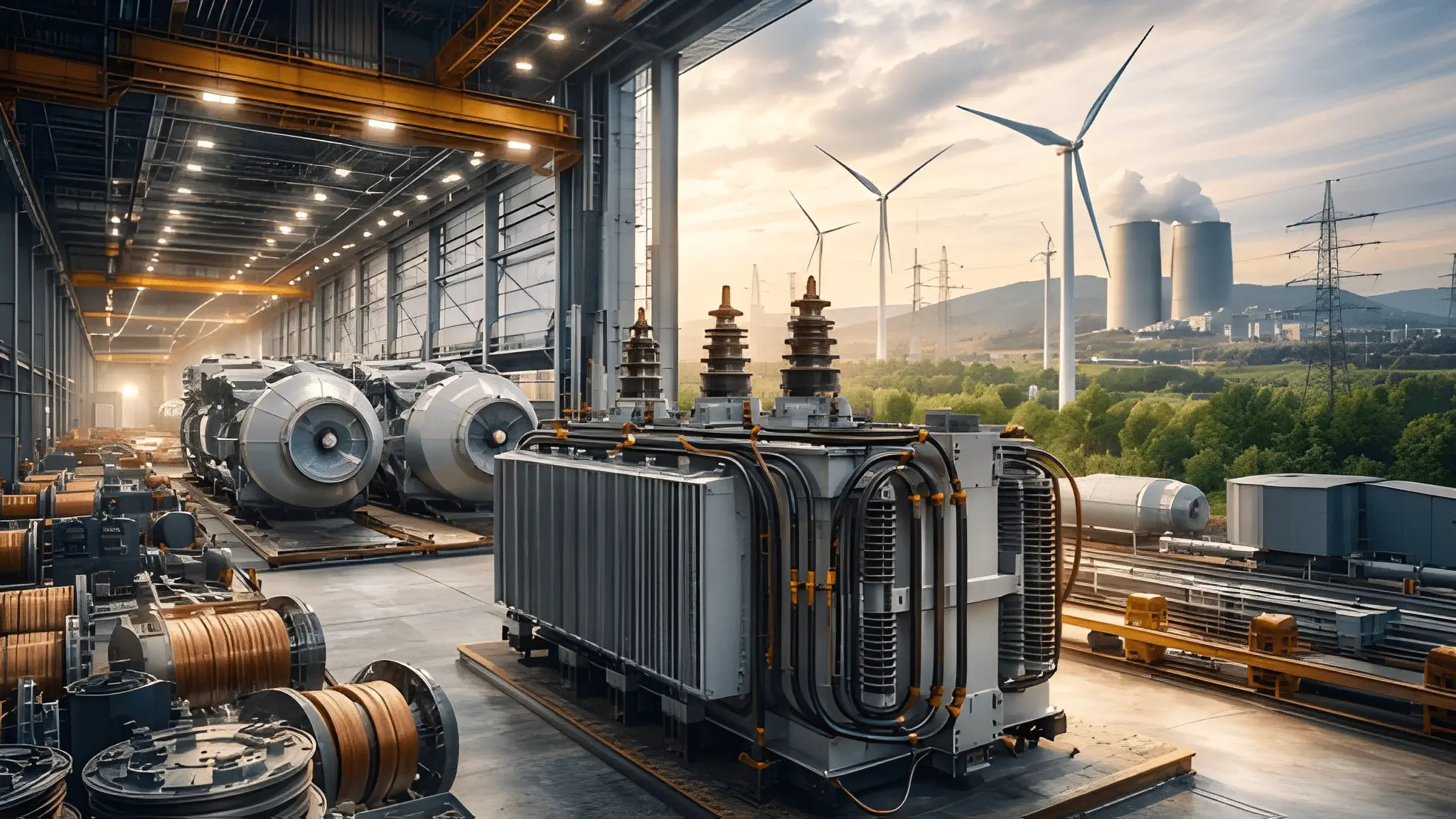
Electric power systems rely on transformers as the critical devices that regulate voltage and enable electricity to move efficiently across transmission and distribution networks. Power plants generate electricity at specific voltage levels that require adjustment before transmission across long distances. Transformers perform this function by increasing voltage for transmission and reducing voltage before electricity enters distribution networks that serve cities and industries. Renewable energy integration increases the importance of these devices because wind farms and solar plants often connect to grids through complex transformer configurations. Grid modernization programs also require new substations and upgraded transformer installations to manage evolving electricity flows. Infrastructure expansion therefore depends heavily on the availability of specialized transformers that support stable grid operations.
Transformer manufacturing represents one of the most technically demanding segments of the power equipment industry. Production involves complex electrical winding processes, specialized insulation systems, and large magnetic cores made from grain-oriented electrical steel. Engineers design each transformer to match the electrical characteristics of the grid segment where it will operate. Manufacturing therefore involves significant customization and rigorous quality testing to ensure long operational lifetimes under demanding grid conditions. Industrial facilities require heavy machinery capable of handling large metal structures and precision winding equipment used to assemble transformer coils. Final assembly also requires extensive testing procedures to verify insulation integrity and electrical performance. These processes contribute to long production cycles that limit how rapidly manufacturers can increase output.
Engineering Complexity Behind Grid Transformers
Large power transformers function as highly engineered electromechanical systems rather than standardized industrial components. Each installation must accommodate specific voltage ratings, load conditions, and grid reliability requirements determined by local transmission networks. Engineers design winding structures and insulation systems to withstand electrical stress over decades of operation. Specialized cooling systems maintain operational temperatures and protect internal components from thermal degradation. Manufacturing teams must assemble hundreds of precision components while maintaining strict tolerances throughout the production process. Final equipment must undergo extensive electrical testing to verify reliability under real-world operating conditions. This engineering complexity explains why transformer manufacturing requires specialized expertise and cannot scale rapidly through simple mass production.
Transformer shortages increasingly affect the ability of utilities and developers to expand electricity infrastructure. Renewable energy projects often require new substations equipped with transformers capable of connecting generation assets to regional transmission networks. Grid reinforcement projects also depend on replacing older transformers with modern equipment capable of supporting higher electricity flows. Utilities planning large electrification programs frequently encounter delays while waiting for transformer deliveries. These delays slow the construction of new substations and transmission upgrades necessary to support renewable generation and increased electricity demand. Equipment availability therefore becomes a determining factor in the timeline for grid modernization projects. The growing reliance on electrified systems intensifies the consequences of these supply constraints across energy infrastructure development.
Strategic Importance of Transformer Manufacturing
Governments increasingly view transformer production as a strategic capability within national energy infrastructure planning. Electricity networks cannot expand without reliable access to large numbers of transformers across transmission and distribution systems. Energy transition programs therefore depend on stable supply chains capable of delivering these critical components on predictable timelines. Industrial manufacturers respond by expanding transformer production capacity and investing in modernized fabrication facilities. Utilities and grid operators also engage in long-term procurement agreements designed to secure production slots from major manufacturers. These developments illustrate how transformer manufacturing now plays a central role in global energy transition strategies. Ensuring reliable supply of these components becomes essential for sustaining electricity infrastructure expansion worldwide.
Turbine Manufacturing and the Scaling Challenge
Electric turbines serve as the mechanical engines that convert energy sources into electricity across a wide range of power generation technologies. Wind turbines harness aerodynamic forces to rotate large blades connected to electrical generators. Gas turbines convert the energy released through combustion into rotational motion that drives power generation equipment. Hydroelectric turbines capture the kinetic energy of flowing water within dams and river systems. Each turbine design requires specialized engineering solutions optimized for the specific characteristics of the energy resource it utilizes. Manufacturing these systems involves complex mechanical fabrication processes and large industrial facilities capable of assembling massive rotating machinery. The expansion of renewable energy and flexible power generation therefore creates rising demand for turbine manufacturing capacity.
Wind energy development illustrates the scale of turbine manufacturing required to support modern energy transition goals. Offshore wind installations require extremely large turbines capable of generating significant electrical output from maritime wind resources. Manufacturing facilities must produce tower structures, nacelles, blades, and generator assemblies that can withstand harsh environmental conditions at sea. These components require specialized materials such as advanced composites for blades and high-strength steel structures for tower assemblies. Transportation and logistics also introduce complexity because turbine components must travel from factories to installation sites that may lie hundreds of kilometers offshore. Each stage of this process requires coordinated industrial capabilities and infrastructure investment. Manufacturing capacity must therefore expand significantly to support large-scale wind deployment strategies.
Industrial Infrastructure for Turbine Production
Turbine manufacturing relies on heavy industrial infrastructure capable of producing large mechanical assemblies with high precision. Factories must include extensive machining capabilities for producing shafts, housings, and mechanical support structures. Blade manufacturing requires specialized composite fabrication facilities that shape and cure large aerodynamic structures under controlled environmental conditions. Assembly operations involve cranes and heavy lifting equipment capable of positioning massive turbine components during final integration. Quality assurance teams conduct mechanical balancing tests and performance verification procedures before equipment leaves the factory. These industrial processes require highly trained technicians and engineers familiar with complex electromechanical systems. Expanding turbine production therefore demands significant investment in manufacturing facilities and workforce development.
Gas turbine production also plays an important role in electricity infrastructure because flexible generation helps balance intermittent renewable energy sources. Power systems require dispatchable generation capable of responding quickly to fluctuations in wind and solar output. Modern gas turbines provide this capability by delivering reliable power generation during periods when renewable resources produce less electricity. Manufacturing these turbines involves advanced metallurgy and precision engineering processes that enable high-temperature operation under demanding mechanical conditions. Production facilities must incorporate sophisticated casting, machining, and assembly technologies capable of handling specialized materials used in turbine blades and combustion systems. These requirements make turbine manufacturing one of the most technologically complex segments of the power equipment industry. Industrial expansion must therefore proceed carefully to maintain reliability standards while increasing production capacity.
Scaling Production for Future Energy Systems
Global energy transition strategies depend on scaling turbine manufacturing to levels that match rapidly expanding electricity generation requirements. Wind power deployment continues across both onshore and offshore environments as countries pursue renewable energy targets. Hydropower modernization programs upgrade existing turbines to improve efficiency and increase electricity output from established dams. Gas turbine installations support flexible generation that stabilizes electricity networks during renewable variability. Each of these developments increases demand for turbine manufacturing capacity across multiple segments of the energy sector. Manufacturers therefore expand factories, invest in automation technologies, and strengthen supply chains for critical components. Industrial expansion of turbine production becomes a key enabler of large-scale electricity system transformation.
Supply Chain Complexity in Power Equipment Production
Power equipment manufacturing depends on extensive global supply chains that deliver specialized materials and precision components required for complex electrical systems. Transformer cores rely on grain-oriented electrical steel produced through specialized metallurgical processes in a limited number of facilities worldwide. Turbine blades require composite materials manufactured using advanced chemical engineering techniques. Electrical windings depend on high-purity copper and aluminum conductors capable of maintaining reliable electrical performance under heavy loads. Precision bearings, insulation systems, and electronic control components originate from suppliers distributed across multiple industrial regions. Coordinating these supply chains requires careful logistics management and long-term relationships between manufacturers and material providers. Any disruption within these networks can slow production timelines for critical power equipment.
Industrial materials used in power equipment often involve specialized production capabilities concentrated within specific geographic regions. Electrical steel production requires dedicated rolling mills capable of achieving the precise grain structures necessary for efficient transformer operation. Composite materials used in turbine blades originate from chemical manufacturing facilities that produce resins and reinforcing fibers under tightly controlled conditions. Copper and aluminum conductors rely on mining and refining industries that supply raw materials to electrical component manufacturers. These industries must coordinate production schedules with equipment manufacturers to ensure consistent supply of critical inputs. Transportation networks then move materials across international shipping routes toward manufacturing facilities. The complexity of these logistics chains introduces additional constraints on how quickly power equipment production can expand.
Coordination Across Global Industrial Networks
Large equipment manufacturers often coordinate hundreds of suppliers responsible for delivering specialized components required in turbine and transformer production. Mechanical components, electronic control systems, insulation materials, and structural assemblies originate from different suppliers that must synchronize deliveries with factory assembly schedules. Delays affecting any individual supplier can interrupt manufacturing workflows and postpone final equipment delivery. Manufacturers therefore maintain extensive supply chain management teams responsible for monitoring supplier performance and coordinating logistics operations. These teams analyze material flows and maintain inventory buffers designed to reduce disruptions in production. However, rapid increases in demand across energy infrastructure sectors place stress on these coordination systems. Supply chain management becomes increasingly complex as industrial production expands to meet the needs of the global energy transition.
Manufacturers also face strategic decisions regarding the geographic distribution of their supply chains. Companies must balance cost efficiency with resilience when selecting suppliers for critical materials and components. Dependence on distant suppliers can introduce transportation delays and exposure to geopolitical disruptions. Regionalizing supply chains may reduce risk but requires new investments in manufacturing capabilities across multiple regions. Governments increasingly encourage domestic production of key energy infrastructure components through industrial policy initiatives. These strategies aim to strengthen national resilience while supporting large-scale energy infrastructure expansion. Supply chain planning therefore becomes a central element of industrial strategy for companies operating within the power equipment sector.
Long Lead Times and Their Impact on Energy Projects
The timeline of modern energy infrastructure projects increasingly depends on the manufacturing lead times associated with critical electrical equipment. Developers often complete engineering designs, environmental approvals, and financing arrangements before they can secure delivery schedules for turbines, transformers, or grid hardware. Power equipment manufacturers operate with complex production queues that allocate manufacturing slots months or years in advance. Project developers must therefore coordinate procurement strategies carefully to align equipment delivery with construction milestones. Even small disruptions in production schedules can cascade through project timelines and delay commissioning dates. Infrastructure deployment therefore depends heavily on how efficiently manufacturers can move equipment through their production pipelines.
Large energy infrastructure projects require synchronized delivery of multiple equipment systems before installation work can proceed. Wind farms require turbines, transformers, substations, and grid connection equipment to arrive within a narrow construction window. Transmission lines require transformers and switchgear installations before electricity can flow through newly built networks. Power plants cannot begin operational testing until turbine systems and generator assemblies are installed and integrated with grid infrastructure. Manufacturing delays therefore ripple across the broader construction schedule of energy projects. Developers often adjust engineering plans and construction sequencing to accommodate equipment delivery constraints. These adjustments highlight the central role manufacturing timelines play in determining how quickly energy infrastructure can enter operation.
Procurement Planning and Infrastructure Timelines
Utilities and energy developers increasingly treat equipment procurement as one of the most critical phases of infrastructure planning. Long lead times for transformers and turbines require procurement teams to secure manufacturing slots early in the project development cycle. Developers frequently begin procurement processes early in project planning to improve the likelihood of securing equipment delivery schedules that align with construction timelines. Financial planning must also account for advance payments and long production cycles associated with these manufacturing contracts. Delays within manufacturing facilities can therefore introduce financial uncertainty into large infrastructure programs. Utilities attempt to mitigate these risks through diversified supplier relationships and flexible project planning strategies. Procurement planning has become a strategic capability that shapes the success of large-scale energy infrastructure deployment.
Manufacturers also face operational challenges when attempting to accelerate production schedules for critical equipment. Production lines often run continuously with limited capacity for additional output beyond existing commitments. Introducing new orders requires careful coordination across supply chains and workforce schedules. Factories must maintain strict quality assurance processes because electrical equipment must operate reliably for decades under demanding conditions. Accelerating production without adequate preparation can introduce risks related to product reliability and safety. Manufacturers therefore expand production cautiously while maintaining engineering standards required for grid infrastructure. These operational realities contribute to the persistent lead times associated with power equipment manufacturing.
Infrastructure Planning in a Constrained Supply Environment
Energy developers increasingly incorporate supply chain constraints into long-term infrastructure planning strategies. Project timelines now account for potential delays associated with manufacturing bottlenecks and supply chain disruptions. Developers coordinate closely with manufacturers to understand production capacity and anticipated delivery schedules before finalizing project plans. This collaborative approach helps align infrastructure development with realistic equipment availability timelines. Governments also integrate supply chain considerations into national energy transition roadmaps. Strategic planning must balance ambitious deployment targets with the industrial capacity required to manufacture essential infrastructure components. Aligning project development with manufacturing realities becomes essential for maintaining momentum in the global energy transition.
Skilled Labor Shortages in Energy Manufacturing
Industrial manufacturing of power equipment depends heavily on skilled labor capable of designing, assembling, and testing complex electromechanical systems. Engineers specializing in electrical design develop transformer configurations that match specific grid requirements and operational conditions. Machinists and technicians operate specialized equipment used to fabricate turbine components and transformer cores. Assembly teams integrate electrical windings, insulation systems, and mechanical structures within large manufacturing facilities. Quality assurance professionals conduct rigorous testing procedures that verify the reliability and safety of completed equipment. Each stage of production requires specialized technical expertise developed through years of training and industrial experience. Expanding manufacturing capacity therefore depends not only on factory construction but also on the availability of skilled workers.
Industrial workforce dynamics present challenges for manufacturers seeking to scale production rapidly. Many experienced technicians within heavy manufacturing industries approach retirement after decades of service within specialized engineering roles. Training new workers requires extensive apprenticeship programs that teach both theoretical knowledge and hands-on operational skills. Educational institutions must collaborate with industry partners to develop curricula focused on advanced manufacturing technologies and electrical engineering principles. Recruiting skilled technicians also becomes more difficult as younger professionals often pursue careers within digital technology sectors. Manufacturers therefore invest in workforce development programs designed to attract and train the next generation of industrial technicians. Labor availability emerges as a key determinant of how rapidly manufacturing capacity can expand.
Technical Expertise Required for Power Equipment Production
Manufacturing transformers and turbines involves a combination of electrical engineering, materials science, and precision mechanical assembly. Engineers design transformer windings and insulation systems capable of operating reliably within high-voltage environments. Turbine designers analyze aerodynamic forces and mechanical stresses affecting rotating equipment operating at high speeds. Technicians must understand complex fabrication processes used in metal machining, electrical winding, and composite material manufacturing. Testing procedures require specialized knowledge of electrical diagnostics and performance measurement techniques. Training programs must therefore provide multidisciplinary technical education that prepares workers for these complex industrial environments. Building such expertise across a large workforce requires sustained investment in technical education and industrial training programs.
Manufacturers increasingly adopt advanced manufacturing technologies that also require new technical competencies among their workforce. Automation systems control precision machining processes and coordinate robotic assembly equipment used in turbine production. Digital monitoring systems track production parameters and quality metrics throughout manufacturing workflows. Engineers analyze large volumes of operational data to optimize production efficiency and maintain product reliability. Workers must therefore develop digital literacy alongside traditional mechanical and electrical skills. Industrial training programs evolve continuously to prepare technicians for these technologically sophisticated manufacturing environments. Workforce capability development therefore becomes an essential element of industrial expansion within the energy equipment sector.
Workforce Development as an Industrial Priority
Energy transition strategies increasingly recognize workforce development as a critical enabler of infrastructure deployment. Governments invest in vocational training programs that prepare technicians for careers within energy manufacturing industries. Universities and technical institutes collaborate with equipment manufacturers to create specialized engineering courses focused on power systems and industrial fabrication technologies. Apprenticeship programs provide practical experience within manufacturing facilities while allowing trainees to develop advanced technical competencies. These initiatives aim to build a sustainable workforce pipeline capable of supporting expanding manufacturing capacity. Industry leaders emphasize the importance of long-term workforce planning as part of broader energy infrastructure strategies. Human capital therefore becomes as essential as physical infrastructure in sustaining the global energy transition.
Regional Manufacturing Hubs and Energy Infrastructure Strategy
The geographic distribution of power equipment manufacturing increasingly shapes the pace and resilience of the global energy transition. Industrial regions that host factories producing turbines, transformers, generators, and grid hardware become central nodes within international energy infrastructure supply chains. These manufacturing hubs combine technical expertise, specialized suppliers, and logistics networks capable of supporting complex industrial production. Governments often promote regional clusters where equipment manufacturers operate close to component suppliers and engineering service providers. Concentrated industrial ecosystems allow companies to share knowledge, coordinate supply chains, and develop skilled labor pools that support large-scale production. The formation of regional manufacturing hubs therefore strengthens the overall capacity of the power equipment industry to meet growing infrastructure demand.
Energy transition strategies increasingly incorporate industrial development policies that encourage domestic manufacturing capabilities for key energy infrastructure technologies. Countries seek to reduce dependence on imported turbines and grid equipment by expanding local production capacity. National industrial programs often provide incentives for equipment manufacturers to establish new factories within domestic markets. These initiatives aim to strengthen energy security while supporting economic development and job creation within manufacturing sectors. Governments also recognize that localized manufacturing can shorten supply chains and improve project timelines for infrastructure deployment. Strategic planning therefore integrates industrial policy with broader energy transition objectives. Manufacturing hubs emerge as both economic engines and critical enablers of energy system transformation.
Strategic Advantages of Localized Production
Localized manufacturing of power equipment offers several operational advantages for energy infrastructure developers and utilities. Proximity between factories and project sites reduces transportation complexity associated with delivering large and heavy equipment. Turbines, transformers, and generator assemblies often require specialized logistics arrangements when shipped across long distances. Manufacturing facilities located near major infrastructure markets can respond more quickly to evolving project requirements and delivery schedules. Regional supply chains also reduce exposure to international shipping disruptions and geopolitical uncertainties. Utilities and project developers therefore prefer suppliers capable of providing reliable equipment delivery within predictable timelines. Domestic production capabilities strengthen national infrastructure resilience while supporting long-term energy transition goals.
Regional manufacturing hubs can support closer collaboration between industry participants, technical institutes, and engineering organizations that contribute to workforce development and industrial knowledge exchange. Universities and engineering institutes often work closely with nearby manufacturers to develop advanced materials and improved equipment designs. Research partnerships contribute to innovation in turbine aerodynamics, transformer insulation systems, and grid integration technologies. Skilled graduates from these academic institutions frequently join local manufacturing companies, strengthening the regional workforce. Industrial clusters therefore support continuous knowledge exchange that improves the overall competitiveness of the power equipment sector. These collaborative ecosystems enhance the ability of manufacturers to adapt production capabilities to emerging energy technologies. Industrial concentration thus becomes an important factor in sustaining long-term innovation within energy infrastructure manufacturing.
International Competition for Manufacturing Leadership
The growing strategic importance of power equipment manufacturing has intensified international competition among countries seeking leadership in energy infrastructure industries. Governments recognize that controlling key manufacturing capabilities provides economic advantages and influence within global energy markets. National strategies therefore emphasize investment in advanced manufacturing technologies, workforce development programs, and research initiatives that support equipment production. Companies respond by expanding international partnerships and establishing facilities within regions that offer favorable industrial policies and infrastructure. Competition among manufacturing hubs encourages technological innovation and efficiency improvements within the power equipment sector. However, this competition also introduces complex geopolitical considerations into global supply chains. Balancing economic opportunity with international cooperation becomes an ongoing challenge for policymakers guiding the energy transition.
Technology Innovation in Power Equipment Manufacturing
Technological innovation within manufacturing processes offers opportunities to accelerate production of turbines, transformers, and other power infrastructure components. Advanced automation systems improve precision and efficiency during machining, assembly, and material handling operations within modern factories. Robotics enable consistent fabrication of complex mechanical parts used in turbine assemblies and generator systems. Digital manufacturing platforms monitor production parameters in real time and allow engineers to identify operational improvements within industrial workflows. These technologies enhance productivity while maintaining strict quality standards required for critical electrical infrastructure. Manufacturing innovation therefore contributes to reducing production bottlenecks affecting the global energy transition.
Additive manufacturing technologies are being explored by some industrial manufacturers as a method for producing specialized components used in certain energy equipment systems. Engineers use advanced three-dimensional printing techniques to fabricate complex geometries that traditional machining processes cannot easily produce. Turbine manufacturers experiment with additive methods for producing lightweight structural elements and specialized cooling components. Transformer designers explore new insulation materials and winding configurations that improve efficiency and reliability. These innovations help manufacturers optimize equipment performance while potentially reducing production timelines. Continuous experimentation within industrial research laboratories contributes to incremental improvements across the power equipment sector. Technological progress therefore complements physical manufacturing expansion by increasing productivity within existing facilities.
Digital Engineering and Production Optimization
Digital engineering tools allow manufacturers to simulate equipment performance and manufacturing processes before physical production begins. Engineers create virtual models of turbines and transformers that replicate real-world operational conditions within computational environments. Simulation technologies enable design teams to identify potential engineering challenges and optimize component configurations before fabrication starts. Digital twins of manufacturing facilities also allow managers to analyze production workflows and identify opportunities for efficiency improvements. Data analytics platforms monitor machine performance, material flows, and workforce productivity across factory operations. These digital capabilities enhance the ability of manufacturers to scale production without compromising engineering reliability. Digital transformation therefore becomes an essential component of modern power equipment manufacturing strategies.
Manufacturers also develop advanced materials that improve the performance and durability of power equipment used within electricity infrastructure. New composite materials strengthen turbine blades while reducing overall structural weight. Advanced electrical steels improve transformer efficiency by minimizing energy losses during magnetic induction processes. Improved insulation systems enhance the operational lifespan of high-voltage electrical equipment operating within demanding grid environments. Materials science research therefore contributes directly to the reliability and efficiency of energy infrastructure technologies. Continuous innovation within materials engineering helps manufacturers deliver equipment capable of supporting evolving electricity systems. Technological development across multiple disciplines strengthens the industrial foundation of the global energy transition.
Planning for Infrastructure Resilience
Energy planners increasingly adopt strategies that strengthen resilience across equipment supply chains and infrastructure development programs. Utilities diversify procurement strategies to reduce dependence on a limited number of equipment manufacturers. Governments support domestic manufacturing initiatives designed to strengthen supply chain independence for critical infrastructure components. Long-term planning frameworks incorporate manufacturing timelines into energy transition roadmaps to ensure realistic infrastructure deployment schedules. These strategies allow policymakers and industry leaders to manage potential bottlenecks before they significantly disrupt infrastructure expansion programs. Collaboration between manufacturers, developers, and regulators improves transparency across supply chains. Proactive planning therefore helps mitigate the risks associated with limited power equipment manufacturing capacity.
Aligning Industrial Production With Energy Policy Goals
The success of the global energy transition increasingly depends on effective alignment between industrial production capacity and national energy policy objectives. Governments set ambitious targets for renewable energy deployment, electrification, and grid modernization as part of long-term decarbonization strategies. These goals require the rapid expansion of electricity infrastructure supported by large quantities of turbines, transformers, and grid hardware. Policymakers must therefore consider the manufacturing capacity required to produce these components when designing transition roadmaps. Industrial planning becomes an essential complement to energy policy development. Coordination between government agencies, manufacturers, and infrastructure developers ensures that equipment supply aligns with infrastructure deployment timelines. This integrated approach strengthens the overall feasibility of national energy transition strategies.
Industrial policy tools increasingly support the development of domestic manufacturing ecosystems capable of producing essential power equipment technologies. Governments provide incentives for factory construction, workforce training programs, and research initiatives that strengthen equipment manufacturing sectors. These policies aim to create stable industrial foundations that support long-term infrastructure expansion. Manufacturers benefit from predictable policy frameworks that encourage investment in production capacity and technological innovation. Utilities and infrastructure developers gain greater confidence when equipment supply chains remain reliable and accessible. Strategic coordination between industrial development and energy policy therefore becomes essential for sustaining momentum in the global energy transition.
Integrating Infrastructure and Industrial Planning
Long-term energy planning increasingly incorporates detailed analysis of industrial manufacturing capacity required to support infrastructure deployment goals. Policymakers evaluate equipment production capabilities alongside electricity demand forecasts and renewable energy expansion targets. Infrastructure strategies therefore include provisions for expanding turbine, transformer, and grid equipment manufacturing capacity. Governments collaborate with industry leaders to understand technological requirements and investment timelines associated with industrial expansion projects. This cooperative planning approach ensures that manufacturing ecosystems evolve in parallel with infrastructure development programs. Aligning industrial production with energy policy objectives helps avoid supply chain bottlenecks that could slow the pace of decarbonization efforts. Integrated planning therefore strengthens the resilience and effectiveness of energy transition strategies.
Solving the Industrial Bottleneck of the Energy Transition
The global energy transition now depends as much on industrial manufacturing capacity as it does on technological innovation and policy ambition. Turbines, transformers, and grid hardware represent the physical foundation that enables electricity generation, transmission, and distribution across modern energy systems. Rising demand driven by renewable deployment, electrification, and digital infrastructure growth has placed unprecedented pressure on manufacturers responsible for producing these essential components. Supply chain complexity, workforce shortages, and long industrial lead times have revealed structural bottlenecks within the global power equipment industry. Governments, investors, and manufacturers therefore pursue coordinated strategies aimed at expanding production capacity and strengthening industrial ecosystems. The success of global decarbonization efforts ultimately depends on how effectively these industrial challenges can be addressed.
Solving the manufacturing bottleneck requires sustained collaboration across governments, industry leaders, and financial institutions responsible for shaping energy infrastructure development. Investment in new factories, workforce training programs, and advanced manufacturing technologies will strengthen the capacity of industrial systems to deliver critical equipment at scale. Strategic planning that aligns energy policy with industrial expansion ensures that infrastructure deployment targets remain achievable within realistic production timelines. Supply chain resilience initiatives will also help protect energy infrastructure projects from disruptions affecting critical materials and components. These combined efforts create the industrial foundation necessary to support a reliable and sustainable electricity system. Expanding manufacturing capacity for power equipment therefore becomes one of the most important tasks facing the global energy transition.