The trajectory of human civilization follows two primary forces. These forces are energy and information. Historically, the ability to harness power and process data evolved together. This relationship is now undergoing a fundamental phase shift. We are moving away from fossil fuels. Instead, we are entering an era of Sovereign Intelligence and Synthesized Energy. The emergence of the “Quantum Brain” is the catalyst for this change. This infrastructure uses Quantum Artificial Intelligence to design new materials. Specifically, it acts as the master architect for the “Forever Battery.” These storage devices will decouple economic growth from resource exhaustion. This is not just a story about better hardware. Rather, it is a redefinition of how discovery and governance intersect. Data is the new oil. Consequently, compute capacity is the new strategic reserve.
1. The Discovery Engine: The Quantum Brain
Modern material science faces a major bottleneck. This is not a lack of human imagination. Instead, it is a lack of computational fidelity. For decades, discovering a new battery chemistry was a slow process. It often took 15 to 20 years from the lab to the market. This delay stems from the “N-body problem” in quantum mechanics. Traditional computers cannot accurately simulate atoms and electrons at scale.
The Computational Wall and Binary Limits
Traditional computers speak in binary bits. These bits are zeros and ones. This logic works for spreadsheets or video rendering. However, it fails when dealing with chemistry. Chemistry is probabilistic and “fuzzy” by nature. To simulate one complex molecule, a classical computer must track every electron. This task scales exponentially. Specifically, the data doubles for every electron added to the simulation.
In a system with N quantum particles, there are 2N possible states. For a system with 300 electrons, the states exceed the number of atoms in the universe. Because of this, scientists used approximations like Density Functional Theory (DFT). This method was the workhorse of the 20th century. Nonetheless, it often fails for “strongly correlated” systems. These are materials where fine interactions provide unique properties. High-temperature superconductors and advanced battery electrolytes are prime examples.
Quantum AI: Thinking Like Nature
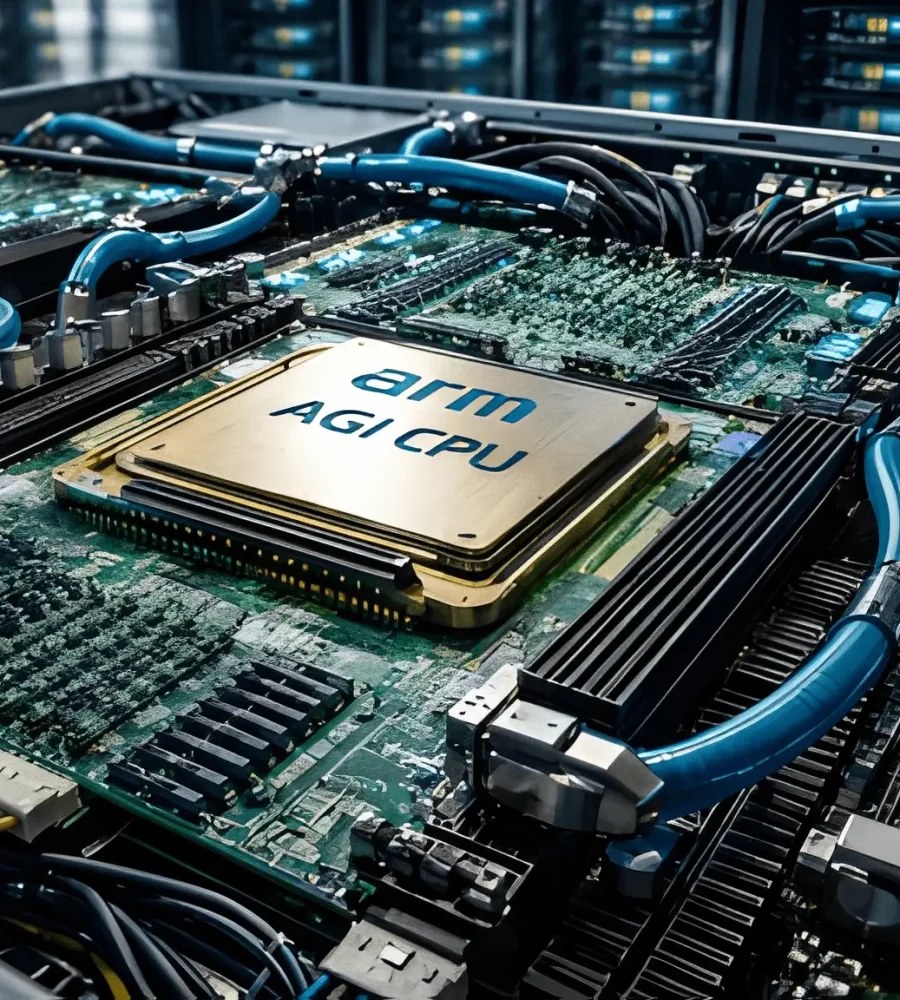
Quantum AI represents a transition. We are moving from simulating nature to thinking like nature. Quantum processors use qubits. These qubits can exist in superpositions. They also become entangled with each other. This allows the “Quantum Brain” to map directly onto real molecules. Consequently, it solves the Schrödinger equation without the overhead of classical approximations.
The “Quantum Brain” is more than a fast calculator. It is a discovery engine. It integrates quantum hardware with large-scale machine learning. This hybrid approach helps identify the “convex hull” of stability. This hull is the mathematical boundary where a crystal structure is stable. Stable materials will not decompose into simpler compounds.
Computational Capacity: Classical vs. Quantum AI
- Classical Simulation (HPC)
- Logic Unit: Binary Bits (0 or 1).
- Scaling: Exponential (2N). This creates a “curse of dimensionality.” Simulations halt beyond a few dozen particles.
- Accuracy: Uses DFT “averaging.” This misses critical electron correlation effects.
- Timeline: Decades for discovery. Costs often exceed 100 million dollars for one material.
- Quantum AI Simulation
- Logic Unit: Qubits (Superposition/Entanglement). These allow parallel data representations.
- Scaling: Polynomial for chemistry tasks. Costs grow moderately as system size increases.
- Accuracy: High-fidelity mapping. It maps electron spins directly to qubits.
- Timeline: Weeks or days for discovery via high-throughput screening.
Advanced Algorithms: QAOA and QRL
Beyond basic simulations, the “Quantum Brain” uses diverse algorithms. The Quantum Approximate Optimization Algorithm (QAOA) is a primary tool. It solves combinatorial problems in microgrid scheduling. Specifically, it manages the interplay of renewable generation and storage.
Another breakthrough is Quantum Reinforcement Learning (QRL). This integrates Variational Quantum Circuits (VQCs) with traditional reinforcement learning. QRL agents observe grid voltage levels and active loads. They then adjust generator outputs in real time. This method maintains voltage stability within narrow limits. Furthermore, it identifies economically efficient dispatch schedules.
Researchers also use Quantum Neural Networks (QNNs). These models estimate the State of Charge (SoC) for batteries. QNNs are more computationally efficient than classical neural networks. They also yield more accurate results for aging batteries.
Molecular Mapping: Ending Trial and Error
Quantum AI has enabled “Molecular Mapping.” In this process, the AI explores millions of theoretical atomic arrangements. It looks for specific traits. These include high energy density and zero fire risk.
A major breakthrough occurred in 2024. Microsoft partnered with the Pacific Northwest National Laboratory (PNNL). They used the Azure Quantum Elements platform. The system screened 32.6 million potential materials. The methodology was very rigorous:
- AI Filtering: The AI sifted 32.6 million materials. It found 500,000 stable candidates in days.
- Property Prediction: The pool narrowed to 800 candidates. It focused on redox potential and band gap.
- AI-Accelerated Simulation: Molecular Dynamics (MD) investigated ionic diffusivity. This stage used AI models for forces instead of slower DFT methods. This cut the field to 150.
- Expert Selection: Scientists finalized 18 candidates. They synthesized one named N2116.
N2116 is a solid-state electrolyte. It replaces 70% of lithium with sodium. Sodium is abundant and cheap. Within nine months, PNNL built a working prototype. This battery powered a lightbulb. This demonstrates that Quantum AI can compress 250 years of discovery into months.
New Tools: MatterGen and the Battery Large Model
Several projects are defining the frontier. Google DeepMind created GNoME. This system predicted 2.2 million new crystal structures. That is equivalent to 800 years of research. GNoME identified 528 potential lithium-ion conductors. This is 25 times more than the total found in the previous decade.
Microsoft developed MatterGen. This is a generative diffusion model. It works like an image generator for crystals. Instead of searching a list, MatterGen “dreams up” new structures. It uses constraints like mechanical hardness or magnetic density.
Additionally, researchers proposed the Integrated Battery Large Model. This is an industry-level pretrained AI model. It covers the entire battery lifecycle. It integrates materials science with manufacturing data. Furthermore, it uses digital twins. These twins use real-time data from sensors to refine predictions. This creates a closed-loop system from the lab to the field.
2. The Quest for the “Forever Battery”
The next century needs a better battery. It must not degrade or explode. Also, it must avoid scarce minerals. Current lithium-ion (Li-ion) technology is reaching its limits. Li-ion batteries have powered the mobile age. However, they have flammable liquid electrolytes. They also lack the density for heavy aviation. Finally, “dendrites” limit their life.
Solid-State Evolution
The move to all-solid-state chemistry is the first step. These batteries replace liquid electrolytes with solid ceramic or polymer layers. This removes the fire risk. Moreover, solid electrolytes allow pure lithium metal anodes. This can double the energy density.
However, solid-state batteries face the “dendrite” problem. Dendrites are needle-like structures of lithium. They pierce the solid electrolyte and cause short circuits. Quantum AI is solving this issue. Researchers at Brown University used AI modeling. They showed that a specific temperature gradient blocks dendrites. This thermal compression creates a physical barrier.
Comparative Battery Metrics
- Traditional Lithium-Ion
- Cycle Life: 1,000 to 3,000 Cycles.
- Energy Density: 100 to 265 Wh/kg.
- Safety: High risk of thermal runaway.
- Resources: Relies on mined Lithium and Cobalt.
- Solid-State Batteries (AI-Optimized)
- Cycle Life: Projections of 5,000 or more cycles.
- Energy Density: Projections above 500 Wh/kg.
- Safety: Non-flammable and resilient to heat.
- Resources: Uses abundant materials like sodium.
- Nuclear Diamond Battery (C-14)
- Cycle Life: 5,730 or more years.
- Energy Density: Roughly 3.3 Wh/g. This is 10 times higher than conventional batteries.
- Power Density: Very Low. It is a supplementary source.
- Resources: Recycled nuclear waste.
Graphene and Nanostructures
Graphene is an ideal electrode material. It has perfect conductivity and massive surface area. Yet, graphene sheets often clump together. This is called “restacking” or the layering issue.
AI is now designing pomegranate-like nanostructures. These structures encapsulate active materials in a carbon network. Skeleton Technologies uses AI for Curved Graphene. These batteries offer 15-minute charge times. They also last for 50,000 cycles. Japanese scientists recently unveiled a topological quantum battery. This device uses material features to resist energy loss.
Silicon Anodes: Solving the Expansion Problem
Silicon is a prime candidate for anodes. Its theoretical capacity is 4,200 mAh/g. This is ten times higher than graphite. However, silicon expands by 300% during charging. This causes mechanical cracking and failure.
Quantum AI and Physics-Informed Neural Networks (PINNs) are helping. They design hierarchical assemblies of silicon nanoparticles. These include nanopores that act as buffer zones. The silicon can expand without destroying the structure. Start-ups like SiLi-ion are already commercializing these designs.
Nuclear Diamond Batteries
The Nuclear Diamond Battery (NDB) is the most radical option. These harvest energy from radioactive decay. Specifically, they use Carbon-14. This isotope is a byproduct of nuclear reactors.
Researchers extract the Carbon-14. They then encapsulate it in synthetic diamond. Diamond is the hardest material on Earth. As the Carbon-14 decays, it emits high-energy electrons. The diamond acts as a wide-bandgap semiconductor. It captures these electrons to generate current. The battery uses Schottky diodes to optimize current flow.
The safety of these batteries is remarkable. Diamond absorbs all short-range radiation. No leakage occurs. Because of this, they are biocompatible for medical implants. A battery with one gram of Carbon-14 delivers energy for 6,000 years. This is the ultimate power source for pacemakers and space probes.
3. The Battery Lifecycle: The Circular Economy
The future requires more than high energy density. It needs a sustainable, closed-loop ecosystem. Batteries must be recyclable by design. This is where the “Battery Large Model” becomes essential. It coordinates materials, manufacturing, and recycling in one hub.
Predictive Maintenance and Lifespan Extension
AI is already transforming battery health monitoring. National Renewable Energy Laboratory (NREL) researchers developed a PINN model. This model predicts battery health 1,000 times faster than traditional physics models. It analyzes nonlinear datasets to quantify degradation. This allows for nondestructive “check-ins” on internal states.
Furthermore, the Battery Passport initiative enhances traceability. It records critical manufacturing details and operational history. By using real-time data, the passport creates a dynamic digital twin. This system provides early warnings for hazards like lithium plating. Consequently, it reduces thermal runaway risks to one in a million.
Direct Recycling and Second-Life Deployment
Recycling is a critical pillar of energy security. By 2045, recycling could handle millions of tons annually. AI integration improves sorting yields by 30%. Specifically, machines use spectroscopy to identify chemical compositions.
Startups like Astracite are leading the way. They create anode materials from $CO_2$ and recycled batteries. Their process is carbon negative. Moreover, researchers use federated machine learning to sort retired batteries. This framework achieves 99% accuracy. It does this without sharing raw proprietary data.
Spent EV batteries also find new roles. They are repurposed for stationary grid storage. This “second-life” deployment absorbs up to 75% of spent EV cells. This delays recycling and maximizes resource efficiency.
4. Electrified Horizons: Transportation and Beyond
Next-generation batteries are redefining mobility. They are the foundation for the “electrification of everything.” This includes drones, commercial aviation, and urban transport.
Drone Batteries: Balancing Power and Weight
Unmanned Aerial Vehicles (UAVs) face unique challenges. They need lightweight power sources to stay airborne. However, high energy typically means more mass. Startups like Dreamfly Innovations are solving this. They use graphene chemistry cells to achieve high power density. These batteries offer 15-minute charge times. They also have a life of 5,000 cycles. Furthermore, the graphene cells are non-explosive. This is a critical safety feature for urban logistics.
Electric Aviation and NASA Concepts
Aerospace is the final frontier for batteries. Solid-state technology offers 2 to 3 times the energy density of Li-ion. This can reduce aircraft weight by 30%. Consequently, it doubles the range of electric aircraft.
NASA is exploring diverse airframe designs. Their N3-X concept is a fully turboelectric aircraft. It uses a hybrid wing body to maximize efficiency. Additionally, NASA developed the HEMM 1.4 megawatt electric motor. This machine minimizes weight while maximizing power capability. AI managed simulations are essential here. They optimize the powertrain under extreme flight altitude conditions.
5. The Energy Paradox: The Snake Eating Its Tail
The advancement of Quantum AI presents a paradox. It is the “Ouroboros” effect. This is the symbol of a snake eating its own tail. These systems help discover energy solutions. Yet, training them consumes massive amounts of electricity.
The AI Electricity Crisis
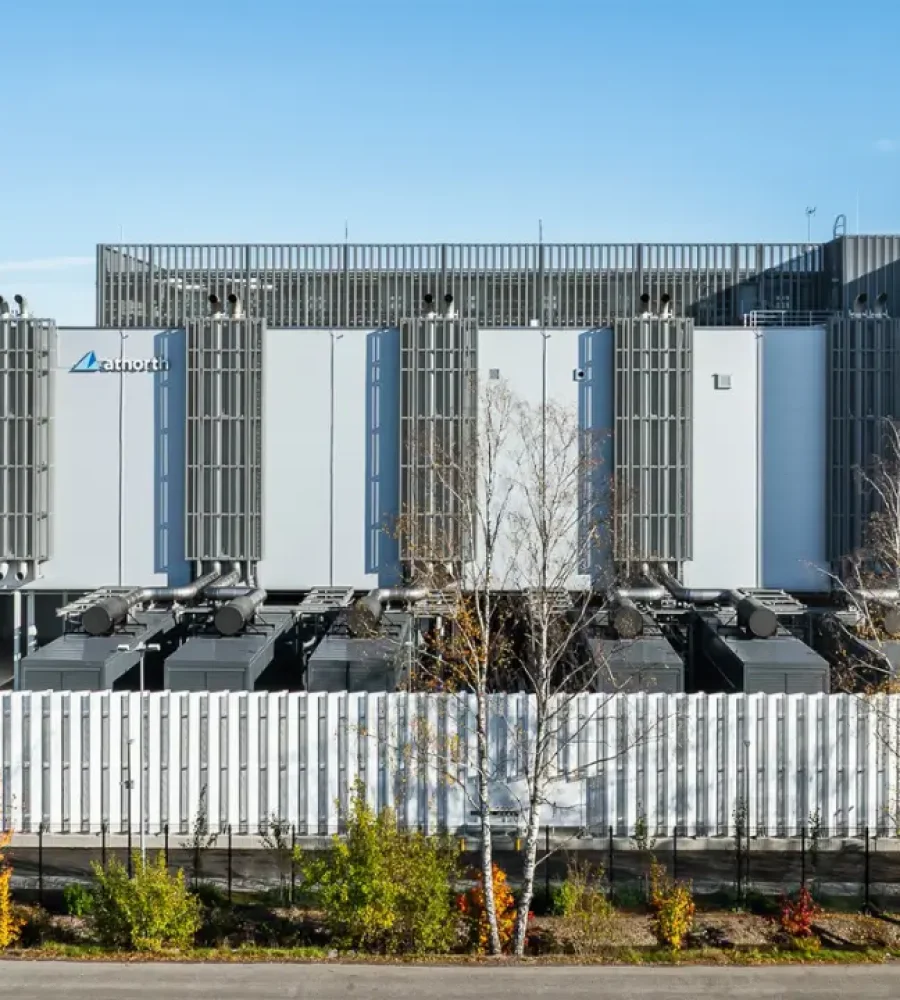
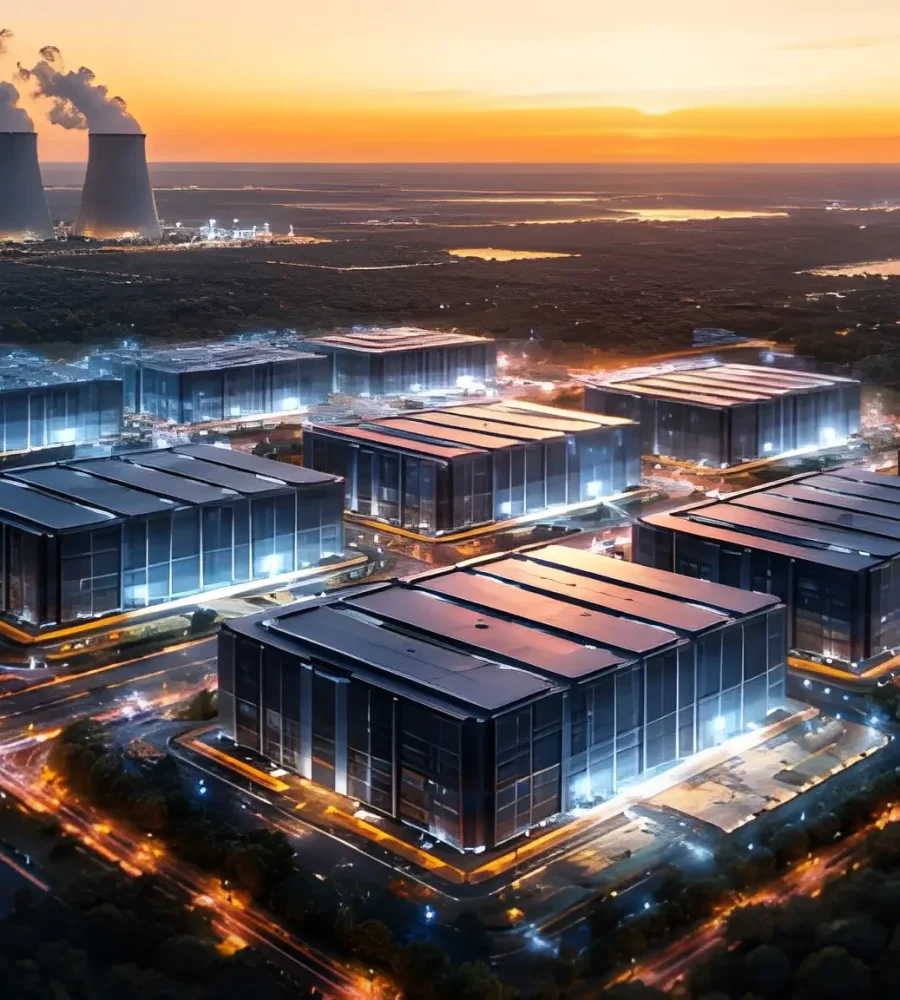
In 2022, data centers used 460 terawatt-hours (TWh). This was 2% of the world’s total. By 2026, this will increase to over 1,000 TWh. This is equal to the consumption of Japan. One text-based AI assistant for everyone would use 100 gigawatts. This is 20% of the United States grid. Currently, fossil fuels meet most of this demand. This threatens to undo the gains from AI discovery.
Quantum Efficiency: A Low-Power Path
Quantum AI offers an escape. Classical computing is energy-intensive. It must move bits through silicon gates. This generates heat. Quantum computers manipulate quantum states. Often, these exist in near-zero resistance environments.
For example, the neutral-atom computer Aquila has 256 qubits. It uses less than 10 kilowatts. This is 1,000 times less than a classical supercomputer. As quantum systems scale, power grows exponentially. However, the energy footprint grows modestly. Additionally, scientists are exploring the Quantum Zeno Effect. This effect could stabilize quantum batteries and prevent energy loss.
Grid Intelligence and Climate Modeling
The Forever Battery is a building block. It belongs to an intelligent power grid. Current grids struggle with renewables. Wind and solar are intermittent. Quantum AI acts as the “Grid Brain.” It manages millions of variables at once.
One specific tool is the Quantum Long Short-Term Memory (QLSTM) network. These networks predict solar and wind patterns with high accuracy. Consequently, grid operators can manage battery discharge in real-time.
Grid Management Case Studies
- EDF (France): Used Pasqal’s quantum algorithms for renewable forecasting.
- E.ON (Germany): Used quantum annealing for modularity-based graph partitioning.
- TenneT (Netherlands): Used IBM’s quantum-in-the-loop to balance supply.
- Tohoku Electric (Japan): Used Toshiba’s quantum-inspired algorithms. This reduced peak load by 30%.
- VQC-RO (Cornell): Achieved 9.8% lower power consumption for AI data centers.
In this future, every vehicle and home is a node. Every nuclear diamond battery is a sensor. The AI reroutes energy in milliseconds. This ensures the lights stay on. No fossil-fuel backup is needed.
6. The Geopolitical Shift: Resource to Intelligence
Global power is shifting. We are moving from the “Petroleum Century” to the “Quantum-Battery Century.” Historically, nations controlled coal and oil. In the next century, power belongs to the Intelligence Stack. This includes quantum hardware and AI models. Also, it includes intellectual property for battery chemistry.
From Oil Reserves to Compute Reserves
Nations now treat compute as a strategic asset. This is Sovereign Intelligence. It is the ability of a nation to produce AI using its own infrastructure. It avoids reliance on foreign tech giants.
In the 21st century, security depends on compute sovereignty. This has triggered massive investment:
- European Union: The EuroStack initiative target is 100 billion euros. It aims for zero dependency on non-EU AI by 2030.
- India: Launched the National Quantum Mission in 2023. It has a budget of 6,003 crore rupees. This is part of the Quantum Antyodaya vision.
- China: Leads in 57 out of 64 critical technologies. It focuses on top-down AI integration into supply chains.
- UAE: Building the Starcloud project. This is an orbital data center with 5-gigawatt capacity. It seeks Space Cloud Sovereignty.
Strategic Materials: The New Periodic Table
We are moving away from lithium, cobalt, and nickel. New materials like sodium, magnesium, and silicon are rising. Magnesium is very attractive. Its ions carry double the charge of lithium. This could double energy density.
The economy is changing from Resources to Knowledge. In the old model, value was in the raw ore. In the new model, value is in the AI recipe. This recipe makes sodium perform like lithium. This democratizes energy. Any nation with a “Quantum Brain” can build its own batteries. They do not need to import rare minerals from volatile regions.
7. Ethical, Security, and Governance Challenges
The transition to a quantum-powered world brings new risks. These involve monopolies, dual-use technology, and infrastructure security.
Monopolization of the Intelligence Stack
A major concern is the concentration of compute power. Over 90% of global data centers for AI are operated by American or Chinese firms. Many nations in Africa and South America have no computing hubs. This creates a new Digital Divide.
Without sovereign alternatives, smaller nations face “digital colonialism.” They become mere consumers of foreign models. These models may not align with local cultural or ethical values. To prevent this, multistakeholder platforms like the Open Quantum Institute are vital. They promote anticipatory governance and inclusive capacity building.
Security of the Digital Commons
The energy grid is a prime target for non-linear warfare. Ministry of State Security actors have already pre-positioned in global telecom backbones. They use existing surveillance tools to geolocate targets. This creates a Security Deficit.
We must treat the power grid with the same rigor as aviation safety. This includes implementing Post-Quantum Cryptography (PQC). Hybrid architectures must combine classical and quantum security methods. Nations like France are already mandate sovereign communication platforms for civil servants. This prevents metadata leakage to foreign intelligence services.
Governance of Nuclear Diamond Batteries
Nuclear diamond batteries present unique regulatory hurdles. They repurpose nuclear waste. This reduces the burden of radioactive storage. However, they still contain radioactive isotopes.
Governance frameworks must ensure these batteries remain tamper-proof. The encasement in carbon-12 diamond provides structural protection. Yet, end-of-life protocols must prevent unauthorized extraction of the Carbon-14. International standards for betavoltaic safety will be essential for medical and space use.
8. Human and Societal Implications
Widespread energy autonomy will transform the human experience. It will rewrite the rules of urban planning and labor.
Decentralized Energy and Urban Resilience
The shift to mini-grids transcends the urban-rural divide. Communities can now collectively invest in renewable storage. This autonomy stimulates local economic development. It creates jobs in the installation and maintenance of decentralized tech.
Smart microgrids ensure essential services continue during outages. For example, hospitals can operate independently during hurricanes. Furthermore, prosumer models allow homes to sell surplus energy back to the grid. This reduces utility bills and decreases energy poverty.
The Philosophy of Nature’s Architect
AI is more than a tool. It is a “philosophical rupture.” It challenges the modern assumption of a clear-cut distinction between humans and machines. For the first time, we have built a technical system that is intelligent. This system discover logical structures in data where we see nothing.
AI acts as a “design microscope.” It translates complex natural patterns into parameterizable design representations. This redefines the limits of creativity. We are entering an era of Co-creativity. Humans and AI will intersect in generative ways to build the materials of the future. Yet, we must treat AI outputs as hypotheses needing confirmation. Rigor and empirical testing must remain the bedrock of science.
9. Speculative Future Scenarios
The convergence of these technologies leads to breathtaking possibilities.
- Self-Sustaining Energy Ecosystems: Imagine a city where every building is a power plant. High-efficiency perovskite solar cells are integrated into windows. AI-optimized microgrids balance energy flow in 140 milliseconds. Darkness becomes obsolete.
- Space Colonization: Nuclear diamond batteries power deep-space probes for 28,000 years. Small robots on Mars use betavoltaic cells to survive the long lunar nights. Energy constraints no longer limit human exploration.
- Photonic Neural Networks: Underwater data centers process information at the speed of light. They use photonic chips that are 1,000 times more efficient than silicon. These data centers are powered by oceanic thermal dynamics. The energy paradox of AI is finally solved.
The Synthesis: A New Civilizational Baseline
The convergence of the Quantum Brain and the Forever Battery is huge. It represents more than new gadgets. It is a new baseline for humanity. For the first time, we have the tools to simulate the universe precisely. We also have the infrastructure to store energy indefinitely.
The “Discovery Engine” is ending scientific scarcity. We are no longer limited by what we find in the ground. Instead, we are limited by what we can imagine and simulate. The “Forever Battery” provides the foundation. It ensures the energy needs of an intelligent society do not destroy the Earth.
Challenges remain. The “Energy Paradox” needs quantum efficiency. Geopolitical competition for “Sovereign Intelligence” must be managed. We must avoid a new era of digital colonialism. However, the path is clear. The next century belongs to those who master the brain and the battery. We are moving from extracted carbon to synthesized intelligence. In this era, the only limit is our ability to think at the speed of light. We will store that power for a thousand years.