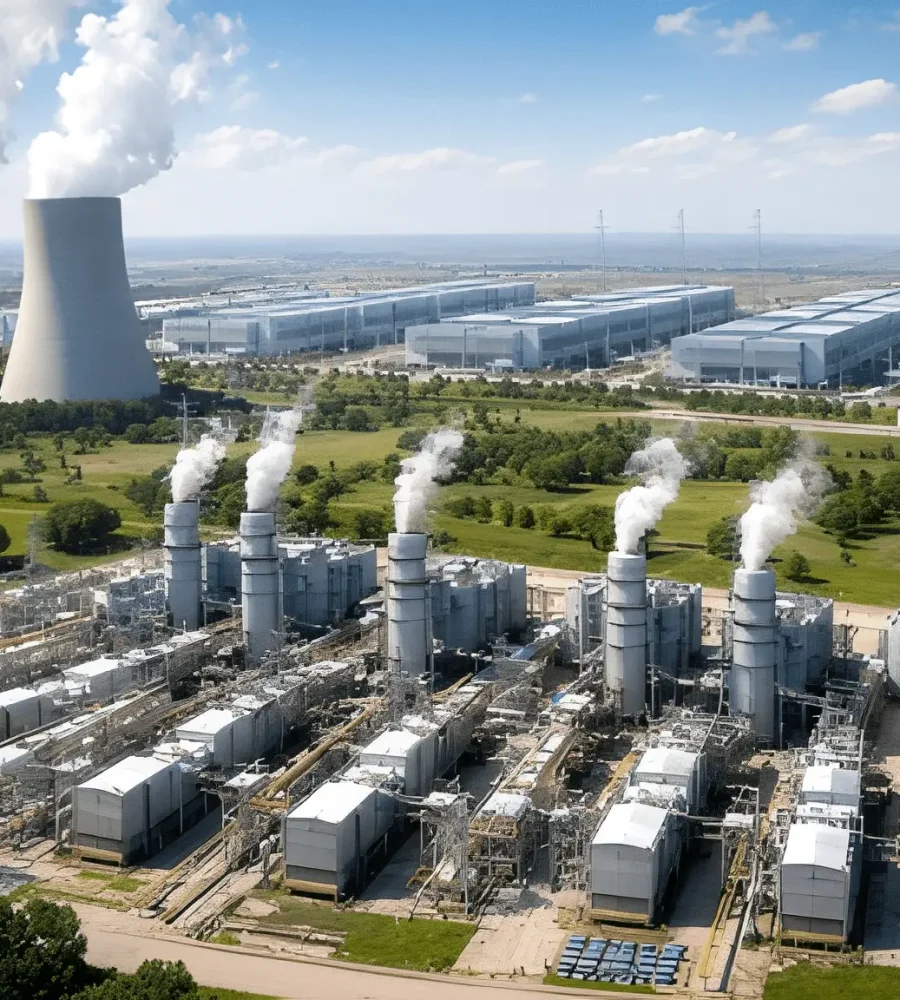

The concept of sustainable intelligence goes beyond building high-performance algorithms. It signals a structural shift in global technology. Artificial intelligence is now designed and deployed as a catalyst for human progress. However, this progress must not come at the cost of ecological or social stability.
Within the framework of the United Nations 2030 Agenda for Sustainable Development, sustainable intelligence bridges the computational frontier and the ethical mandates of the 17 Sustainable Development Goals. All 193 UN member states adopted the SDGs in 2015. They provide a shared blueprint for peace and prosperity. Yet as the 2030 deadline approaches, the gap between ambition and implementation continues to widen.
Artificial intelligence, especially large-scale generative models and autonomous agents, offers an unprecedented toolkit. It can transform vast datasets into actionable intelligence at a planetary scale. As a result, AI is positioned as a critical accelerator for sustainable development.
AI integration into the SDG framework is not a peripheral enhancement. Instead, it is recognized as a core means of implementation by the UN General Assembly. Challenges such as climate change, poverty, and global health require processing datasets that exceed human cognitive limits. Therefore, AI is uniquely suited to address this complexity.
However, this promise carries a paradox. Massive data centers and energy-intensive training runs consume enormous resources. If left unchecked, they can undermine environmental goals. Consequently, the path forward requires a shift from Red AI to Green AI. Red AI prioritizes accuracy at any resource cost. In contrast, Green AI emphasizes efficiency, transparency, and equity as primary design objectives.
The Dual Nature of AI and Sustainability
The relationship between artificial intelligence and the three pillars of sustainable development is complex. These pillars include social, economic, and environmental dimensions. AI can enable progress, but it can also create setbacks.
Research by Vinuesa et al. shows that AI could support 128 targets, or 76 percent, across the SDGs. At the same time, it may inhibit 58 targets, or 34 percent, if governance is weak. Therefore, AI is neither a universal solution nor a purely harmful force. Instead, its impact depends on policy frameworks and technical standards throughout its lifecycle.
Positive Potential Across the Sustainability Pillars
AI technologies act as force multipliers across sectors. They enable a shift from reactive to proactive development strategies. Moreover, they improve efficiency and decision-making at scale.
Social Pillar
The social pillar includes goals related to poverty, health, education, water, energy, and cities. In these areas, AI expands access to essential services.
For example, in regions with few medical practitioners, AI-enabled diagnostic tools provide accurate disease screenings. UNDP deployments in Tajikistan and the Pacific region have used AI to detect tuberculosis in remote communities. As a result, early intervention becomes possible even in underserved areas.
In education, AI supports personalized learning pathways. It adapts curricula to individual student needs. Consequently, access to high-quality instruction becomes less dependent on geography or income. This directly supports progress toward SDG 4.
Environmental Pillar
Within the environmental pillar, AI shows the highest positive impact. It acts as an enabler for approximately 93 percent of relevant targets.
Machine learning applied to satellite imagery can detect deforestation months in advance. It can also identify marine pollution such as oil spills. In addition, AI tracks biodiversity loss with greater precision than manual observation.
Furthermore, AI can simulate complex climate scenarios. These simulations support resilient urban planning and infrastructure design. They also optimize resource use in circular economy models, strengthening progress toward responsible consumption.
Summary of AI Impact by Category
Society (SDGs 1, 3, 4, 6, 7, 11):
79 percent enabler versus about 21 percent inhibitor. The main contributions include improved service delivery and enhanced diagnostic accuracy.
Economy (SDGs 8, 9, 10, 12, 17):
63 percent enabler versus 32 percent inhibitor. AI drives innovation, labor productivity, and data-driven growth. However, inequality risks remain.
Environment (SDGs 13, 14, 15):
93 percent enabler versus about 7 percent inhibitor. Primary benefits include resource optimization and predictive climate modeling.
Environmental and Ethical Challenges
Despite its promise, AI carries a significant environmental footprint. This creates tensions with SDG 7 on clean energy and SDG 13 on climate action.
The lifecycle of an AI model requires massive electricity and water use. The training phase is especially resource-intensive. For instance, training GPT-3 consumed roughly 1,287 MWh of electricity. It emitted approximately 552 tonnes of CO2 equivalent. This footprint is comparable to 123 gasoline-powered cars driven for one year.
Moreover, cooling data centers for such training can require up to 700,000 liters of freshwater. Therefore, sustainable AI must address both carbon and water intensity.
Ethical risks are equally serious. AI systems trained on biased datasets can reinforce historical inequalities. For example, they may reproduce gender stereotypes in voice assistants. They can also produce discriminatory outcomes in employment and housing decisions. Consequently, progress on gender equality and reduced inequalities may be undermined.
In addition, the AI equity gap presents a geopolitical challenge. Only 2 percent of global data centers are located in Africa. Furthermore, just 5 percent of African AI innovators have access to adequate computational resources. This concentration of power in multinational corporations and developed economies risks deepening global divides. If not corrected, AI could become a tool of exclusion rather than inclusion.
Frameworks for Integrating AI with the SDGs
Aligning next-generation AI with sustainable development requires strong governance. Technical innovation must be paired with ethical stewardship. In recent years, international coordination has intensified. Importantly, discussions have moved from broad principles to actionable commitments.
Global AI Governance Initiatives
The Hamburg Declaration on Responsible AI for the SDGs, launched in June 2025, marks a significant milestone. Over 40 governments, international organizations, and private sector leaders endorsed it. It is the first global pledge focused specifically on AI and international development.
The declaration aligns its commitments with the five pillars of the 2030 Agenda: People, Planet, Prosperity, Peace, and Partnership. Signatories commit to promoting human-centric AI. They also pledge to protect marginalized communities, improve resource efficiency, and support local innovation in developing countries.
At the same time, the United Nations has strengthened its efforts through the Global Digital Compact and the Pact for the Future, adopted in late 2024. These frameworks aim to bridge the digital divide. They treat digital public infrastructure and AI as global public goods.
Moreover, the UN High-Level Advisory Body on AI works to align governance with human rights standards. Its goal is to ensure that the promise of AI for all produces tangible outcomes in low-resource regions.
Responsible and Ethical AI Principles
Sustainable intelligence rests on clear ethical foundations. Transparency and accountability are essential for public trust. Therefore, AI decision-making processes must be explainable and open to audit.
Human-centric design is equally important. AI should augment human capabilities rather than replace them. For example, it can assist doctors in remote areas without removing the essential human element. It must also avoid discriminating against vulnerable populations.
Equitable access remains the most critical barrier. To prevent widening divides, governance frameworks must promote digital solidarity. This includes supporting local language models and creating inclusive datasets. These datasets should reflect the linguistic and cultural diversity of the Global South.
Finally, the physical infrastructure of AI must be more evenly distributed. Compute and data storage capacity cannot remain concentrated in a few regions. Only then can sustainable intelligence become a genuinely global public good.
Sector Level AI Contributions to SDGs
The practical value of AI in advancing the SDGs becomes clear at the sector level. Real-world applications show how predictive analytics, machine vision, and reinforcement learning address complex challenges. These challenges span energy, conservation, agriculture, and urban systems.
Importantly, these use cases move AI from theory to measurable impact. They demonstrate how data-driven systems can improve efficiency, resilience, and sustainability outcomes.
Energy and Climate Systems (SDG 7 and SDG 13)
AI plays a central role in the energy transition. Renewable sources such as wind and solar are inherently variable. Therefore, grid systems require advanced forecasting and optimization tools.
In smart grids, AI systems monitor electricity flows continuously. They detect inefficiencies and optimize the balance between supply and demand in real time. As a result, utilities can reduce waste and improve reliability.
Case Study: Google DeepMind Wind Farm Optimization
Google DeepMind applied machine learning to wind farms in the U.S. Midwest. The goal was to improve wind power predictability.
Engineers trained neural networks on weather data and turbine telemetry. The system forecasts wind output 36 hours in advance. Moreover, it achieves 25 percent greater accuracy than traditional models.
This improved foresight strengthens grid coordination and energy scheduling. Consequently, the economic value of generated wind energy increased by 20 percent. At the same time, reliance on carbon-intensive fossil fuel backup fell by 24 percent during periods of wind intermittency.
In climate adaptation, the Early Warnings for All initiative uses AI to issue life-saving alerts. AI models combine satellite imagery, social media signals, and IoT sensor data. As a result, global flood prediction reliability has extended from zero to five days. This improvement helps protect the 19 percent of the global population affected by flooding.
NVIDIA further advances this effort through its Earth-2 platform. The system uses AI-powered digital twins to simulate extreme weather events. These simulations operate at a spatial resolution of 3.5 kilometers. Therefore, insurers and city planners can design climate resilience strategies with far greater precision.
Environmental Conservation (SDG 14 and SDG 15)
Global biodiversity management increasingly depends on Earth observation satellites combined with AI processing. This approach provides intelligence from above. As a result, conservation shifts from reactive monitoring to proactive stewardship.
AI reduces the need for manual image analysis. Consequently, conservation groups can act faster and allocate resources more effectively.
Case Study: Microsoft AI for Earth and Rainforest Monitoring
Microsoft launched the AI for Earth program to support environmental researchers worldwide. Grantees use computer vision to monitor ecosystems in near real time.
Deep learning models analyze satellite feeds to detect illegal logging patterns in the Amazon. These patterns often appear months before traditional systems identify them. Therefore, authorities can intervene earlier.
In Africa, organizations such as African Parks use AI to track elephant populations. They also predict poaching hotspots. Rangers receive centralized intelligence and coordinate rapid responses.
Previously, small NGOs spent years manually tagging millions of images. This annotation bottleneck slowed conservation action. Now, AI automates image classification and enables near real-time monitoring.
Conservation Technologies and Impacts
- Wildbook uses computer vision and feature identification to monitor wildlife populations. It supports SDG 15.
- CircularNet applies object detection with more than 90 percent accuracy to optimize waste recycling. It advances SDG 12.
- Ocean Color Sensing combines spectral analysis with AIS data to detect illegal, unreported, and unregulated fishing. It strengthens SDG 14.
- Airbus Anti-Poaching analyzes high-resolution satellite imagery to protect habitats and endangered species. It contributes to SDG 15.5.
Agricultural Intelligence (SDG 2)
Feeding a projected global population of 10 billion by 2050 requires sustainable agricultural innovation. At the same time, pesticide use and water consumption must decline. AI-powered precision farming offers a practical pathway to high-yield, low-impact production.
By combining sensors, machine vision, and data analytics, farmers can apply inputs only where necessary. Therefore, environmental strain decreases while productivity improves.
Case Study: John Deere and Blue River Technology See and Spray
John Deere developed the See and Spray system using models from Blue River Technology. The system distinguishes crops from weeds in real time as machinery moves across fields.
The model was trained on more than one million weed images. Onboard GPUs process camera feeds 20 times per second. As a result, robotic nozzles target individual weeds with precision.
This targeted spraying reduces herbicide use by up to 90 percent. Consequently, essential plants remain unharmed and chemical runoff declines.
In addition, AI improves agricultural supply chains. Predictive systems optimize logistics and forecast market demand. These tools reduce food waste and cut forecasting errors by 50 percent.
Urban Systems and Communities (SDG 11)
AI is transforming cities into adaptive and efficient ecosystems. Smart building systems analyze real-time energy usage. They adjust heating and cooling to reduce waste. Therefore, energy consumption declines without sacrificing comfort.
Similarly, AI-driven traffic management systems reduce congestion. By optimizing traffic signals and routing, they lower emissions and improve air quality.
These technologies support disaster response as well. AI models analyze risk patterns and coordinate emergency services more effectively. As a result, cities become more resilient to climate and infrastructure shocks.
Collectively, these applications make urban areas more livable and less resource-intensive. They align directly with the goal of building inclusive, safe, and resilient human settlements.
Risks, Gaps, and Ethical Trade Offs
AI offers significant promise for the SDGs. However, its deployment unfolds within a landscape shaped by inequality and structural risk. If poorly governed, AI can reinforce the harms it aims to reduce. Therefore, sustainable intelligence requires careful evaluation of trade offs.
The AI Equity Gap and Digital Colonialism
One of the most pressing concerns is the widening digital divide. Many disadvantaged regions lack reliable electricity, high speed internet, and local data centers. Without this infrastructure, they cannot fully benefit from AI systems.
When advanced AI tools are deployed without local capacity building, dependency can follow. Nations may rely on proprietary models controlled by a few global powers. As a result, development strategies risk becoming dependent on external technologies.
This dynamic can lead to digital colonialism. Commercial platforms may extract data and economic value while communities receive limited long term benefit. Consequently, citizens risk becoming passive data providers rather than active participants in technological progress.
Environmental Paradoxes and Resource Intensity
AI creates a clear environmental trade off. On one hand, it can optimize energy grids and reduce emissions. On the other hand, model training consumes substantial electricity.
The International Energy Agency forecasts that global data center electricity use could reach 945 TWh by 2030. This level would match Japan’s current national power consumption. Therefore, unchecked growth could undermine climate targets.
Water consumption presents another challenge. Data centers often require large volumes of freshwater for cooling. In water stressed regions, this demand can compete directly with local community needs. As a result, the sustainability benefits of AI may be offset by local environmental strain.
Algorithmic Bias and Lack of Transparency
AI systems can amplify bias if governance is weak. Models trained primarily on data from the Global North may fail in other contexts. In some cases, they may produce harmful or discriminatory outcomes.
Many developing countries lack strong regulatory frameworks for algorithmic auditing. This limits their ability to assess safety, fairness, and accountability. Without enforcement mechanisms, harmful systems may persist.
Transparency is another barrier. Providers of closed source models rarely disclose full details about parameters, training data, or energy use. Consequently, executives and policymakers struggle to measure environmental impact or ethical risk. Clear reporting standards are therefore essential.
The Path Forward: Policy, Practice, and Collaboration
Advancing sustainable intelligence requires coordinated action. Technical innovation alone is not sufficient. Instead, progress depends on aligning engineering practices with public policy and international cooperation.
Green AI Technical Techniques
Improving efficiency at the model level is a critical step. Several technical approaches can significantly reduce energy use while preserving performance. In many cases, these methods cut energy demand by 50 to 70 percent.
Pruning
Pruning removes less important weights or entire neurons from a model. This reduces memory usage and computational demand. As a result, models run faster and consume less energy.
Quantization
Quantization lowers numerical precision, for example from 32 bit to 8 bit. Lower precision speeds up inference and reduces hardware requirements. Consequently, large models can operate on low power edge devices.
Knowledge Distillation
Knowledge distillation trains a smaller student model to replicate a larger teacher model. The resulting system is more compact and efficient. Therefore, it is suitable for mobile or remote deployment.
Carbon Efficient Neural Architecture Search
Carbon efficient Neural Architecture Search integrates real time grid carbon intensity into training schedules. Training runs occur when renewable energy availability is high. In some cases, this approach can reduce emissions by up to seven times.
National and International Policy Synergies
Governments play a central role in steering AI toward sustainability. Public funding should prioritize Green AI research. In addition, public private partnerships can align commercial development with SDG priorities.
Policy tools such as tax incentives and targeted grants can encourage AI projects that address the Global Goals. These incentives are especially important in low resource settings.
Digital solidarity also requires international cooperation. The Global South must participate in AI development, not simply consume imported systems. Therefore, capacity building, shared infrastructure, and inclusive governance are essential.
Interdisciplinary Collaboration and New Metrics
Sustainable intelligence demands collaboration across disciplines. Technologists alone cannot address environmental and social complexity. Ecologists, social scientists, policymakers, and engineers must work together.
Furthermore, AI performance metrics must evolve. Accuracy alone is no longer sufficient. Energy use, water consumption, equity outcomes, and transparency must also be measured.
Standardized lifecycle assessments for AI models can provide clarity. These assessments allow organizations to compare systems based on environmental and social impact. Consequently, decision makers can make more responsible and informed choices.
When AI Meets the SDGs
The integration of next-generation AI with the Sustainable Development Goals represents a pivotal moment in human history. Aligning artificial intelligence with the 2030 Agenda can deliver transformational progress across energy, climate, agriculture, health, and economic domains. However, this future is not guaranteed. Success requires a deliberate shift from prioritizing computational scale to embracing a philosophy of sustainability-by-design.
Responsibility must be embedded into AI systems from the start, rather than added later. Through strong governance, ethical design, and global efforts to close the AI equity gap, AI can serve as a force multiplier for humanity’s most urgent goals. The challenge is not only what AI can do, but how we choose to direct its power. With collaboration and Green AI principles, intelligent systems can accelerate human prosperity while preserving planetary health.
Detailed Resource Footprint Analysis: Generative AI Inferences
As AI queries scale to billions per day, resource consumption becomes a critical metric for sustainability. Efficiency varies widely across models and deployment environments:
- GPT-3 (2020): ~3.0 Wh per query; 0.35-0.50 mL water per query. High initial overhead.
- GPT-4 (2025 Optimized): 0.30–0.34 Wh per query; ~0.32 mL water. ~10× efficiency gain over GPT-3.
- GPT-4o (Short Query): 0.43 Wh per query; 700 million daily queries equal electricity for 35,000 U.S. homes.
- Gemini-class (Optimized): 0.24 Wh per query; 0.26 mL water, roughly equivalent to nine seconds of TV.
- DeepSeek-R1 / o3: >33 Wh per query, requiring ~70× the energy of GPT-4.
- Single Almond (Growth Context): 4,000-14,000 mL water; one AI query uses 1/12,500th the water of an almond.
- Smartphone Charge (Context): 12-17 Wh; equivalent to 50-70 AI prompts.
Even with per-query efficiency improvements, aggregate consumption remains high. For example, the freshwater needed for 700 million daily GPT-4o queries matches the annual drinking needs of 1.2 million people. These figures underscore the importance of closed-loop cooling and 24/7 carbon-free energy in data centers.
Historical Evolution of AI within the UN Sustainable Development Agenda
The relationship between AI and global development has evolved rapidly from 2015 to 2025:
- 2015: Adoption of the 2030 Agenda establishing 17 SDGs.
- 2017: Publication of 2030Vision, linking Big Data, AI, and IoT with the SDGs.
- 2020: Vinuesa et al. study in Nature, systematically assessing AI’s impact on 169 SDG targets.
- 2023: UN High-Level Advisory Body established to align AI governance with human rights and SDGs.
- 2024: Global Digital Compact adopted, committing 193 states to bridging the digital divide.
- 2025: Hamburg Declaration signed, the first global pledge focused on AI in international development.
This trajectory highlights the rise of “digital solidarity,” emphasizing that AI innovation must be inclusive, rights-respecting, and environmentally sustainable.
Technical Pathways for Green AI: Efficiency Metrics and Savings
Sustainable intelligence relies on algorithmic and hardware interventions that reduce AI’s ecological footprint.
Algorithmic Optimization
- Model Pruning (ResNet-50): Reduces parameters, lowering energy consumption by ~52% with marginal accuracy loss (74% vs 76%).
- Quantization (8-bit): Converts 32-bit models to 8-bit precision, speeding up inference by 3× on edge devices like NVIDIA Jetson.
- Knowledge Distillation (TinyBERT): Smaller models (~14M parameters) achieve ~80% accuracy while consuming ~70 kWh versus hundreds for full-scale models.
Data-Centric and System-Level Savings
- Dynamic Resource Allocation: Carbon-Efficient NAS schedules training during high-renewable periods, cutting emissions up to 7.22×.
- Data Core-Set Selection: Using a representative 30-60% subset of datasets maintains performance while reducing compute.
- Flash Attention: Optimized memory access reduces computation overhead during inference for large transformer models.
These strategies show that high-performance AI can be sustainable when energy awareness is embedded into design and execution.
Geopolitical Implications: The AI Equity Gap
Concentration of AI capabilities threatens SDG 10 (Reduced Inequalities). Without equitable compute and data distribution, AI benefits remain concentrated in the Global North.
African AI Landscape (2025)
- Compute Access: Only 5% of African AI innovators have high-performance computing resources.
- Data Center Distribution: 2% of global data centers are in Africa.
- Economic Impact: AI-driven GDP growth in Africa is projected to be 10× lower than in regions with mainstream adoption.
Closing this gap requires more than hardware. Developing nations need digital public infrastructure (DPI) to build and manage AI ecosystems. Initiatives such as UNDP’s AI for Development and the Open Source Ecosystem Enabler (OSEE) support countries in strengthening data, trust, and green compute foundations.
Toward a “Sustainability-by-Design” Framework
International organizations advocate for embedding sustainability into next-generation AI systems. This framework redefines “state of the art” to include ecological and social performance.
Core Pillars:
- Lifecycle Awareness: Manage environmental impact from raw material extraction to end-of-life hardware circularity.
- Ecological Performance: Prefer smaller or distilled models over largest-possible models.
- Governance Guardrails: Ensure sustainability goals are not sacrificed for speed or accuracy.
- Transparency Standards: Normalize reporting of water and carbon footprints, allowing selection of “green” compute regions.
Adoption of these principles can reduce organizational GHG emissions by up to 10% through AI-led initiatives, while minimizing the inherent costs of AI.
AI as a Force Multiplier for the 2030 Agenda
Artificial intelligence is neither a standalone solution nor a peripheral threat. It is a dual-use technology whose impact depends on human intention and governance.
When AI is integrated into the SDG framework with transparency, equity, and efficiency, it becomes a powerful ally against climate change, poverty, and inequality.
The choice of sustainable development in the age of AI is collective: to build ecosystems where technological progress and planetary health are linked. Through Green AI principles and commitments like the Hamburg Declaration, the global community can turn sustainable intelligence into reality, ensuring prosperity for all people and the planet.