1. Executive Summary
The transition toward water-neutral thermal management is fundamentally changing how the industry handles global server heat. As 2026 begins, the rapid expansion of artificial intelligence pushes traditional evaporative cooling methodologies to their physical limits. Hyperscale AI factories now require systems that decouple computational growth from local water consumption. Therefore, the industry defines water-neutrality as the adoption of thermal management strategies that eliminate the consumptive use of freshwater. These strategies ensure that facilities do not deplete local aquifers. They also ensure that data centers do not compete with municipal supplies for potable water.
Strategic urgency drives this transition because of the convergence of extreme compute densities and intensifying global water scarcity. High-performance AI clusters now routinely operate at rack densities exceeding 100 kW. This level of heat renders conventional air cooling economically and physically unfeasible. Consequently, the industry has consolidated around three core technological pillars: dry and adiabatic cooling, closed-loop liquid-to-chip architectures, and AI-driven water-smart orchestration. These pillars enable a significant reduction in Water Usage Effectiveness (WUE). Specifically, experts define WUE as the liters of water consumed per kilowatt-hour of IT energy. Notably, a primary performance benchmark for 2026 reveals a startling efficiency gain. A modern water-neutral AI factory reduces physical water consumption per 100-word prompt by approximately 98 percent relative to past evaporative systems.
Regulatory pressures and community advocacy further accelerate this shift. The European Union will release its Energy Efficiency Package in the first quarter of 2026. This package mandates granular reporting of water consumption. It also sets a precedent for potential fines based on resource efficiency. Simultaneously, market dynamics favor operators who mitigate environmental risk. For instance, liquid cooling adoption for new AI server installations will likely reach 76 percent in 2026 . Technical requirements for next-generation silicon, such as the NVIDIA Blackwell architecture, drive this trend. This report provides an exhaustive analysis of the technologies and economics defining the water-neutral era. It offers a strategic roadmap for infrastructure leaders who navigate the complexities of sustainable AI expansion.
Key Performance Indicators
- Water Usage Effectiveness (WUE): Legacy evaporative systems range from 1.8 to 1.9 L/kWh. Conversely, 2026 water-neutral AI factories range from 0.01 to 0.30 L/kWh .
- Primary Heat Rejection Mode: Legacy systems use open-loop evaporation. Modern designs utilize closed-loop sensible heat transfer .
- Water Consumption (Prompt Level): New systems achieve a 98 percent reduction from the past baseline.
- Cooling CAPEX Share: Legacy systems allocate 15 to 20 percent of CAPEX to cooling. Modern factories allocate 30 to 35 percent .
- Regulatory Risk Level: Legacy systems face high risk due to scarcity and permits. Modern designs remain low risk and compliance-ready .
2. The AI Water Challenge: Context and Scale
The emergence of large-scale generative models and high-performance computing (HPC) has transformed the data center. These facilities now function as high-intensity industrial factories. This evolution carries profound implications for the global hydrological cycle. Traditional data centers often utilize cooling towers that evaporate millions of gallons of water per day. This consumption dissipates the immense heat that IT hardware generates. In regions with water stress, this consumption represents a significant portion of local water withdrawal. Often, it competes directly with the needs of residents and agricultural sectors. For example, training a large language model with 175 billion parameters can consume approximately 5.4 million liters of water . This volume would sustain over 5,000 households for a full day .
The shift from standard dual-processor servers to high-density GPU clusters drives this rising demand. Traditional enterprise racks functioned at 5 to 10 kW. However, AI-optimized racks in 2026 reach 50 to 120 kW per rack . Furthermore, certain next-generation deployments will hit 200 to 250 kW to process complex AI workloads . The physics of thermal management dictates a strict rule. As density increases, the volume of air or water required to move heat away from the chip surface must also increase. In an open-loop evaporative system, heat escapes via the latent heat of vaporization. This process is energy-efficient because it requires no mechanical refrigeration. However, it is fundamentally water-intensive. It permanently evaporates water into the atmosphere. This removal takes water away from the local ecosystem.
Regional density
This further intensifies the water challenge. In the United States, fifteen states account for approximately 80 percent of total data center demand . These clusters reside primarily in Virginia, Texas, and California . In Northern Virginia’s Data Center Alley, water usage surged nearly 66 percent from 2019 to 2023 . This concentration places unprecedented strain on municipal infrastructure and power grids. Many regional grids cannot accommodate large-scale expansion without substantial upgrades . These upgrades can take five to ten years to plan and permit . Consequently, communities and regulators have increased their pushback. Proposed bans on water-intensive cooling are now common. Local governments also seek to protect their freshwater resources through mandatory usage reporting.
The industry average for WUE historically hovered around 1.8 to 1.9 L/kWh. However, the direct water footprint of a facility tells only part of the story. The indirect water footprint includes the water used at power plants to generate electricity . This indirect footprint can be several times larger than the direct site usage . For example, a facility in Arizona during the summer may have a site WUE as high as 9 L/kWh. This occurs because of extreme ambient heat and water-intensive local power generation. To mitigate these risks, hyperscale operators have committed to water-neutral or water-positive targets by 2030 . Achieving these goals requires a total transformation of cooling architecture .
Critical Data Center Metrics
- US Electricity Demand Share: The share was 1.9 percent (76 TWh) in 2018. It is projected to reach 6.7 to 12.0 percent (325 to 580 TWh) by 2030 .
- Average Rack Density: Baseline densities were 5 to 8 kW. Projected AI intensity reaches 50 to 120 kW .
- Primary Compute Hardware: Legacy facilities used dual processors (CPUs). Modern factories use 8-GPU AI processors .
- Direct Water Footprint Share: Direct use accounted for 25 percent of total consumption in 2018. Operators aim for less than 5 percent via closed-loop systems by 2026 .
3. Pillar I: Dry and Adiabatic Cooling in Practice
3.1 The Case Against Evaporative Towers
Evaporative cooling towers circulate warm water over a high-surface-area fill media. This media exposes the water to ambient air. A portion of the water evaporates. This process cools the remainder of the liquid. While this method cools effectively, it carries significant operational and environmental costs. Beyond the pure consumptive loss of water, evaporative systems require a continuous supply of fresh water. This prevents the buildup of minerals and salts. The non-evaporated water in the loop is known as blowdown. Operators must discharge this water after a few cycles to avoid pipe clogging.
Furthermore, the warm environment of an evaporative tower serves as a breeding ground for Legionella bacteria . Maintaining these systems requires aggressive chemical treatment. This adds to the operational expense. It also introduces potential pollutants into the wastewater stream. During prolonged drought, the high withdrawal requirements of these towers can lead to forced shutdowns . This vulnerability makes them a liability for mission-critical AI operations .
3.2 Dry Cooling Fundamentals
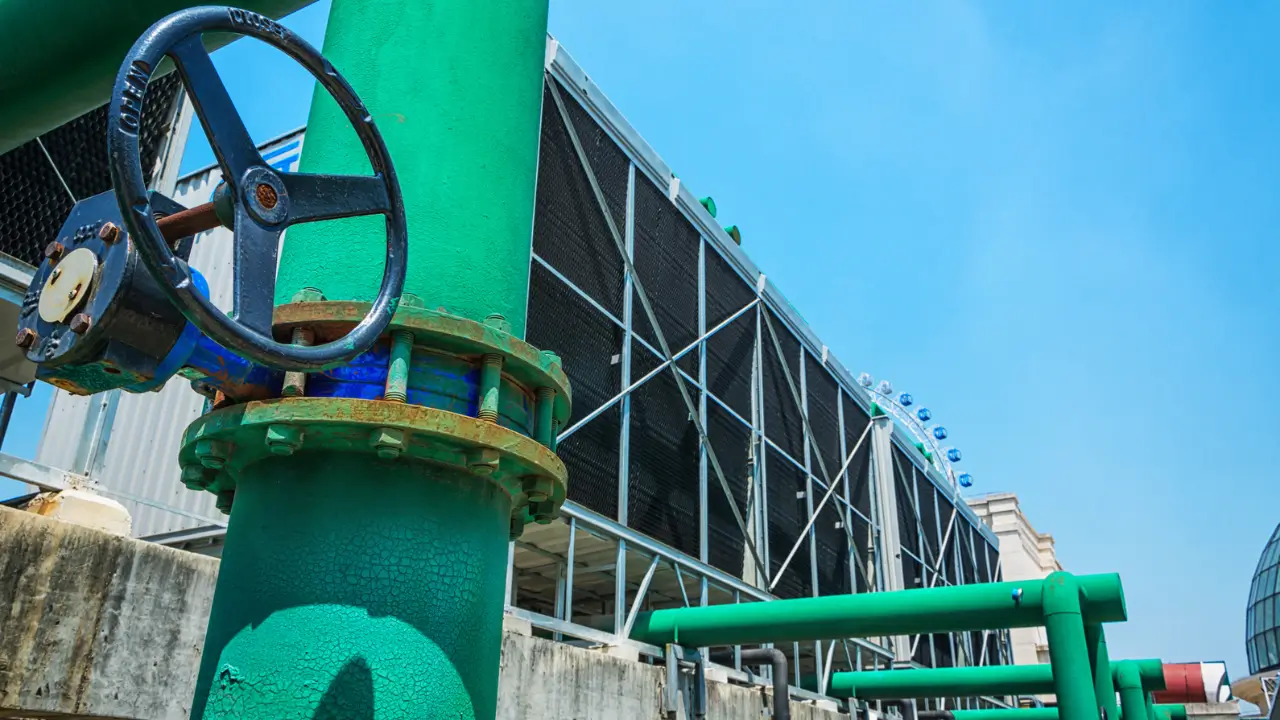
Dry cooling, or air-side heat rejection, represents the primary alternative for water-neutral design. In this architecture, heat transfers from the server to a closed liquid loop. This loop then travels to a large dry cooler. This unit operates like a massive radiator. It uses high-efficiency fans to draw ambient air over finned tubes. Because the liquid loop is completely sealed, the process results in zero evaporative loss of water.
The global market for data center dry coolers will grow significantly. It was valued at 1.92 billion dollars in 2025 . Experts project it will reach 2.10 billion dollars in 2026 and 4.51 billion dollars by 2035 . This growth occurs because dry coolers allow operators to maintain stable temperatures under high IT loads without water use . Historically, dry coolers required more energy than evaporative systems. However, modern designs incorporate intelligent fan integration and EC motors . These motors dynamically adjust airflow based on real-time heat loads. This improvement increases energy efficiency by up to 30 percent .
3.3 Adiabatic Hybrid Systems
Operators deploy adiabatic hybrid systems to maintain performance during extreme heatwaves. These units operate in dry mode for most of the year. However, when the ambient temperature exceeds a specific threshold, a fine water mist activates . This mist pre-cools the entering air . This hybrid approach achieves the low delivery temperatures required for high-density chips. Crucially, it uses only a fraction of the water that a traditional tower requires.
Advanced adiabatic systems, such as the Alfa Laval Abatigo or the NIMBUS VIRGA, reduce water consumption by up to 95 percent . These systems also address biological risks. They use a closed adiabatic chamber that prevents water drift to the heat exchangers . This keeps the exchangers dry and prevents scaling. It also prevents the growth of waterborne bacteria such as Legionella . By using water only as a seasonal supplement, adiabatic systems offer a robust solution for arid regions .
3.4 Practical Deployment Case Studies
The implementation of dry and adiabatic cooling is now a standard for new hyperscale builds. In Texas, the Edged 24 $MW$ facility in Irving utilizes a waterless closed-loop design . This facility proves that modern dry cooling can handle AI hardware even in high ambient temperatures . In Northern Europe, operators often integrate dry cooling with heat recovery systems . Facilities in Sweden and Norway capture warm return water to provide district heating for local towns . This circular approach achieves water neutrality while improving the overall energy profile. Initial CAPEX for these systems can be 15 to 25 percent higher than traditional chillers . However, the reduction in water costs and regulatory risk provides a clear long-term financial advantage .
Cooling Technology Comparison
- Open Cooling Tower: High water consumption. It requires low energy but creates a high environmental impact .
- Dry Cooler: Zero water consumption via a closed-loop. It requires moderate energy and has a very low environmental impact .
- Adiabatic Hybrid: Very low water consumption via seasonal misting. It requires low to moderate energy .
- Free Air Cooling: Zero water consumption. It requires very low energy but depends heavily on the local climate .
4. Pillar II: Closed-Loop Liquid-to-Chip Thermal Architectures
4.1 Why Closed-Loop Matters
The physics of high-density AI training necessitates a transition to liquid cooling. Air is a poor conductor of heat. As rack densities exceed 25 kW, the volume of air required for stability becomes physically impossible to move through a server chassis . Liquid cooling systems use water or specialized dielectric fluids . These fluids have a much higher thermal capacity. They absorb and transport heat more efficiently than air . In a closed-loop architecture, these fluids circulate in a sealed circuit. This means the water is never exposed to the atmosphere. Therefore, the system never loses water to evaporation .
This shift is central to achieving water neutrality. Data centers can operate without constant freshwater replenishment. Furthermore, liquid cooling can operate at higher return temperatures. This enables the use of dry coolers even in warmer climates. This architecture effectively decouples the facility from the local water table.
4.2 Industry Adoption and Market Trends
The adoption of liquid cooling accelerates as AI deployments shift toward specialized platforms. For instance, the NVIDIA Blackwell (GB200 NVL72) design requires direct-to-chip (DTC) cooling. Industry research indicates a rapid surge in adoption . Only 15 percent of AI servers used liquid cooling in 2024. This figure will likely reach 54 percent in 2025 and 76 percent by 2026 . This trend is a technical requirement for hardware that reaches a Thermal Design Power (TDP) above 1000 $W$ per chip .
Financial investment in liquid cooling mirrors this demand. Funding for direct liquid cooling solutions surged nearly five times year-over-year to 546 million dollars in 2025 . Companies such as Submer and Vertiv see record growth . They race to build AI-ready capacity that supports racks reaching 120 kW to 200 kW . For server racks exceeding 40 $kW$, liquid cooling is a cost-efficient choice . It reduces the need for massive mechanical infrastructure and large real-estate footprints.
4.3 Case Study: Microsoft Zero-Water Designs
Microsoft has pioneered the deployment of closed-loop liquid systems that aim for zero evaporative losses. In new facilities designed for AI, Microsoft utilizes a sealed water loop that recycles the cooling medium . This design often pairs with innovative power sources such as biogas fuel cells . These zero-water designs allow Microsoft to site data centers in water-stressed regions . This provides a significant competitive advantage when traditional permits are denied .
4.4 Technical Trade-Offs and Water Usage Metrics
The move to closed-loop liquid cooling changes the relationship between energy and water efficiency. A traditional facility might have a lower PUE. However, its WUE remains high. A closed-loop facility may have a slightly higher PUE in extreme heat. Nevertheless, it can achieve a WUE of nearly zero . Modern closed-loop designs have demonstrated a reduction in WUE from 0.49 L/kWh to approximately 0.30 L/kWh or less . Furthermore, liquid cooling allows for higher return water temperatures. This increases the potential for heat recovery. This thermal output can support district heating or industrial processes .
4.5 Operational Considerations
Transitioning to liquid-cooled infrastructure introduces new operational complexities. Approximately 58 percent of operators report difficulty hiring specialists who are familiar with fluid-handling systems . Unlike standard HVAC systems, liquid-cooled racks require precise management of coolant distribution units (CDUs) . Technicians must also manage manifolds and quick disconnect couplings (QDCs) . Supply chain fragility is a concern. The market for high-quality QDCs is concentrated among a few Western suppliers .
Service teams must also manage the risks of fluid contamination . Inadequate filtration can lead to clogs in micro-channel cold plates . This can trigger hardware shutdowns and lost AI workloads . Additionally, the integration of liquid cooling often coincides with the deployment of medium-voltage power systems . This requires technicians to have specialized certifications in arc flash prevention . To maintain uptime, professional service teams leverage predictive analytics to monitor fluid levels in real time .
Operational Challenges and Mitigation
- Fluid Handling Complexity: This increases the need for specialized technicians. Operators address this via comprehensive certification programs .
- Contamination Risk: Contaminants can clog cold plates and cause hardware failure. Monitoring tools detect these before they cause damage .
- Medium Voltage Safety: MV environments create arc flash hazards. Professional teams use protective gear and clear safety protocols .
- Supply Chain Fragility: Scaling depends on diversifying the pipeline for QDCs .
- Uptime Demands: AI workloads require 24/7 reliability. Teams use predictive analytics and routine inspections .
5. Pillar III: AI-Driven Water-Smart Orchestration
5.1 Water Usage Effectiveness (WUE) as a KPI
In the water-neutral era, WUE has emerged as the primary KPI for infrastructure leaders. WUE calculates the ratio of annual water consumption to the total energy consumed by IT equipment. This metric provides a benchmark for comparing efficiency across varying climates. The global fleet-wide average for Google is approximately 1.09 L/kWh. However, AI-optimized facilities target values as low as 0.01 L/kWh. They achieve this through closed-loop and dry cooling technologies.
5.2 AI Models for Cooling Optimization
One of the most profound developments is the use of AI to manage its own cooling. Machine learning models now track and measure the delivery of carbon-free energy and cooling in real time. These AI-driven thermal controls allow modular data centers to adjust airflow dynamically . This improves energy efficiency by up to 30 percent .
By integrating sensors that monitor ambient temperature and IT utilization, AI schedulers determine the most water-efficient cooling mode. In hybrid systems, the AI determines exactly when to activate adiabatic misting. This ensures that water is used only when absolutely necessary. This level of precision is essential for facilities in drought-prone states like Arizona or Texas.
5.3 Workload Shifting to Preserve Water
Beyond optimizing hardware, AI enables the spatial and temporal shifting of workloads to preserve water. Schedulers can dynamically move non-urgent AI training tasks to regions with more abundant water. Simulation studies indicate that spatial shifting can lower a data center’s water footprint by 20 to 85 percent . During extreme heatwaves, AI models can shift inference workloads to facilities where cooling is more efficient at that specific time . Furthermore, sparse activation techniques such as Mixture-of-Experts (MoE) ensure that only a fraction of a model’s parameters are active. This reduces the thermal load per query and lowers the amount of water required for cooling.
5.4 Industry Examples
Major cloud providers already integrate these water-smart orchestration techniques. For example, some facilities adjust their cooling strategy based on real-time environmental data. This allows operators to mitigate the risks of heatwaves and power grid outages . By seeing data centers as active agents in water management, hyperscalers prove that AI growth is compatible with ecological stewardship .
Water-Smart Orchestration Strategies
- Spatial Shifting: Moving compute tasks to water-abundant regions reduces water use by 20 to 85 percent .
- Temporal Shifting: Scheduling workloads during cooler hours reduces water use by 5 to 15 percent .
- Sparse Activation (MoE): Activating only a fraction of parameters per query reduces the thermal load.
- Predictive Maintenance: Monitoring fluid levels prevents leaks and resource waste .
6. Regulatory and Social Drivers
6.1 The EU Energy Efficiency Package (Q1 2026)
The European Union has taken a leading role in regulating digital infrastructure. The Energy Efficiency Package will arrive in the first quarter of 2026 . This package implements the Energy Efficiency Directive (EED) for data centers . This directive requires operators to report detailed operational data. This data includes annual water consumption and the specific source of that water . The European Commission is also developing a rating and labeling scheme . This scheme will categorize data centers based on their sustainability performance and WUE .
This package represents a shift toward mandatory transparency. Operators in the EU will no longer treat water consumption as an opaque metric. Instead, they must provide granular data for policymaker review . The EED will likely influence digital growth across the continent. The cost of compliance and the risk of poor ratings drive investment toward water-neutral technologies .
6.2 Water Usage Standards and Fines
Local jurisdictions are implementing specific water usage standards. In water-stressed Western states, opposition to evaporative cooling has led to more stringent rules . Some municipalities have proposed fines for data centers that exceed their allocated water draw . These policies turn water into a high-cost operational variable. These standards are shaping the design of new facilities. Operators move away from designs that require massive freshwater replenishment. In Virginia, there is a growing movement toward mandatory reporting and water-neutral benchmarks for all new construction .
6.3 Net-Zero Water Certifications
The pursuit of green building certifications, such as LEED or BREEAM, is a significant driver . Over 60 percent of new data centers in Europe target these certifications . These standards now place a heavy emphasis on zero water discharge . To achieve these, operators incorporate on-site rainwater harvesting and the reuse of treated wastewater . These certifications provide a competitive advantage. They demonstrate a commitment to sustainability to both investors and customers .
6.4 Community and Environmental Advocacy
Public scrutiny of the hydrological cost of intelligence has reached an all-time high. Advocacy groups in water-stressed regions urge greater transparency. This scrutiny drives a policy movement that urges site selection based on water availability . Environmental organizations advocate for a systems approach to data center sustainability . This approach considers the location-specific water and heat risks of each facility . Communities no longer accept data centers as silent neighbors. They demand that facilities be environmentally invisible by decoupling their growth from resource consumption .
7. Comparative Economics and Environmental Analysis
7.1 Cost Efficiency of Water-Neutral Designs
The financial landscape of data center cooling has undergone a structural transformation. Historically, cooling accounted for a relatively small portion of overall CAPEX. However, water-neutral systems have doubled that share. Cooling now commands up to 35 percent of total data center CAPEX. Modern dry coolers and liquid-cooling infrastructure involve significant upfront investment . For example, a production-scale liquid system can cost over 50,000 dollars per rack .
Despite these higher costs, water-neutral designs offer superior long-term efficiency. By eliminating cooling towers, operators avoid rising municipal water costs . Furthermore, liquid cooling can reduce energy-related operational expenses by up to 15 percent . In regions with water scarcity, the ability to operate without high-volume water acts as insurance against regulatory fines .
7.2 Carbon vs Water Trade-Offs
Infrastructure leaders must consider the trade-off between energy and water preservation. Traditional evaporative cooling is highly energy-efficient. Moving to dry cooling can increase the electrical demand for fans. This may increase the carbon footprint if the energy comes from fossil fuels. However, the industry uses AI to minimize this trade-off. Closed-loop liquid cooling systems can achieve a lower PUE than air-cooled systems while eliminating water consumption . Additionally, the indirect water footprint is often larger than the direct site use. By choosing low-carbon energy sources, data centers significantly reduce their total life-cycle water footprint .
7.3 Risk Modeling for Operators
Water scarcity represents a material operational risk. Facilities in water-stressed regions are vulnerable to heatwaves . These events increase both energy and water demand. They can lead to grid outages or water curtailments . Many existing data centers are in regions with high water stress. Their failure to adapt could lead to stranded assets . Infrastructure leaders now use energy-climate operational risk analysis . This modeling focuses on location-specific risks. By adopting water-neutral technologies, operators insulate their projects from these volatility factors .
Financial Metrics Comparison
- Initial CAPEX per Rack: 10,000 to 15,000 USD for traditional systems versus over 50,000 USD for water-neutral liquid-cooled designs .
- Annual Water Cost: Rising due to scarcity for traditional systems. Modern designs achieve near-zero costs .
- Maintenance (Opex): High for traditional systems due to chemicals. Liquid-cooled designs have moderate maintenance focused on fluid management .
- Energy Efficiency (PUE): 1.2 to 1.3 for traditional systems versus 1.05 to 1.15 for liquid-cooled systems .
- Regulatory Compliance Cost: Increasing for traditional systems. Modern designs integrate this into CAPEX .
8. Geographic Case Studies
8.1 Arid Regions: Arizona and Southwest U.S.
The Southwestern United States is the epicenter of the data center water crisis. In Arizona, extreme heat and rapid growth have led to intense competition for water. A large commercial data center in Arizona can consume 9 liters of water per kilowatt-hour. This consumption has driven a shift to dry cooling and waterless closed-loop systems. Operators site facilities in these regions only if they commit to a near-zero water footprint .
8.2 Europe and Regulatory Pressure
The European market features a rigorous regulatory environment. In the EU, taxation policies and eco-compliance frameworks drive water neutrality . Cities such as Frankfurt and Amsterdam have imposed restrictions on new builds. This has led to the adoption of hybrid adiabatic systems. European operators also lead in heat reuse . They support local district heating networks with thermal output from water-neutral systems .
8.3 Nordic and Cold Climates
The Nordic countries offer ideal conditions for water-neutral cooling. Cold ambient air allows for free-air cooling throughout the year . This reduces the need for both water and mechanical refrigeration . Facilities such as the Google center in Hamina, Finland, use seawater for cooling . This is a non-depletable resource. These regions see a surge in investment for massive AI training clusters.
8.4 Tropical Climates and Membrane Cooling
High humidity makes traditional evaporative cooling ineffective in tropical regions . To overcome this, operators are testing hydrophobic and semi-permeable membranes . The Cold Tube project in Singapore demonstrated that radiant surfaces can cool people without cooling the air . Forward-thinking operators such as Digital Edge are implementing these technologies in Indonesia and the Philippines . These membrane-based systems can cut water usage by up to 90 percent . This innovation enables AI expansion in tropical markets without depleting local groundwater .
Regional Deployment Strategies
- Arizona, US: High heat and drought constraints. Addressed via waterless closed-loop and dry cooling .
- Frankfurt, DE: Regulatory caps and urban heat. Addressed via adiabatic hybrid systems and heat reuse.
- Lulea, SE: Arctic cold conditions. Addressed via free air cooling and direct-to-chip .
- Jakarta, ID: High humidity and tropical heat. Addressed via membrane liquid cooling and direct-to-chip .
9. Future Outlook: Toward True Water Neutrality
The period between 2026 and 2030 will see the industry achieve true water neutrality. By 2030, major technology companies aim to replenish more water than they consume . They will achieve this through extreme on-site efficiency and off-site watershed restoration . Innovation will continue in advanced materials and water-smart algorithms . Researchers are exploring vacuum membrane-based air dehumidification (MAD) . This enhances cooling efficiency in humid climates .
Data centers will become environmentally invisible as AI models grow . The industry aims to decouple the benefits of AI from the consumption of finite resources . In the future, a data center will be a quiet, cool, and water-efficient utility. It will integrate seamlessly into the regional ecosystem .
10. Conclusion and Strategic Recommendations
The rise of water-neutral thermal management is a strategic imperative. Legacy evaporative cooling has become a significant liability as rack densities surge . The transition to dry cooling and closed-loop liquid architectures is a technical necessity. It is also a critical component of regulatory compliance and social license .
Infrastructure leaders should consider the following recommendations:
- Adopt a Water-Neutral by Design Philosophy. New facilities should prioritize closed-loop liquid-to-chip and dry cooling .
- Leverage AI to Optimize Resource Use. Implement machine learning to manage cooling loads and shift compute tasks to water-advantageous locations .
- Prepare for Granular Reporting. Operators must invest in sensors and management systems to report water use with high precision .
- Invest in Specialized Workforce Training. Build a certified workforce that understands fluid handling and medium-voltage safety .
- Engage with Communities and Policymakers. Transparency is no longer optional. Building public trust is necessary for continued expansion .
Water neutrality is the industry standard for the 2026 AI landscape. By decoupling compute growth from water consumption, the industry protects the world’s most vital resource.