
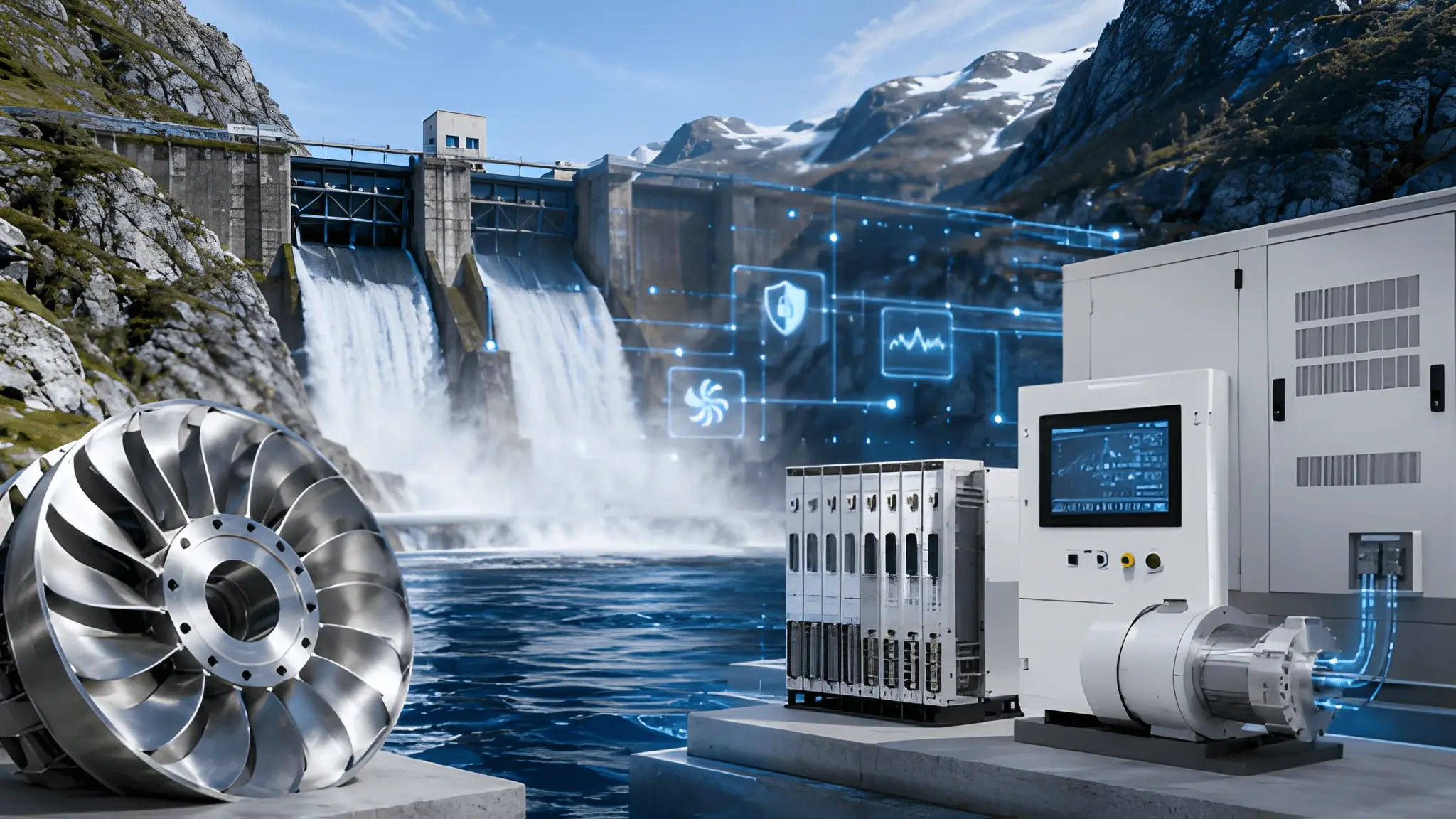
ABB has won a major modernization contract from Statkraft AS covering three hydropower plants at the Vikfalli complex in Vik municipality, western Norway, reinforcing the country’s push to keep aging renewable infrastructure competitive and reliable. Located about 170 kilometers northeast of Bergen, the complex combines the Målset, Refsdal and Hove plants, which together generate about 830 GWh of electricity annually, enough to supply approximately 53,000 Norwegian homes. Statkraft booked the order in the second quarter of 2026, while the companies did not disclose financial terms. The project gives ABB responsibility for a broad technology overhaul rather than a limited equipment replacement, positioning Vikfalli for a longer operating life as Norway manages an increasingly complex electricity system.

The three stations provide 184 MW of combined generating capacity across five generating units, with Målset contributing 24 MW, Refsdal 92 MW and Hove 68 MW. ABB will modernize the control, protection, excitation and electrical infrastructure across the complex, targeting systems that underpin operational reliability and long-term asset performance. The scope includes ABB Ability™ System 800xA® distributed control and monitoring technology, which will connect with existing third-party turbine systems to create a unified operating environment. Meanwhile, the modernization reflects a wider infrastructure challenge for hydropower owners: extending the useful life of established assets while preparing them for stricter technical requirements and a more dynamic grid.
Digital Controls and Protection Take Center Stage
ABB’s package extends across UNITROL® 8000 excitation systems for all five generating units, alongside cyber security, low- and medium-voltage electrical systems, vibration monitoring and protection, digital solutions, and cable supply and installation. The combination is designed to strengthen how the plants monitor, control and protect generating equipment while giving operators greater visibility across the three facilities. Modern excitation and protection technologies will help the plants meet evolving grid codes for generators, an increasingly important consideration as variable renewable generation changes power flows and operating conditions. The project therefore links asset modernization with grid resilience, rather than treating digital controls as a standalone technology upgrade.
“The upgrade of Vikfalli is an important step in strengthening Norway’s renewable energy infrastructure and we worked closely with ABB from the earliest stage to ensure the solution was optimized,” said Inge Hass, Power Plant Manager of group Sogn, Statkraft. Hass’s comments highlight the value of early technical collaboration. Multiple generations of equipment must work together across the complex. ABB and Statkraft began developing the solution during the project’s early phase. Both teams used that period to refine the technical architecture. Statkraft then finalized the main contract after the teams completed that work. This procurement approach can reduce integration risks for owners managing complex power assets. It also gives project teams more time to identify technical challenges.
Norway’s Hydropower Role Raises the Stakes
The Vikfalli upgrade comes as Norway continues to rely heavily on hydropower for domestic electricity and its role in interconnected European power markets. Hydropower accounted for almost 90 percent of Norway’s total electricity generation in June 2026, highlighting the strategic importance of maintaining the performance of existing plants rather than relying solely on new capacity. Globally, hydropower remained the third-largest source of electricity in 2024, representing about 14 percent of total generation, with more than 154 GW of new capacity expected to come online by the end of the decade. Moreover, Norway’s position as a major hydropower market gives modernization projects such as Vikfalli significance beyond individual plant economics.
“Hydropower is an important part of an expanding energy system, helping to grow renewable capacity and deliver stable baseload power to the grid,” said Per Erik Holsten, President of ABB’s Energy Industries division. “The priority now is ensuring that existing assets such as Vikfalli are equipped to fulfill that role for future needs with modern control and digital solutions that enable them to run more safely, cleaner and leaner, and to be ready for tomorrow’s grid requirements.” His assessment places the project within a broader shift toward extracting greater reliability and flexibility from established renewable assets as power systems accommodate more variable generation. For Norway, that means keeping hydropower plants technologically prepared to support both everyday electricity demand and the balancing needs of a more interconnected European grid.

Vikfalli Work Begins With Målset in 2028
Work at Målset will begin in 2028, with Statkraft moving to Refsdal and Hove in 2029. The staggered schedule gives Statkraft a phased path to upgrade the complex while maintaining operational continuity across its generating assets. After the upgrades, Vikfalli’s five generating units will operate with modern control, excitation, protection, monitoring and electrical systems that meet future grid requirements. For ABB, the order strengthens its role in Norway’s renewable infrastructure modernization, while Statkraft gains a stronger technology base to keep the established hydropower complex relevant as the electricity system evolves.











