India’s infrastructure ambitions just entered a new phase. The Adani Group has unveiled a $100 billion plan to build renewable-powered, hyperscale AI-ready data centres across India by 2035, staking a claim in what it calls the next global Intelligence Revolution.
However, this is not a conventional data centre expansion story. Instead, the move signals a structural shift: India’s push to control its own compute destiny. Through integrated energy generation, transmission, storage and high-density AI compute, Adani aims to position India as a sovereign power in the global intelligence economy rather than a dependent node within foreign cloud ecosystems.
The scale alone is unprecedented in India’s digital infrastructure landscape. Yet the strategy goes deeper than capital expenditure. It redefines the relationship between energy and compute as a national strategic axis.
“The world is entering an Intelligence Revolution more profound than any previous Industrial Revolution,” said Gautam Adani, Chairman of the Adani Group. “Nations that master the symmetry between energy and compute will shape the next decade. India is uniquely positioned to lead. At Adani, we are building on our foundation in data centres and green energy to expand into the complete five layer AI stack focused on India’s technological sovereignty. India will not be a mere consumer in the AI age. We will be the creators, the builders and the exporters of intelligence and we are proud to be able to participate in that future.”
From Capacity to Sovereignty
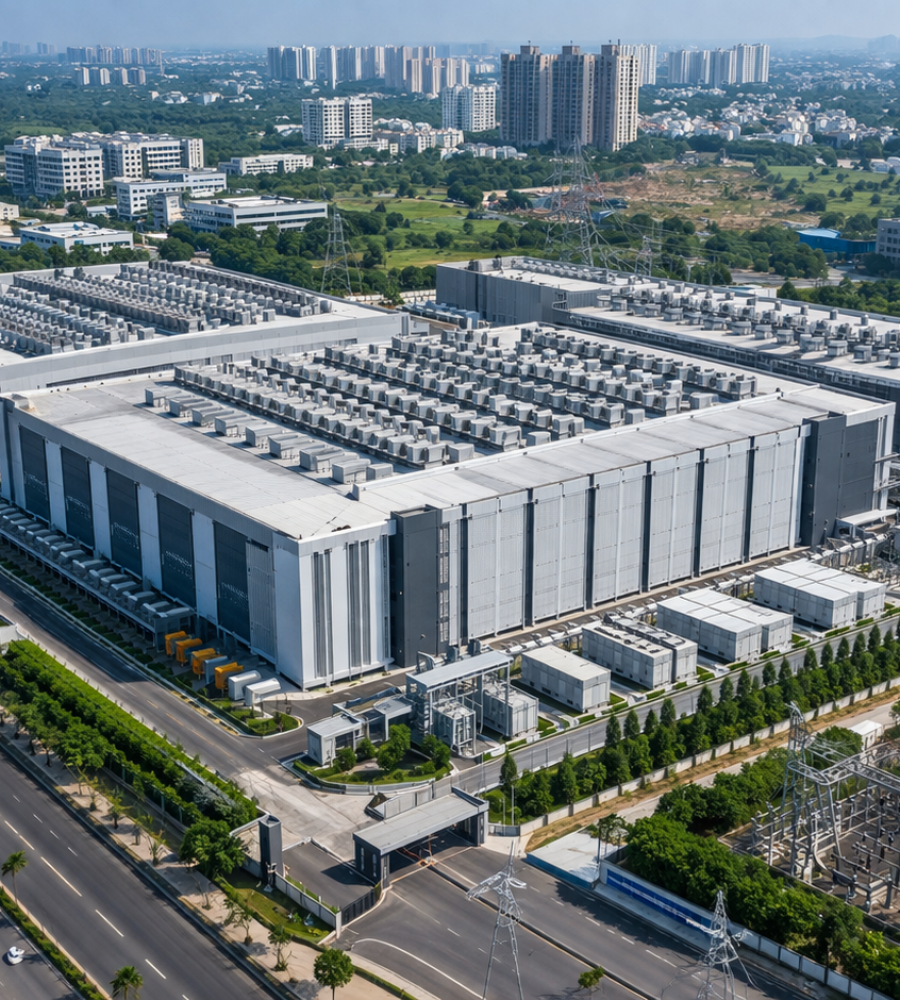
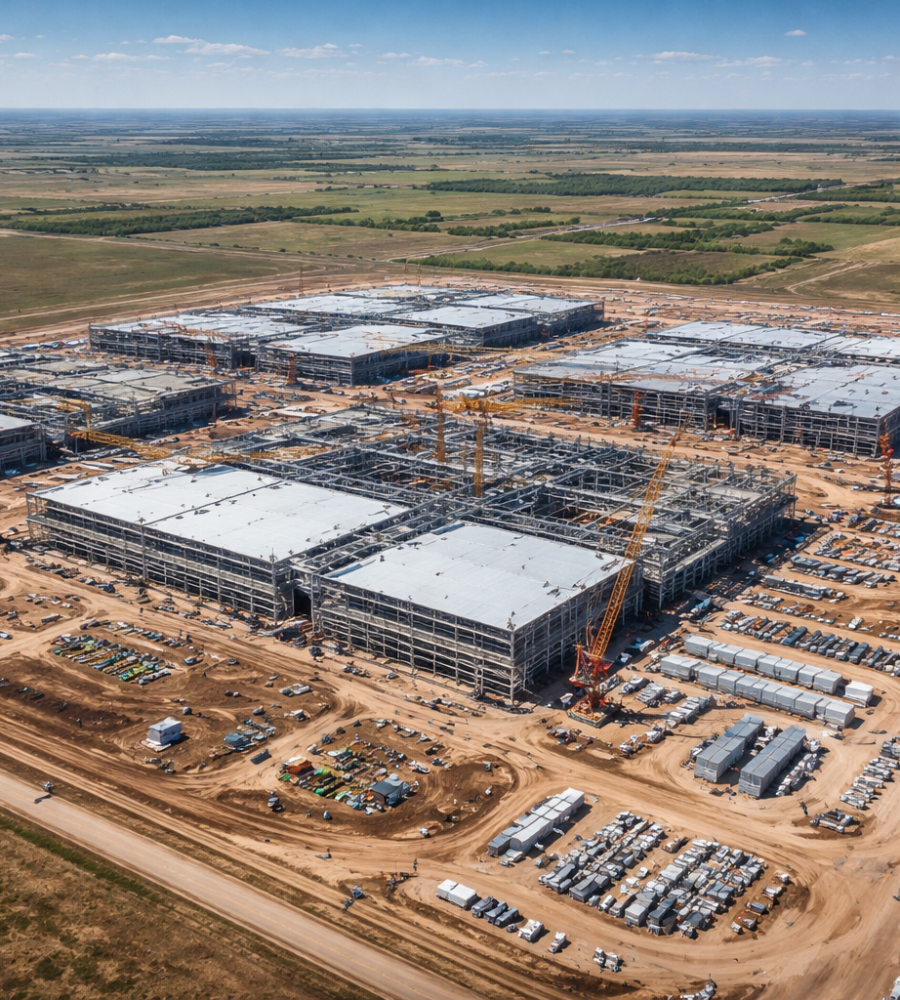
The roadmap significantly expands the footprint of AdaniConnex, the Group’s data centre arm. Its existing 2 GW national platform will scale toward a 5 GW hyperscale target, with flagship campuses planned in Visakhapatnam and Noida.
Crucially, these sites will not operate as isolated server farms. Instead, they will anchor an integrated compute-energy backbone. Partnerships with Google and Microsoft are already in place, while discussions continue with additional global hyperscale operators. Through these alliances, Adani aligns sovereign infrastructure with global cloud demand without surrendering control over energy supply or core assets.
Meanwhile, the Group is deepening its collaboration with Flipkart to develop a second high-performance AI data centre. That facility will support next-generation digital commerce and large-scale AI workloads, reinforcing India’s consumer internet backbone with domestic high-density compute capacity.
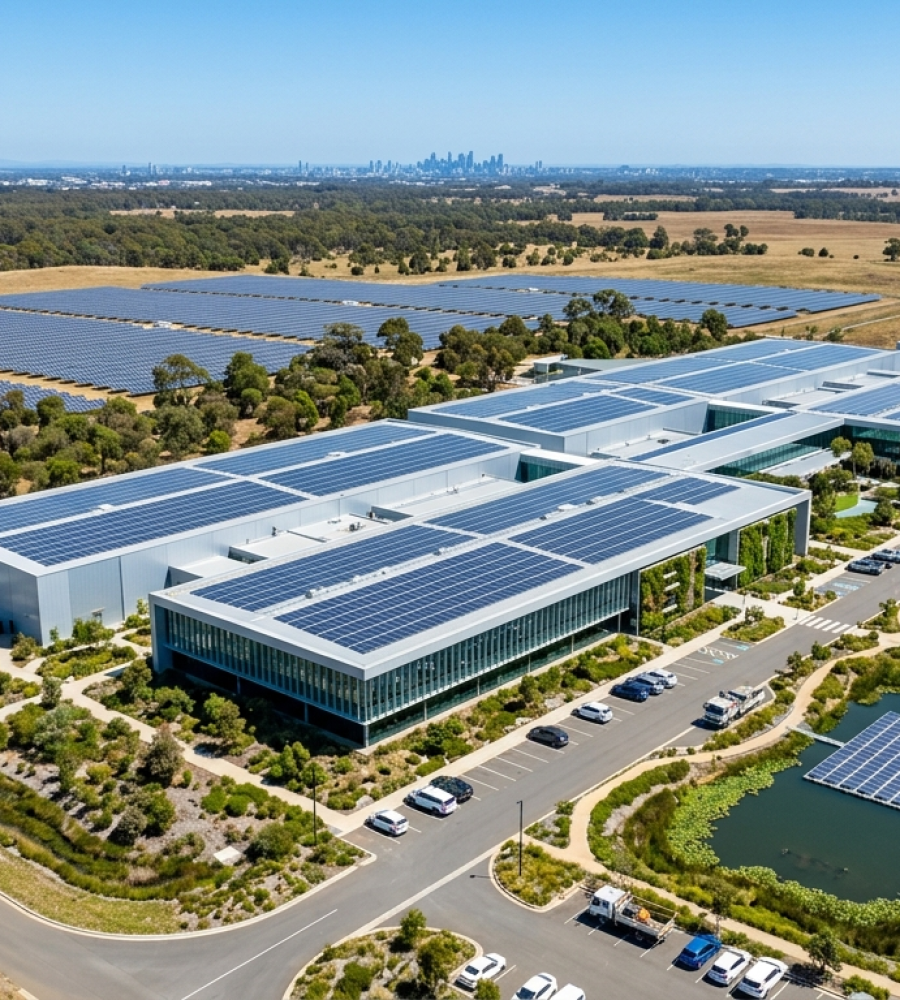
Unlike traditional expansion cycles driven by enterprise colocation demand, this program integrates renewable generation, transmission corridors and liquid-cooled AI clusters within a unified architecture. Facilities will deploy high-efficiency power systems and advanced thermal management to sustain energy-intensive AI processing loads. Therefore, the initiative addresses both performance and sustainability at scale.
Energy as Strategic Leverage
AI workloads are rapidly reshaping global electricity demand curves. Training and inference clusters now require gigawatt-scale planning horizons. Consequently, access to reliable, competitively priced, low-carbon power has become the decisive constraint in AI infrastructure economics. Adani’s model turns that constraint into leverage.
The platform will draw heavily on Adani Green Energy’s 30 GW Khavda renewable project, one of the world’s largest renewable energy parks. More than 10 GW is already operational. In parallel, the Group has committed an additional $55 billion to expand its renewable portfolio, including large-scale battery energy storage deployments to stabilise AI-driven load variability.
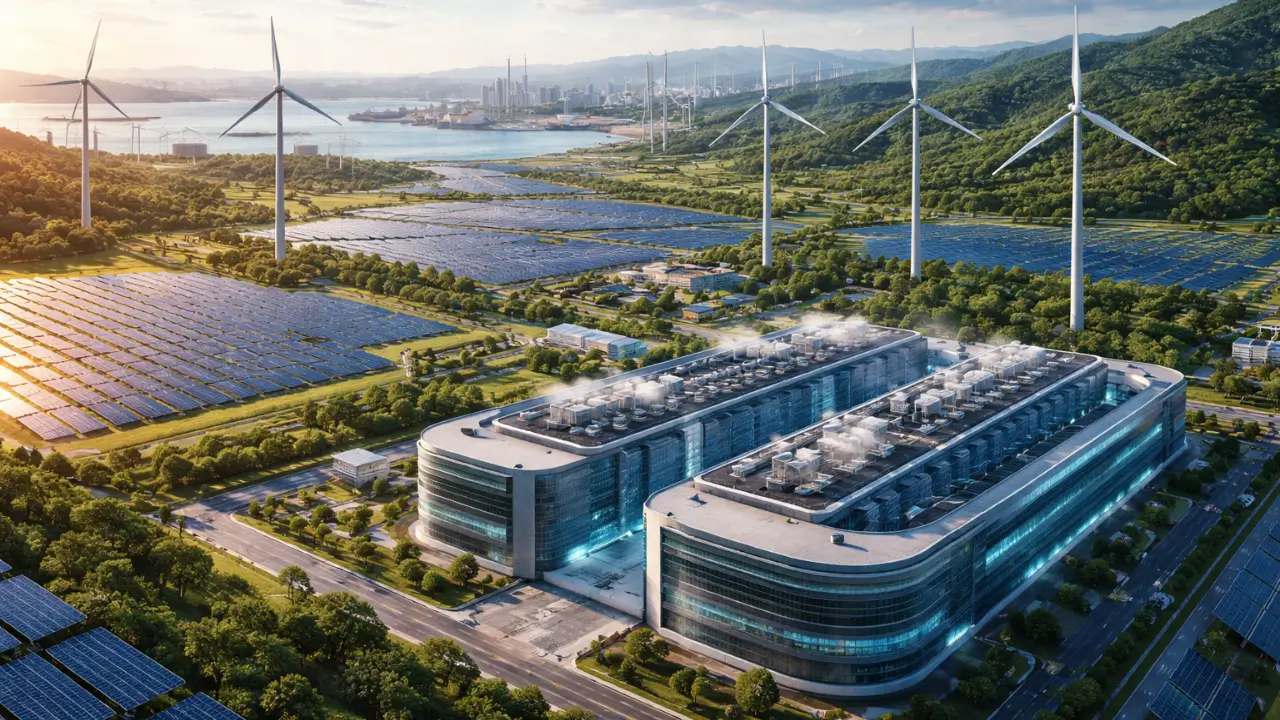
This coupling of renewable generation with hyperscale compute changes the risk profile. Instead of relying on external grid markets subject to volatility, Adani internalises power production and transmission within its infrastructure stack. As a result, carbon-neutral compute becomes not merely an ESG narrative but a structural competitive advantage.
Furthermore, strategic cable landing stations at Adani-operated ports will enable low-latency integration with global digital networks spanning the Americas, Europe, Africa and Asia. That connectivity ensures India’s AI backbone links directly into international data flows while retaining domestic energy control.
Building the Five-Layer Stack
The announcement also outlines ambitions beyond real estate and megawatts. Adani intends to expand into what it describes as a complete five-layer AI stack focused on technological sovereignty.
While detailed technical specifications remain forthcoming, the strategic direction is clear: integrate energy, data centre infrastructure, hardware manufacturing, cloud platforms and AI workloads within a domestically anchored ecosystem. In effect, the Group seeks to compress the value chain that today stretches across multiple jurisdictions into an Indian-controlled corridor.
To reduce exposure to geopolitical friction and supply chain volatility, Adani plans co-investments in domestic manufacturing of critical components. These include transformers, grid systems, power electronics and advanced thermal management technologies. Therefore, the initiative aims to cultivate not only data hosting capacity but also industrial depth.
The projected multiplier effect is substantial. Beyond the initial $100 billion investment, the program is expected to catalyse an additional $150 billion across adjacent sectors such as server manufacturing, electrical systems and sovereign cloud platforms. Taken together, that could generate a $250 billion AI infrastructure ecosystem over the next decade.
The Intelligence Economy Play
Global AI competition increasingly hinges on who controls compute, energy and connectivity at scale. The United States and China dominate hyperscale deployment, while Europe pushes regulatory sovereignty. India, by contrast, has historically relied on foreign cloud operators for advanced AI capacity.
Adani’s blueprint attempts to alter that equation. By synchronising renewable power expansion with hyperscale AI infrastructure, the Group positions India as a producer of intelligence infrastructure rather than merely a market for imported cloud services.
Importantly, this strategy reframes infrastructure from a backend utility into a geopolitical instrument. Control over compute capacity influences economic growth, digital trade, defence capabilities and innovation ecosystems. Therefore, the investment operates at the intersection of industrial policy and corporate ambition.
Execution, of course, will determine whether the vision translates into operational scale. Hyperscale AI facilities demand sustained capital discipline, regulatory coordination and technology partnerships. However, the underlying thesis, that energy symmetry with compute defines the next industrial frontier aligns with global trends reshaping infrastructure planning.
A Structural Bet on India AI Infrastructure
Ultimately, the $100 billion commitment represents more than an expansion plan. It is a structural bet on India AI infrastructure as the foundation of national competitiveness in the intelligence era.
If realised, the program would anchor gigawatt-scale renewable energy to high-density AI compute, integrate domestic manufacturing into the supply chain and connect India directly into global digital arteries. In doing so, Adani seeks to transform India from a fast-growing digital consumer market into a sovereign compute powerhouse.
The next decade will reveal whether this integration of energy, hyperscale data centres and AI ambition can reposition India at the centre of the global intelligence economy. For now, the signal is clear: infrastructure scale, not incremental capacity, will define leadership in the age of AI.