
.Nscale Locks $3.5 Billion Figure Robotics Compute Deal  ·Qatar’s Meeza Lands Major Hyperscaler Deal for 8MW ·Qualcomm Strikes Amazon AI Chip Deal, Opens Door to $4 Billion Stock ·Hitachi Energy Bets $300M on China Grid Manufacturing Corvex Builds Toward 8MW Cloud Infrastructure Footprint LITEON Bets $176 Million on DCX Liquid Cooling EdgeConneX Backs Singapore’s AI-Ready Tropical Data Center Testbed

SoftBank Builds Battery Backbone for AI Infrastructure

SoftBank Group is moving deeper into the infrastructure stack not just computing, but power itself. Its telecom arm, SoftBank Corp.,

Share
AI battery manufacturing

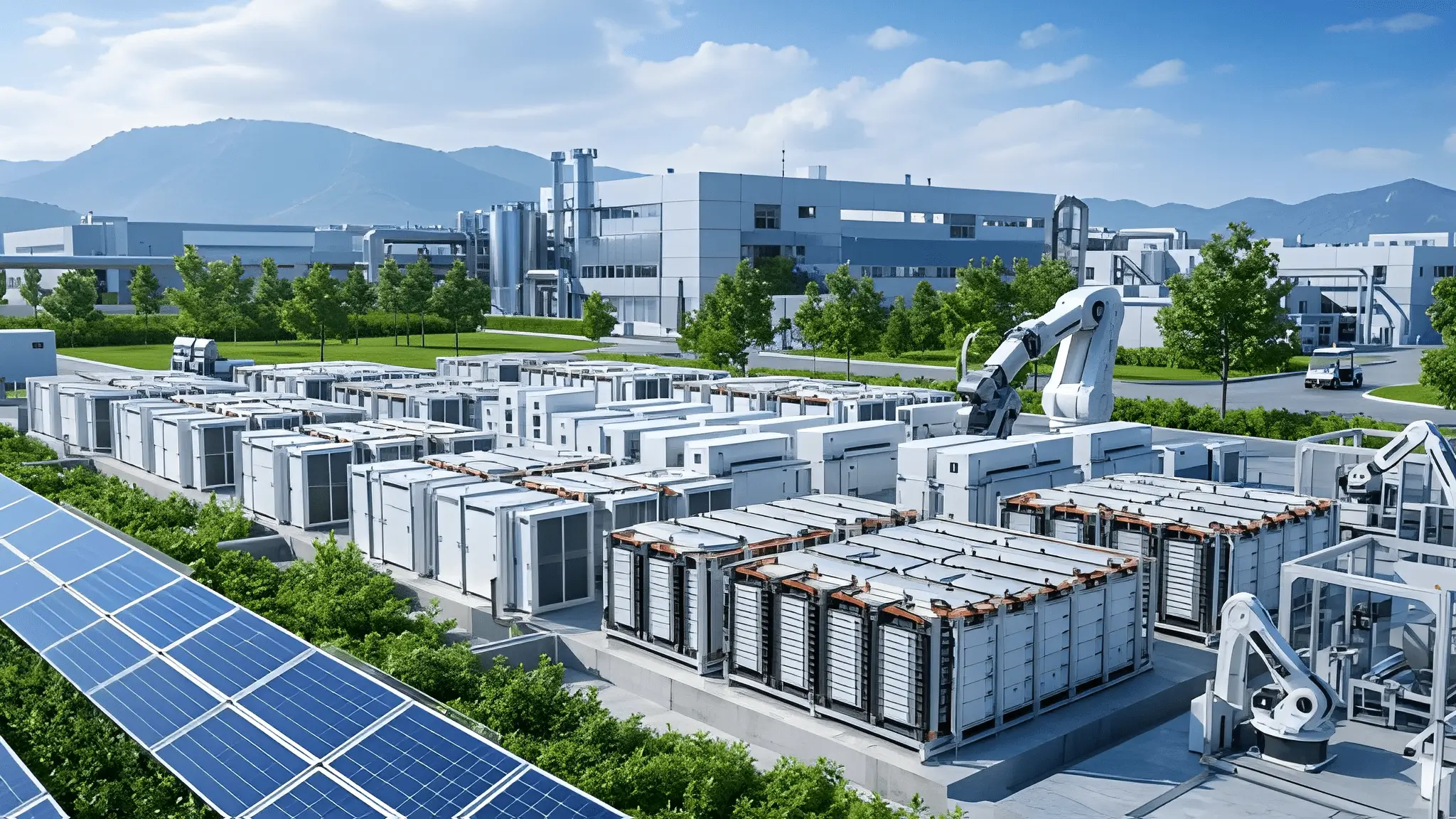
SoftBank Group is moving deeper into the infrastructure stack not just computing, but power itself. Its telecom arm, SoftBank Corp., is preparing to convert part of an Osaka facility into a large-scale battery production line designed to support AI data centers.

The shift signals a broader industry inflection: compute is no longer the only constraint. Energy, how it’s stored, distributed, and secured is becoming the defining bottleneck. Inside Osaka Prefecture, the Sakai plant once considered for robotics is being repositioned as an energy asset. Sources indicate that SoftBank aims to operationalize battery production within five years, aligning manufacturing timelines with its expanding AI infrastructure footprint.

This is not a marginal upgrade. The company is designing a facility capable of producing batteries at gigawatt-hour scale modest compared to China’s largest plants, but significant within Japan’s domestic ecosystem. The intent is clear: build enough capacity to stabilize its own data center operations before expanding outward to enterprise customers.

Masayoshi Son’s Infrastructure Thesis Expands

Masayoshi Son has long positioned SoftBank at the center of the AI economy through aggressive capital deployment. Billions have already flowed into data centers, cloud platforms, and startups including OpenAI.

However, this battery initiative extends that thesis into physical resilience. By integrating energy storage into its stack, SoftBank reduces reliance on external grids and mitigates volatility tied to renewable energy intermittency. The telecom unit has become a key execution layer for this vision structuring partnerships, deploying infrastructure, and now manufacturing critical components.

Chief Executive Officer Junichi Miyakawa is expected to formally unveil the battery initiative as part of an upcoming five-year strategy. The plan remains under internal review, though approval from Son signals strong executive backing. A SoftBank representative declined to comment.

Miyakawa’s broader agenda emphasizes domestic manufacturing resilience. Supply chain disruptions and geopolitical tensions have exposed vulnerabilities across technology ecosystems. Localizing battery production positions SoftBank to operate with greater autonomy while contributing to Japan’s industrial policy goals.

Data Centers Drive Energy Reinvention

SoftBank’s battery push cannot be separated from its data center expansion. The company has already acquired a former LCD facility from Sharp Corporation for ¥100 billion, transforming it into a next-generation data center campus.

With roughly 840,000 square meters of space, the site represents one of Japan’s most ambitious infrastructure conversions. Initial deployment targets 150 megawatts of capacity, with long-term scaling potential exceeding 400 megawatts.

Battery systems will play a critical role in stabilizing these operations, smoothing demand spikes, optimizing load balancing, and ensuring uptime in an increasingly compute-intensive environment.

SoftBank is evaluating multiple battery chemistries for large-scale production. Lithium iron phosphate (LFP) remains the industry standard due to safety and cost advantages. Yet the company is also exploring next-generation alternatives emerging from Japan and South Korea.

The decision carries strategic weight. Chinese manufacturers dominate global battery supply chains, particularly in energy storage systems. According to SNE Research, China accounted for 64% of the ESS market in 2025, far outpacing North America’s 16% share. SoftBank’s technology selection will determine whether it competes on cost parity or attempts differentiation through innovation.

SoftBank’s Endgame: Control the Stack

Battery demand is accelerating globally as renewable energy adoption scales. Intermittency from solar and wind generation creates instability that storage systems must absorb. Data centers among the largest electricity consumers are amplifying this demand curve.

However, Japan faces an additional constraint: grid capacity. Renewable expansion has been limited not by generation potential, but by transmission and storage bottlenecks. Large-scale batteries offer a pathway to unlock that stranded capacity.

SoftBank is not simply building batteries or data centers. It is assembling an integrated infrastructure model where compute, connectivity, and energy operate as a unified system.

This approach reflects a deeper strategic shift across the AI economy. Owning GPUs is no longer sufficient. The companies that control power generation, storage, and optimization will define the next phase of competitive advantage. SoftBank appears determined to be one of them.


[simple-author-box]

More from AI Infrastructure

SURF has selected Eurofiber to host a new large-scale AI facility in Groningen, marking

O-Green, a state-backed renewable energy company in Oman, plans to bring more than 200MW

Nabiax has begun construction of Alcalá Data Center 3 (ADC3) in Alcalá de Henares,

COMPUTE WEEKLY

The briefing that 40,000+ tech leaders read every Monday. Sharp, fast, essential.

Building an AI Startup Without Owning GPUs

Not owning GPUs has become the default, deliberate strategy for building an AI company — not a compromise founders accept reluctantly. H100 rental rates fell 64-75% in fifteen months, a dense ecosystem of neoclouds and inference-as-a-service providers now lets startups skip infrastructure entirely, and credit programs can fund a company’s first year before a founder writes a check
Most Read

A compute node sitting behind a garage door can perform the same basic computational

A project can leave a site without leaving behind the conditions that made the

A commercial operation date can look precise long before the underlying project is capable

A 5 GW AI infrastructure plan can satisfy every conventional site-selection requirement and still

A fire strategy becomes expensive when the building has already decided where walls, equipment,

Disruptor Spotlight

Cerebras Systems

The chip that makes Nvidia nervous. Cerebras’ Wafer Scale Engine is rewriting the rules of AI inference at scale.
Faster
0 x
YoY Revenue
0 x
Transistors
0 T
Market Pulse
MSFT
+1.02%
NVDA
+0.66%
AMZN
-0.078%
AMD
-6.95%
TSMC
-2.98%
Indicative only · Not financial advice
Upcoming Events
SEP
The AI Infrastructure Race (India)
WEBINAR · ONLINE
The AI Infrastructure Race: Won on Power, Land and Trust — Not Capital
MAY
0
AI Infrastructure Summit
DUBAI · IN PERSON
MEA’s premier AI infrastructure event.
JUN
0 0
Compute Forecast Summit
SINGAPORE · IN PERSON
Our flagship APAC event. Early bird open.
Latest Moves
Live
ecolab
Ecolab Deepens Cooling Strategy With $4.75B CoolIT Acquisition
Ecolab is making one of its biggest moves yet into AI infrastructure after completing its $4.75 billion acquisition of liquid cooling specialist CoolIT Systems
Pure DC AVK Europe data center microgrid Dublin 110MW AI infrastructure Ireland 2026
Pure DC and AVK Deploy Europe’s First 110 MW Data Center Microgrid in Dublin
The Pure DC Dublin microgrid has made history as Europe’s first large-scale on-site data center microgrid, launched in partnership with power solutions provider AVK at Pure DC’s campus in Ireland.
Pace Digitek
Pace Digitek Partners With MEGMEET to Expand AI Data Center Power Business
India’s AI infrastructure ecosystem continues to mature as domestic technology manufacturers move beyond traditional telecommunications and industrial markets toward high-growth digital infrastructure opportunities
Follow Compute Forecast
11K followers
1200 followers
Companies to Watch
CW
CoreWeave
Neo Cloud · $19B · IPO Watch
CB
Cerebras Systems
AI Hardware · $4.25B · Pre-IPO
G42
G42
Sovereign AI · Abu Dhabi
H
Humain
Saudi AI · $40B Fund
Latest Podcast
AI Capex, Cloud Margins & the Nuclear Bet
48 MIN · 25 APR 2026

SoftBank Builds Battery Backbone for AI Infrastructure

SoftBank Group is moving deeper into the infrastructure stack not just computing, but power itself. Its telecom arm, SoftBank Corp.,

Share
AI battery manufacturing
21
847 SHARES

0
SHARES

[simple-author-box]

More from AI Infrastructure

A compute node sitting behind a garage door can perform the same basic computational

A project can leave a site without leaving behind the conditions that made the

A commercial operation date can look precise long before the underlying project is capable

A 5 GW AI infrastructure plan can satisfy every conventional site-selection requirement and still

COMPUTE WEEKLY

The briefing that 40,000+ tech leaders read every Monday. Sharp, fast, essential.

Great! We’ve received your information.

Global AI Infrastructure Outlook 2026

The briefing that 40,000+ tech leaders read every Monday. Sharp, fast, essential.
Download Free
Most Read

A compute node sitting behind a garage door can perform the same basic computational

A project can leave a site without leaving behind the conditions that made the

A commercial operation date can look precise long before the underlying project is capable

A 5 GW AI infrastructure plan can satisfy every conventional site-selection requirement and still

A fire strategy becomes expensive when the building has already decided where walls, equipment,

Disruptor Spotlight

Cerebras Systems

The chip that makes Nvidia nervous. Cerebras’ Wafer Scale Engine is rewriting the rules of AI inference at scale.
Faster
0 x
YoY Revenue
0 x
Transistors
0 T
Market Pulse
NVDA
$924.60
+2.4%
MSFT
$421.30
+1.1%
AMZN
$192.80
-0.6%
NVDA
$924.60
+2.4%
NVDA
$924.60
+2.4%
Indicative only · Not financial advice
Upcoming Events
MAY
0 0
DCD Global — London
LONDON · IN PERSON
World’s largest DC event. CF is media partner.
MAY
0
AI Infrastructure Summit
DUBAI · IN PERSON
MEA’s premier AI infrastructure event.
JUN
0 0

Compute Forecast Summit

SINGAPORE · IN PERSON
Our flagship APAC event. Early bird open.
Latest Moves
  • Live
Sam Altman
OpenAI appoints new Chief Infrastructure Officer to lead $100B DC programme
27 APR · OPENAI
Sam Altman
OpenAI appoints new Chief Infrastructure Officer to lead $100B DC programme
27 APR · OPENAI
Sam Altman
OpenAI appoints new Chief Infrastructure Officer to lead $100B DC programme
27 APR · OPENAI
Follow Compute Forecast
18.4K followers
12.1K followers
9.3K subscribers
41 episodes
Companies to Watch
CW
CoreWeave
Neo Cloud · $19B · IPO Watch
CB
Cerebras Systems
AI Hardware · $4.25B · Pre-IPO
G42
G42
Sovereign AI · Abu Dhabi
CW
Humain
Saudi AI · $40B Fund
Latest Podcast
AI Capex, Cloud Margins & the Nuclear Bet
48 MIN · 25 APR 2026
Scroll to Top








